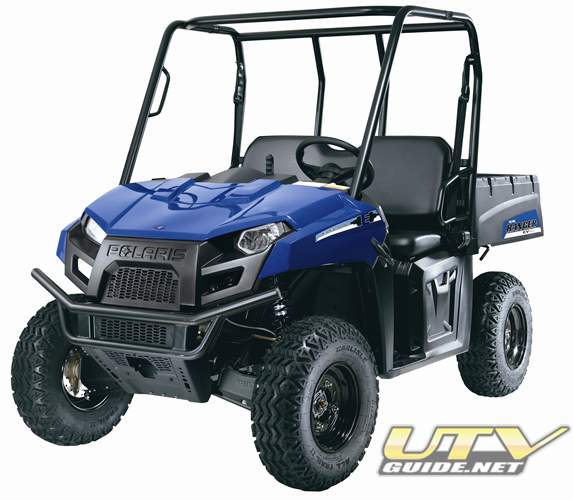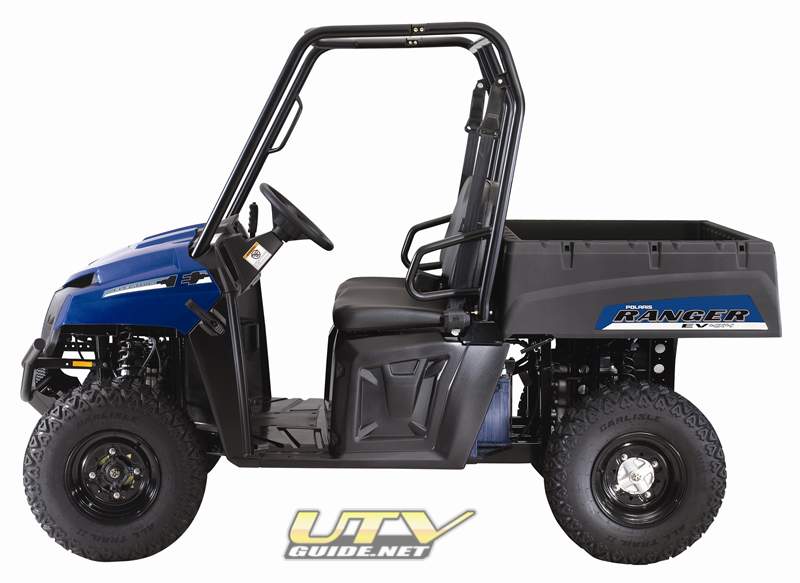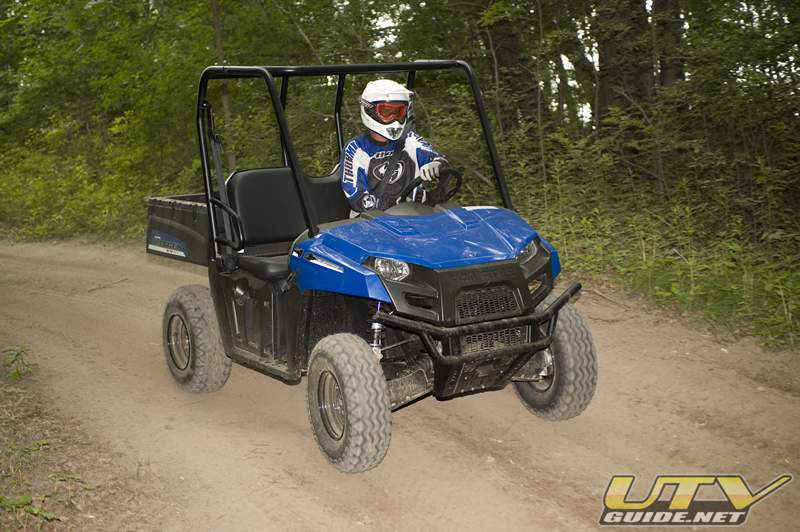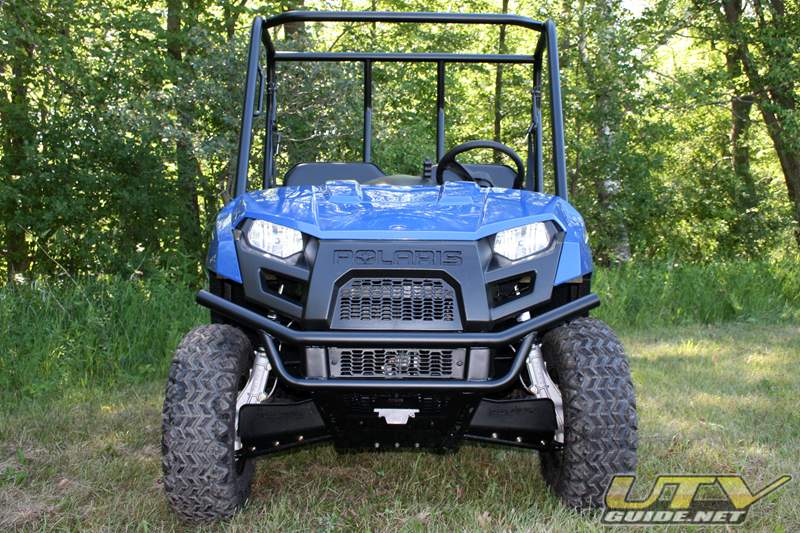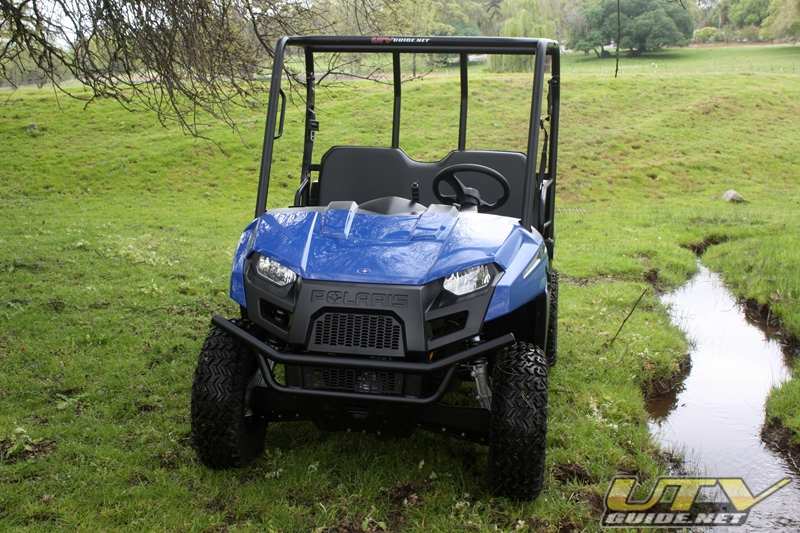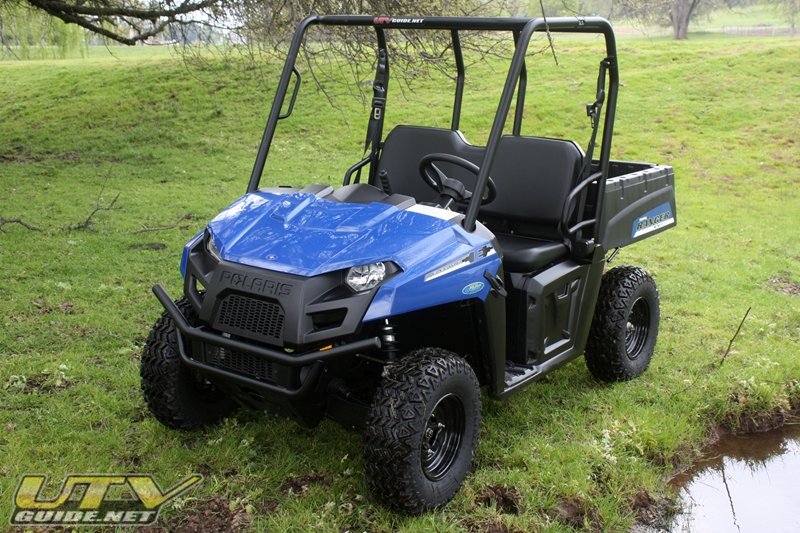
Long before lithium-ion electric UTVs became a serious part of the market, Polaris introduced its first battery-powered off-road vehicle: the 2010 Polaris RANGER EV.
Announced in July 2009 alongside the midsize Polaris RANGER 400, the RANGER EV combined quiet electric power with the cargo capacity, towing ability and four-wheel-drive system expected from a working side-by-side.
The original machine was modest by modern electric-UTV standards, but it established a foundation Polaris would eventually build upon with the much more powerful RANGER XP Kinetic.

Polaris Introduces Its First Electric Vehicle
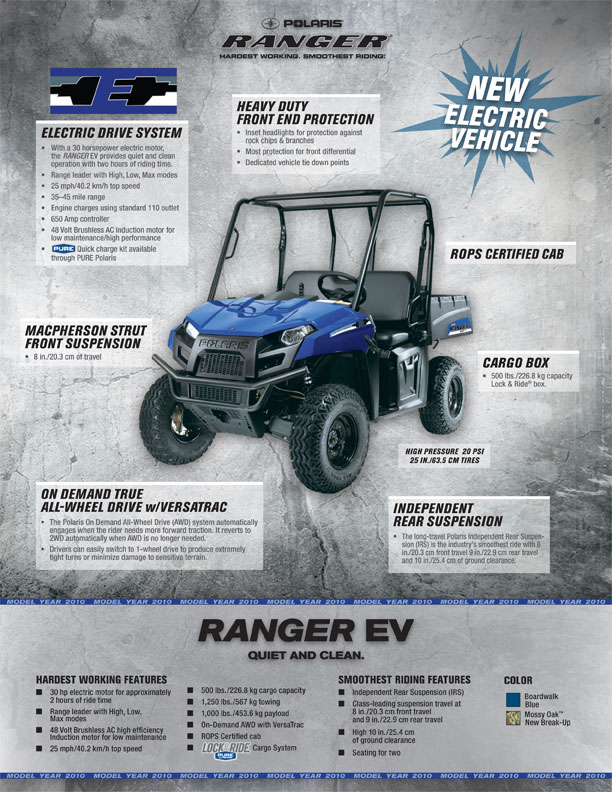
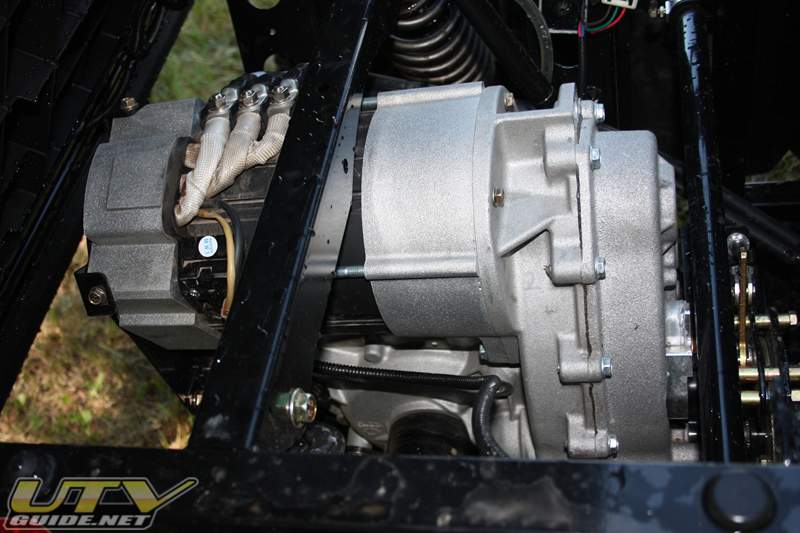
The 2010 RANGER EV was Polaris’ first production electric vehicle. It used a 48-volt AC induction motor producing a claimed 30 horsepower, paired with a 650-amp controller and regenerative braking.
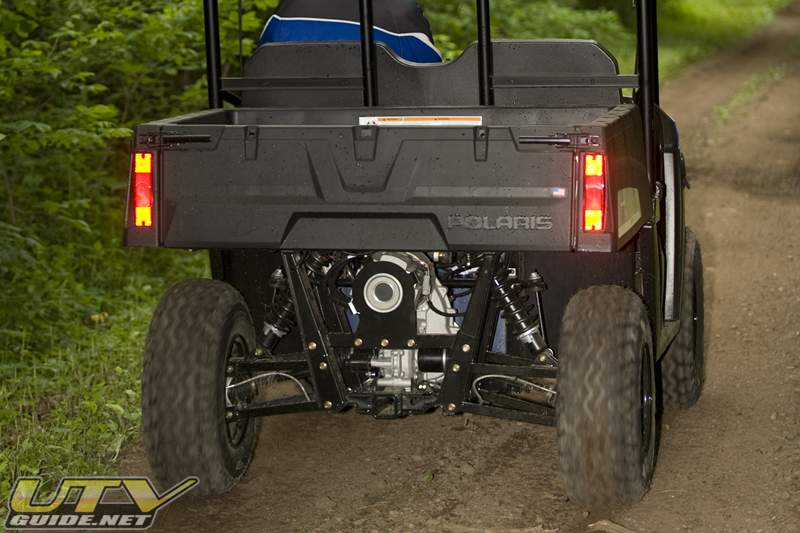
Unlike a gasoline-powered RANGER with a conventional continuously variable transmission, the electric motor drove the transaxle through a direct-drive system with low-noise gears. This helped make the vehicle especially attractive for hunting, property maintenance, livestock work and other jobs where engine noise could be disruptive.
The onboard charger could be connected to a standard 120-volt household outlet. Polaris listed a full charge time of approximately eight hours, depending on how deeply the batteries had been discharged.

2010 Polaris RANGER EV Range and Performance
Early Polaris information listed an expected operating range of approximately 35 to 45 miles and around two hours of driving between charges. More detailed specifications listed a maximum range of up to 50 miles when driven in Max Range mode on flat ground.
As with any electric vehicle, actual range depended on speed, terrain, temperature, cargo, towing load and driving conditions.
The RANGER EV included three selectable operating modes:
- High: Prioritized speed and general driving performance.
- Low: Intended for towing, hauling and controlled low-speed work.
- Max Range: Reduced performance demands to extend battery range.
Top speed was limited to approximately 25 mph.

Lead-Acid Battery Pack
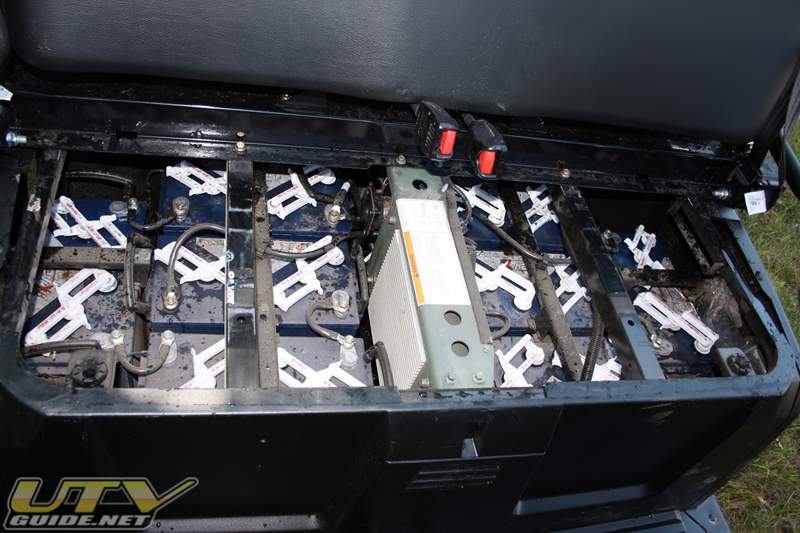
The original RANGER EV used eight 12-volt lead-acid batteries arranged to create a 48-volt electrical system. Polaris described the battery pack as one of the largest offered in a midsize electric utility vehicle at the time.
This was very different from the lithium-ion battery systems found in newer electric UTVs. The lead-acid pack added substantial weight, required longer charging times and provided less usable energy than a comparable modern lithium-ion system.
Even with those limitations, the RANGER EV demonstrated that an electric drivetrain could work in a practical off-road utility vehicle rather than being limited to golf carts or low-speed neighborhood vehicles.
On-Demand AWD and Turf Mode
The electric powertrain did not eliminate the familiar RANGER drivetrain features. The 2010 RANGER EV included Polaris On-Demand True All-Wheel Drive, allowing the front wheels to engage automatically when additional traction was needed.
Drivers could also select VersaTrac Turf Mode. This unlocked the rear differential so the inside rear tire could rotate independently during a turn, helping reduce lawn and ground damage while improving maneuverability in tight areas.
That combination allowed the RANGER EV to move between sensitive lawns, farms, hunting property and rougher off-road terrain without sacrificing four-wheel-drive capability.

Work Capability
Despite its compact two-seat chassis, the original electric RANGER retained useful hauling and towing ratings:
- 500-pound cargo-box capacity
- 1,000-pound total payload capacity
- 1,250-pound towing capacity
- Lock & Ride cargo system
- Two-inch receiver hitch
The midsize chassis measured approximately 56.5 inches wide and had a 72-inch wheelbase. Polaris promoted its compact dimensions as small enough to fit in the bed of some full-size pickup trucks.
Our Long-Term Experience With the RANGER EV
UTV Guide took delivery of a Polaris RANGER EV demo unit in April 2010 and continued using it around our Northern California property for well over a year. This gave us considerably more experience with the original electric RANGER than a typical press introduction or short test drive could provide.
Our first Polaris RANGER EV review covered the charging process, battery location, drive controls and the advantages of its unlockable Turf Mode rear differential. The charging cord was stored in the glove box and could be connected to a standard 120-volt outlet. We generally plugged the vehicle in every few days and found it ready to work the following morning.
Our Polaris RANGER EV long-term review became a running log of how the demo unit performed from 2010 through 2011. By June 2011, the vehicle had passed 100 operating hours without giving us any significant problems.
We used the RANGER EV for considerably more than light transportation. Jobs performed with the vehicle included:
- Hauling hay, straw, firewood, tools, concrete bags and fencing supplies
- Towing a rough-cut field mower through wet and muddy pasture
- Pulling a drag harrow while preparing ground for seeding
- Moving compost, wet clay, branches and other yard debris
- Dragging a dead tree to a burn pile
- Moving a chicken coop into position
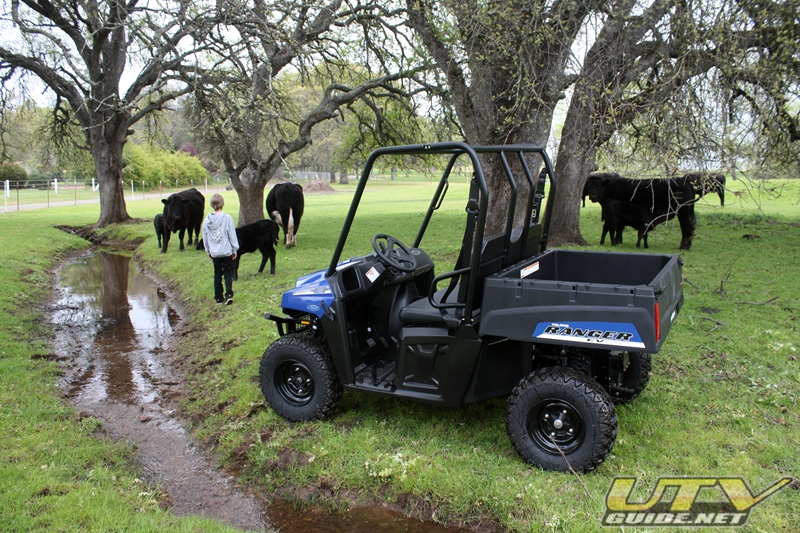
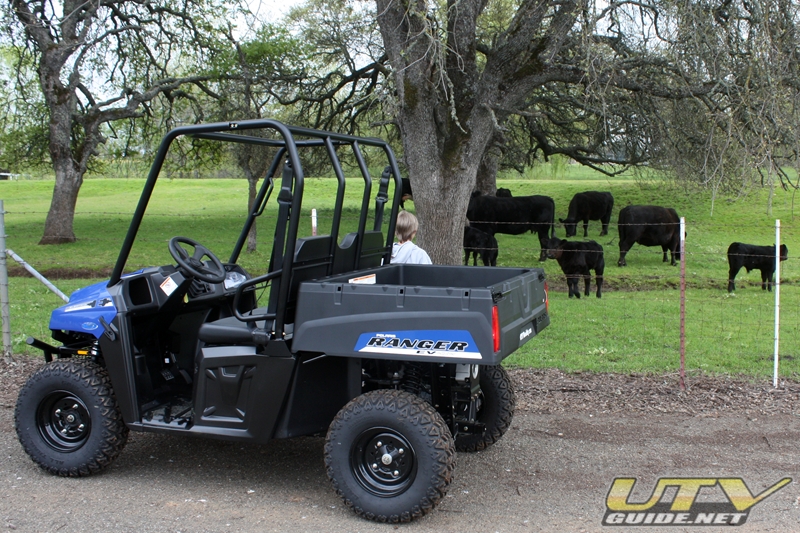
- Checking cattle and maintaining irrigation equipment
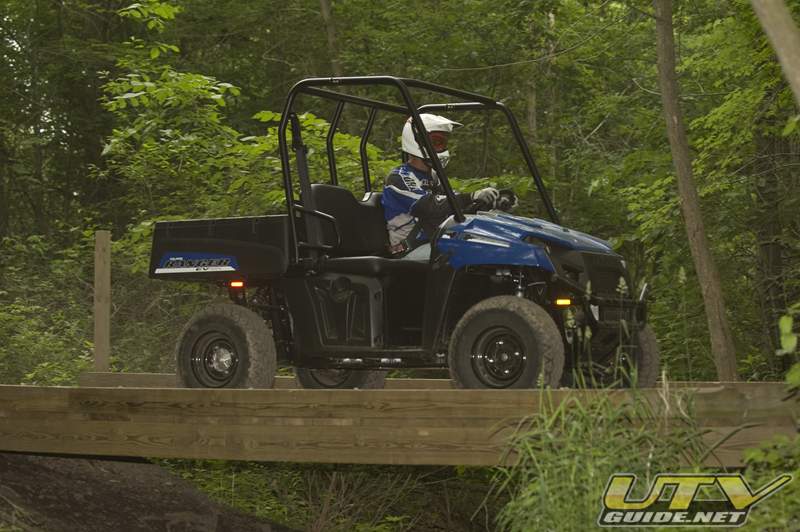
- Trail riding in the Plumas National Forest near Lake Almanor

The electric motor delivered enough low-speed torque that the RANGER EV rarely felt like a glorified golf cart. It pulled equipment, moved loaded trailers and worked through muddy areas using its On-Demand AWD system. Its relatively compact dimensions also allowed it to pass through gates and work in places where a larger utility UTV or pickup would have been cumbersome.
Quiet Operation Was a Real Advantage
The lack of engine noise proved valuable around livestock and horses. We could drive much closer to cattle without immediately disturbing them, and the RANGER EV worked particularly well at equestrian events where gasoline-powered vehicles could spook horses.
We brought the vehicle to multiple events at Leone Equestrians, where it transported saddles and other supplies between the barns and show rings. Its cargo box made it far more useful than the golf carts commonly used at the facility, while its quiet powertrain and tight turning radius helped it move through crowded aisles.
Turf Mode Helped Protect Wet Ground
Turf Mode was another feature we came to appreciate during long-term use. Unlocking the rear differential reduced scuffing while turning on lawns and helped prevent unnecessary damage to wet pasture. When the ground became muddy, the driver could switch back to locked two-wheel drive or On-Demand AWD.
This combination of low ground disturbance and genuine four-wheel-drive capability separated the RANGER EV from conventional electric carts. It could perform everyday work without tearing up the property, yet still had the traction needed to cross muddy areas.

Suspension and Chassis
The RANGER EV used MacPherson struts in front and a dual-A-arm independent rear suspension. Front-wheel travel measured eight inches, while the rear suspension provided nine inches of travel.
Additional chassis specifications included:
- 10 inches of ground clearance
- Four-wheel hydraulic disc brakes
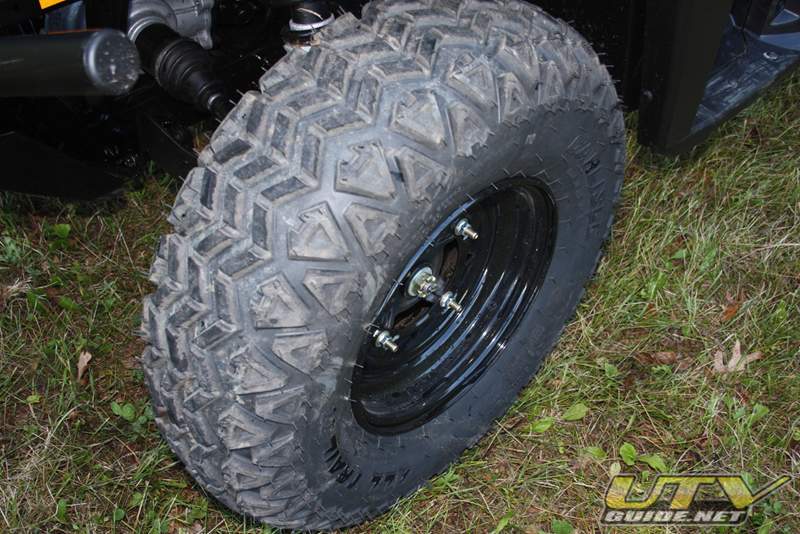
- 25-inch Carlisle All Trail II tires
- ROPS-certified cab structure
- Automotive-style three-point seat belts
- Approximately 1,700-pound dry weight

2010 Polaris RANGER EV Specifications
| Motor | Single 48-volt AC induction motor |
|---|---|
| Peak Power | 30 hp |
| Controller | 650-amp Sevcon Gen IV with regenerative braking |
| Battery System | Eight 12-volt lead-acid batteries |
| Top Speed | 25 mph |
| Estimated Range | Approximately 35–45 miles; up to 50 miles under ideal Max Range conditions |
| Charge Time | Approximately eight hours, depending on depth of discharge |
| Drive System | On-Demand AWD, 2WD and VersaTrac Turf Mode |
| Suspension Travel | 8 inches front / 9 inches rear |
| Ground Clearance | 10 inches |
| Cargo-Box Capacity | 500 pounds |
| Payload Capacity | 1,000 pounds |
| Towing Capacity | 1,250 pounds |
| Seating | Two |
| Original MSRP | $10,699 |
From the Original RANGER EV to the XP Kinetic
The specifications illustrate how much electric UTV technology has progressed. The original RANGER EV produced 30 horsepower, reached approximately 25 mph and relied on a heavy lead-acid battery pack.
The modern RANGER XP Kinetic moved Polaris into an entirely different performance class. The current electric RANGER produces 110 horsepower and 140 lb-ft of torque while offering up to 80 miles of estimated range in its dual-battery configuration. It can also tow 2,500 pounds and carry 1,250 pounds in its cargo box.
That makes the XP Kinetic a full-size, high-performance utility vehicle rather than simply a quiet alternative for light-duty work. However, its basic appeal remains remarkably similar to the original RANGER EV: quiet operation, immediate electric torque and reduced routine drivetrain maintenance.
For current model information, see our 2027 Polaris RANGER lineup guide.
Why the Original RANGER EV Matters
The 2010 RANGER EV did not transform the UTV market overnight. Its lead-acid battery system, limited speed and lengthy recharge time restricted the types of riding it could realistically handle.
Its importance is easier to recognize in hindsight. Polaris introduced a production electric utility side-by-side years before lithium-ion electric UTVs became a major industry development. It also identified the applications where electric power still makes the most sense: hunting, agriculture, property maintenance and work around animals or noise-sensitive areas.
The original RANGER EV was a limited machine compared with today’s XP Kinetic, but it represented an important first step in the development of practical electric UTVs.
Explore more Polaris UTV news, reviews and model history on UTV Guide.