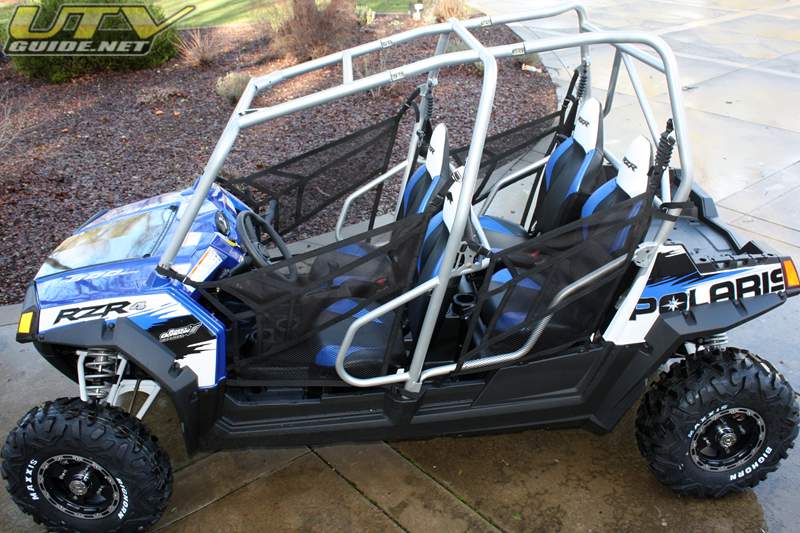
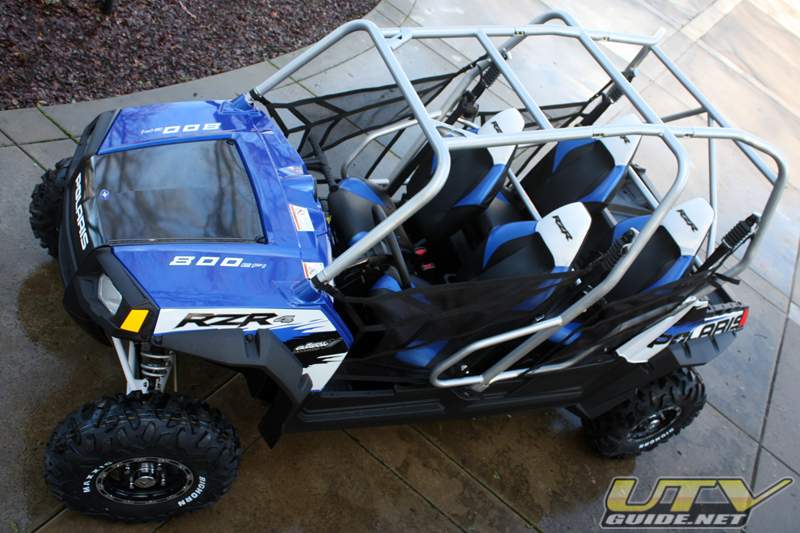
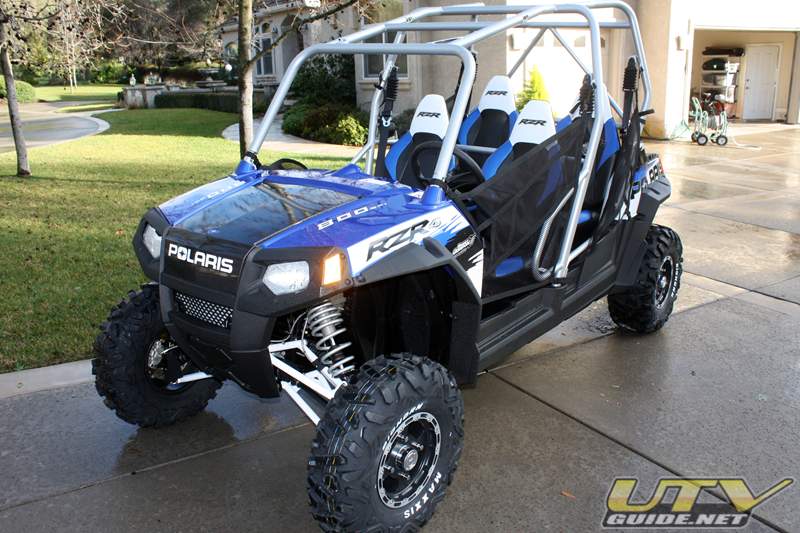
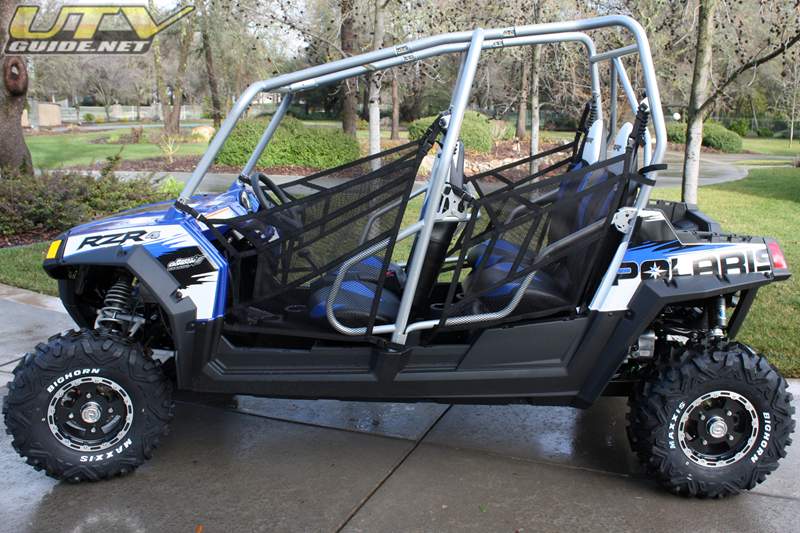
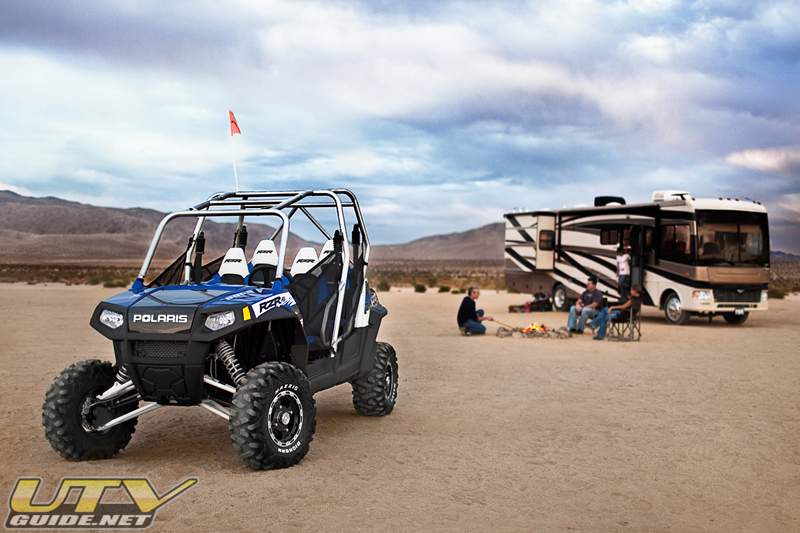
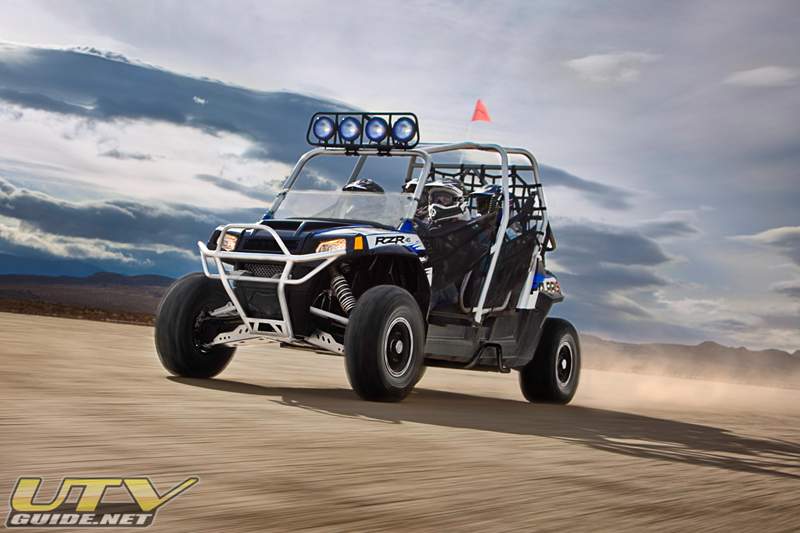
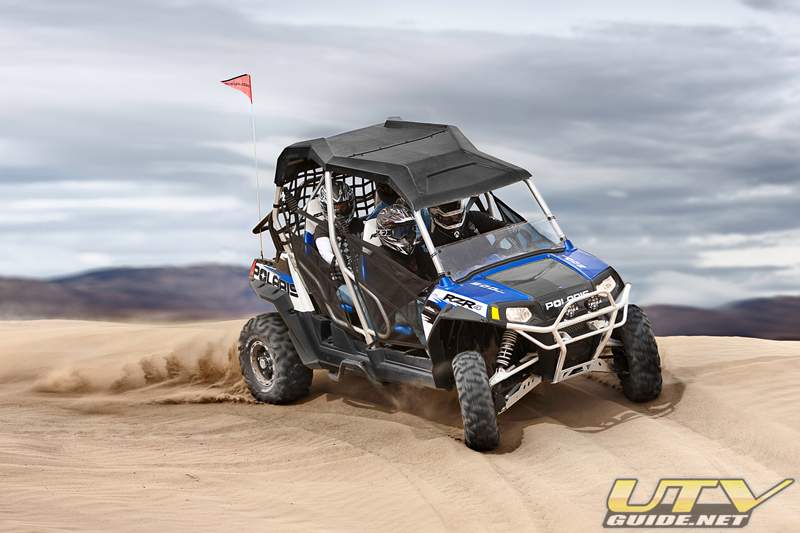
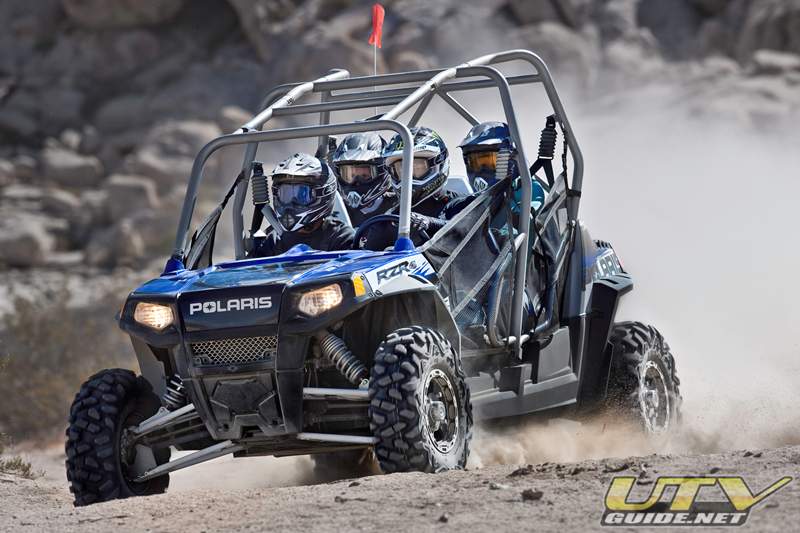
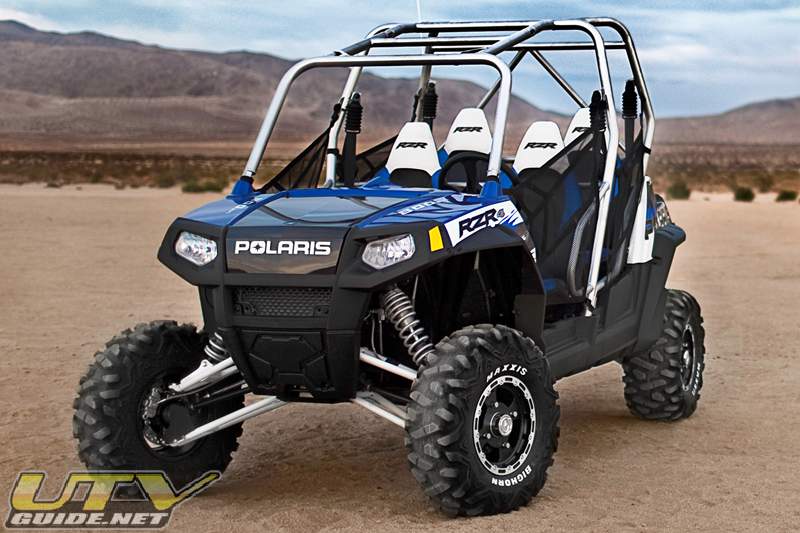
The 2010 Polaris RZR 4 800 proved that a four-seat side-by-side could deliver genuine sport performance while carrying the entire family. Developed with input from off-road racer Robby Gordon, it combined the familiar RZR 800 drivetrain with a stretched chassis, stadium-style seating and 12 inches of suspension travel.
We spent time driving the original RZR 4 Robby Gordon Edition at Prairie City SVRA and evaluating its passenger space, rear-seat access, suspension and handling. Although four-seat sport UTVs are common today, this was the machine that established the category.
This review focuses on our original driving and ownership impressions. For its complete history, model-year changes and specifications, see our 2010 Polaris RZR 4 800 model guide. You can also follow its place in the broader history of the Polaris RZR.
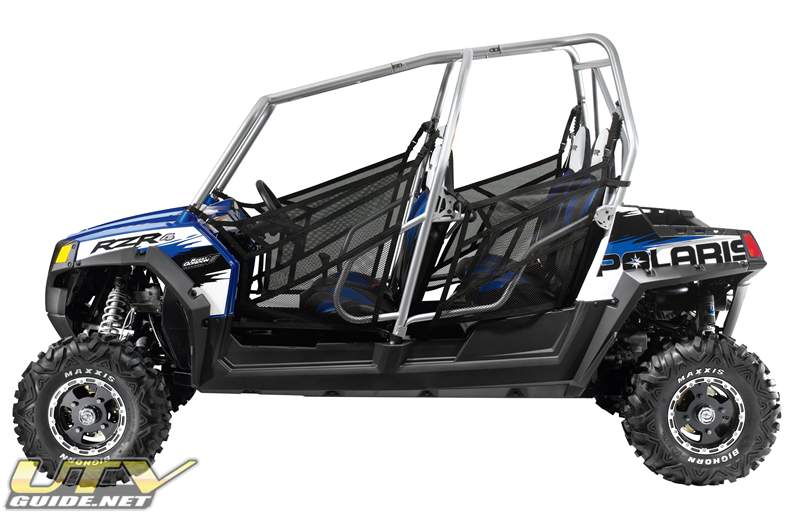
Four-Seat Sport Performance
Before the RZR 4 arrived, carrying four people in a recreational side-by-side generally meant buying a utility-focused crew model or adding an aftermarket rear seat and extended cage. Polaris instead designed a factory four-seat performance machine around the RZR platform.
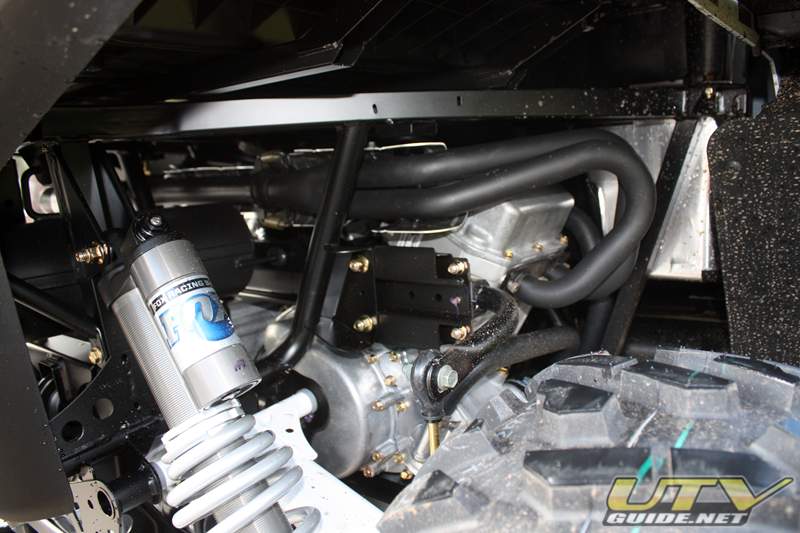
The RZR 4 retained the liquid-cooled, fuel-injected 760cc High Output twin-cylinder engine used in other RZR 800 models. The engine sat behind the rear passengers, allowing Polaris to retain a useful Lock & Ride cargo box.
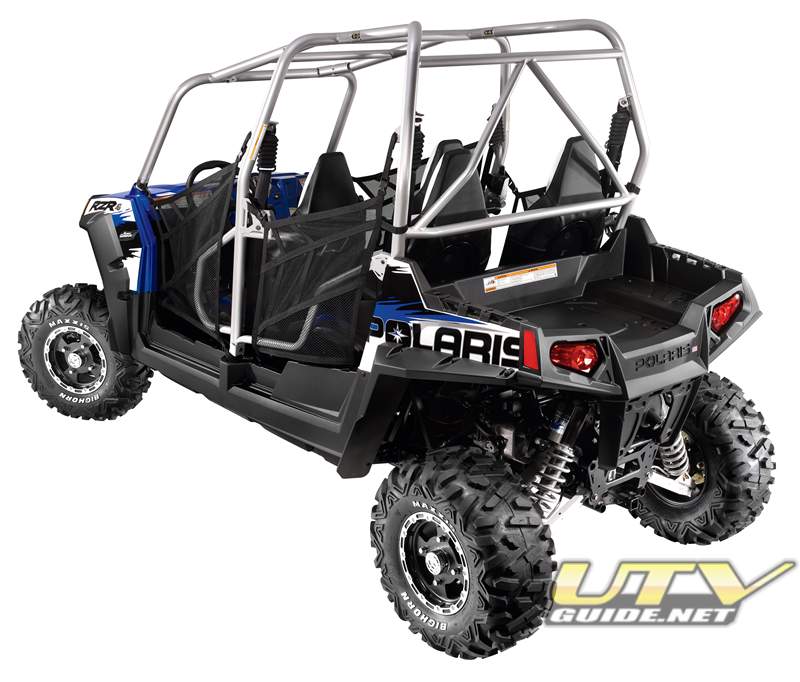
Polaris listed a top speed of approximately 61 mph, which we found impressive for a four-passenger UTV in 2010. More important than its outright speed was the way it retained the responsive, recreational character of the two-seat RZR.
RZR 4 Height and Trailer Fit
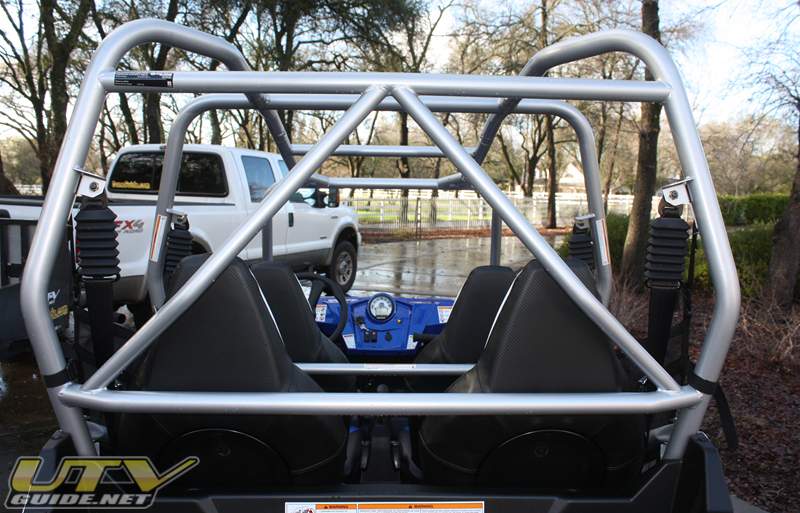
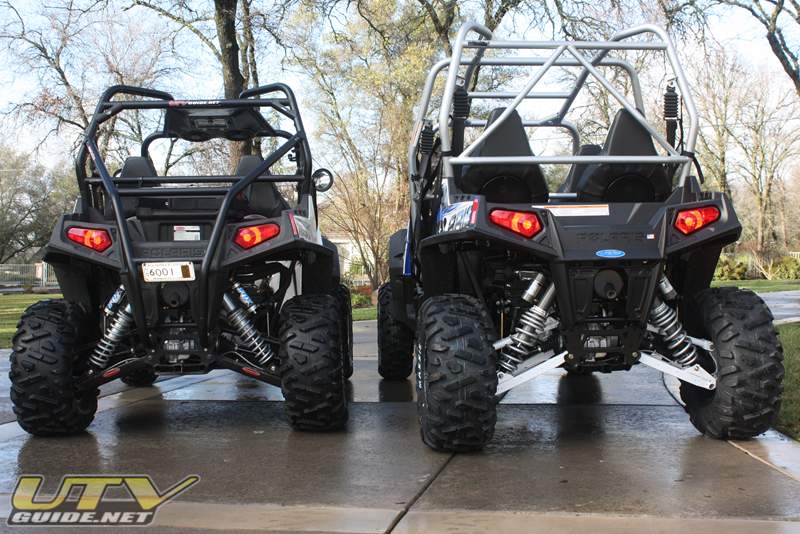
The longer RZR 4 was also taller than the contemporary RZR S. We measured our new machine at approximately 75 inches tall before its suspension springs had settled. That measurement is important for owners transporting one in an enclosed trailer.

Rear-Seat Room and Passenger Comfort
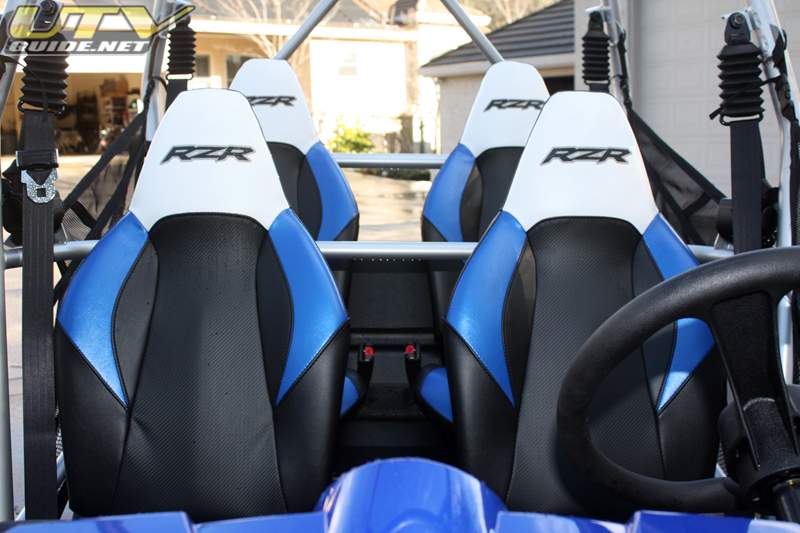
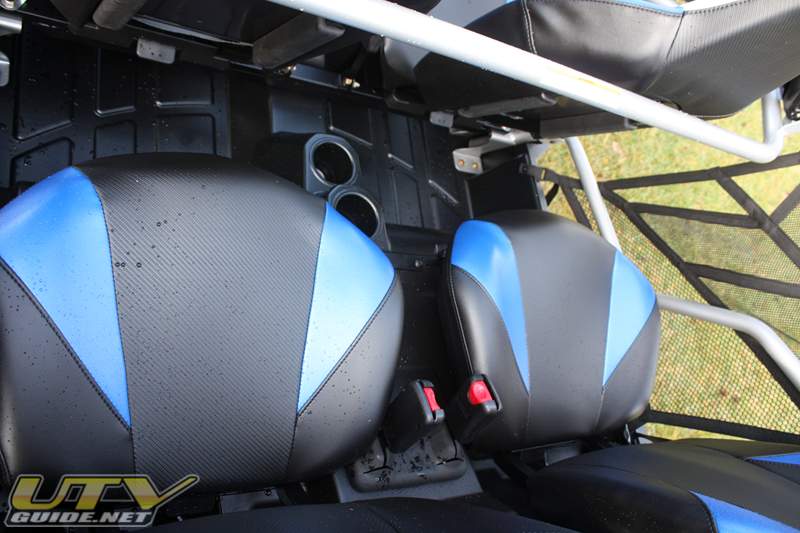
The stadium-style seating placed the rear occupants above the front passengers, improving their view of the trail. More importantly, the rear axle was positioned behind the second row instead of directly beneath it. That layout helped isolate rear passengers from the sharp impacts often experienced in converted four-seat UTVs.
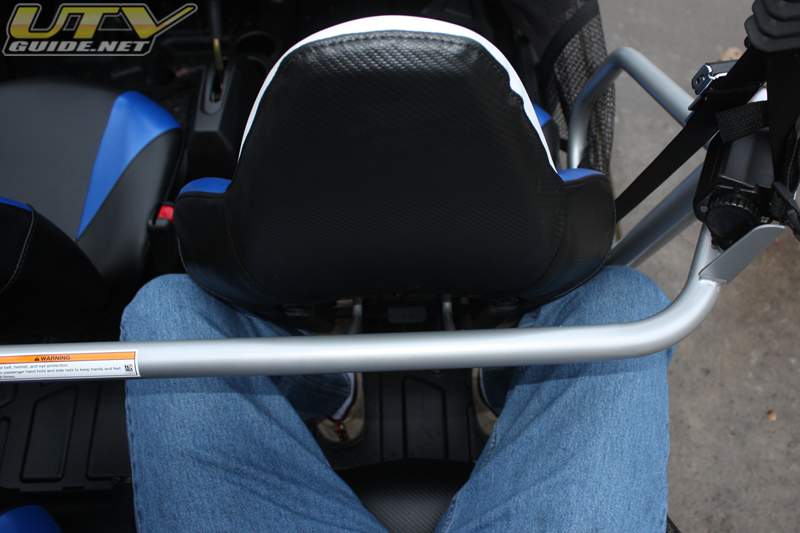
Rear legroom was reasonable considering the RZR 4’s relatively compact dimensions. We tested the second row with passengers measuring 6 feet 1 inch and 4 feet 8 inches tall. The taller passenger fit, although the rear compartment naturally felt more comfortable for children and smaller adults.
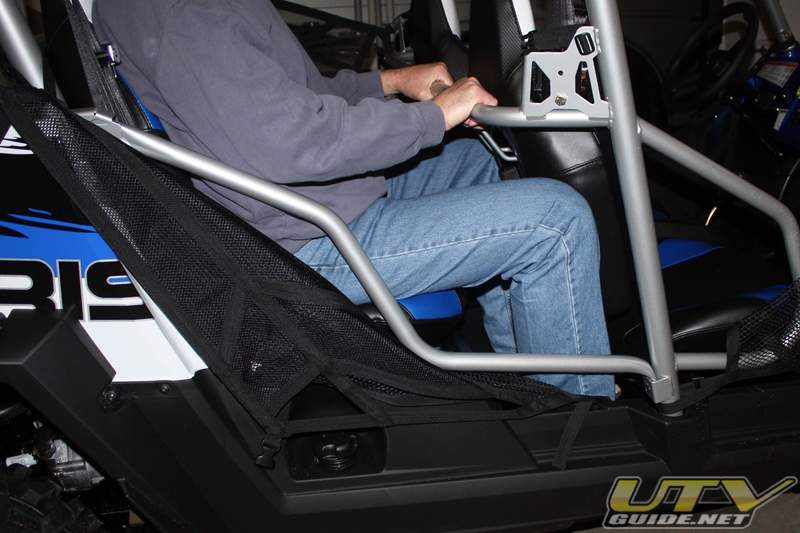

Getting Into the Rear Seats
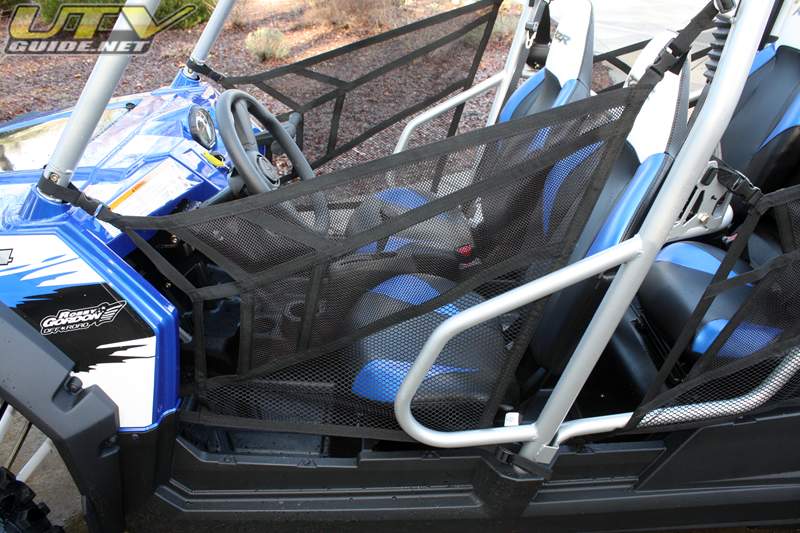
Rear-seat entry was more difficult than getting into the front because passengers had to step around the side structure and climb into the elevated second row. Polaris offered a rear step bar that made the process considerably easier. Based on our experience, it was a worthwhile accessory for anyone regularly carrying rear passengers.

Suspension and Rough-Terrain Performance
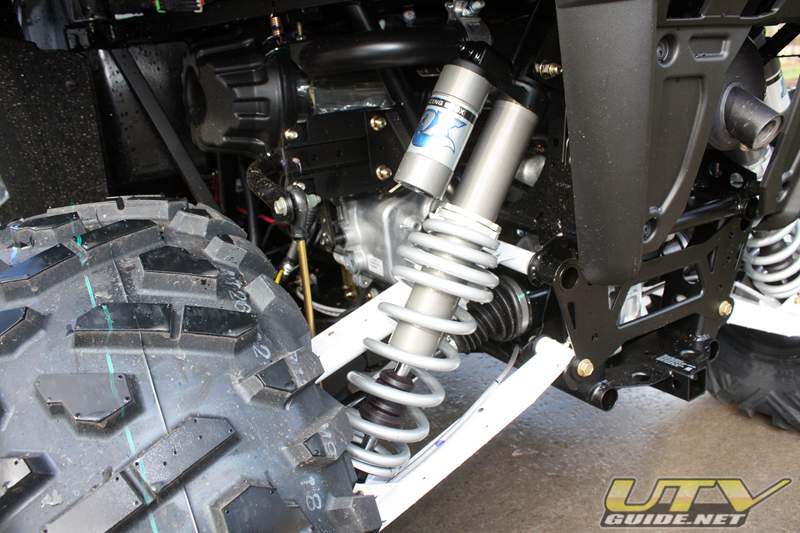
The RZR 4 used dual A-arm independent suspension with 12 inches of travel at both ends. FOX Podium X 2.0 piggyback-reservoir shocks provided adjustable compression damping, while a rear anti-sway bar helped control the longer chassis.
During our testing, the suspension handled small jumps and g-outs well. The longer 103-inch wheelbase also improved straight-line stability and helped smooth rough terrain. That stability was particularly valuable with passengers aboard.


Handling and Turning Radius
The longer wheelbase brought an unavoidable tradeoff: a much larger turning radius than the two-seat RZR or RZR S. Tight trails required more planning, and some corners that could be negotiated in one move with a two-seat RZR required a multi-point turn in the RZR 4.
On faster and more open terrain, however, that additional length worked in its favor. The chassis felt stable and predictable, while the 60.5-inch width kept the vehicle reasonably maneuverable for a four-seater.


2010 Polaris RZR 4 Review Verdict
The original RZR 4 was an excellent match for families that wanted to ride together without giving up the performance and suspension of a sport UTV. Its 800-class engine was not overwhelmingly powerful with four people aboard, but it delivered enough acceleration and speed for recreational trail riding.
The strongest parts of the package were its stable chassis, capable FOX suspension and thoughtful placement of the rear axle behind the second row. Rear-seat entry and the larger turning radius were the most obvious compromises.
Viewed from today’s perspective, its specifications appear modest. In 2010, however, the RZR 4 represented a major change in the UTV market. It established the basic formula still followed by modern four-seat sport machines.
Key Features
- Liquid-cooled 760cc High Output twin-cylinder engine
- Electronic fuel injection
- Automatic Polaris PVT transmission with high and low range
- On-Demand True AWD and 2WD
- 12 inches of front and rear suspension travel
- FOX Podium X 2.0 piggyback-reservoir shocks
- Rolled independent rear suspension with anti-sway bar
- 26-inch Maxxis Bighorn radial tires
- 12-inch cast-aluminum wheels
- Four individual bucket seats
- Stadium-style second-row seating
- Lock & Ride cargo box
- Claimed top speed of approximately 61 mph
2010 Polaris RZR 4 800 Specifications
| Engine | Liquid-cooled, four-stroke twin-cylinder |
|---|---|
| Displacement | 760cc High Output |
| Fuel system | Electronic fuel injection |
| Transmission | Automatic PVT with Park, Reverse, Neutral, Low and High |
| Drive system | On-Demand True AWD/2WD |
| Engine braking/ADC | Not equipped |
| Front suspension | Dual A-arm with FOX Podium X 2.0 reservoir shocks; 12 inches of travel |
| Rear suspension | Rolled dual A-arm IRS with anti-sway bar and FOX Podium X 2.0 reservoir shocks; 12 inches of travel |
| Brakes | Four-wheel hydraulic discs with dual-bore front calipers |
| Front tires | 26 x 9-12 Maxxis Bighorn |
| Rear tires | 26 x 12-12 Maxxis Bighorn |
| Wheels | 12-inch painted cast aluminum |
| Wheelbase | 103 inches |
| Dry weight | 1,255 pounds |
| Length | 130 inches |
| Width | 60.5 inches |
| Height | 75 inches |
| Ground clearance | 11.5 inches |
| Fuel capacity | 7.25 gallons |
| Cargo-box dimensions | 22 x 42 inches |
| Cargo-box capacity | 300 pounds |
| Towing capacity | 1,500 pounds |
| Receiver | 1.25 inches |
| Electronic power steering | Not equipped on the tested model |
| Instrumentation | Speedometer, odometer, tachometer, tripmeter, hour meter, gear indicator, fuel gauge, warning lights and two DC outlets |
| Colors | Boardwalk Blue, Pearl White and Black |
For more ownership experience after additional miles and terrain, see our 2010 Polaris RZR 4 long-term review. Our RZR 4 family trail build documents how we equipped this machine for continued use.
Additional Polaris RZR 4 Photos