| Polaris RZR XP 4 1000
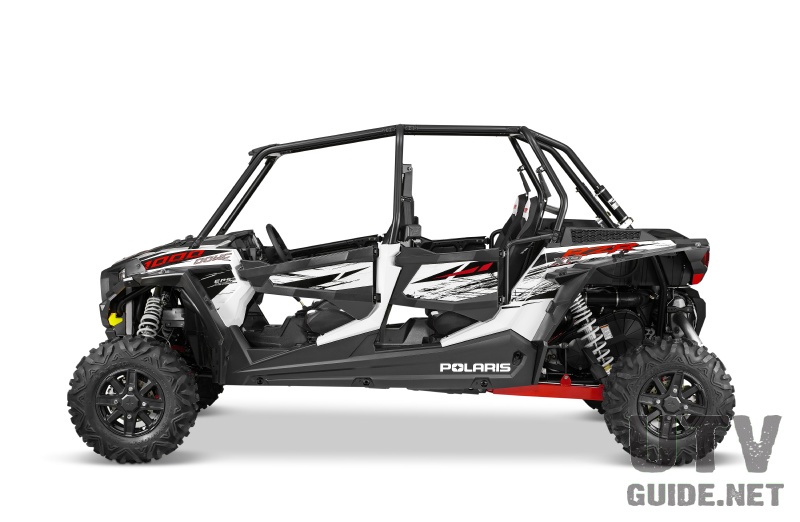
2014 Polaris RZR XP 4 1000
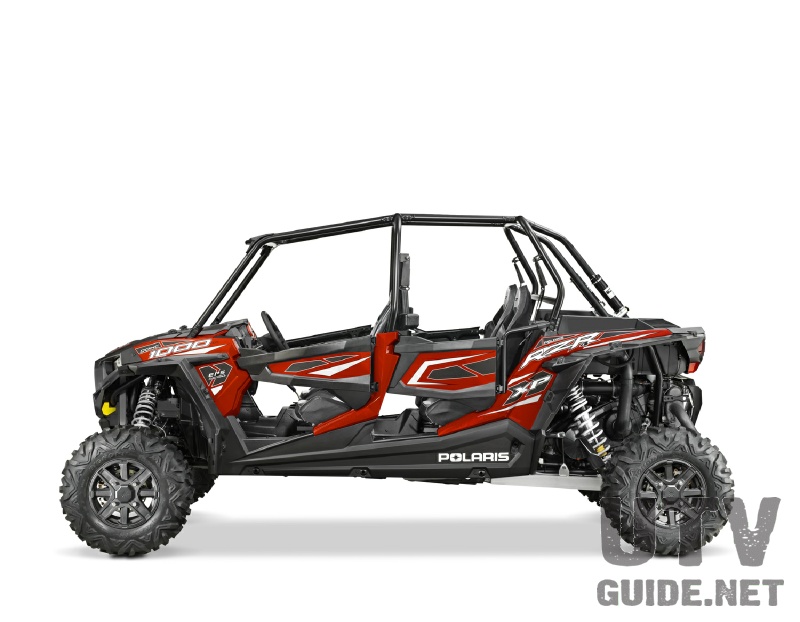 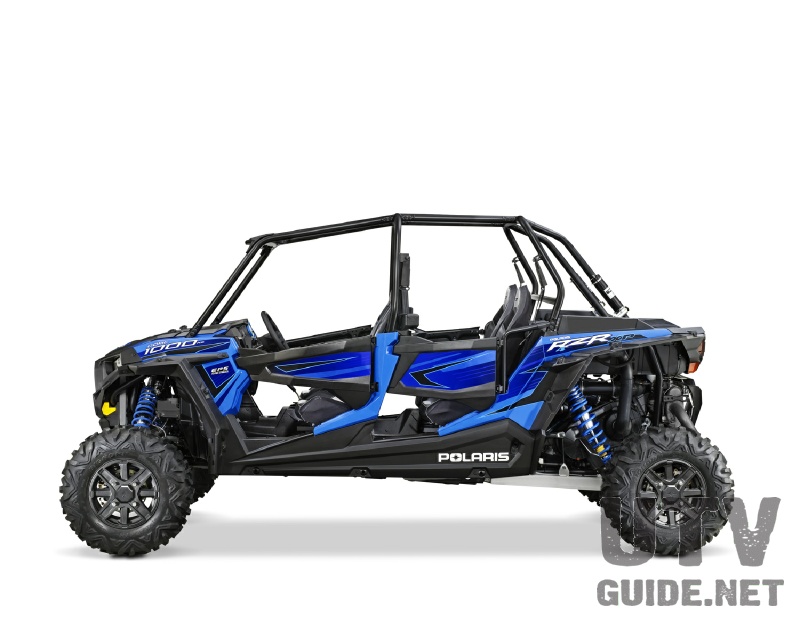
New for 2015 Polaris RZR XP 4 1000 – More Power and New Clutch
To achieve 110 horsepower, the 2015 RZR XP 1000 and XP 4 1000 feature a new calibration with high-output cams, stiffer valve springs and a higher compression ratio of 11:1. The upgraded horsepower further increases the RZR XP 1000 and XP 4 1000 dominance in power with nine-percent more power than anything else in their classes. A revised exhaust system, incorporating closed loop control and catalyst technology, enables the ProStar 1000 to not simply add power, but also be cleaner and more efficient. To handle the increased power, the 2015 RZR XP 1000 and XP 4 1000 feature new direct flow intake covers, new belt and a new clutch cover with more ducting providing two times more airflow directly to the clutches.
The RZR XP 4 1000 in Havasu Red Pearl and Voodoo Blue. All units feature standard Electronic Power Steering (EPS) and will be available in dealerships starting in July.
Minneapolis, October 15, 2013 Three months ago, Polaris introduced the RZR® XP 1000, which brought incredible innovations to each of the hallmark Power, Suspension and Agility aspects of RZR®, and added an entirely new level of interior comfort and accessory customization. In true Polaris fashion of aggressively bringing vehicles to market that suit the needs of all off-road enthusiasts, the company is introducing the all-new RZR® XP 4 1000, which offers the ultimate RZR experience for four.
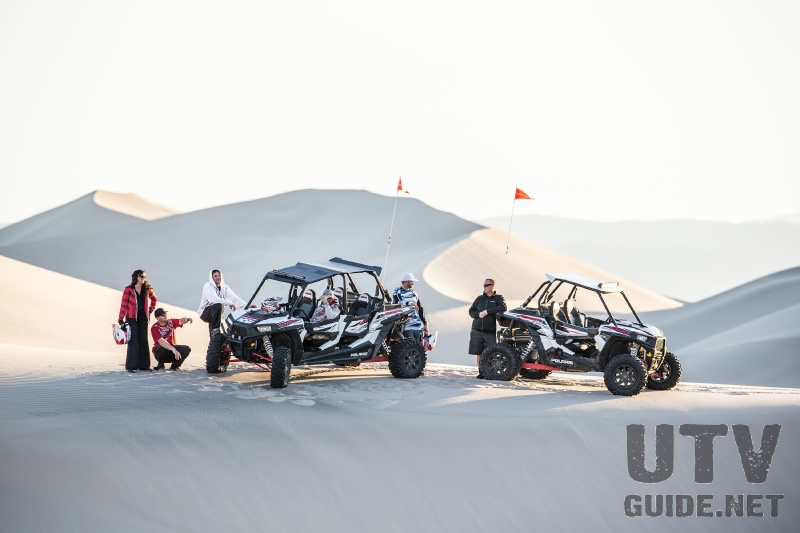 RZR has defined the recreational side-by-side market, outselling the competition five to one, and owning a RZR has become a lifestyle allowing for social adventure, said Craig Scanlon, general manager for the Off-Road Vehicle Division at Polaris. Our four-seat RZRs provide off-road enthusiasts the ability to share that lifestyle with more of their family and friends, and the new RZR XP 4 1000 is the ultimate in outdoor adventure for four. RZR has defined the recreational side-by-side market, outselling the competition five to one, and owning a RZR has become a lifestyle allowing for social adventure, said Craig Scanlon, general manager for the Off-Road Vehicle Division at Polaris. Our four-seat RZRs provide off-road enthusiasts the ability to share that lifestyle with more of their family and friends, and the new RZR XP 4 1000 is the ultimate in outdoor adventure for four.
Four Seats
The RZR XP 4 1000 is the ultimate multi-passenger side-by-side, with all the same attributes as the RZR XP 1000: 107 horsepower ProStar engine with a true 999 ccs of displacement, 3-Link Trailing Arm Independent Rear Suspension (IRS) with exclusive Walker Evans position-sensitive, anti-bottoming needle shocks, the first-OEM offered 29 in/73.7 cm Maxxis Bighorn tires, high-strength tubular chassis and a high-performance on demand all-wheel drive system; with the addition of the most advanced suspension for performance driving and family cruising, and additional cabin comforts to not only accommodate two more passengers, but also provide the smoothest, most-enjoyable ride on a high-performance side-by-side.
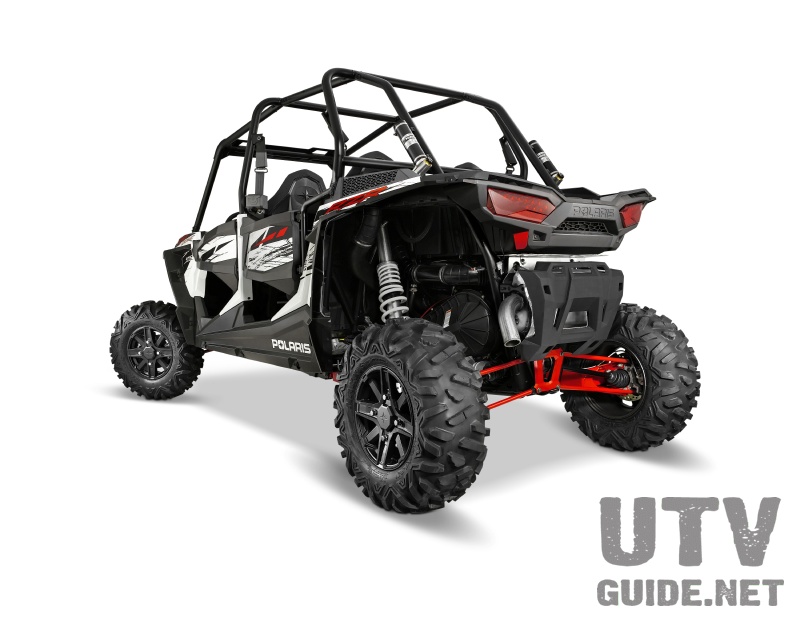 107 Horsepower 107 Horsepower
The ultimate combination of power, suspension and agility starts with power. At the heart of the RZR XP 4 1000 is the 107 horsepower ProStar Twin EFI engine that was built specifically for an extreme-performance side-by-side and first found in the RZR XP 1000. The engine features Dual OverHead Cams (DOHC), four big valves per cylinder and dual throttle bodies for immediate response making the RZR XP 4 1000 the fastest accelerating four-seater on the market. The engine also provides unmatched torque across the RPM range for ample power to carry four people under any riding conditions.
Walker Evans Shocks
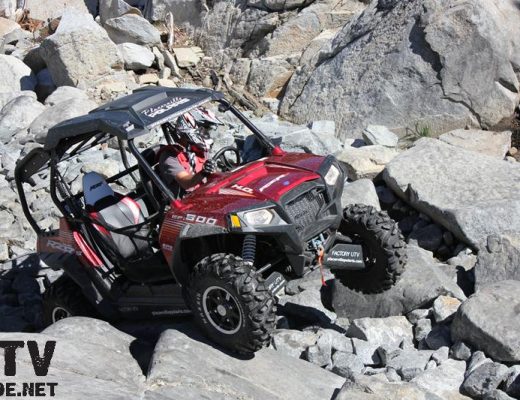
In order to handle the massive power of the engine and keep the ride smooth, the RZR XP 4 1000 features the most advanced suspension for performance driving and family cruising. The RZR XP 4 1000 has industry-exclusive Walker Evans Position Sensitive Anti-Bottoming Needle Shocks on all four corners with stronger rear shocks and retuned valving at all four corners to ensure a smooth ride for front and rear passengers. To perfectly match the ride to the terrain and number of passenger, the shocks have piggyback reservoirs up front and remote reservoirs in the rear that are 16-position compression adjustable with preload adjustability. They are paired on all four corners with dual rate/dual spring coil-overs for 18 in/45.7 cm of rear travel and 16 in/40.6 cm of front travel, and industry-exclusive 29 in/73.7 cm Maxxis Bighorn tires which provide more air volume for a smoother ride and fewer pinch flats. With a longer wheelbase and 13.5 in/34.3 cm ground clearance, the RZR XP 4 1000 provides the most control and smoothest ride for all passengers.
Tube Chassis
For RZR sharp agility, the RZR XP 4 1000 has a new tubular chassis that reduces flex to keep the tires planted for precise cornering and an ultra-responsive feel. Paired with a lower cab frame, as compared to the RZR 4 900, and a flat second row of seating, which pushes the center of gravity low into the chassis, the RZR XP 4 1000 provides an incredibly nimble and responsive feel. For a more confidence-inspired ride, the vehicle is equipped with a new, high performance All-Wheel Drive (AWD) system that seamlessly engages both front wheels with full torque to keep the front wheels pulling stronger and longer, maximizing power delivery to the ground in every condition. The RZR XP 4 1000 also comes equipped with Electronic Power Steering (EPS) to reduce steering effort and provide all-day comfort while riding.
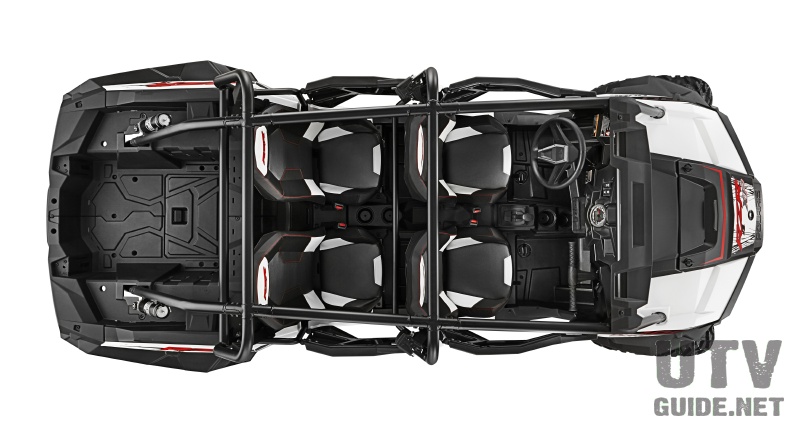 Inside the cabin, the RZR XP 4 1000 features several upgrades for the most comfort and convenience of any RZR. Up front, both the driver and front passenger will appreciate the seat sliders for tool-less, on-the-fly seat adjustment and space-optimized footrests for a more secure feel. The driver will appreciate a high-performance steering wheel with 10 in/25.4 cm of tilt adjustability. To stay connected, the RZR XP 4 1000 also features sealed smartphone storage that provides visibility of the display while protecting it from the elements. The rear passengers will enjoy a roomier rear cabin due to deeper footwells with angled footrests and sculpted front seats that provide more legroom. The rear seats also are equipped with cup holders and a 12-volt outlet for added convenience. All passengers will appreciate the newly-designed seats that offer substantially improved bolstering and more hip cushioning for a more secure feel, and a new film technology under the cover for a drier ride in wet conditions. Both the front and rear row have the slick blue LED floor lighting and floor cleanouts. Inside the cabin, the RZR XP 4 1000 features several upgrades for the most comfort and convenience of any RZR. Up front, both the driver and front passenger will appreciate the seat sliders for tool-less, on-the-fly seat adjustment and space-optimized footrests for a more secure feel. The driver will appreciate a high-performance steering wheel with 10 in/25.4 cm of tilt adjustability. To stay connected, the RZR XP 4 1000 also features sealed smartphone storage that provides visibility of the display while protecting it from the elements. The rear passengers will enjoy a roomier rear cabin due to deeper footwells with angled footrests and sculpted front seats that provide more legroom. The rear seats also are equipped with cup holders and a 12-volt outlet for added convenience. All passengers will appreciate the newly-designed seats that offer substantially improved bolstering and more hip cushioning for a more secure feel, and a new film technology under the cover for a drier ride in wet conditions. Both the front and rear row have the slick blue LED floor lighting and floor cleanouts.
RZR XP 4 1000 features larger openings and a lower step-in height, for both front and rear passengers, for easier ingress and egress. The factory-installed quarter doors were designed for more elbow room and are equipped with a high-strength, easy-access latch for one hand operation and automotive-quality latching.
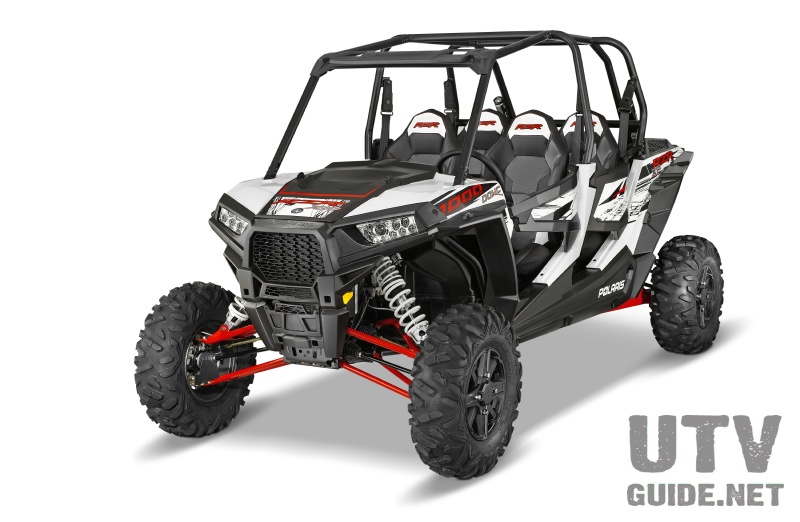 XP 4 1000 Accessories XP 4 1000 Accessories
RZR enthusiasts love to accessorize their vehicles and the RZR XP 4 1000 was exclusively engineered for Polaris accessories. With integrated mounting points situated along the vehicle frame and pass-through areas for routing wires, accessories can be attached with minimal installation time. Additions, such as rock sliders and bumpers, easily attach and fit securely to the vehicles frame due to Polaris innovative Lock & Ride® Expanding Anchor; a revolutionary piece of hardware that expands as it is inserted into a mounting point. Lock & Ride® windshields, rear panels, roofs and doors work seamlessly with each other and install directly onto the vehicle frames designated mounting points, making installation simple, and providing superior fit and finish.
The RZR XP 4 1000 will be offered in White Lightning and Titanium Matte Metallic, and will be available at Polaris dealerships in November. More information about Polaris whole line of Off-Road Vehicle offerings and Polaris Engineered Accessories can be found online atwww.Polaris.com.
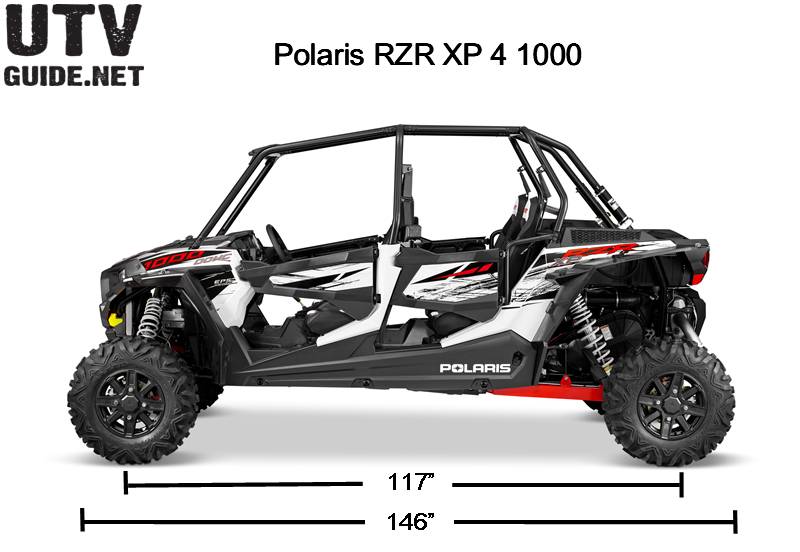
The XP 4 1000 is 12 inches longer than the XP 4 900 and the wheelbase is 10 inches longer.
Polaris RZR XP 4 1000 Video:
Polaris RZR XP 4 1000 Specifications:
| Engine Type |
4-Stroke DOHC Twin Cylinder |
| Displacement |
999 cc |
| Fuel System |
Electronic Fuel Injection |
| Cooling |
Liquid |
| Transmission/Final Drive |
Automatic PVT P/R/N/L/H; Shaft |
| Drive System |
On-Demand True AWD/2WD |
Engine Braking System/
Active Decent Control |
Not Equipped |
| Front Suspension |
Dual A-Arm Walker Evans 2″ Needle Shocks (comp adjust/res.) 16″ (40.6 cm) Travel |
| Rear Suspension |
Trailing Arm Walker Evans 2.5″ Needle Shocks (comp adjust/remote res.) 18″ (45.7 cm) Travel |
| Front/Rear Brakes |
4-Wheel Hydraulic Disc with Dual-Bore Front and Rear Calipers |
| Parking Brake |
Park in Transmission |
| Front Tires |
29 x 9-14; Maxxis Bighorn |
| Rear Tires |
29 x 11-14; Maxxis Bighorn |
| Wheels |
Cast Aluminum |
| Wheelbase |
117.0″ (297.2 cm) |
| Estimated Dry Weight |
1,596 lbs (723.9 kg) |
| Overall Vehicle Size |
146″ x 64″ x 73.75″ (370.8 x 162.6 x 187.3 cm) |
| Ground Clearance |
13.5″ (34.3 cm) |
| Fuel Capacity |
9.5 gal (36 L) |
Bed Box Dimension
|
28 x 41 x 2.8″(72.0 x 104.0 x 7.0 cm) |
| Payload Capacity |
900 lb (408.2 kg) |
| Cargo System |
Lock & Ride, 2 Weather Sealed Storage Boxes |
| Lighting |
White LED, High/Low & Red LED Tail / Brake Lights |
| Electronic Power Steering |
Standard |
| Instrumentation |
Digital Gauge: Speedometer, Odometer, Tripmeter, Tachometer, Coolant Temperature, Volt Meter, Hour
Meter, Service Indicator, Clock, Gear Indicator, Fuel Gauge, Hi-Temp Light, Seatbelt Reminder Light; DC Outlet |
| Colors |
Titanium Matte Metallic, White Lightning |
More Resources:
Aftermarket Accessories:
Manufacturer Info:
Polaris is a recognized leader in the powersports industry with annual 2012 sales of $3.2 billion. Polaris designs, engineers, manufactures and markets innovative, high quality off-road vehicles, including all-terrain vehicles (ATVs) and the Polaris RANGER® and RZR® side-by-side vehicles, snowmobiles, motorcycles and small vehicles.
Polaris is among the global sales leaders for both snowmobiles and off-road vehicles and has established a presence in the heavyweight cruiser and touring motorcycle market with the Victory and Indian motorcycle brands. Additionally, Polaris continues to invest in the global on-road small vehicle industry with Global Electric Motorcars (GEM), Goupil Industrie SA, Aixam Mega S.A.S., and internally developed vehicles. Polaris enhances the riding experience with a complete line of Polaris and KLIM branded apparel and Polaris accessories and parts.
Polaris Industries Inc. trades on the New York Stock Exchange under the symbol PII, and the Company is included in the S&P Mid-Cap 400 stock price index.
Information about the complete line of Polaris products, apparel and vehicle accessories are available from authorized Polaris dealers or anytime at www.polaris.com |


No Comments