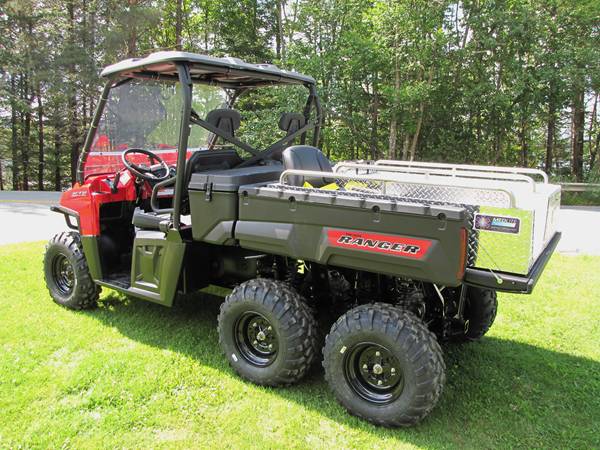
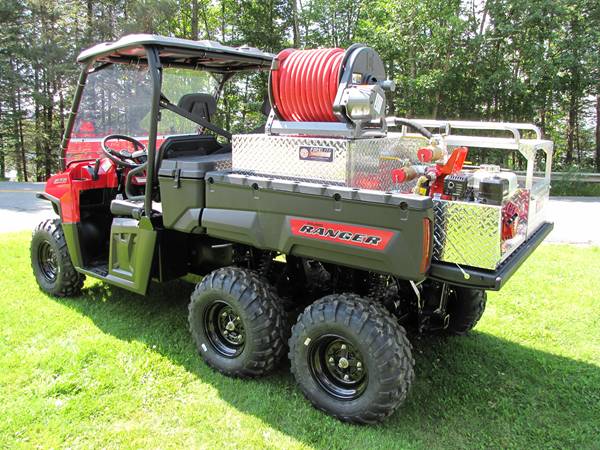
2010 Polaris RANGER 6×6 Fire and EMS UTV Conversion

2010 Polaris RANGER 6x6

The redesigned 2010 Polaris RANGER 800 6×6 provided a high-capacity platform for specialized fire, rescue and emergency medical equipment. KIMTEK Corporation adapted the six-wheel utility vehicle with its FIRELITE and MEDLITE Transport skid units, creating a compact emergency-response vehicle capable of traveling beyond the reach of conventional fire engines and ambulances.

Why the RANGER 6×6 Worked as an Emergency Vehicle

The 2010 Polaris RANGER 800 6×6 combined true six-wheel drive with substantial load capacity and independent suspension at all six wheels. Those qualities made it well suited to carrying water, pumps, medical supplies and patient-transport equipment across rough terrain.

The redesigned model had a rated 2,000-pound payload capacity, including a 1,250-pound rear cargo box and a separate 250-pound job box positioned between the cab and cargo bed. That additional storage area gave emergency personnel a protected place for tools and supplies while leaving the main bed available for a skid unit.

Its compact footprint also allowed the RANGER to operate on narrow trails, in wooded areas, around large public events and in other places where full-size emergency apparatus could not easily travel. A fire or EMS UTV does not replace an ambulance, brush truck or structural fire engine, but it can help responders reach a patient or begin addressing a remote fire more quickly.

“We are thrilled with the upgrades to the 2010 Polaris RANGER 6×6. Our MEDLITE EMS and FIRELITE skid units work great on the 6×6 platform with its high load capacity, and the new storage space is a big plus for firefighters and emergency personnel.”

Kimball Johnson, president of KIMTEK Corporation, in 2009

KIMTEK FIRELITE Fire and Rescue Skid

The KIMTEK FIRELITE Transport converted the RANGER’s cargo area into a compact wildland firefighting and rescue platform. The slip-on unit was designed to combine several functions within the limited space available on a UTV.

Depending on its configuration, the FIRELITE system could:

  • Carry water for fire suppression
  • Pump water through a hose and reel
  • Carry firefighting tools and equipment
  • Support a rescue Stokes basket or long backboard
  • Store hose line and related equipment
  • Accept an optional foam system with certain pump packages

KIMTEK offered systems using established firefighting components from companies including Darley-Davey, Hannay Reels, Pacer Pumps and Scotty Firefighter. The company designed its skid systems to fit multiple full-size 4×4 and 6×6 UTV platforms rather than limiting them to a single vehicle.

2010 Polaris RANGER 6x6 equipped with a KIMTEK MEDLITE patient transport skid
The KIMTEK MEDLITE Transport turned the RANGER 6×6 into a compact off-road EMS and patient-transport vehicle.

KIMTEK MEDLITE EMS Transport

The MEDLITE Transport was developed to carry one patient, an EMS attendant and emergency medical equipment. A long backboard could be secured to the unit with ten hook-and-loop D-ring straps.

The attendant rode next to the patient on a belted seat that moved along guide rails. The seat could be locked in three positions, allowing responders to adjust their working location according to the patient and the needs of the call.

Under the patient platform, the MEDLITE provided nine cubic feet of enclosed storage for medical bags, trauma supplies and an oxygen cylinder. A retractable IV pole was also included.

Keeping an attendant beside the patient was an important part of the design. Instead of simply placing a litter in a cargo box, the MEDLITE gave emergency personnel a purpose-built area for monitoring and treating the patient during low-speed transport out of a remote location.

An Early Example of the Fire and Rescue UTV

This 2009 conversion is significant because it shows how quickly public-safety agencies and equipment manufacturers recognized the potential of utility side-by-sides. The original Polaris RANGER began as a six-wheel work vehicle, and its cargo capacity, traction and relatively compact dimensions made emergency response a natural extension of that utility-focused design.

Polaris RANGER fire and rescue vehicles have advanced substantially since this early conversion. Modern packages are available on platforms such as the RANGER XP 1000, RANGER XP Kinetic and heavy-duty RANGER XD 1500. They may combine fire suppression equipment, water tanks, rescue litter platforms, enclosed cabs and other specialized equipment in turnkey configurations.

For a look at those newer systems, see our guide to modern Polaris RANGER fire and rescue UTV packages. The basic mission, however, remains the same: use a compact off-road vehicle to carry responders, patients and critical equipment through terrain that may be inaccessible to conventional emergency vehicles.

KIMTEK continues to produce FIRELITE, MEDLITE and other public-safety skid systems for current UTV platforms. Departments considering a conversion should confirm the complete operating weight—including the skid, water, equipment, occupants and patient—against the payload rating of the specific vehicle. Current compatibility information is available through the KIMTEK Polaris fit guide.

To see how the vehicle underneath this conversion fit into the broader evolution of utility side-by-sides, read the History of the Polaris RANGER.

Explore more: Follow our complete Polaris UTV coverage for RANGER model guides, historical articles, reviews, technical information and new-vehicle announcements.