
 |
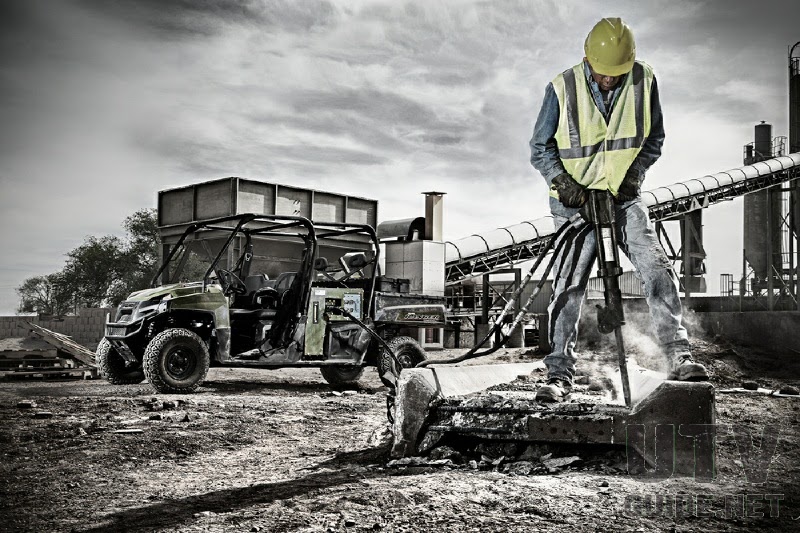
| Polaris RANGER CREW Diesel with Fully integrated HIPPO Multipower System |
Fully integrated HIPPO™ Multipower™ System provides mobile power
MINNEAPOLIS (June 30, 2014) — Polaris Industries Inc. (NYSE: PII), has engineered a Polaris® RANGER CREW® Diesel side-by-side utility vehicle with an integrated multi-power system, a first for vehicles in this category. A flip of a switch allows operators to power hydraulic, pneumatic, electric and welding equipment directly from the vehicle’s diesel engine through the integrated HIPPO™ Multipower™ System from the Mobile Hydraulic Equipment Company.
The Polaris RANGER with HIPPO MPS represents a continued expansion into non-traditional markets for Polaris to serve its increasing base of work customers. Operators in the rail, municipal, construction, oil and gas, rental, utilities and mining industries as well as the military already consider the proven HIPPO MPS indispensable and this all-in-one solution increases their flexibility and mobility even more. This is the first time a Polaris vehicle’s engine has been engineered to power a robust multi-power system like the HIPPO.
 |
| Polaris RANGER CREW Diesel with HIPPO MPS |
A properly maintained vehicle will simply need to be fueled up and it is ready to go since all the equipment is powered from the RANGER’s 24 horsepower diesel engine. This feature greatly reduces the maintenance time associated with four separate systems. The integrated HIPPO 1041CP Multipower System has one hydraulic tool circuit, two quick disconnect pneumatic fittings, two 120 volt electric outlets at 20 amps and one welding console with quick disconnects.
The RANGER is the perfect vehicle to partner with the HIPPO MPS. Features such as seating for three, On-Demand True All-wheel drive to tackle tough terrain, 500 pound cargo box capacity and one ton of towing capacity, ensure a highly-capable vehicle able to tackle the toughest of tasks.
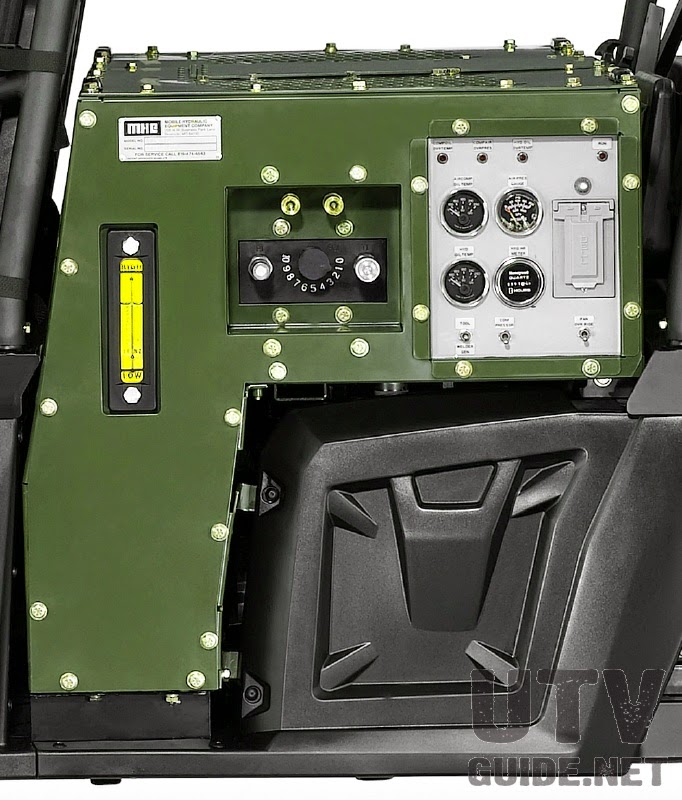 |
| Integrated HIPPO 1041CP system, driven by the RANGER® Diesel engine |
The RANGER with HIPPO MPS is currently available for sale through authorized dealers, Polaris Fleet Sales and defense channels. For more information or to get a quote visit POLARIS.COM/HIPPO.
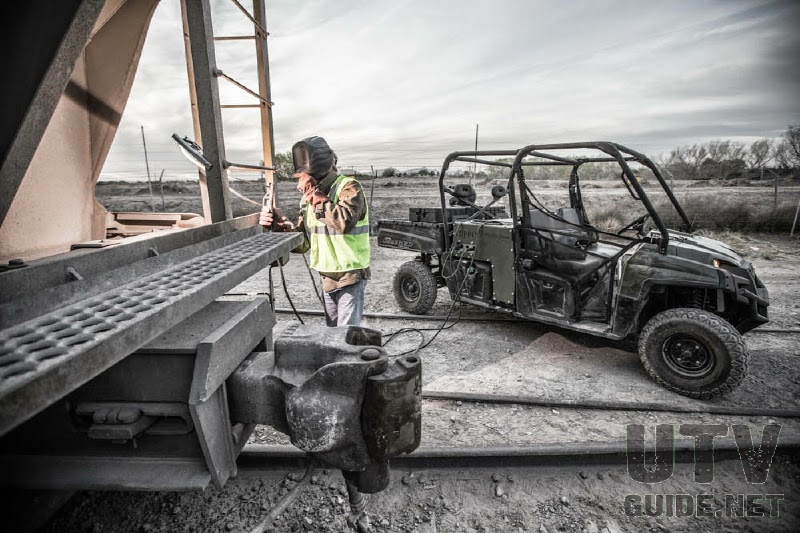 |
| Power Welding, Electric, Hydraulic, and Pneumatic Equipment |
About Polaris
Polaris is a recognized leader in the powersports industry with annual 2013 sales of $3.8 billion. Polaris designs, engineers, manufactures and markets innovative, high quality off-road vehicles, including all-terrain vehicles (ATVs) and the Polaris RANGER® and RZR® side-by-side vehicles, snowmobiles, motorcycles and on-road electric/hybrid powered vehicles.
Polaris is among the global sales leaders for both snowmobiles and off-road vehicles and has established a presence in the heavyweight cruiser and touring motorcycle market with the Victory and Indian Motorcycle brands. Additionally, Polaris continues to invest in the global on-road small electric/hybrid powered vehicle industry with Global Electric Motorcars (GEM), Goupil Industrie SA, Aixam Mega S.A.S., and internally developed vehicles. Polaris enhances the riding experience with a complete line of Polaris Engineered Parts, Accessories and Apparel, Klim branded apparel and ORV accessories under the Kolpin and Cycle Country brands.
Polaris Industries Inc. trades on the New York Stock Exchange under the symbol “PII”, and the Company is included in the S&P Mid-Cap 400 stock price index.
Information about the complete line of Polaris products, apparel and vehicle accessories are available from authorized Polaris dealers or anytime at www.polaris.com.
Follow us on Facebook at www.facebook.com/UTVGuide

No Comments