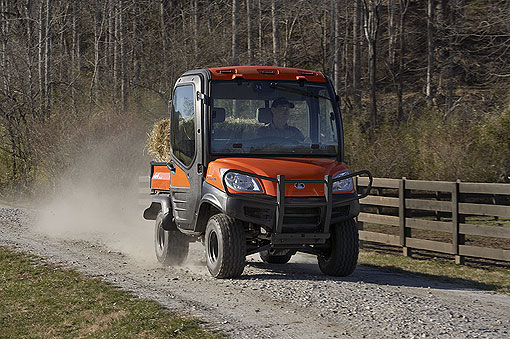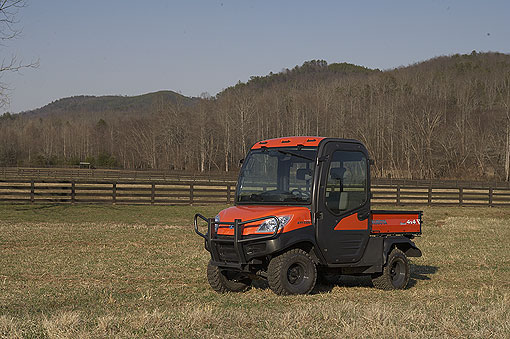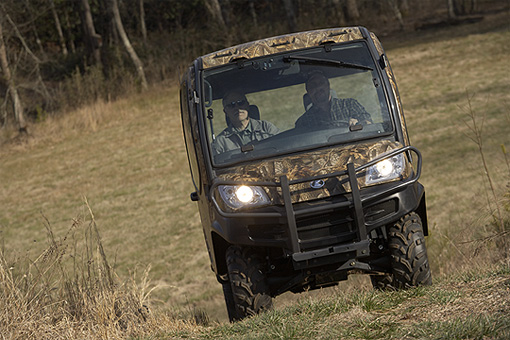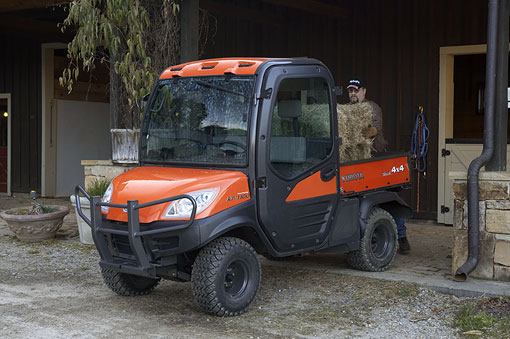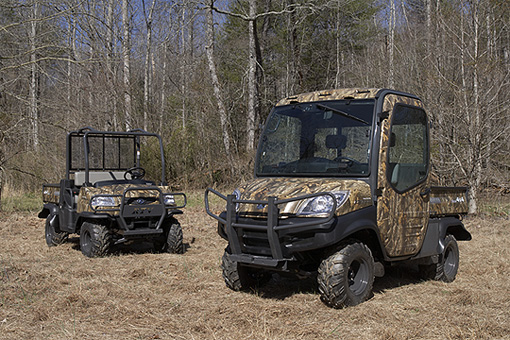
The Kubota RTV1100 was one of the earliest utility vehicles to combine a diesel drivetrain, heavy-duty cargo capability and a fully integrated factory cab with heat and air conditioning.
Introduced in 2006, the RTV1100 expanded Kubota’s work-focused RTV platform into a true four-season machine. Its enclosed Premium Grand Cab was designed for farmers, ranchers, commercial crews, property managers and other operators who needed to keep working through summer heat, winter cold, rain, dust and snow.
Kubota subsequently simplified its consumer-facing model names. The current successor to the RTV1100 and RTV-X1100C is marketed as the Kubota RTV-X CAB.
Current buyers can compare it with the rest of the range in our complete Kubota RTV lineup guide or learn more about today’s diesel models in our Kubota RTV-X family comparison.
Kubota RTV1100 Overview
The RTV1100 was built around a 1,123cc Kubota three-cylinder diesel engine rated at 24.8 horsepower. Although its horsepower figure was modest, the engine produced a substantial 50.3 pound-feet of torque and was designed for low-speed work rather than rapid acceleration.
Power reached the wheels through Kubota’s three-range Variable Hydro Transmission. Unlike the belt-driven continuously variable transmissions used in most UTVs, Kubota’s hydraulic transmission was developed to provide controlled acceleration, predictable low-speed operation and dynamic braking when the operator released the accelerator.
The RTV1100 had a maximum travel speed of approximately 25 mph. It was not intended to be a recreational trail machine or a fast way to cross large distances. Its strengths were controlled operation, diesel durability, cargo capacity and year-round operator protection.
One of the Industry’s First Factory HVAC UTVs
The RTV1100’s defining feature was its Premium Grand Cab. Kubota described it as the industry’s first utility vehicle with a factory-installed air-conditioned cab.
This was an important distinction. An integrated factory cab could provide better sealing, noise control and climate performance than the accessory enclosures commonly added to open-cab UTVs at the time.
Standard cab equipment included:
- Air conditioning
- Heater
- Windshield defroster
- Opening windshield
- Sealed doors
- Windshield wiper
- Roll-Over Protective Structure
The driver’s door could also be secured in a partially open ventilation position. Combined with the outward-opening windshield, this allowed fresh air to move through the cab when full heating or air conditioning was unnecessary.
Kubota listed an operator-ear sound level of 83 dBA at maximum engine speed with no load. While that would not be considered automotive levels of quietness, the sealed factory cab provided a considerably more refined working environment than many open utility vehicles of the period.
Diesel Engine and Variable Hydro Transmission
The RTV1100 used Kubota’s D1105-E2-UV engine, a 1,123cc liquid-cooled, three-cylinder diesel. It produced 24.8 horsepower at 3,000 rpm and 50.3 pound-feet of torque.
The three-range Variable Hydro Transmission provided high, medium and low forward ranges along with neutral and reverse. Two-wheel drive or four-wheel drive could be selected as conditions required, and a mechanically held rear differential lock provided additional traction.
The hydraulic drivetrain gave the RTV1100 a different driving character from a conventional belt-driven UTV. Acceleration was deliberate, but the vehicle offered precise speed control that was well suited to maneuvering with cargo, operating around livestock and descending grades.
Cargo Bed and Towing Capacity
The RTV1100 used a steel cargo box measuring approximately 52 inches wide, 46.7 inches long and 11.4 inches deep. Its 16-cubic-foot capacity provided enough space for tools, feed, landscaping supplies and other jobsite material.
Kubota rated the cargo box to carry up to 1,102 pounds. A standard hydraulic bed lift allowed the operator to raise and dump the box using a control lever rather than unloading loose material by hand.
The RTV1100 also had a listed towing capacity of 1,300 pounds and a total payload rating of 1,631 pounds. Operators still needed to account for occupants, cargo, accessories and terrain when determining a safe working load.
Chassis, Suspension and Brakes
The RTV1100 was a substantial machine, weighing approximately 2,469 pounds before adding occupants or cargo. That weight reflected its diesel engine, hydraulic drivetrain, steel cargo box and enclosed climate-controlled cab.
Its front suspension used independent MacPherson struts. The rear employed a DeDion axle with leaf springs and shock absorbers, a work-focused arrangement selected for stability and load-carrying capability rather than recreational suspension travel.
Hydrostatic power steering reduced steering effort, especially when the vehicle was loaded or moving slowly. Wet-disc brakes were used at the front and rear.
Ground clearance was listed at approximately 8.1 inches under the front axle and 7.5 inches under the rear axle. Those figures are limited compared with modern trail-oriented UTVs, reinforcing the RTV1100’s primary role as a farm, commercial and property-maintenance vehicle.
Kubota RTV1100 Specifications
| Specification | Kubota RTV1100 |
|---|---|
| Engine | Kubota D1105-E2-UV three-cylinder diesel |
| Displacement | 1,123cc |
| Cooling | Liquid-cooled |
| Claimed horsepower | 24.8 hp at 3,000 rpm |
| Claimed torque | 50.3 lb-ft |
| Fuel capacity | 7.9 gallons |
| Transmission | Three-range Variable Hydro Transmission |
| Drive system | Select two-wheel drive or four-wheel drive |
| Differential lock | Mechanical rear differential lock |
| Maximum speed | Approximately 25 mph |
| Steering | Hydrostatic power steering |
| Front suspension | Independent MacPherson struts |
| Rear suspension | DeDion axle with leaf springs and shock absorbers |
| Brakes | Front and rear wet-disc brakes |
| Length | 128.4 inches without front guard |
| Width | 66.5 inches |
| Overall height | 82.8 inches |
| Wheelbase | 77.4 inches |
| Ground clearance | 8.1 inches front / 7.5 inches rear |
| Turning diameter | 26.2 feet |
| Vehicle weight | Approximately 2,469 pounds |
| Payload capacity | 1,631 pounds |
| Towing capacity | 1,300 pounds |
| Cargo-box capacity | 1,102 pounds |
| Cargo-box volume | 16 cubic feet |
| Cargo-box dimensions | 52 x 46.7 x 11.4 inches |
| Bed lift | Hydraulic |
| Front tires | 25×10-12 |
| Rear tires | 25×11-12 |
Specifications can vary by model year, tire selection and configuration. Prospective used buyers should confirm the identification plate and model-specific operator’s manual before ordering parts or calculating operating limits.
Kubota RTV1100 vs. RTV-X1100C
Kubota introduced its next-generation RTV-X Series in late 2013 for the 2014 model year. The RTV-X1100C replaced the original RTV1100 and retained the concept of a diesel-powered utility vehicle with a factory HVAC cab.
The newer X-Series platform added major chassis and suspension changes, including four-wheel independent suspension, greater ground clearance and an updated VHT-X transmission. It also offered a wider stance and revised styling while preserving the RTV1100’s work-first character.
Kubota subsequently simplified its consumer-facing model names. The current successor to the RTV1100 and RTV-X1100C is marketed as the Kubota RTV-X CAB.
| Model | Position in the Timeline | Key Distinction |
|---|---|---|
| Kubota RTV1100 | Introduced in 2006 | Original diesel RTV with factory heat and air conditioning |
| Kubota RTV-X1100C | Introduced for 2014 | Next-generation X-Series chassis and independent rear suspension |
| Kubota RTV-X CAB | Current model name | Modern factory-cab model with updated equipment and available ProKonvert bed |
Is a Used Kubota RTV1100 Still Worth Buying?
A well-maintained RTV1100 can remain useful for farms, ranches, commercial properties, snow removal and other jobs where low-speed control and an enclosed cab matter more than acceleration or suspension travel.
Its appeal on the used market centers on several characteristics:
- Factory-installed heat and air conditioning
- Kubota three-cylinder diesel engine
- Hydraulic transmission without a conventional UTV drive belt
- Hydraulic dump bed
- More than 1,100 pounds of cargo-box capacity
- Strong low-speed control for work applications
Age and condition are more important than mileage or hours alone. A prospective buyer should inspect cab seals, air-conditioning performance, heater operation, hydraulic-bed function, transmission response, brakes, suspension bushings, wheel bearings and signs of corrosion.
The machine should accelerate and decelerate smoothly after reaching operating temperature. Difficult shifting, weak pulling performance or abnormal hydraulic noise deserves further diagnosis rather than being dismissed as normal behavior.
Buyers should also remember that the RTV1100 is large, heavy and slow by recreational UTV standards. Someone looking for quicker acceleration or a 40-mph utility vehicle should consider the gasoline-powered Kubota RTV-XG850 SIDEKICK. Operators who want a modern diesel platform with improved suspension and a current factory HVAC cab should look at the RTV-X CAB.
Who Is the Kubota RTV1100 Best For?
The RTV1100 is best suited to buyers who prioritize year-round working comfort, diesel durability, cargo capacity and controlled low-speed operation.
Typical applications include:
- Farm and ranch chores
- Winter livestock feeding
- Snow removal
- Commercial property maintenance
- Construction and industrial sites
- Municipal and campus operations
- Large private properties
It is less appropriate for riders who primarily want recreational trail performance, high ground clearance, long suspension travel or rapid acceleration.
Frequently Asked Questions
What engine is in the Kubota RTV1100?
The RTV1100 uses a 1,123cc Kubota D1105 three-cylinder, liquid-cooled diesel engine. It was rated at 24.8 horsepower and 50.3 pound-feet of torque.
Does the Kubota RTV1100 have air conditioning?
Yes. The RTV1100 was equipped with a factory-installed enclosed cab featuring air conditioning, heat and a windshield defroster.
How fast does a Kubota RTV1100 go?
Kubota listed a maximum travel speed of approximately 25 mph.
How much can a Kubota RTV1100 carry?
The steel cargo box was rated to carry up to 1,102 pounds. Kubota listed total payload capacity at 1,631 pounds.
How much can a Kubota RTV1100 tow?
The RTV1100 had a listed towing capacity of 1,300 pounds. Terrain, vehicle loading and operating conditions can affect practical towing limits.
Does the Kubota RTV1100 use a CVT belt?
No. It uses Kubota’s Variable Hydro Transmission rather than the belt-and-clutch CVT found in most UTVs.
What replaced the Kubota RTV1100?
The RTV-X1100C replaced the RTV1100 for the 2014 model year. Kubota now markets the current successor under the simplified RTV-X CAB name.
What is the difference between the RTV1100 and RTV-X1100C?
The RTV-X1100C introduced the newer X-Series chassis, four-wheel independent suspension, increased ground clearance and an updated VHT-X transmission. Both models use a Kubota diesel engine and an integrated HVAC cab.
Kubota RTV1100 Legacy
The RTV1100 was not designed to be fast or sporty. Its importance came from demonstrating that a UTV could provide diesel work capability and a properly integrated climate-controlled cab in one factory-built machine.
That formula continued through the RTV-X1100C and into today’s RTV-X CAB. Nearly two decades after the RTV1100 appeared, an enclosed cab with heat and air conditioning remains one of the most valuable features available on a utility side-by-side used throughout the year.
See where the modern successor fits in the current Kubota RTV-X diesel family, or compare every current gas and diesel model in our Kubota RTV lineup guide.