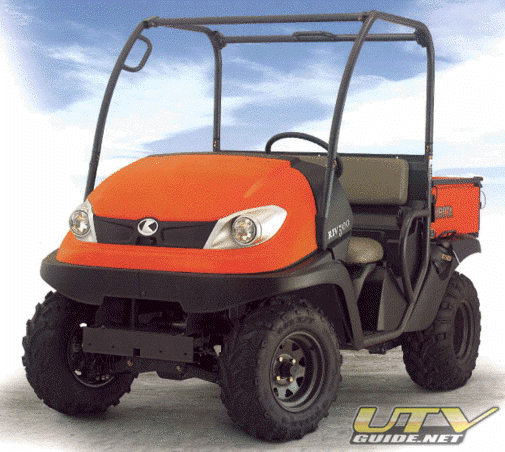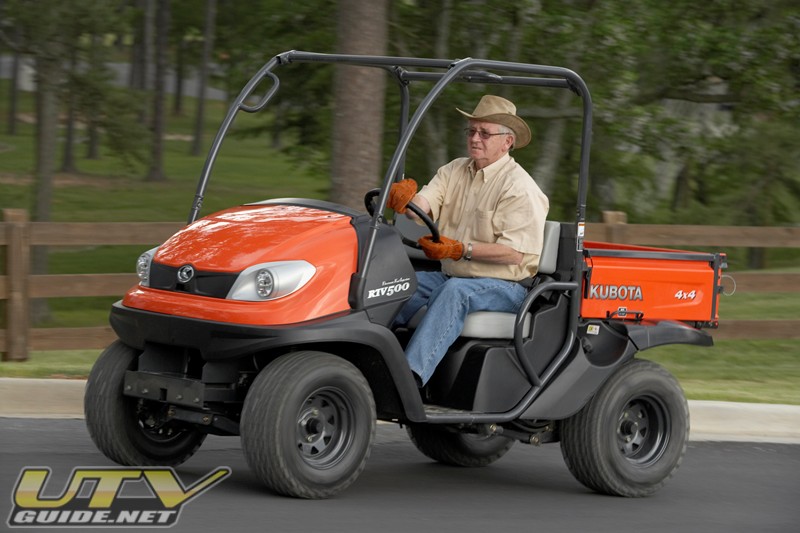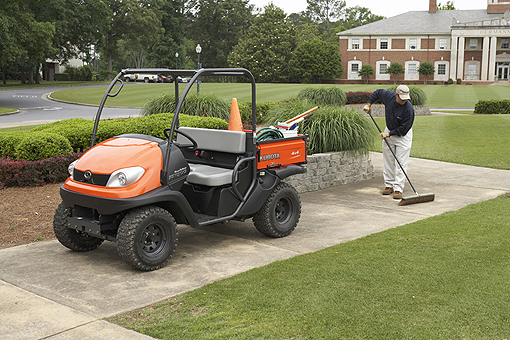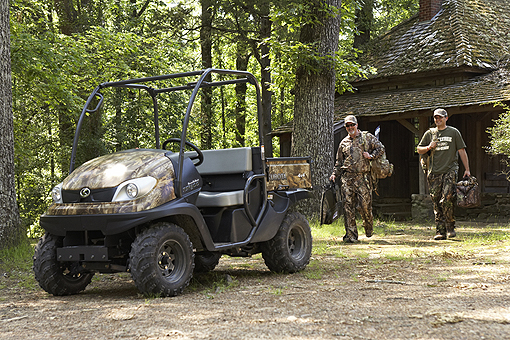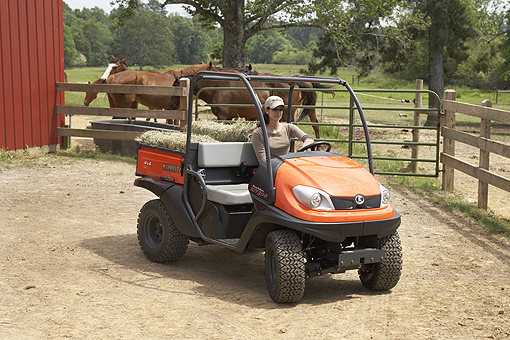
The Kubota RTV500 was a compact two-seat utility vehicle designed for property maintenance, groundskeeping, hunting and other jobs where maneuverability mattered more than speed. Introduced in 2008, it combined a 456cc gasoline engine with Kubota’s beltless Variable Hydrostatic Transmission and selectable four-wheel drive.
Although the RTV500 has been discontinued and replaced by the more powerful Kubota RTV520, used RTV500s remain available. Its 54.7-inch width, 25-mph maximum speed, 441-pound cargo-bed rating and controlled hydrostatic drivetrain can still make it a practical vehicle for smaller properties and confined work areas.
See how the RTV500 fits into the company’s history and current model range in our complete Kubota RTV lineup guide.

Kubota RTV500 Specifications
| Engine | 456cc, two-cylinder, liquid-cooled gasoline engine |
|---|---|
| Fuel system | Electronic fuel injection |
| Horsepower | 15.8 hp at 3,600 rpm |
| Transmission | VHT PLUS Variable Hydrostatic Transmission |
| Gear ranges | High, low, neutral and reverse |
| Drive system | Selectable two-wheel drive and four-wheel drive |
| Maximum speed | 25 mph |
| Seating | Two occupants |
| Overall length | 105.9 inches |
| Overall width | 54.7 inches |
| Overall height | 72 inches |
| Wheelbase | 70.9 inches |
| Ground clearance | 8.1 inches front; approximately 6.9 inches rear |
| Turning diameter | 22.9 feet |
| Cargo-box capacity | 441 pounds |
| Cargo-box volume | Approximately 9 cubic feet |
| Cargo-box dimensions | 40.6 x 33.7 x 11.4 inches |
| Towing capacity | 1,102 pounds |
| Payload capacity | 949 pounds, including occupants and cargo |
| Fuel capacity | Approximately 5 gallons |
| Vehicle weight | Approximately 1,358 pounds with ATV tires |
Specifications can vary slightly by model year, tire selection and installed equipment. Owners should consult the operator’s manual for the limits applying to their individual vehicle.
456cc Liquid-Cooled Gas Engine
The RTV500 is powered by Kubota’s GZ460-series, 456cc two-cylinder gasoline engine. Its 15.8-horsepower output is modest even by compact-UTV standards, but the vehicle was developed for controlled work rather than rapid acceleration or recreational trail performance.
Electronic fuel injection eliminates carburetor adjustment and supports more dependable starting in cold weather or after storage. Liquid cooling helps maintain a stable operating temperature during extended chores while also contributing to quieter operation.
Maximum speed is approximately 25 mph in high range. Low range is intended for slower work, heavier loads, towing and operation on steep or difficult terrain.

Beltless Variable Hydrostatic Transmission
One of the RTV500’s most distinctive features is its VHT PLUS Variable Hydrostatic Transmission. Unlike the belt-driven continuously variable transmissions used by most gasoline UTVs, Kubota’s hydrostatic system does not use a conventional CVT drive belt and centrifugal clutch arrangement.
The transmission provides smooth acceleration and precise control at low speed. It also supplies dynamic braking when the operator releases the accelerator, helping control the vehicle on descents and during jobs that involve frequent starts and stops.
This behavior can feel different to someone accustomed to a conventional UTV. The RTV500 slows more decisively when the accelerator is released instead of freely coasting. That characteristic is useful for work, but new operators should become familiar with it before carrying a load or driving on steep terrain.
Selectable Four-Wheel Drive
The operator can select two-wheel drive for firm surfaces or four-wheel drive when additional traction is required. A differential-lock system provides further assistance in mud, snow and uneven ground.
Front suspension consists of independent MacPherson struts. The rear uses a semi-independent multi-link arrangement. This durable, work-oriented setup provides considerably less suspension travel than a recreational side-by-side, so the RTV500 is better suited to fields, maintained trails and jobsites than fast or aggressive trail riding.
Compact Dimensions and Maneuverability
At 54.7 inches wide, the RTV500 is narrower than most full-size utility UTVs. Its 70.9-inch wheelbase and 22.9-foot turning diameter help it maneuver around barns, landscaping, livestock facilities and other confined areas.
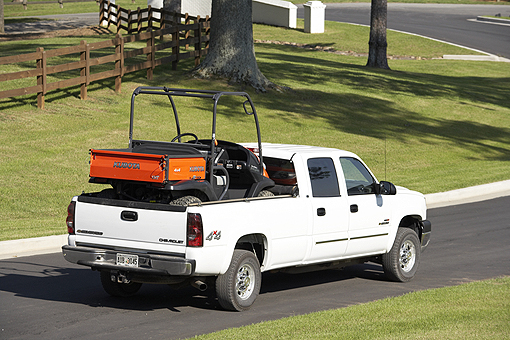
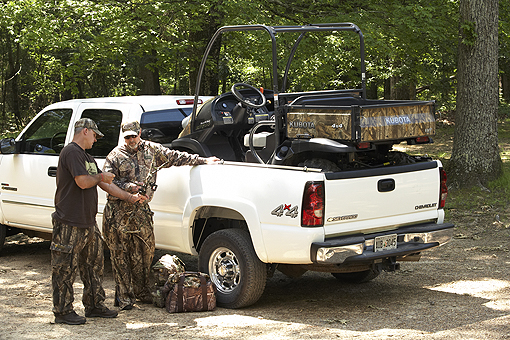
Kubota originally promoted the vehicle as compact enough to transport in the bed of certain full-size long-bed pickup trucks. Anyone considering that method should measure the truck carefully, verify its payload rating and use properly rated ramps and tie-down points. A suitable trailer is generally the simpler transportation option.
441-Pound Dumping Cargo Bed
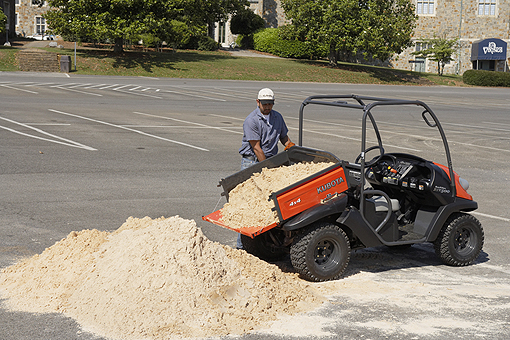
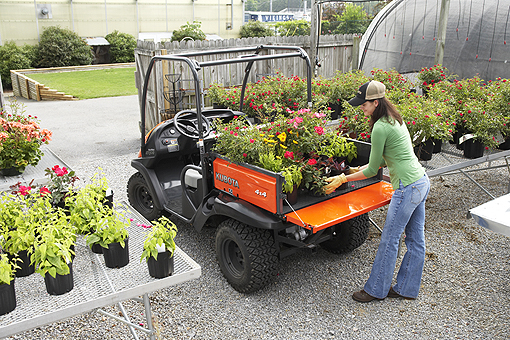
The steel cargo box measures approximately 40.6 inches wide, 33.7 inches long and 11.4 inches deep. Its 441-pound load rating is useful for carrying feed, tools, firewood, landscaping material and maintenance supplies.
The bed can be manually tilted to unload material or provide access to service components. An electric bed-lift system was also offered as an option.
Towing capacity is approximately 1,102 pounds when pulling from the rear hitch. Operators should account for occupants, cargo, trailer tongue weight, terrain and available braking distance instead of treating the published tow rating as the only limitation.

Operator Area and Available Accessories
The RTV500 has a two-person bench seat, flat floor and straightforward dashboard. Its open operator area makes entry and exit easy when the vehicle is being used for chores requiring frequent stops.
A rollover protective structure was standard. Available accessories included roofs, windshields, cab enclosures, heaters, winches, work lights, front guards, snow blades and an electric cargo-bed lift. Equipment can vary substantially among used examples, so buyers should consider the value and condition of installed accessories when comparing prices.
Who Is the Kubota RTV500 Best For?
The RTV500 is best suited to buyers who prioritize controlled low-speed operation, compact dimensions and straightforward utility capability. Potential applications include:
- Maintaining residential and rural properties
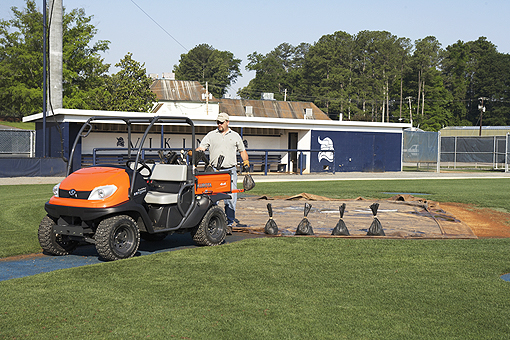
- Groundskeeping and landscaping
- Moving tools, feed and supplies
- Working around barns and livestock facilities
- Hunting and access on maintained trails
- Light towing and snow removal
It is less suitable for long-distance transportation, high-speed trail riding, deep mud, rough rock crawling or jobs requiring the cargo capacity of a full-size utility vehicle. Buyers wanting more speed should consider the Kubota RTV-XG850 Sidekick, while Kubota’s diesel RTV-X models are better suited to heavier commercial work.
Kubota RTV500 vs. RTV520
The RTV520 succeeded the RTV500 while preserving the same basic compact-work-vehicle concept. The newer model received a larger engine, more horsepower, revised suspension and several comfort improvements.
| Specification | Kubota RTV500 | Kubota RTV520 |
|---|---|---|
| Engine | 456cc two-cylinder gas | 514cc two-cylinder gas |
| Horsepower | 15.8 hp | 17.4 hp |
| Transmission | VHT PLUS hydrostatic | VHT PLUS hydrostatic |
| Maximum speed | 25 mph | Approximately 25 mph |
| Width | 54.7 inches | 54.7 inches |
| Cargo capacity | 441 pounds | 440 pounds |
| Towing capacity | 1,102 pounds | 1,168 pounds |
The RTV520 does not transform the compact platform into a fast UTV, but its additional engine output and chassis refinements make it the more polished vehicle. A well-maintained RTV500 may still provide good value when its lower used price offsets those improvements.
What to Check When Buying a Used RTV500
Condition and maintenance history matter more than model year alone when evaluating a used RTV500. Before purchasing, inspect or test the following:
- Cold starting: The engine should start readily without excessive smoke, knocking or prolonged cranking.
- Hydrostatic operation: Acceleration should be smooth in both high and low range, without unusual whining, hesitation or loss of pulling power.
- Dynamic braking: Confirm that the transmission slows the vehicle predictably when the accelerator is released.
- Range selection: Test high, low, neutral and reverse. Difficulty shifting can result from linkage adjustment, driveline load or wear.
- Four-wheel drive: Make sure the selector and differential lock engage and disengage correctly.
- Suspension and wheel bearings: Check for looseness, damaged boots, worn bushings and uneven tire wear.
- Cargo bed and frame: Look for rust, cracks, distorted mounting points and evidence of repeated overloading.
- Cooling system: Inspect the radiator, hoses and coolant condition, particularly on vehicles used in mud or tall grass.
- Hour meter and service records: Compare recorded hours with overall wear and ask for evidence of fluid and filter changes.
- Accessories: Inspect cab panels, heaters, winches, lights and power bed lifts rather than assuming they operate correctly.
Because the RTV500 is discontinued, buyers should also confirm local dealer support and parts availability. Kubota continues to provide parts listings for the platform, but availability and lead times can differ by component.
Is a Used Kubota RTV500 Worth Buying?
A used RTV500 can still be a sensible compact work UTV when it has been maintained properly and priced below a comparable RTV520. Its strongest qualities are low-speed control, a beltless hydrostatic transmission, manageable dimensions and simple utility capability.
Its limitations are equally clear. The 15.8-horsepower engine provides leisurely acceleration, the 25-mph maximum speed restricts longer-distance use and the 441-pound cargo rating is well below the capacity of Kubota’s full-size diesel vehicles.
For buyers who need a small machine to move tools and supplies around a property, the RTV500 remains relevant. Anyone who needs more power, better ride quality or a new-machine warranty should look closely at the current Kubota RTV520 before purchasing an older RTV500.
Browse our Kubota UTV news, model guides and reviews for more information about the company’s utility-vehicle lineup.