


By Jon Crowley. Photos by Adam Campbell and Jon Crowley.
Editor’s note: This review covers the original manual-transmission 2016 Yamaha YXZ1000R as it was introduced in 2015. For model-year changes, specifications and additional reviews, visit our Yamaha YXZ1000R model history and buying guide.
Yamaha’s first pure sport side-by-side was one of the most anticipated new UTVs of 2015. After concentrating on the recreation and utility markets with the Yamaha Viking and Yamaha Wolverine, Yamaha introduced something entirely different: the 2016 YXZ1000R.
Instead of following the established turbocharged, belt-driven formula, Yamaha built a naturally aspirated sport UTV around a high-revving three-cylinder engine and a driver-operated five-speed sequential transmission. We traveled to Gordon’s Well in Southern California’s Imperial Sand Dunes to find out how that unusual combination worked in the sand.
The First Five-Speed Manual Sport UTV
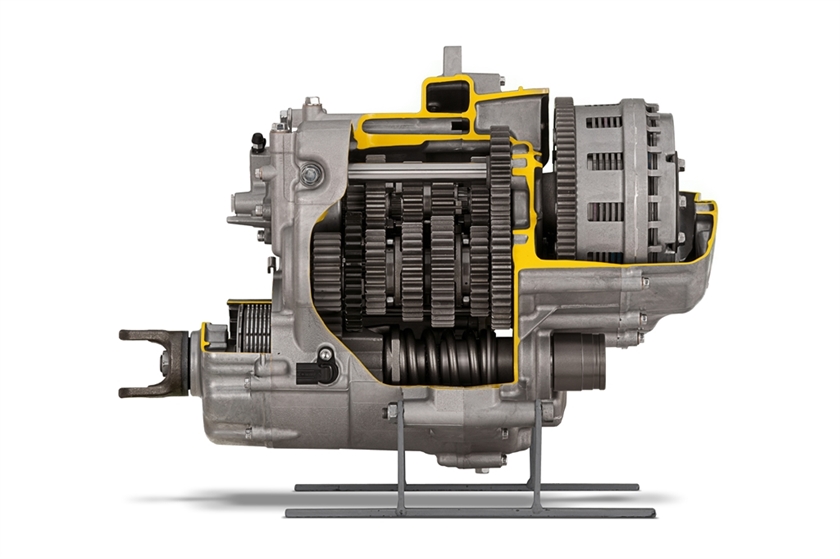
Yamaha did not want to produce another variation of the belt-driven sport UTVs already offered by Polaris, Can-Am and Arctic Cat. Instead, the company designed what it called a “Pure Sport” machine intended to give the driver more direct control.
The foundation of that experience was the industry’s first five-speed sequential manual transmission in a production sport UTV. A foot-operated clutch and hand-operated shifter gave the driver direct control over gear selection rather than relying on a continuously variable transmission.
That configuration eliminated the conventional CVT belt and gave the YXZ1000R a distinctly mechanical, rally-car-like driving character. It also meant the driver needed to manage clutch engagement, engine speed and gear selection throughout the ride.
High-Revving 998cc Three-Cylinder Engine

Yamaha paired the manual transmission with a naturally aspirated 998cc inline-three engine. The liquid-cooled, dual-overhead-cam powerplant uses 12 valves and was designed to rev to 10,500 rpm.
Three 41mm throttle bodies feed the engine, while individual ignition coils are positioned directly over the spark plugs. The compact arrangement is clean and appears designed with durability and serviceability in mind.
This is not an engine that delivers its best performance at low rpm. The triple rewards drivers who keep it spinning near the top of its rev range and are willing to work through the gears.

Suspension and Steering
The engine and transmission attracted most of the initial attention, but the YXZ1000R’s suspension and steering proved equally important to its driving experience.
Yamaha designed the rear suspension to minimize camber change through its travel, helping the vehicle track straight through rough terrain. The front suspension geometry was developed to control caster, bump steer and Ackermann through the steering and suspension ranges.

The fully adjustable FOX 2.5 Podium shocks provide high- and low-speed compression adjustment, rebound adjustment and threaded spring preload. The rear shocks also use FOX Bottom Out Cup technology to improve bottoming resistance during hard impacts.
Yamaha and FOX delivered an impressive stock suspension setup. It remained compliant through smaller chop while handling whoops, jumps and hard g-outs without feeling harsh or uncontrolled.
Driving the YXZ1000R at Gordon’s Well
I got behind the wheel at Gordon’s Well, just north of Interstate 8 in the Imperial Sand Dunes. The adjustable steering wheel and seatback made it easy to find a comfortable position for my 6-foot-1-inch frame. The seat was comfortable, the full doors worked well and the shoulder bolsters helped hold me in place through rough terrain.
Fit and finish displayed the level of quality we have come to expect from Yamaha.

The first challenge was easing out the clutch while applying enough throttle to avoid stalling in front of the other editors. The clutch pedal had a short throw and felt closer to an ATV clutch than a conventional automotive clutch.
I did not stall during the ride, although I shifted in the wrong direction a few times. There was nothing inherently confusing about the pattern; it simply required time to develop the correct muscle memory.
Tall First Gear Limits Slow-Speed Driving
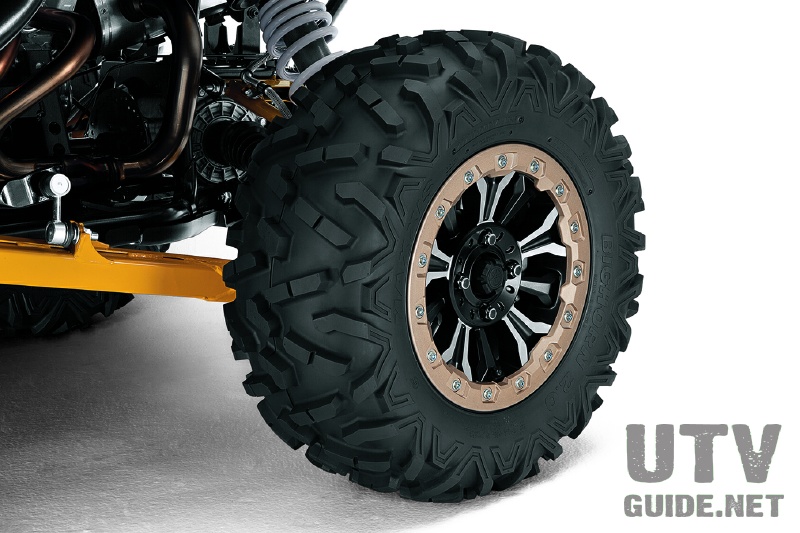
One characteristic became apparent almost immediately: first gear was very tall. The YXZ1000R could run approximately 30 mph in first with additional engine speed still available.
We were testing in the dunes rather than crawling through rocks, but it was clear that the original gearing would be a limitation in difficult, low-speed terrain. Larger tires would make that limitation even more noticeable.
A conventional CVT can often be recalibrated with different weights and springs. Changing the YXZ1000R’s effective gearing required internal transmission changes. Yamaha eventually addressed that need with its GYTR Torque Assist Gear Kit, which reduced the overall gearing and provided an even lower first gear.

Performance in Tight and Open Dunes
Our guided route included steep climbs and tight, technical dunes separated by open valley floors. Much of the tight terrain required second gear, with brief shifts into third and occasional downshifts into first on slower or steeper sections.
This terrain did not show the YXZ1000R at its best. Downshifting from second to first while climbing through tight sand added another task at precisely the moment the driver needed to maintain momentum. A missed shift could leave the vehicle stopped on the face of a hill.
Some of that hesitation was attributable to learning a new vehicle. I had previously driven manual-transmission sand cars and ATVs, but the YXZ1000R still required an adjustment period. I generally avoid especially tight dunes in larger UTVs anyway, although shifting made that terrain less enjoyable in the Yamaha.

The experience changed once we reached the open valley floors, longer hill climbs and faster sand highways. This was where the YXZ1000R became much more entertaining.
The three-cylinder engine likes to be driven hard, and the shift light is genuinely helpful. Unless you regularly drive high-revving race cars or motorcycles, the natural tendency is to shift too early and miss the strongest portion of the engine’s powerband.
Drivers who enjoy selecting gears and keeping an engine in its powerband will appreciate the rush of running the YXZ1000R through its sequential transmission. Drivers who prefer a point-and-shoot experience may find the additional workload less appealing.

Handling Was the Standout
The suspension and steering were my favorite parts of the original YXZ1000R. The chassis felt balanced, tracked straight through rough terrain and resisted pushing in corners. It combined a compliant ride through chop with good control in whoops and strong bottom-out resistance during hard landings.

2016 Yamaha YXZ1000R Review Verdict
The original Yamaha YXZ1000R was a driver-focused sport UTV that demanded more involvement than its belt-driven competitors. Its tall gearing made tight dunes and technical terrain challenging, but the manual transmission, high-revving triple and excellent chassis created a distinctive experience in faster, more open terrain.
The five-speed transmission was never going to appeal to everyone. That was also part of the YXZ1000R’s significance: Yamaha did not simply follow the existing sport UTV formula. It introduced a genuinely different approach that gave enthusiasts another way to experience performance driving.
For drivers who enjoy controlling the transmission and winding an engine to 10,500 rpm, the original YXZ1000R delivered something no competing production UTV offered at the time.
Technical Details


More Yamaha YXZ1000R Reviews
- Yamaha YXZ1000R history, models and reviews
- Yamaha YXZ1000R Woods Review
- Yamaha YXZ1000R SS Review
- Yamaha YXZ1000R SS Dune Review
- Yamaha YXZ1000R GYTR Torque Assist Gear Kit Review
- Yamaha YXZ1000R SE FOX Podium X2 Review


