
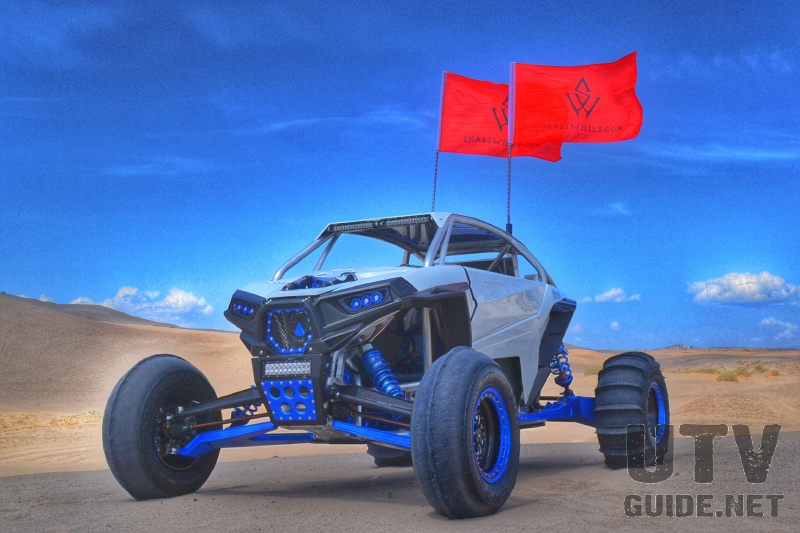
Words by Cody Hooper, Photos by Jon Crowley
Marshall Motoart Superleggera RZR
Marshall Motoart has been making off-the-wall vehicles as long as we can remember hearing the name. Founder Chris Burke has a knack for the obscure, offering up a mix of ratrod style with an infusion of flavor all his own. One of his most famous projects is a lifted (term not to be used lightly) RZR 4 with a sizeable American V8 engine at its heart. For this project, Chris went the other way.
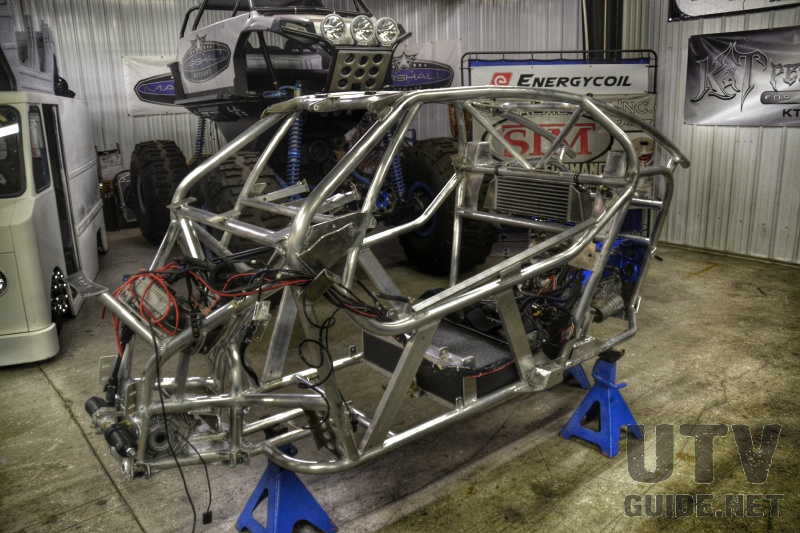
Custom all-aluminum chassis by Marshall Motoart
The driving force behind this build was “Project X” on the TV show Destination Polaris. Chris has built some wild vehicles for the show in the past and he wanted this one to top all before.Starting with a brand-new Polaris RZR XP1000, Chris essentially ditched everything but the plastics and the driveline. A truck full of aluminum stock delivered his building materials, and he went to work, crafting his next work of art. A rough sketch and a single idea would define the build- Superleggera, Italian for Super Light.
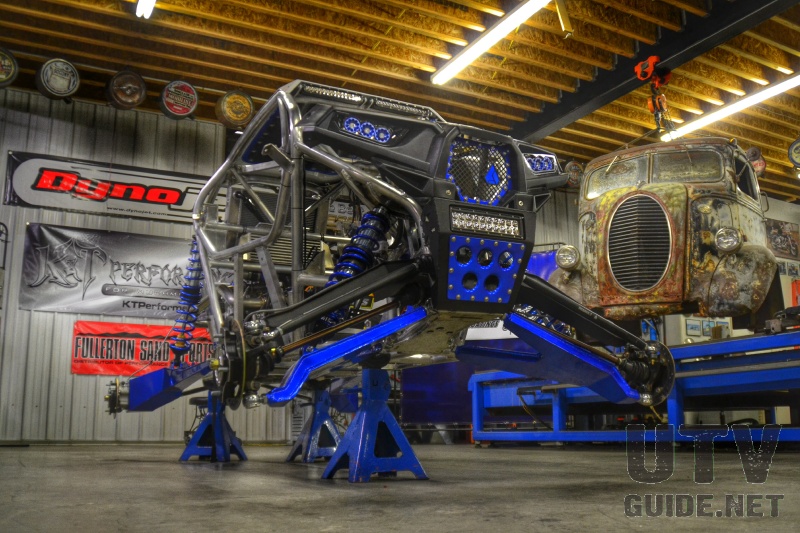
Part way through the build for Destination Polaris
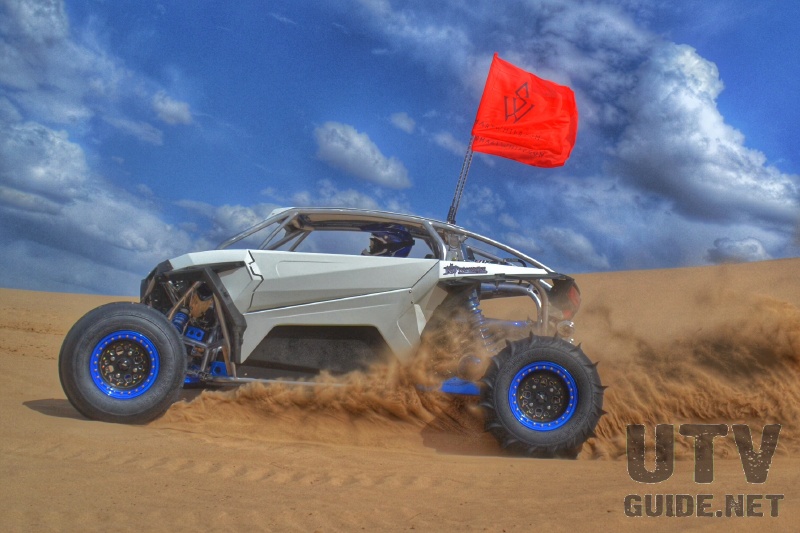
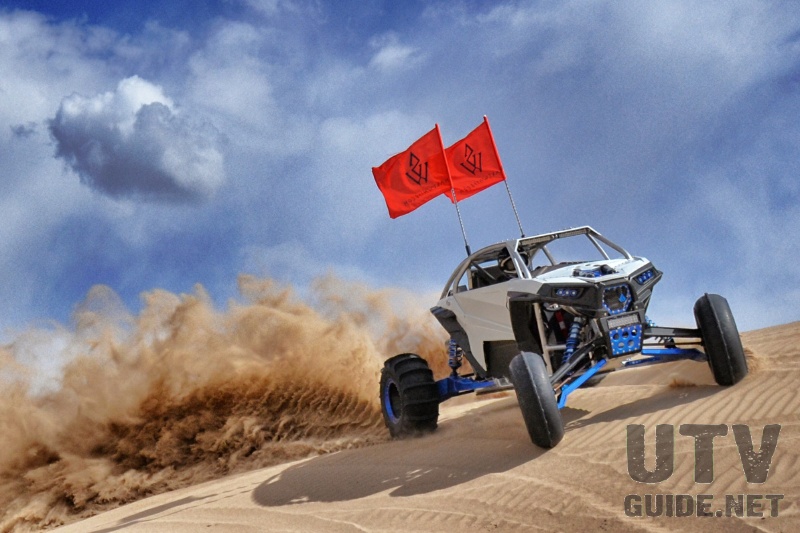
Fans of the exotic car world will recognize the moniker as familiar Lamborghini dialect- Lambo has been coining the term for lightweight versions of their supercars for years. The heart of Marshalls build would be a complete aluminum frame, replacing the steel unit on the XP1000s and changing its dimensions by extreme amounts. The build was restructured as a single seat vehicle, narrowing the RZRs overall cab width by 5 inches. To keep the dimensions sleek, Marshall chopped a full 17 off of the cab height, and added 8 inches of length in the center. The overall effect is similar to a bullet with four extremely long suspension arms spanning from its center.
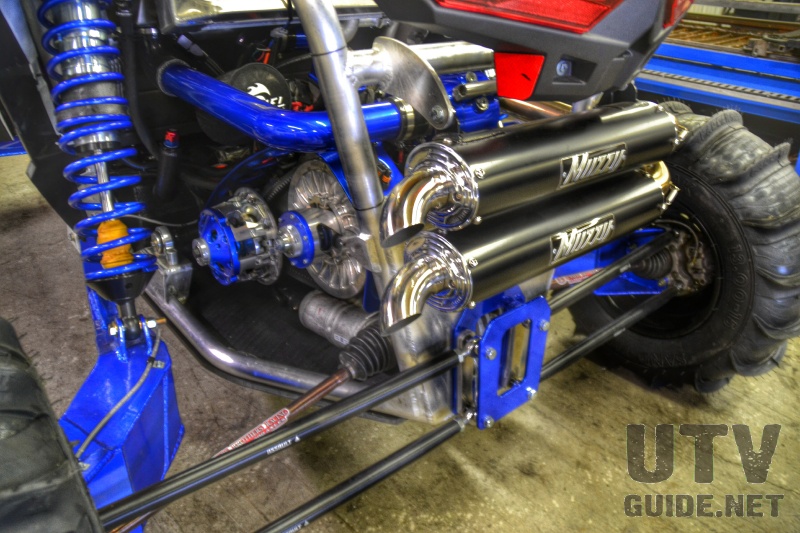
K&T Performance Turbo/Big Bore engine with STM billet clutch and Muzzys Performance Exhaust
Knowing that even the suspension would be made of aluminum, Marshall had his eye set on power to weight numbers. The engine was sent off to K&T Performance, where it received a massaging worthy of a drag UTV. An 1103cc big bore kit was fitted, including spec cams, stronger head studs, forged rods and pistons, CNC porting, big valves, and a massive turbocharger. The end result produces somewhere in the neighborhood of 300 horsepower- and coupled with the all-aluminum construction, provides about the same power to weight ratio as a Pagani Huayra or a Porsche 918 Spyder hypercar.
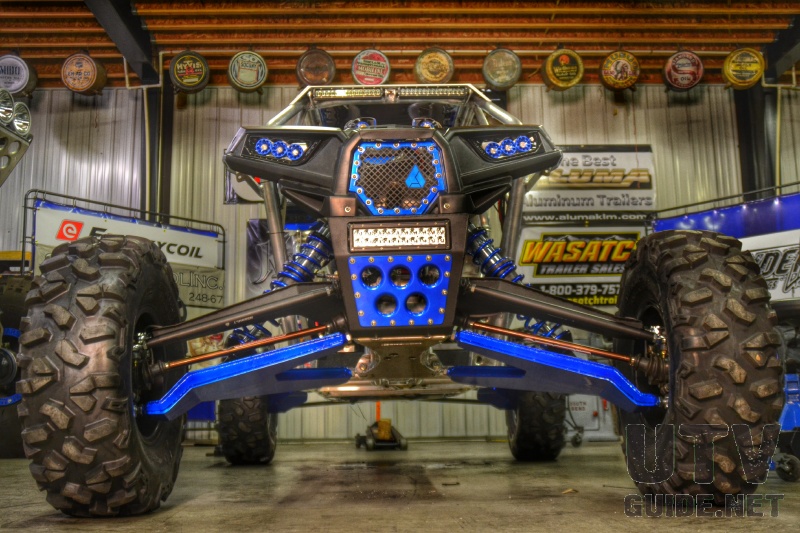
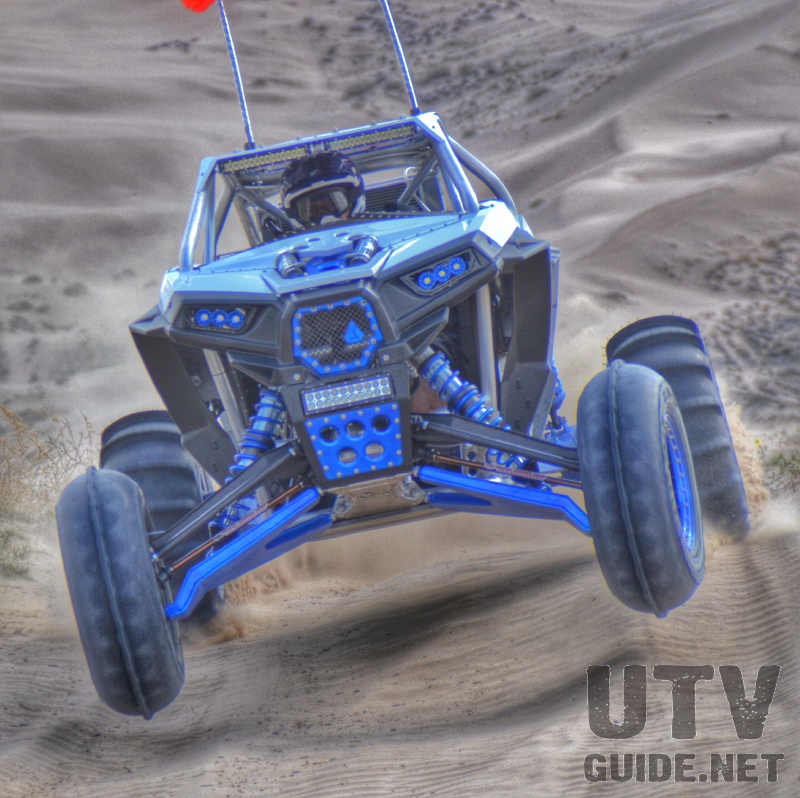
All aluminum, high clearance, long travel front suspension with FOX IBP Shocks
The suspension was elongated 4 on each side, fitted with FOX Internal Bypass shocks, 2.5 up front and 3.0 in the rear. Assault Industries billet radius rods and tie rods were fitted for strength. Without cycling the arms to measure travel, we can safely assume that the wheels move well over 20. Three tire choices were laid out next to the Superleggera- STI 32 Roctane tires on 14 HD4 beadlock wheels, 34 Outback Max tires on 17 HD6 wheels, and Fullerton Sand Sports-supplied STU Competition Cut (#2) paddles on 15 DWT Beadlock wheels.
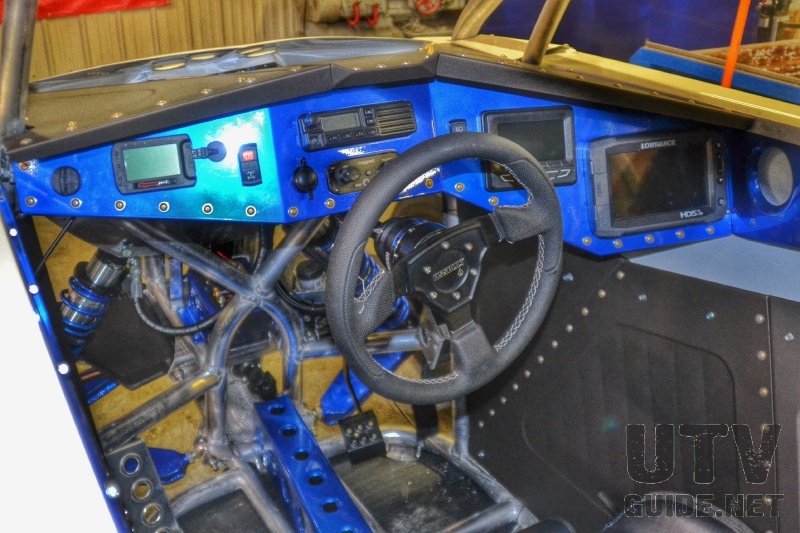
Center Seat with Center Steer
No expense was spared on the build, as Chris custom painted or powdercoated almost every piece of the frame and body. A mixture of his signature candy blue, white, and black colors drape the Superleggera, offering up an understated but striking appearance from any angle. The aluminum sheetwork in the cab alone is enough to stare at for hours, as the entire dash was assembled from hand-formed aluminum panels. The steering wheel was moved to the center, and the single seat straddles the center tunnel that covers the driveshaft.
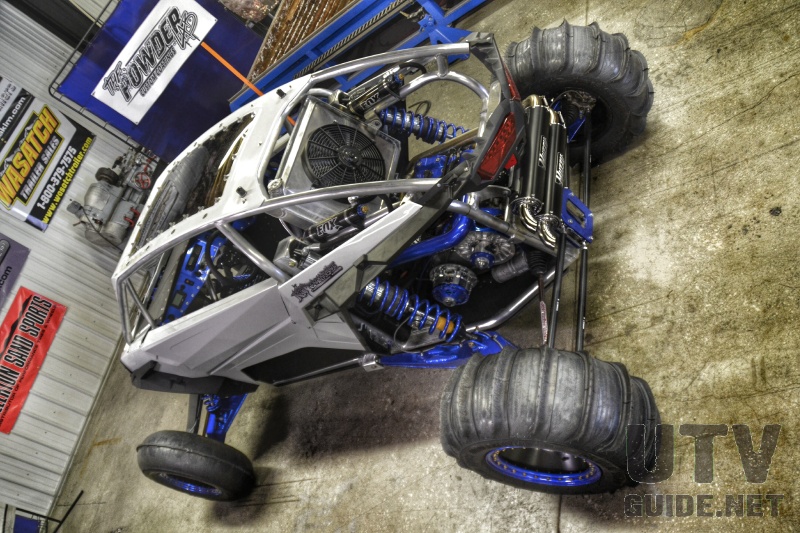
Many sponsors jumped on board with the project as soon as they saw Chris plans. On the engine side, STM Rage clutches transfer the power to the wheels, and the engine breathes through a set of gorgeous Muzzys dual black mufflers. Once the build was completed, the car was dyno tuned by K&Ts professional engine builders, and it was loaded onto a matching aluminum Aluma/Wasatch trailer. We headed out to Little Sahara for its first ride, every one of us boiling with anticipation.
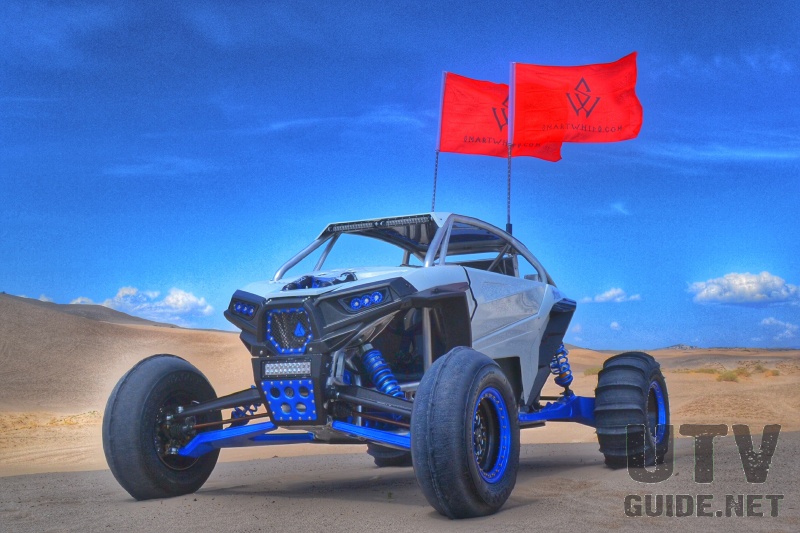
All-Aluminum Chassis, Single Seat, Turbocharged RZR XP 1000
With a dry weight of only 1,108 lbs, the long-travel, turbocharged RZR is a full 270 lbs lighter than the stock unit, with nearly three times the horsepower. To say its fast is an understatement- even with all of the aftermarket Heretic and Dark Hour lighting, big tires, Rugged Radio communications system, the RZR weighs about as much as a Polaris Ace with a driver in it.
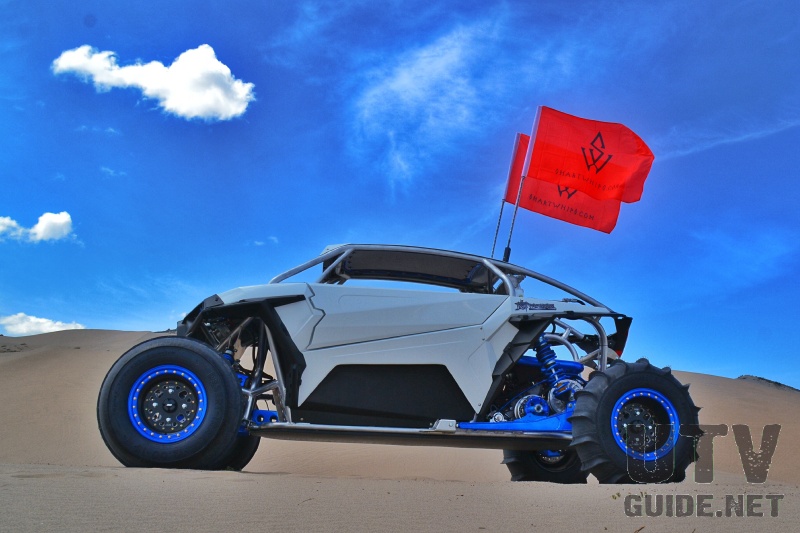
Superleggera RZR at Little Sahara
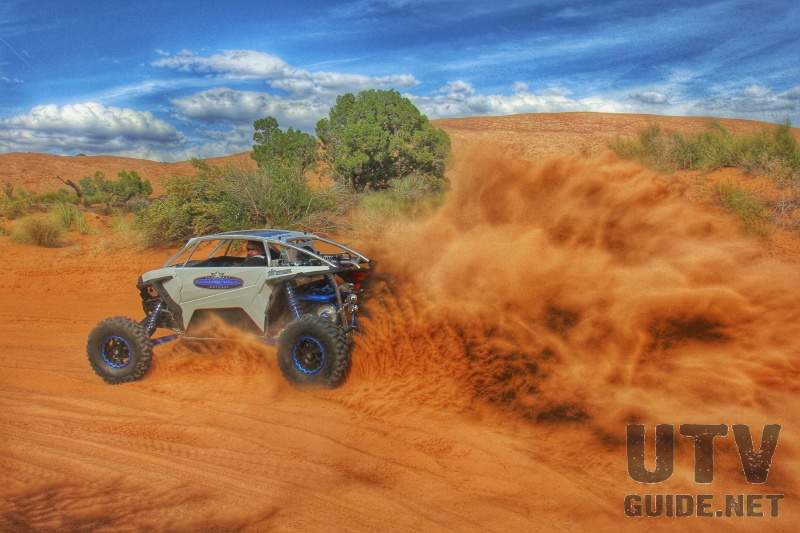
The K&T Turbo engine flat-out screams, and at full boost, the Superleggera is a sight to behold. On full boost, the car pulls up hills like an alcohol-fueled Banshee, seemingly floating on top of the sand as it throws a roost that would rival a jet boat. We will let the pictures speak for themselves on the rest of the details, and stay tuned for future updates on this incredible build.
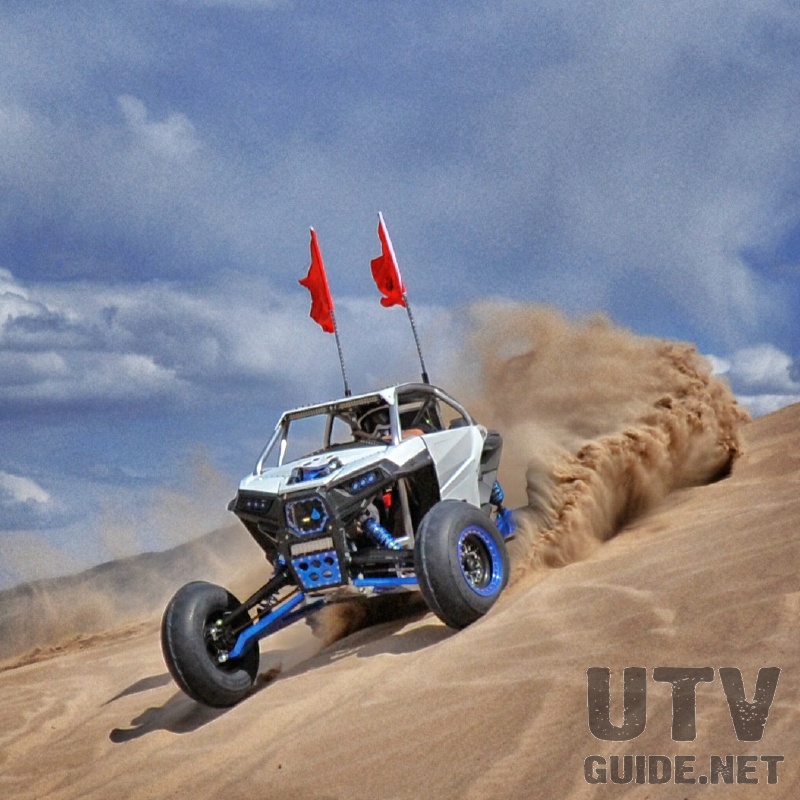
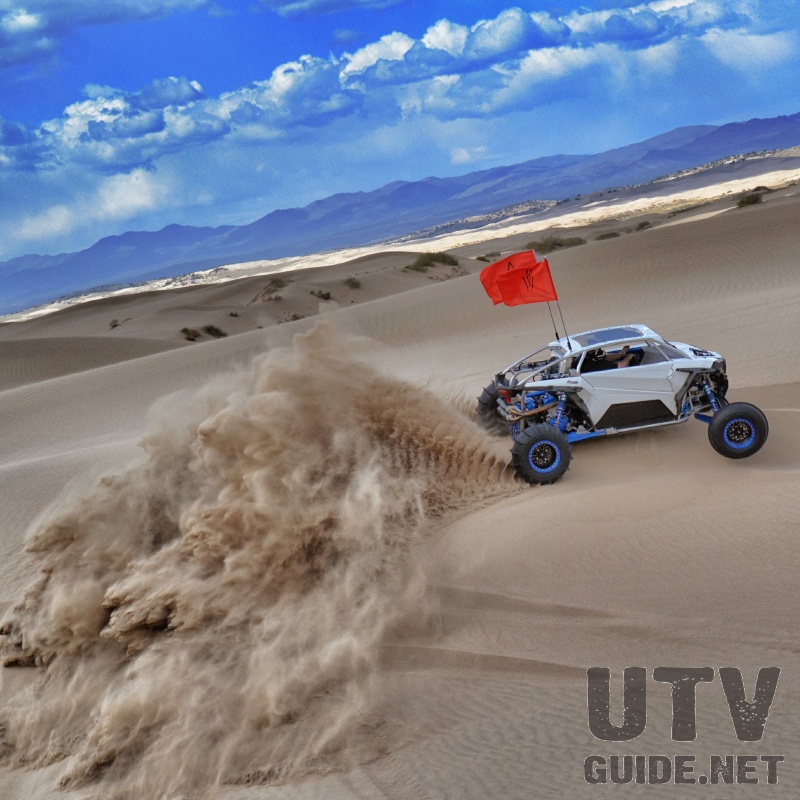
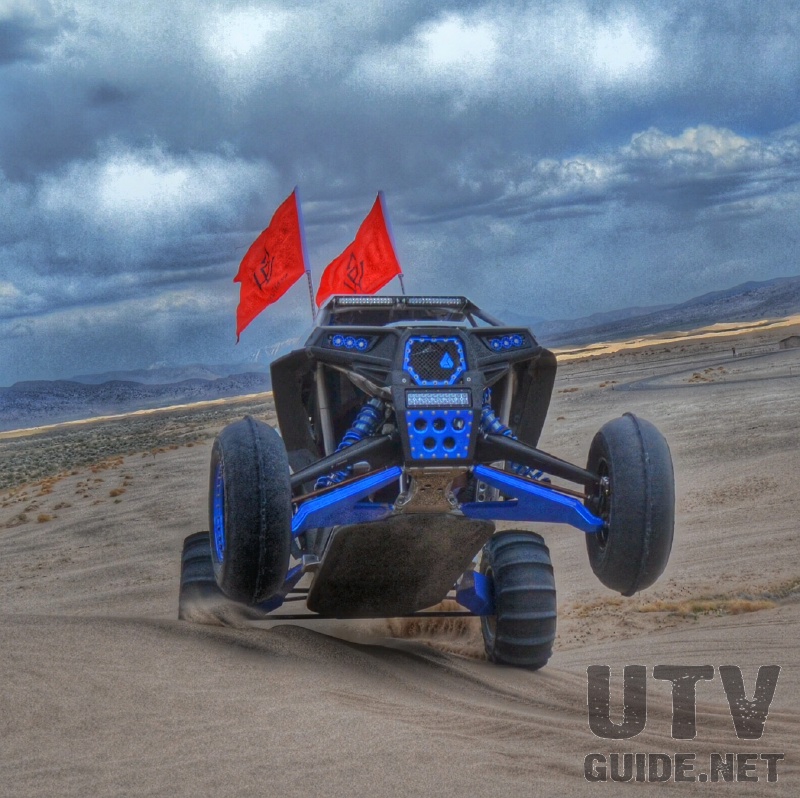
Hell’s Revenge Trail during Rally on the Rocks
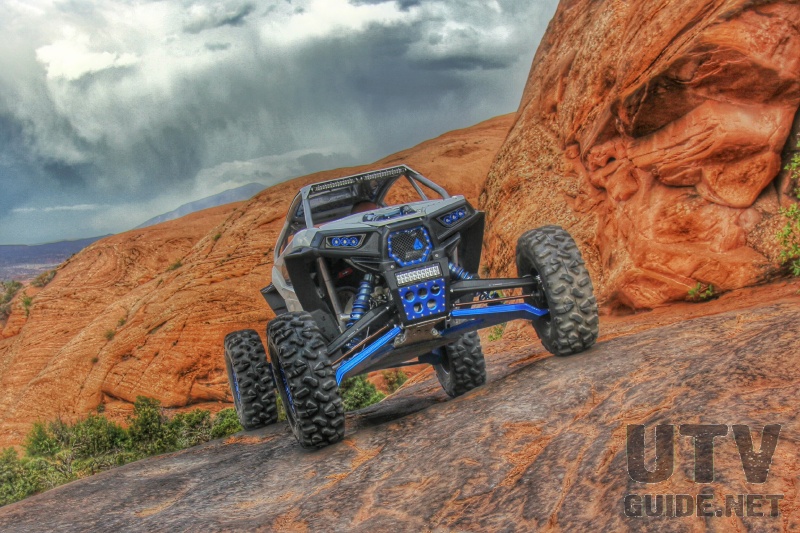
Hell’s Revenge Trail
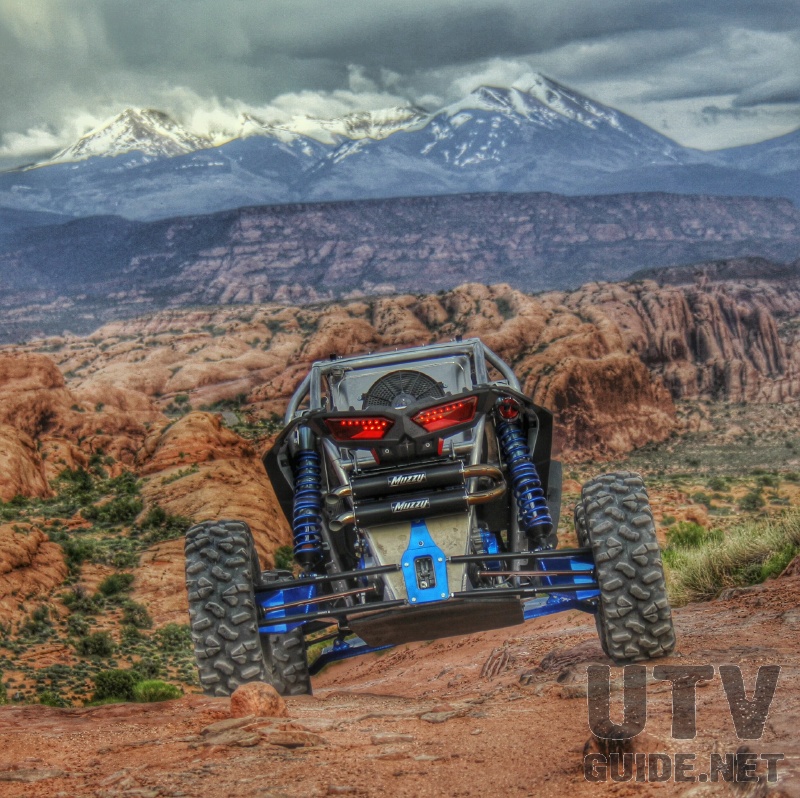
Hell’s Revenge Trail
Watch Destination Polaris on the Fox Sports Network Sunday at 11:30 a.m., Tuesday at 8:30 a.m. and Thursday at 3:30 p.m. For more information on the show or behind the scenes footage go to www.desinationpolaris.com
Specifications:
- K&T Performance – Rods, Pistons, CNC ported big valve head, 1103cc big bore, cams, and head studs and turbo kit
- Fullerton Sand Sports – 13.00 No.2 15 paddles with custom cut front rib tires
- 15″ DWT Sector Beadlocks (sand)
- FOX Internal Bypass with disc shocks 2.5 front and 3.0 rear
- STM Powersports – Rage 8 Z1 clutches
- Rugged RadiosIntercom with car 2 car, bluetooth audio, headset and helmet kit and GoPro cable
- Muzzy Performance – Black dual exhaust
- Assault Industries – Radius rods, tie rods, harness, steering wheel w/disconnect, mirrors, shift knob, and grill
- Dynojet Powercommander – Powercommander, Autotune, and display
- Heretic Studio – Halo Hedlights
- The Powder Lab – All powder coating
- Antigravity BatteriesDual 16 cell lithium batteries
- STI Offroad – 32 Rocktane XD tires on 14 HD4 deadlock wheels34 Outback Max on 17 HD6 wheels
- Summers Brothers Racing+4 300m axles
- Smartwhips – Dual 4 lighted whips
- Aluma/Wasatch trailers – 8114 all aluminum trailer
- NXS Designs LLC. Billet hubs and spherical heim balls
- Triple X Seats+2 venom seat
- Dark Hour Lighting – Dual 10 single row led lights and 10 dual row led light
- Layton Autobody – All wet paintwork
- UTV Guide – Excellent media coverage
- Rugged Rocks – HD7 GPS
- Energycoil – Coils for motor
- Marshall Motoart – All Aluminum chassis, +4 all aluminum suspension, Aluminum body panels- Dry Weight 1180lbs- Wheelbase 105- Roof height lowered 17- Chassis stretched 8- Body narrowed 5 in front and pinched 13 in the rear
More Resources:

No Comments