2008 Kawasaki Teryx Build: Long-Travel Suspension, Engine and Adventure Upgrades

Kawasaki Teryx

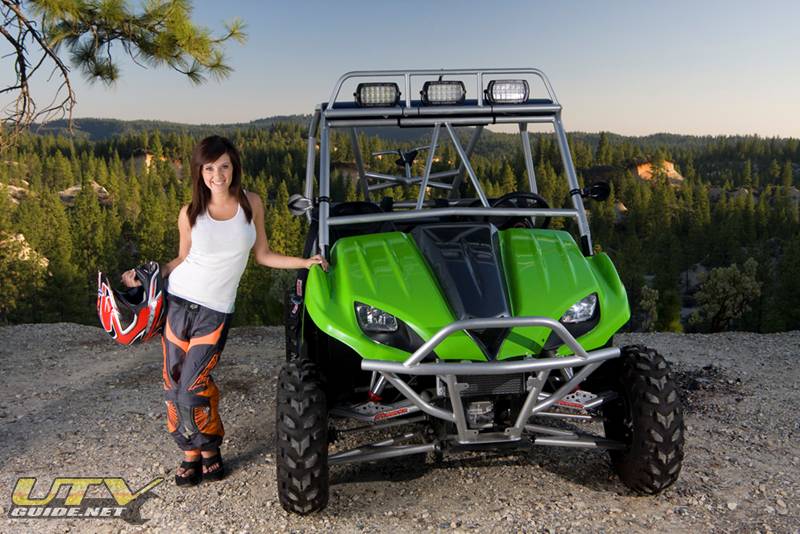
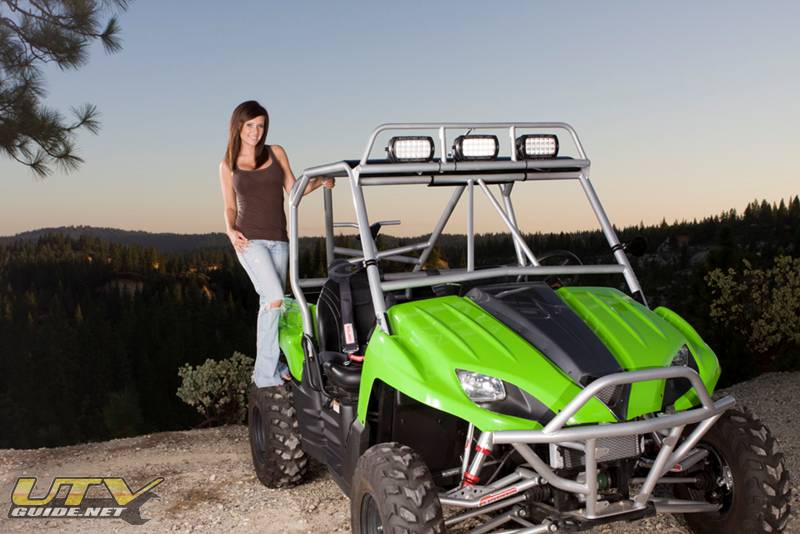
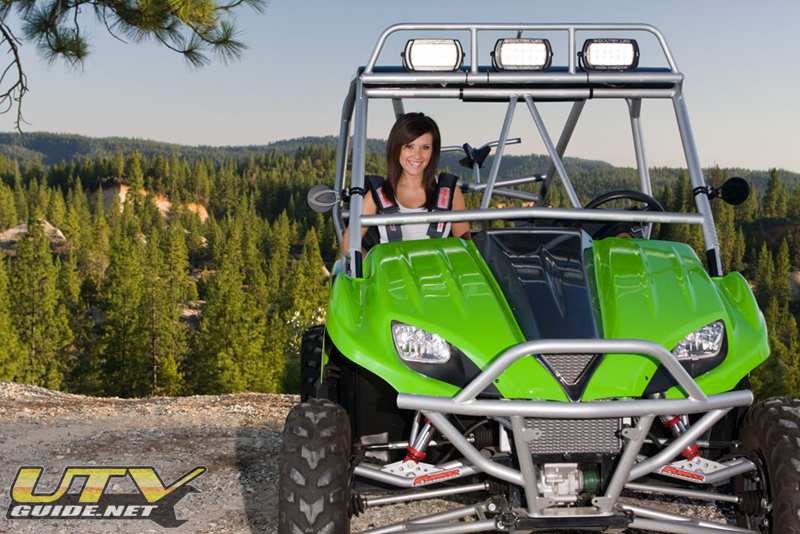
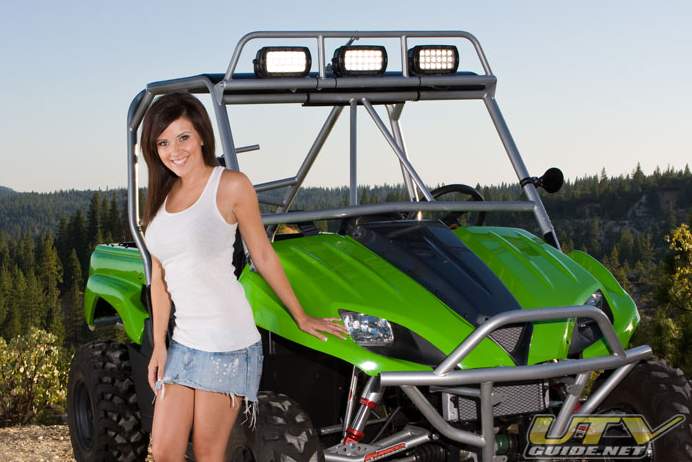
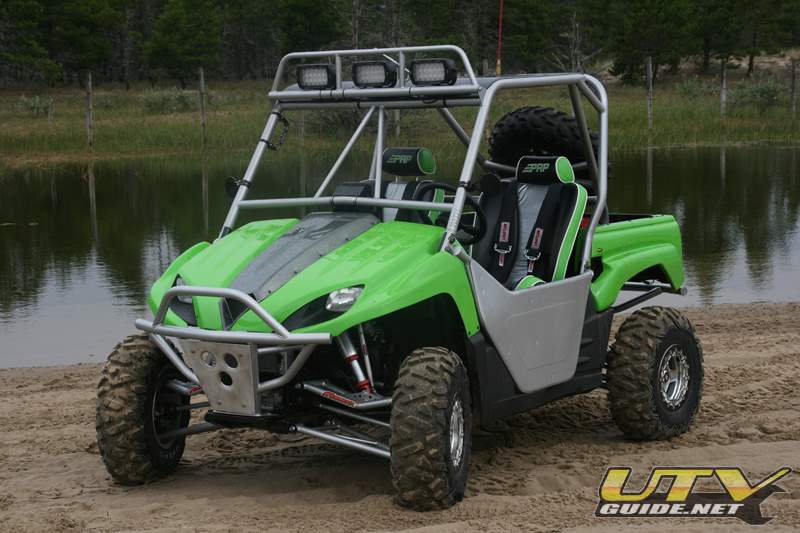
Our 2008 Kawasaki Teryx build transformed Kawasaki’s original two-seat side-by-side into a long-travel adventure machine built for dunes, desert rides, rocky trails and group trips.

When Kawasaki introduced the original Teryx 750 for 2008, the recreational side-by-side market was still taking shape. The Teryx combined a compact two-seat chassis with a 749cc V-twin engine, selectable four-wheel drive, a locking front differential and a useful tilting cargo bed.

After completing our original 2008 Kawasaki Teryx review, we saw considerably more potential in the platform. Our goal was to build a versatile Teryx that could handle fast desert terrain, Glamis dune rides, technical trails and rock crawling while also serving as a test vehicle for the rapidly expanding UTV aftermarket.

The project eventually received long-travel suspension, internal engine upgrades, seating and occupant protection, underbody protection, communications equipment, lighting, navigation and numerous supporting modifications. It appeared in product reviews, magazine articles and UTV events across the western United States.

Starting With a Stock 2008 Kawasaki Teryx 750


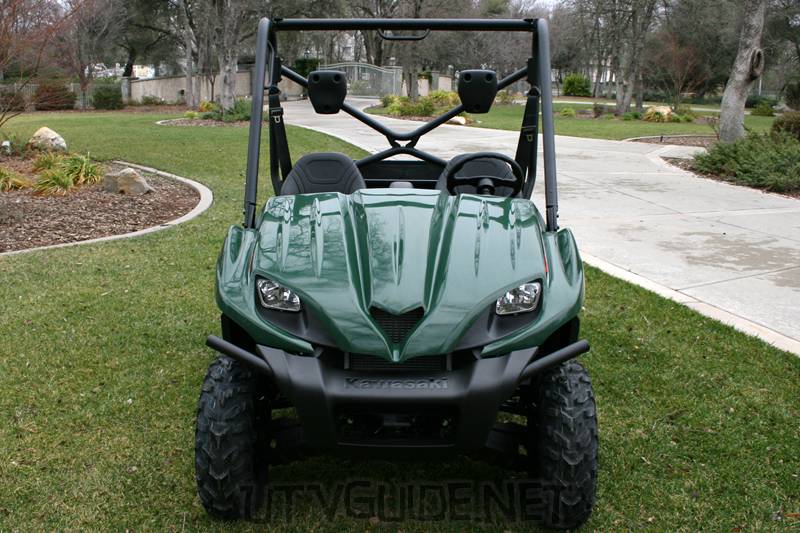
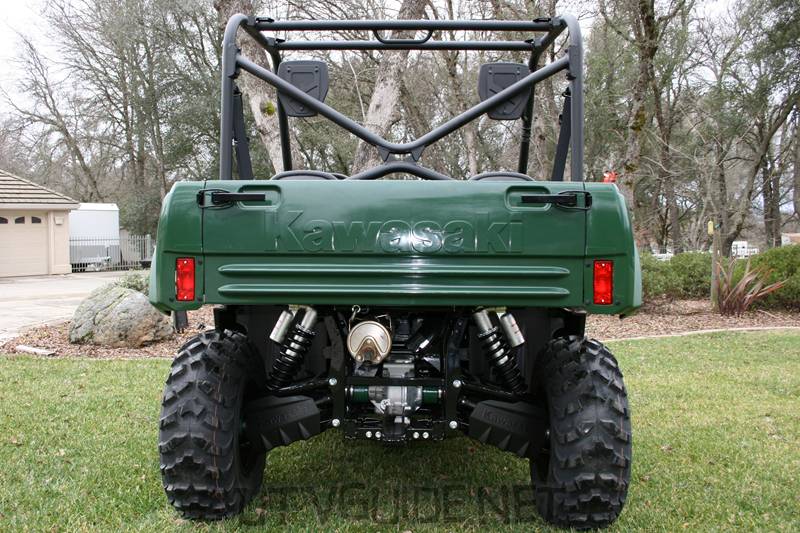
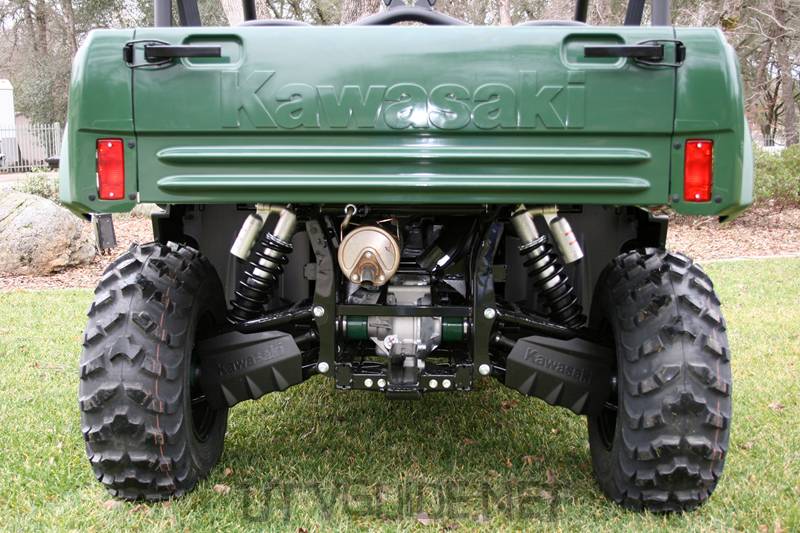
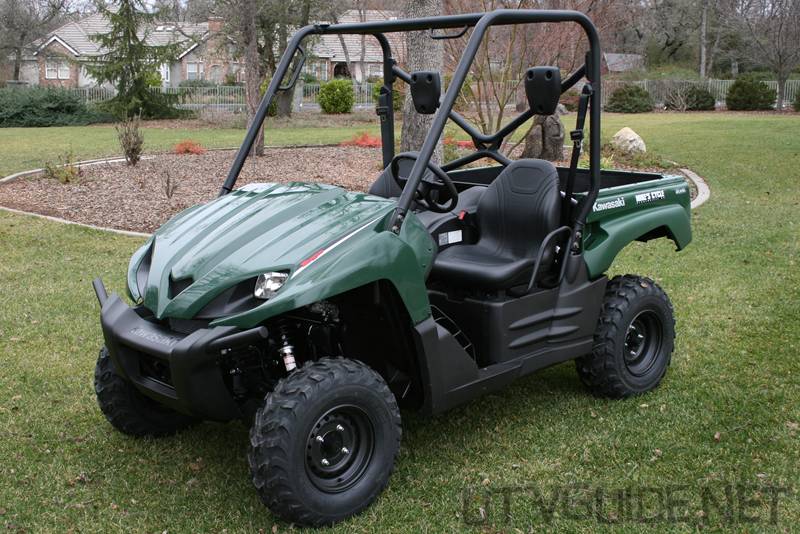
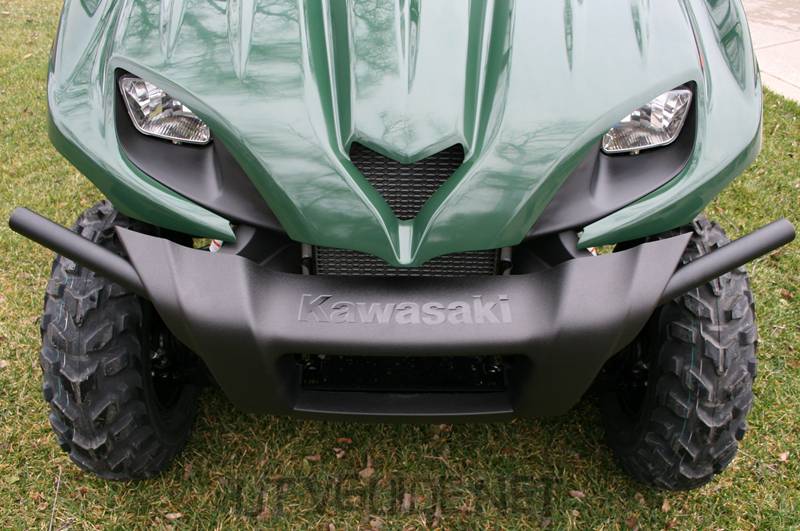
Stock green 2008 Kawasaki Teryx before the buildup project
The stock 2008 Kawasaki Teryx before the suspension, engine, protection and comfort upgrades began.

The first-generation Teryx was a capable trail machine, but it was noticeably different from today’s sport and recreation UTVs. Suspension travel, seating, occupant protection, instrumentation and engine output were all relatively modest by modern standards.

That also made the Teryx an excellent foundation for a project. Its V-twin responded well to performance work, its chassis had room for improvement and aftermarket companies were quickly developing products for Kawasaki’s new side-by-side.

Instead of building it for one specialized purpose, we divided the project into several areas:

  • Occupant protection and comfort
  • Suspension and chassis performance
  • Engine and clutch performance
  • Rock and underbody protection
  • Lighting and electrical accessories
  • Navigation and group communication

This approach allowed us to evaluate individual upgrades before moving into more extensive modifications.

Seats, Harnesses, Cage and Doors


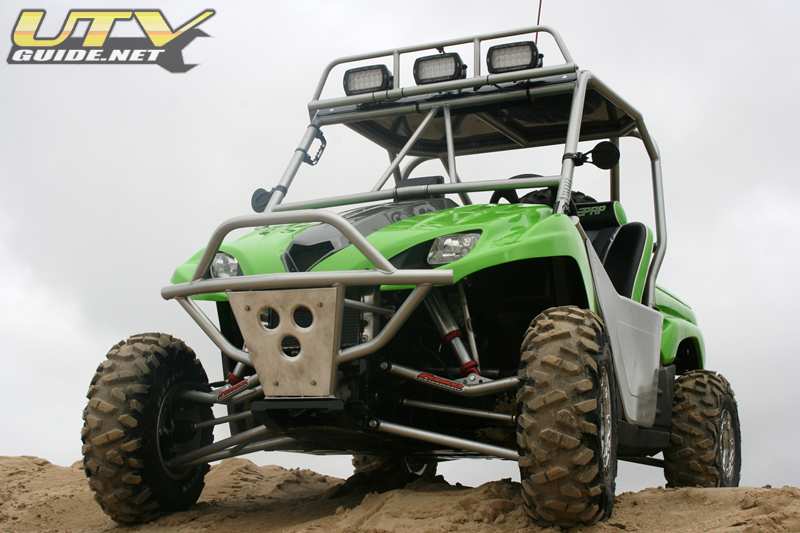
2008 Kawasaki Teryx with SDR Motorsports roll cage, half doors and front bumper
SDR Motorsports fabricated the two-seat cage, half doors, bumper and spare-tire mount.

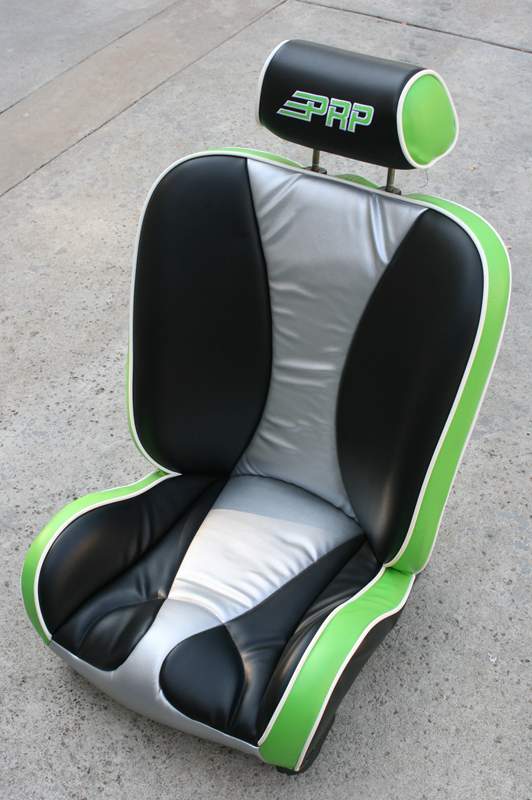
Occupant protection was one of our first priorities. We replaced the original seating with PRP suspension seats mounted on SDR Motorsports seat bases. Simpson harnesses helped hold the driver and passenger securely in place when crossing rough terrain or driving aggressively in the dunes.


PRP suspension seats installed in the 2008 Kawasaki Teryx
PRP suspension seats and Simpson restraints improved occupant comfort and containment.

SDR Motorsports also fabricated the roll cage, half doors, front bumper and spare-tire mount. The half doors provided additional containment without completely enclosing the cab, while the redesigned cage and bodywork gave the Teryx a more finished, purpose-built appearance.

Axia Alloys side mirrors and a panoramic rearview mirror improved visibility, particularly when riding with a group or watching for faster vehicles in the dunes. A fire extinguisher and mount were installed within reach of the occupants.

Together, these changes transformed the Teryx from a largely stock utility-recreation vehicle into something better suited to aggressive trail, dune and desert use.

Testing Stock-Width Replacement Shocks


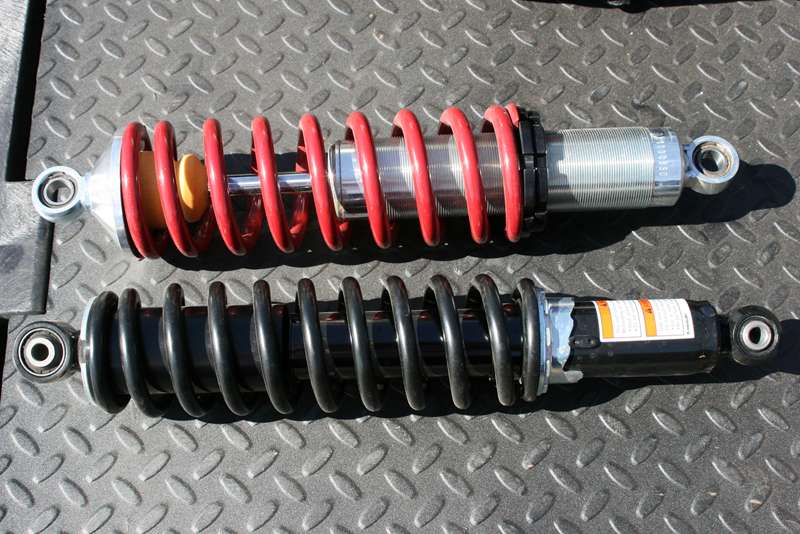
Bilstein front replacement shock compared with a stock Kawasaki Teryx shock
A Bilstein front replacement shock compared with the original Kawasaki Teryx shock.

Before converting the Teryx to long travel, we wanted to learn how much could be gained while retaining the original suspension arms and vehicle width.

We installed Bilstein stock-length replacement shocks and tested them in chopped-up dunes, whoops and larger g-outs. The replacement shocks gave the Teryx a smoother ride through smaller terrain while providing considerably better control when impacts became larger.

The improvement demonstrated a lesson that remains relevant to current UTV builds: properly selected and valved shocks can make a substantial difference even without adding wheel travel or increasing vehicle width.

Our complete Kawasaki Teryx replacement shock review covers that stage of the project in greater detail.

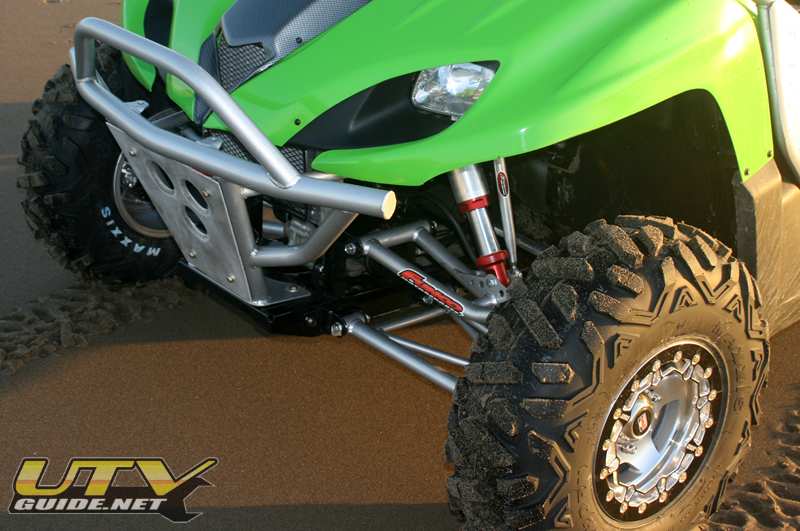
Funco Long-Travel Suspension


Funco long-travel suspension installed on a 2008 Kawasaki Teryx
The Funco long-travel system dramatically increased the Teryx’s track width and usable suspension travel.

Once the stock-width shock testing was complete, we moved to the project’s biggest chassis upgrade: a Funco Motorsports long-travel suspension system.

The Funco kit used chromoly tubular A-arms that added four inches of width per side. It increased wheel travel from approximately 7.5 inches in stock form to a claimed 14 inches. Longer, higher-strength axles were installed to accommodate the wider suspension.

Sway-A-Way RaceRunner air shocks were selected to control the additional travel. These shocks offered an adjustable progressive spring rate without conventional coil springs. An iTi Motorsports sway-bar system helped manage body roll with the wider suspension.


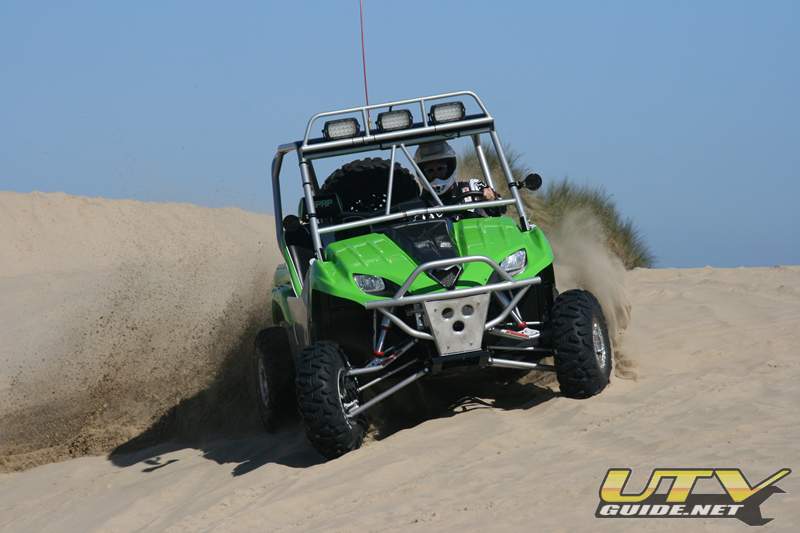
Long-travel Kawasaki Teryx driving in the Oregon Dunes
Testing the long-travel Teryx in the Oregon Dunes near Coos Bay.

The combination substantially changed the Teryx. Increasing both wheel travel and track width produced a more stable vehicle with better control in rough desert terrain and the dunes. It could absorb terrain that forced the stock machine to slow down, while the wider stance helped it feel more planted.

The components and installation process are documented in our original Kawasaki Teryx long-travel suspension review.

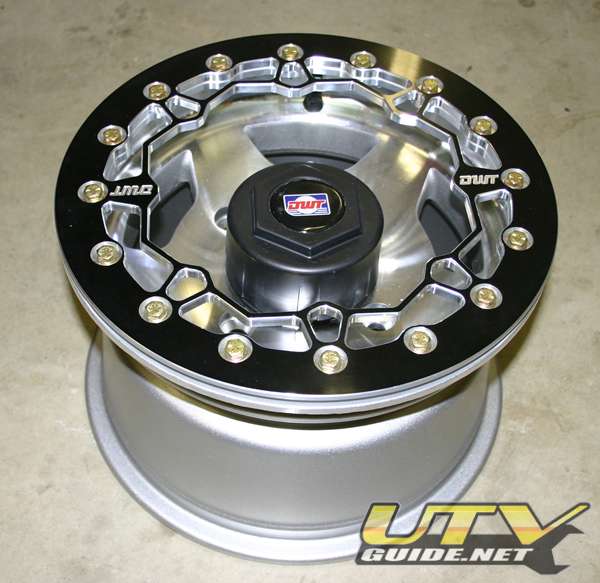
DWT beadlock wheels and Maxxis tires completed the suspension package. Beadlocks were particularly valuable when running reduced tire pressure in sand or on rocky trails.

Building More Power From the 749cc V-Twin


Four Stroke Tech standard-bore Kawasaki Teryx performance engine kit
The Four Stroke Tech performance package upgraded the original engine without turning it into a big-bore build.

The original carbureted Teryx V-twin had good low-speed character, but the additional weight, larger tires and wider suspension made more power desirable.

Our first group of performance modifications included:

  • K&N air filter
  • Dasa Racing intake and plenum-ring upgrades
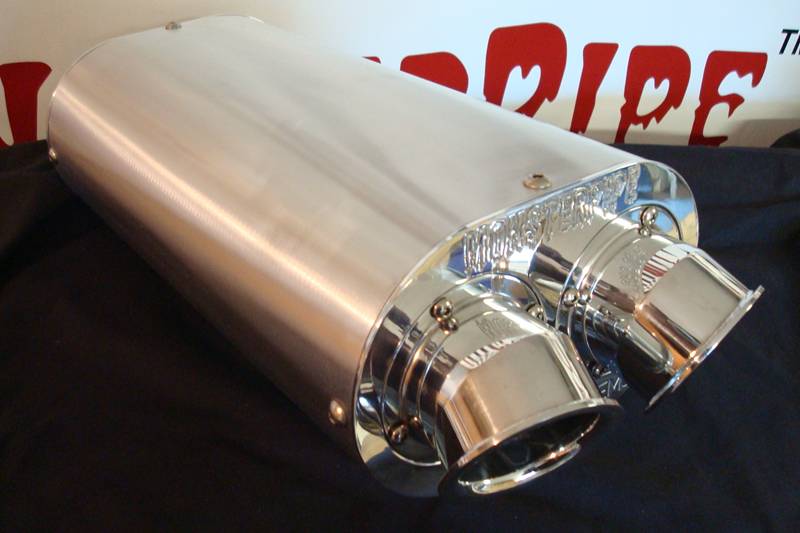
  • Muzzy exhaust
  • Velocity Devices CDI
  • EPI clutch kit

The CDI changed the ignition and operating limits, while the intake and exhaust modifications helped the engine breathe more freely. The clutch kit allowed the CVT to work more effectively with the engine upgrades and the demands of the completed vehicle.

We eventually went inside the engine with a Four Stroke Tech standard-bore performance kit. It included 11.5:1 pistons, Stage 2 cams and heavy-duty valve springs. Retaining the stock bore kept the build from becoming a big-bore engine project, while the internal upgrades produced a more noticeable increase in performance.

The Teryx standard-bore performance kit worked with the intake, exhaust, ignition and clutch changes to create a stronger overall package that could still operate on pump gas.


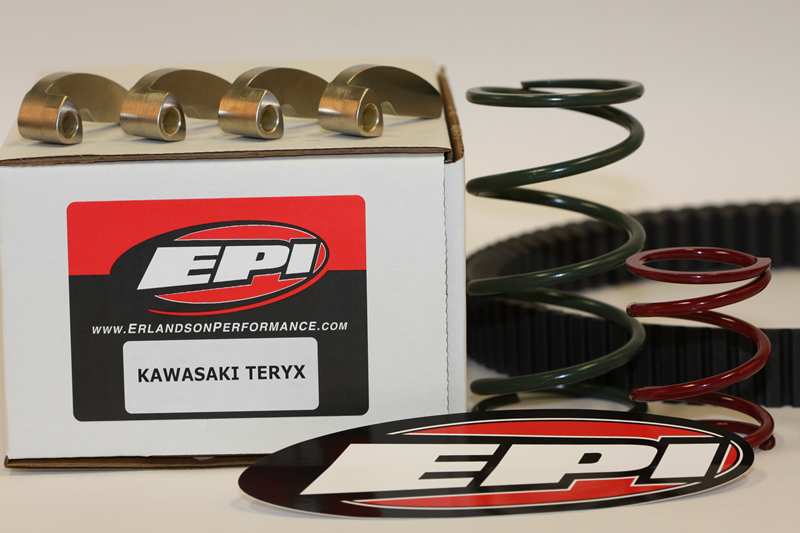
EPI clutch kit used in the 2008 Kawasaki Teryx build
An EPI clutch kit helped match the CVT calibration to the modified engine and completed vehicle.

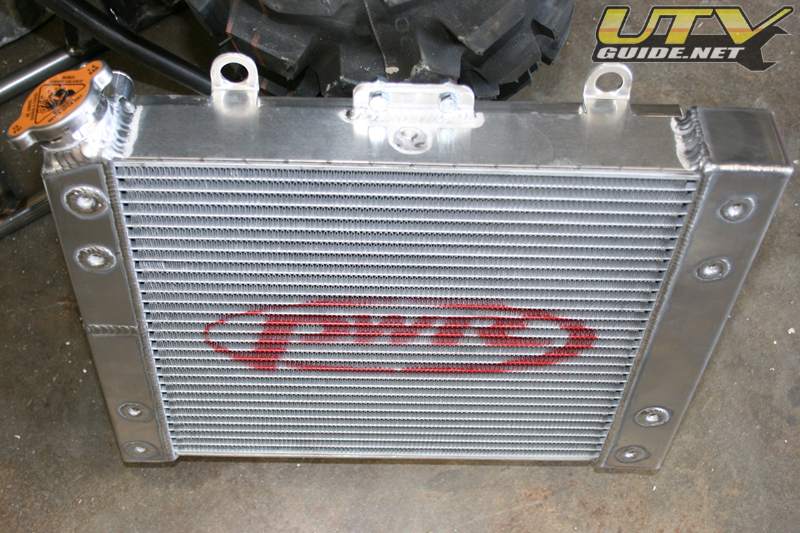
A PWR radiator and an upgraded crankcase breather system were added to support the modified engine.

Protecting the Teryx for Rocky Trails


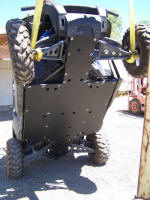
Factory UTV UHMW skid plate installed under a Kawasaki Teryx
The Factory UTV UHMW skid plate provided considerably more coverage than the original protection.

The original skid protection left important areas of the Teryx exposed. That was a concern because this vehicle would be used on rocky trails as well as in sand and open desert.

We installed a Factory UTV UHMW skid plate that covered more of the chassis, including the area beneath the seats. UHMW slides across rocks more easily than many metal skid plates and can absorb impacts without permanently bending in the same manner as thin aluminum.

Recessed mounting hardware also reduced the likelihood of exposed bolt heads catching on obstacles. Our Kawasaki Teryx UHMW skid-plate review shows the difference between the limited factory coverage and the larger aftermarket system.

A WARN XT40 winch and billet fairlead provided a recovery option for technical trails and rock-crawling trips.

Lighting and Electrical Upgrades


Baja Designs LED driving lights used on the Kawasaki Teryx project
Baja Designs auxiliary lights supplemented the upgraded replacement headlights.

Driving after dark required considerably more light than the original headlights could provide. We experimented with factory-replacement HID headlights before adding Baja Designs LED auxiliary lights.

Because the build accumulated lighting, communications equipment and other electrical accessories, we installed a dedicated fuse-and-relay block instead of connecting every accessory independently to the factory wiring. This made the system easier to organize, troubleshoot and service.

The additional lighting was especially useful during nighttime dune rides and long desert trips that did not always end before sunset.

Communications and GPS Navigation


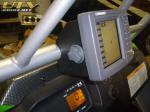
Lowrance 540C GPS and roll-bar mount in a Kawasaki Teryx
A roll-bar-mounted Lowrance 540C provided navigation for long group rides.

Group communication was another essential part of the build. A two-seat Rugged Radios intercom allowed the driver and passenger to communicate inside the vehicle, while the mobile radio provided vehicle-to-vehicle communication.

This equipment was particularly valuable in dusty conditions, where maintaining visual contact with the next vehicle could be difficult.

A Lowrance 540C GPS and roll-bar mount were also installed. Compared with the compact navigation displays available today, it was a large piece of equipment, but it gave us dependable route information for long desert rides.

Together, the radio, intercom and GPS made the Teryx a much more capable vehicle for organized group adventures.

Digital Dash and Maier Bodywork


Multifunction digital dash installed in a standard 2008 Kawasaki Teryx
The digital meter added a speedometer, trip meters, hour meter and clock.

The standard 2008 Teryx came with basic indicator lights, while the LE model received a multifunction digital display. Kawasaki’s compatible wiring made it possible to install the more informative meter in the standard model.

The upgraded display added a speedometer, dual trip meters, an hour meter and a clock. It was a relatively simple modification that provided substantially more information than the original arrangement. See our Kawasaki Teryx digital-dash installation for additional details.


2008 Kawasaki Teryx with black Maier replacement bodywork
Maier replacement bodywork gave the finished project its distinctive appearance.

Maier replacement plastic completed the exterior transformation and helped visually separate the finished project from a stock 2008 Teryx.

Complete 2008 Kawasaki Teryx Build List

Engine and Drivetrain

  • Four Stroke Tech 11.5:1 pistons
  • Four Stroke Tech Stage 2 cams
  • Heavy-duty valve springs
  • K&N air filter
  • Dasa Racing intake and plenum rings
  • Muzzy exhaust
  • Velocity Devices CDI
  • EPI clutch kit
  • PWR radiator
  • Upgraded crankcase breather

Suspension, Wheels and Protection

  • Bilstein stock-length replacement shocks during the first suspension stage
  • Funco plus-four-inch-per-side long-travel suspension
  • Funco extended axles
  • Sway-A-Way RaceRunner air shocks
  • iTi Motorsports sway bars
  • Factory UTV UHMW skid plate
  • DWT beadlock wheels
  • Maxxis tires

Cab and Occupant Equipment

  • SDR Motorsports roll cage
  • SDR Motorsports half doors
  • PRP suspension seats
  • SDR Motorsports seat bases
  • Simpson restraints
  • Axia Alloys side mirrors
  • Panoramic rearview mirror
  • Fire-extinguisher mount

Recovery, Lighting and Electronics

  • WARN XT40 winch
  • Billet winch fairlead
  • Baja Designs auxiliary lights
  • Replacement HID headlights
  • Dedicated fuse-and-relay block
  • Rugged Radios intercom and mobile radio
  • Lowrance 540C GPS
  • Kawasaki multifunction digital meter

Exterior Equipment

  • Maier replacement bodywork
  • SDR Motorsports front bumper
  • SDR Motorsports spare-tire mount

What We Learned From the Build


Modified long-travel Kawasaki Teryx driving through the Oregon Dunes
The completed Teryx became a much more capable dune, desert and trail machine.

The suspension was the modification that most dramatically changed the Teryx. Replacement shocks made the stock-width vehicle more controlled, but the Funco long-travel system expanded its capabilities into another category. The additional width, wheel travel and improved damping allowed it to carry more speed while remaining more composed in rough terrain.

Engine work became increasingly valuable as the project gained weight and larger components. The standard-bore performance kit, intake, exhaust, CDI and clutch calibration worked together more effectively than any single bolt-on modification could have.

Just as important were the less dramatic upgrades. Seats, restraints, doors, skid protection, radios, GPS and lighting made the vehicle more comfortable and better suited to long days on the trail.

A Snapshot of the Early UTV Aftermarket

This project also documents an important period in UTV history. The 2008 Teryx arrived when builders were beginning to apply technology from sand cars, off-road racing and ATVs to recreational side-by-sides.

Long-travel suspension, suspension seats, intercoms, beadlock wheels and internal engine kits were not yet ordinary factory equipment. Owners and aftermarket companies were still defining what a high-performance recreation UTV could become.

The finished Teryx was considerably wider, faster and better equipped than the machine we started with. More importantly, the project showed how adaptable Kawasaki’s original platform could be.

For a broader look at how the model developed after 2008, visit our history of the Kawasaki Teryx and Teryx4.