


The 2010 Polaris RANGER EV brought genuine electric power to Polaris’ utility side-by-side lineup. It combined quiet operation with a midsize chassis, selectable all-wheel drive, Turf Mode, independent rear suspension and a dumping cargo box.
That combination made the RANGER EV particularly useful around farms, ranches, horse facilities and rural properties where noise and exhaust could be a problem. It could also perform jobs that would be difficult for a conventional golf cart, especially when mud, uneven terrain or towing were involved.
This review covers our initial experience with the original lead-acid-battery RANGER EV. For extended ownership impressions, see our Polaris RANGER EV long-term review.
2010 Polaris RANGER EV Highlights
- 48-volt AC induction electric motor
- 30 peak horsepower
- On-Demand True All-Wheel Drive
- Two-wheel drive and unlocked Turf Mode
- High, Low and Max Range operating modes
- Independent front and rear suspension
- 500-pound cargo-box capacity
- 1,250-pound towing capacity
- Charging from a standard 120-volt household outlet
- Claimed maximum range of up to 50 miles under ideal conditions
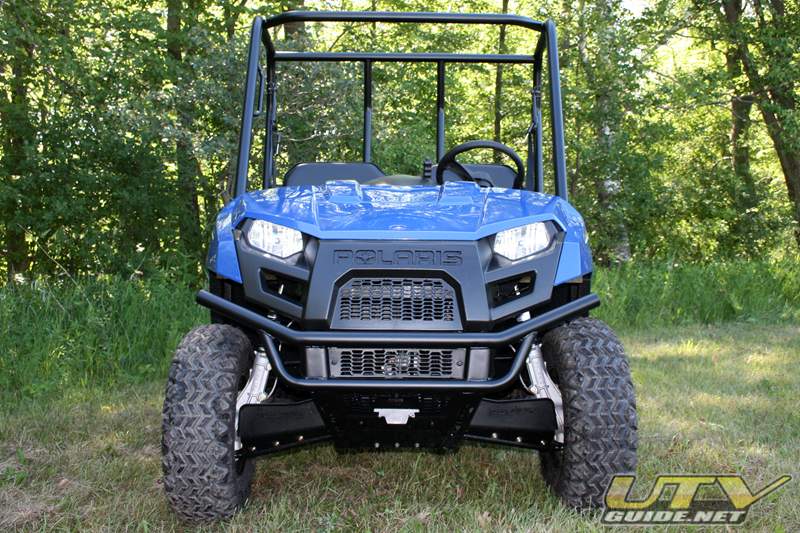
The RANGER EV shared its compact two-seat platform with the contemporary Polaris RANGER 400. At 56.5 inches wide and 108 inches long, the midsize chassis was easy to maneuver through gates, barns and other confined areas.
Electric Motor and Battery Pack
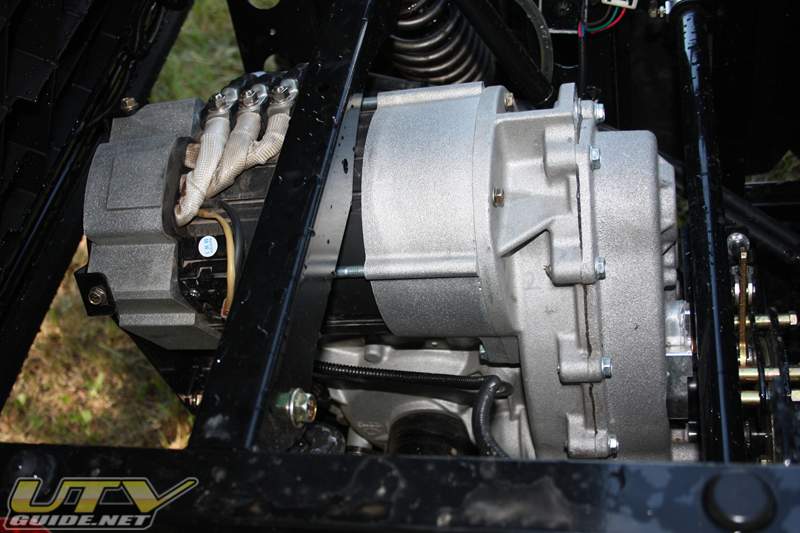
Power came from a 48-volt AC induction motor rated at 30 peak horsepower. A 650-amp Sevcon Gen IV controller managed power delivery and regenerative braking.
The original battery pack consisted of eight 12-volt lead-acid batteries mounted beneath the seat. Polaris listed the pack at approximately 11.7 kWh. These batteries contributed to the vehicle’s substantial 1,700-pound claimed dry weight, but mounting them low in the chassis helped keep the center of gravity down.
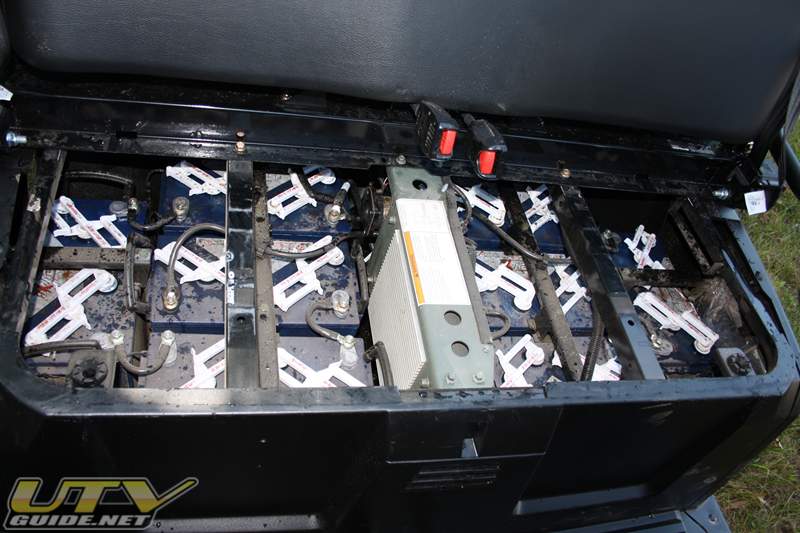
Polaris advertised a maximum range of up to 50 miles in Max Range mode on flat ground. Actual range depended heavily on terrain, payload, towing, temperature and driving style. Polaris also described a more typical operating range of approximately 35 to 45 miles.
The electric drivetrain delivered immediate torque without an engine starting, shifting or building rpm. That made low-speed operation smooth and predictable when maneuvering around animals, buildings and crowded work areas.
Charging the RANGER EV
The charging cord was stored inside the glove compartment. Charging was simple: switch the key off and connect the cord to a standard 120-volt AC outlet. The onboard Delta-Q charger handled the charging process, with a full charge taking approximately eight hours depending on the battery’s state of discharge.
Charge-status indicator
- Solid green: Charging complete
- Fast flashing green: Battery is less than 80 percent charged
- Slow flashing green: Battery is more than 80 percent charged
- Flashing amber: Reduced charging power caused by low AC voltage or high charger temperature
- Flashing red: Charger error; charger power should be reset
Plugging the RANGER EV in after several days of use quickly became part of the normal routine. For property work that did not require covering long distances in one day, charging was easier than keeping gasoline on hand.
Driving Modes and Controls

The RANGER EV offered three operating modes:
- High: Maximum speed and general driving
- Low: Low-speed work, towing and hauling
- Max Range: Reduced performance intended to extend battery range
The original dashboard included a digital charge meter and hour meter but did not have a speedometer or odometer. That was adequate for property work, although a speedometer and trip-distance display would have made range management easier.
AWD, 2WD and Turf Mode

One of the RANGER EV’s best features was its selectable driveline system. The driver could choose between Turf Mode, locked two-wheel drive and On-Demand True All-Wheel Drive.
Turf Mode unlocked the rear differential so the rear wheels could rotate independently. This reduced damage to lawns and other sensitive surfaces while also improving maneuverability in tight spaces. Locked two-wheel drive provided additional traction, while AWD was available for mud, uneven fields and rough trails.
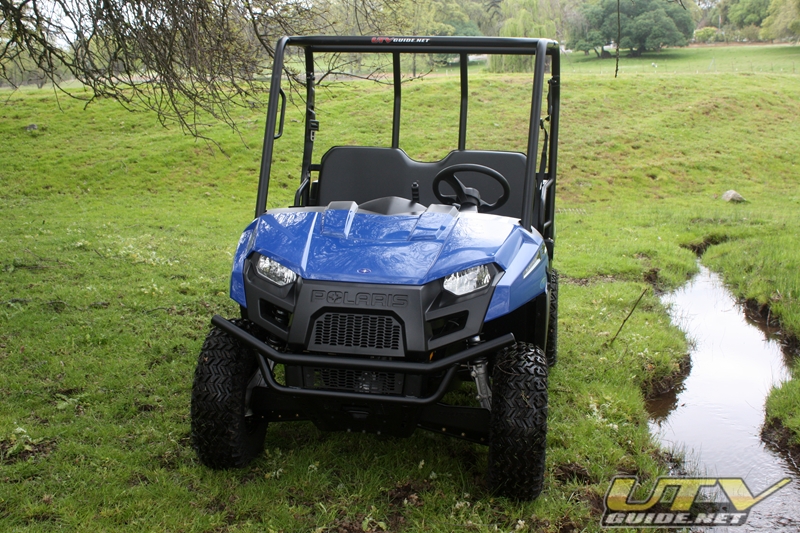
This flexibility distinguished the RANGER EV from a typical electric golf cart. It could cross wet pastures, pull equipment and negotiate rough terrain while still being gentle enough to use around landscaped property.
Ride and Utility Capability
The RANGER EV used MacPherson-strut front suspension with 8 inches of travel and dual-A-arm independent rear suspension with 9 inches of travel. It also provided 10 inches of ground clearance.
The suspension and AWD system allowed the EV to handle terrain that would challenge many conventional electric carts. Its relatively compact dimensions also made it easy to work around barns, gates, walkways and wooded property.
A Lock & Ride dumping cargo box carried up to 500 pounds. Polaris rated the vehicle for a 1,000-pound payload and 1,250 pounds of towing capacity. Those figures gave the EV enough utility for hauling feed, tools, fencing supplies, firewood and yard debris or pulling light property-maintenance equipment.
What We Liked
- Extremely quiet operation around livestock and residential property
- Immediate electric torque at low speeds
- Useful AWD system for mud and uneven ground
- Turf Mode helped protect lawns and improved turning ability
- Compact midsize chassis fit through narrow gates and work areas
- Dumping cargo box was substantially more useful than a golf-cart platform
- Simple overnight charging from a household outlet
Limitations
- Lead-acid batteries added considerable weight
- Range varied with terrain, temperature, load and driving mode
- An approximately eight-hour full charge required advance planning
- The dashboard lacked a speedometer and odometer
- The 25-mph top speed limited its usefulness for longer recreational rides
Additional 2010 Polaris RANGER EV Photos

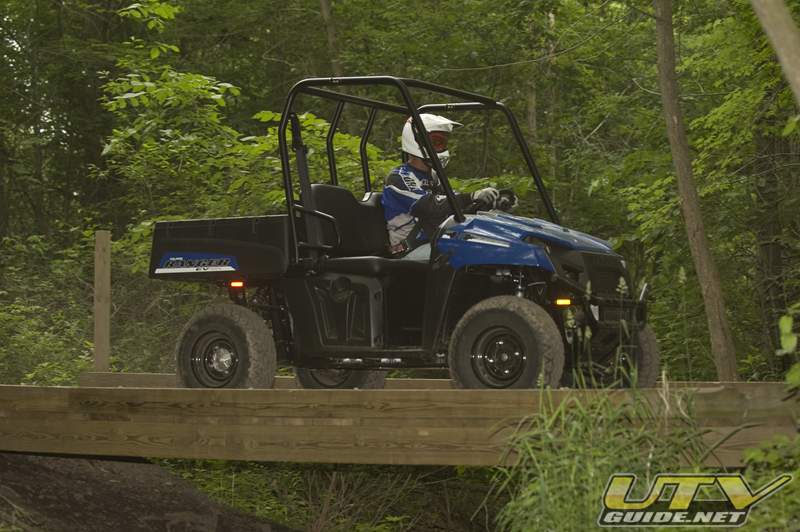
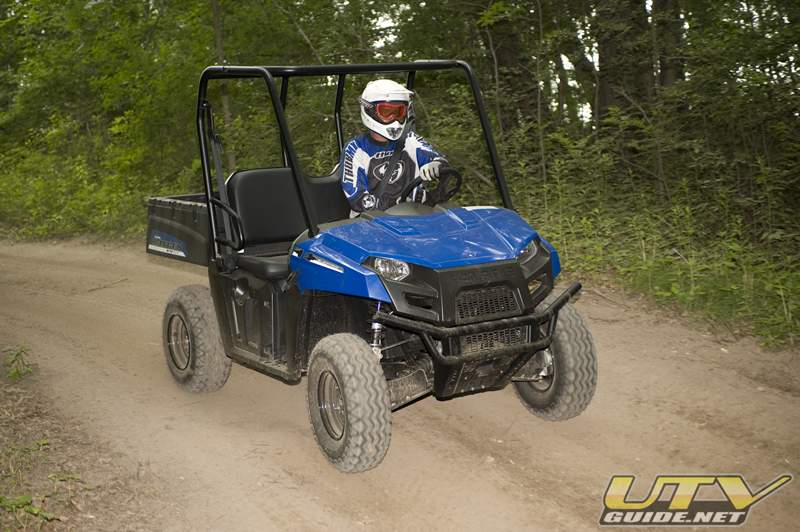
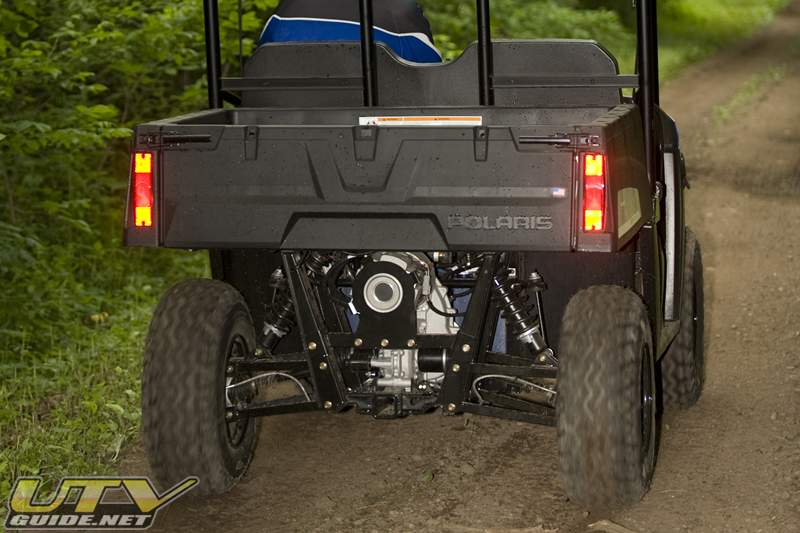





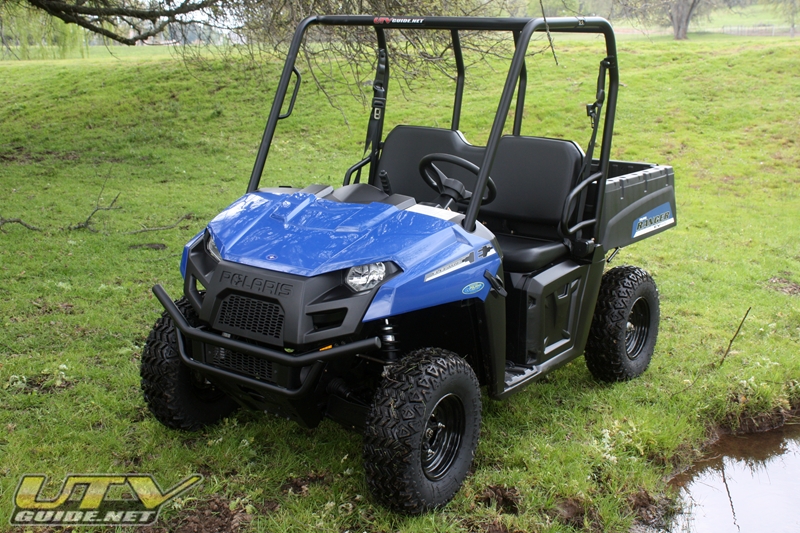
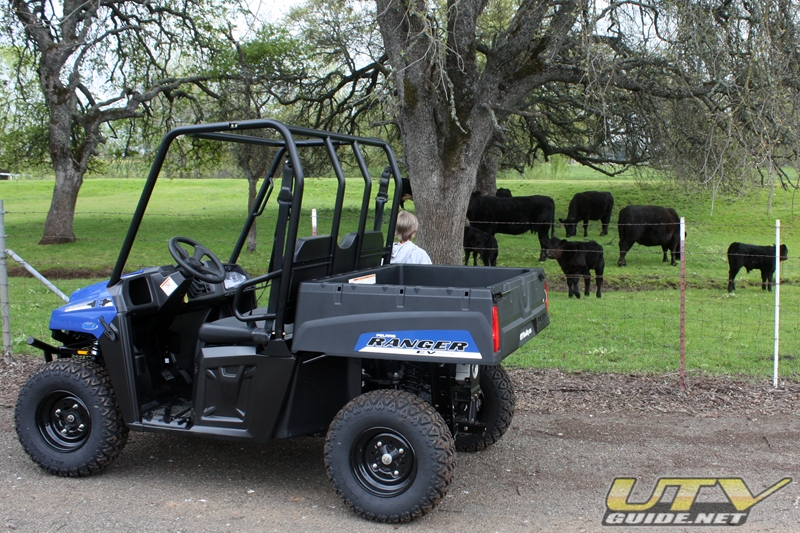
2010 Polaris RANGER EV Specifications
| Powertrain | |
|---|---|
| Motor | 48-volt high-efficiency AC induction motor |
| Peak output | 30 hp |
| Controller | 650-amp Sevcon Gen IV with multiple driving modes and regenerative braking |
| Battery pack | Approximately 11.7 kWh at 48 volts; eight 12-volt lead-acid batteries |
| Top speed | 25 mph |
| Claimed maximum range | Up to 50 miles in Max Range mode on flat ground; actual range varies |
| Charger | Onboard Delta-Q charger with 120-volt AC input |
| Approximate charge time | 8 hours, depending on depth of discharge |
| Transmission | Direct-drive motor to transaxle |
| Drive modes | On-Demand AWD, locked 2WD and Turf Mode |
| Suspension and Brakes | |
| Front suspension | Independent MacPherson struts; 8 inches of travel |
| Rear suspension | Dual A-arm independent rear suspension; 9 inches of travel |
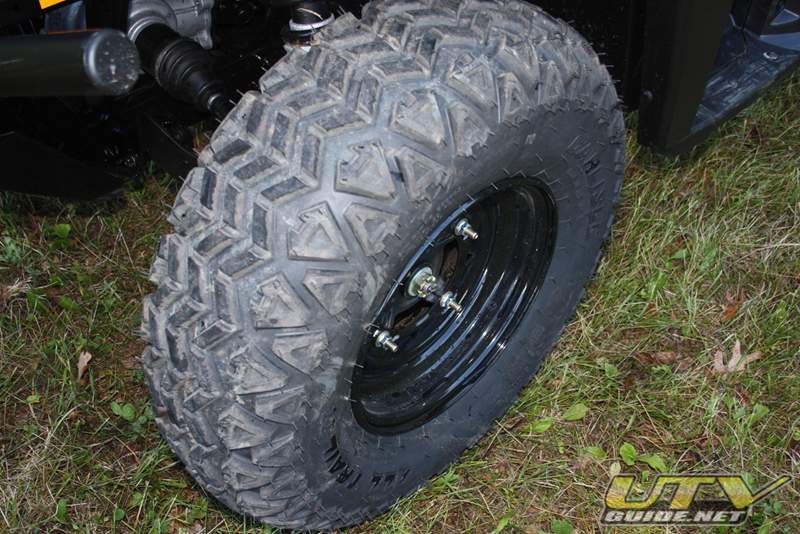
| Tires | 25×9-12 Carlisle All Trail II |
| Brakes | Four-wheel hydraulic discs with dual-bore front calipers |
| Parking brake | Dash-mounted mechanical lever |
| Dimensions and Capacity | |
| Wheelbase | 72 inches |
| Overall dimensions | 108 × 56.5 × 73 inches |
| Ground clearance | 10 inches |
| Turning radius | 150 inches |
| Claimed dry weight | 1,700 pounds |
| Cargo-box capacity | 500 pounds |
| Payload capacity | 1,000 pounds |
| Towing capacity | 1,250 pounds |
| Seating | Two occupants |
| Original MSRP | $10,699 |
Real-World Use at a Horse Show

We brought the RANGER EV to the Capital City Classic at Leone Equestrians in April 2010 while my son competed. Golf carts were common around the facility, but the RANGER EV added a cargo box that made hauling equipment and supplies much easier.
Its quiet electric drivetrain was particularly well suited to the equestrian environment. It maneuvered easily through the crowded aisles without the engine noise that could disturb horses and riders.
Final Impression
The original Polaris RANGER EV was more than an electric alternative to a gasoline-powered utility vehicle. Its AWD system, Turf Mode, independent suspension, useful cargo box and towing capacity made it a legitimate working side-by-side.
Its lead-acid battery technology, limited top speed and lengthy charge time are dated by current standards, but the basic formula proved sound. For work around livestock, rural property and noise-sensitive locations, the RANGER EV delivered capabilities that a conventional golf cart could not match.
Continue with our Polaris RANGER EV long-term review, explore the history of the Polaris RANGER, or compare additional models in our Polaris RANGER models and buying guide.


