


The 2016 Polaris RZR S 1000 combined the compact, responsive chassis of the RZR S 900 with a 100-horsepower ProStar engine. The result was an exceptionally quick 60-inch sport UTV built for riders who wanted serious power without moving up to the wider RZR XP platform.
Polaris did not necessarily need to put a 100-horsepower, 999cc twin-cylinder engine into its relatively short and narrow RZR S chassis. Riders wanted it, however, and Polaris delivered one of the most entertaining trail machines in the company’s expanding sport lineup.
The RZR S 1000 arrived for model year 2016, just one year after Polaris completely redesigned the middleweight RZR S platform. It retained the manageable 60-inch width and 79-inch wheelbase of the RZR S 900, but added 25 horsepower and considerably more torque.
This review covers our firsthand impressions of the original machine. For its complete factory specifications, equipment and model history, see our 2016 Polaris RZR S 1000 overview.
From the Original RZR S to 100 Horsepower
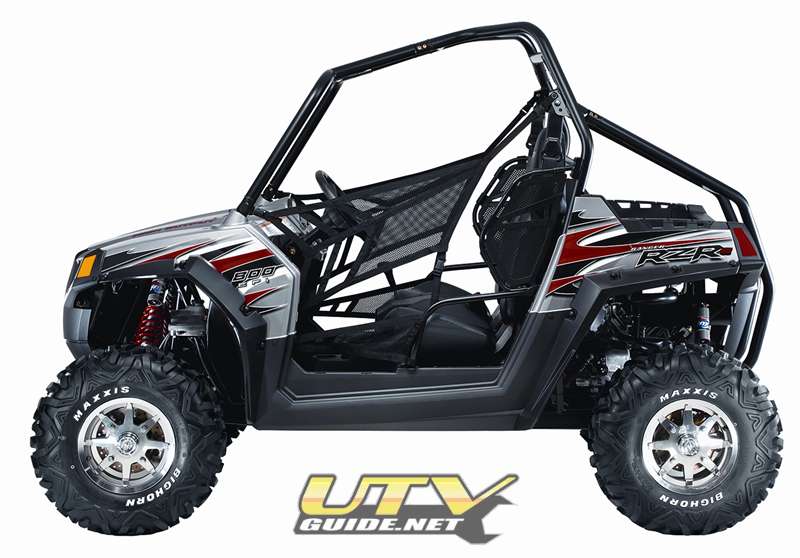
To understand the RZR S 1000, it helps to look back at the original Polaris RZR S 800. Introduced with a 760cc parallel-twin engine, FOX Podium shocks and four-wheel independent suspension, it helped establish the 60-inch sport side-by-side category.
The wider stance made the original RZR S more stable and substantially more capable at speed than the 50-inch RZR. It was a machine that encouraged drivers to attack corners rather than simply negotiate them.
The sport UTV market then evolved rapidly. The RZR XP 900 introduced a new engine, chassis and trailing-arm suspension, followed by the even more capable RZR XP 1000. Polaris eventually replaced the aging S 800 with the substantially revised RZR S 900 for 2015.
The S 900 was already an excellent all-around trail machine. Its 75-horsepower engine felt well matched to the chassis, while its 60-inch width provided a useful compromise between tight-trail maneuverability and high-speed stability. Our two-day RZR S 900 review showed just how versatile that combination could be.
For 2016, Polaris installed its 999cc ProStar twin and created the RZR S 1000. If the S 900 was a versatile multi-tool, the S 1000 felt more like a sledgehammer wrapped in dynamite.
2016 Polaris RZR S 1000 Key Specifications
| Engine | 999cc liquid-cooled DOHC twin-cylinder |
|---|---|
| Claimed horsepower | 100 hp |
| Transmission | Automatic PVT with Park, Reverse, Neutral, Low and High |
| Drive system | On-Demand True AWD/2WD |
| Steering | Electronic power steering |
| Width | 60 inches |
| Wheelbase | 79 inches |
| Front suspension travel | 12.25 inches |
| Rear suspension travel | 13.2 inches |
| Ground clearance | 12.5 inches |
| Tires | 27-inch GBC Dirt Commander |
| Towing capacity | 1,500 pounds |
| Original MSRP | $17,999 |
ProStar 1000 Engine and Trail Performance

Not many machines can match the original RZR S 1000’s ability to make its driver laugh—or occasionally mutter something less printable—after a hard stab of the throttle.
The 999cc parallel twin used dual overhead camshafts, four valves per cylinder and electronic fuel injection. Its 100-horsepower output represented a 25-horsepower increase over the S 900, but the difference felt even more dramatic from behind the wheel.
The engine delivered immediate, naturally aspirated response. Apply too much throttle in a loose corner and the rear of the machine would step out quickly, but the short wheelbase, responsive steering and predictable power delivery made the slide controllable. It felt like a muscle car for dirt: exciting, aggressive and not particularly interested in being subtle.
That additional output required more throttle discipline than the RZR S 900, particularly on narrow, tree-lined trails. The S 1000 could cover ground very quickly, and an enthusiastic right foot could send the rear tires skating toward the edge of the trail.
The transmission’s revised low range also improved its usefulness in technical terrain. Combined with the engine’s strong low-speed torque, it allowed the RZR to work through tighter sections without depending entirely on momentum.
Handling: Agile, Responsive and Entertaining

The RZR S 1000 retained the sharp handling traits that made the RZR S platform successful. Its 60-inch width was narrow enough to thread through wooded trails while providing considerably more stability than a 50-inch machine.
The 79-inch wheelbase was a full 11 inches shorter than the contemporary RZR XP 1000. That difference was immediately noticeable in switchbacks, closely spaced obstacles and other situations requiring quick changes of direction.
Compared with the wider XP, the S 1000 also provided more direct feedback through the chassis. The driver could feel each corner working across bumps, ruts and holes. It was a visceral experience, but one that remained forgiving enough for recreational trail riding.
The 100-horsepower engine made the chassis feel alive. It was easy to rotate the machine with the throttle and then use the responsive electronic power steering to place it where needed. In tight terrain, the S 1000 could run circles around larger, longer sport UTVs.
FOX Suspension

Four-wheel dual-A-arm suspension provided 12.25 inches of travel in front and 13.2 inches at the rear. FOX 2.0 Podium X piggyback-reservoir shocks controlled the suspension at all four corners.
The factory calibration was plush enough for recreational trail riding while remaining composed when the pace increased. The suspension did a good job of absorbing rocks, roots and trail chop without making the machine feel disconnected from the terrain.
The RZR S 1000 was not designed to attack deep holes and large G-outs with the same speed as an XP 1000. The XP’s longer wheelbase, larger tires and substantially greater suspension travel gave it a clear advantage in high-speed desert terrain and large impacts.
Where the S 1000 excelled was on narrower, more technical trails. Its suspension, compact dimensions and strong engine worked together rather than emphasizing only straight-line speed or maximum suspension travel.
GBC Dirt Commander Tires and AWD

Polaris equipped the RZR S 1000 with 27-inch GBC Dirt Commander tires: 27×9-12 in front and 27×11-12 at the rear. The eight-ply-rated Dirt Commander was a good match for the vehicle, delivering useful traction and durability across mixed terrain.
The tires worked with Polaris’ On-Demand True AWD system to help the S 1000 claw its way through loose climbs and rough technical sections. When the rear wheels began losing traction, the system automatically sent power to the front driveline.
The stock tire size also helped preserve the machine’s responsive handling and clutching. Larger aftermarket tires could improve obstacle clearance, but they would add rotating mass and change the way this relatively light, short-wheelbase chassis reacted.
Cockpit and Comfort

The RZR S 1000 received the same updated cockpit used by the S 900, with much of its interior and exterior design influenced by the RZR XP 1000. Compared with the original RZR S 800, it offered more room, improved ergonomics and a more modern layout.
The cockpit was comfortable, although taller occupants might have wanted deeper seats with more lateral support. Factory half doors were standard, while accessory lower inserts could provide additional protection from mud, rocks and branches.
Polaris offered an extensive catalog of roofs, storage boxes, bumpers, harnesses and other accessories. Many could be installed by a dealer and included with the vehicle’s financing, making it relatively easy to configure the machine for a particular type of riding.
Utility Beyond Its Sport-UTV Mission
Despite its performance focus, the RZR S 1000 retained useful recreational capability. Its factory-installed 1.25-inch receiver was rated to tow as much as 1,500 pounds, and the rear cargo box could carry up to 300 pounds.
Those figures did not make it a replacement for a utility-focused RANGER, but they gave the S 1000 more flexibility around camp, on private property or during a long recreational ride.
RZR S 1000 vs. RZR S 900 and XP 1000
At its original $17,999 MSRP, the RZR S 1000 cost approximately $3,300 more than a base RZR S 900 and $2,300 less than the contemporary RZR XP 1000.
The S 900 remained the more balanced choice for riders who did not need the larger engine. Its 75 horsepower was already well matched to the chassis, and its calmer power delivery made it easy to drive on narrow trails.
The S 1000 was the better choice for drivers who wanted stronger acceleration and enjoyed using the throttle to influence the chassis. It delivered XP-level engine displacement in a considerably shorter and narrower package.
The XP 1000 remained the better option for high-speed desert riding, large dunes and deeply whooped terrain. Its 64-inch stance, 90-inch wheelbase, 29-inch tires and substantially longer suspension travel provided capabilities the S platform could not duplicate.
Riders comparing used machines should also read our 2019 Polaris RZR S 1000 review. The later version retained the same basic 60-inch formula but used Walker Evans needle shocks and reflected several years of incremental model development.
2016 Polaris RZR S 1000 Review Verdict
The original Polaris RZR S 1000 was a wonderfully excessive machine. It combined the agility and direct feedback of the 60-inch RZR S chassis with the acceleration of a 100-horsepower ProStar engine.
It could not match the RZR XP 1000 in large bumps or wide-open desert terrain, but that was not its purpose. On winding trails, in the woods and across technical recreational terrain, its compact dimensions were a genuine advantage.
The RZR S 900 was arguably the more practical all-around package. The RZR S 1000, however, was the one for riders who placed excitement near the top of the shopping list. Its combination of sharp handling, strong traction and immediate naturally aspirated power made it one of the most entertaining 60-inch sport UTVs of its era.


