
 |
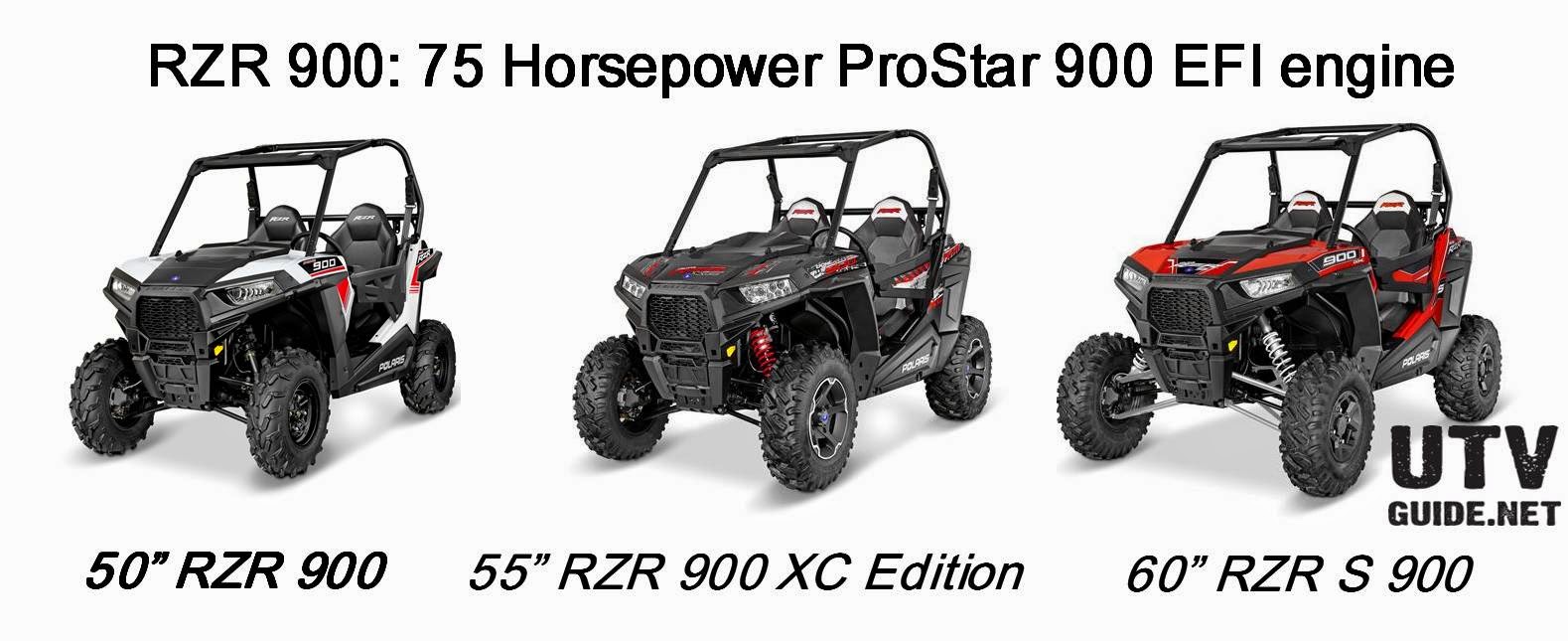
| 2015 Polaris RZR 900 Family |
Polaris RZR® is the No. 1 brand of sport side-by-sides, outselling its nearest competitor by leaps and bounds. That’s because RZR relentlessly innovates, offering the very best lineup for every type of off-road sport riding. Owning a RZR has become more than enjoying the dunes, desert or trail, it is a community of owners who share the RZR lifestyle due to their passion for not only off-roading but the ultimate experiences RZR provides. Model year 2015 brings the launch of RZR’s biggest line-up ever with all-new products and significant innovations to every single segment, for every type of riding to continue to fuel the RZR lifestyle.
For trail riders, RZR goes back to its roots and redefines the first two RZR products ever introduced with the new 2015 RZR 900 and RZR S 900. These vehicles feature unequalled power, highly-capable suspensions, unmatched agility and revolutionary ergonomics and styling.
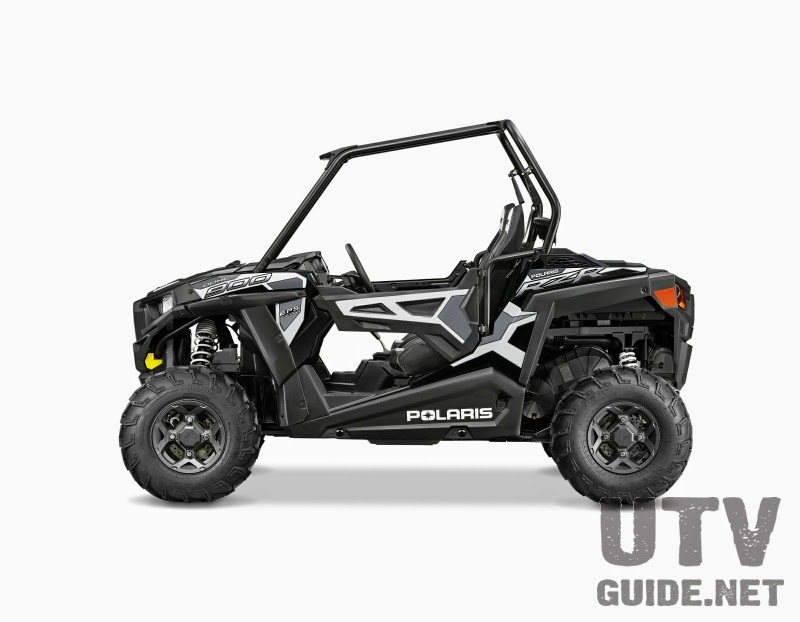 |
| 2015 Polaris RZR 900 |
At the heart of the RZR 900 and RZR S 900 is a 75 horsepower ProStar® 900 engine offering improved power-to-weight ratio and faster acceleration. The new ProStar power plants offer more than 40 percent more horsepower and15 percent more torque than the previous RZR 800 models. Polaris’ ProStar engines have become the pinnacle of performance engines for RZR due to their efficiency, acceleration and durability. For more power to the ground, the vehicles also feature the extremely durable RZR XP transmission which is specifically geared to optimize the power of the engine.
For trails that are width-restricted to 50 in/127 cm, the RZR 900 features a highly-capable, Dual A-Arm Rear Front and Rear Suspension with 11 in/27.94 cm of ground clearance*, and 10 in/25.4 cm front and rear travel to overtake any obstacles thrown in its way. The 26 in/66 cm PXT tires are Polaris-proven and provide all the traction needed even for the toughest trail. The vehicles are more razor sharp through the corners thanks to the optimized track width. Optimization comes from maximizing the track width while maintaining the overall width. For all other trails, the RZR S 900 has an unrivaled suspension featuring a Dual A-Arm Front and Rear Suspension with 12.25 in/31.11 cm front, 13.2 in/33.5 cm rear suspension travel and 12.5 in/31.75 cm of ground clearance. Outfitted with new, eight-ply, 27 in/68.58 cm GBC Dirt Commander Tires that offer better side bite, stiffer sidewalls, better tracking through corners and increased durability, the RZR S 900 won’t let anything stand in its way.
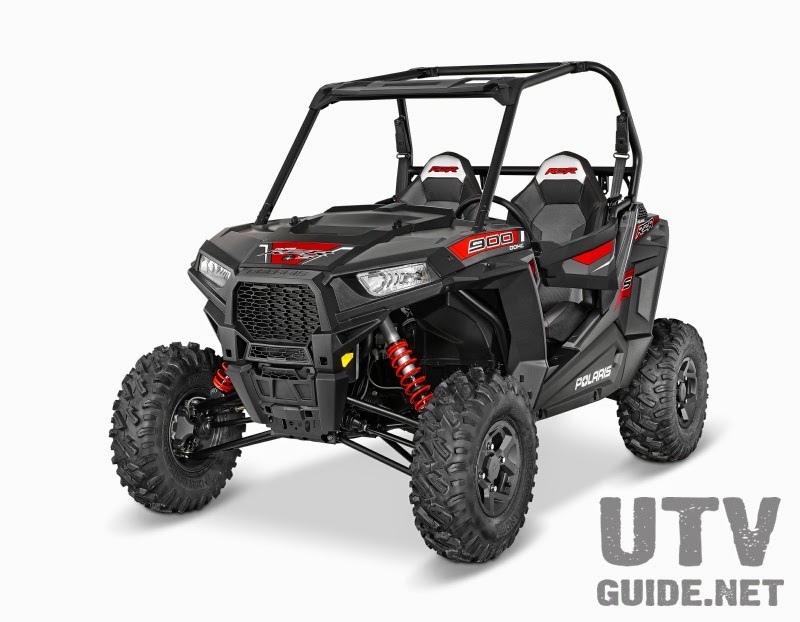 |
| 2015 Polaris RZR S 900 |
For 2014, the RZR XP 1000 was launched with revolutionary ergonomics and styling and for 2015, the new RZR 900 and RZR S 900 also feature many of the same, unique features. The newly-designed seats offer improved bolstering and 100 percent more hip cushioning for a more secure feel, and feature a new thin-film technology under the cover for a drier ride in wet conditions. The driver-side seat slider on the Limited Edition models allow for tool-less, on-the-ready seat adjustment along with additional leg room, and space-optimized dead pedals for both the driver and passenger make for a more secure ride. The driver also will appreciate a new, stiffer steering wheel designed for comfort and a more responsive feel. The vehicles also feature factory-installed quarter doors for extra protection from debris, and easier ingress and egress. For improved adjustability, the units feature the innovative, flow-through tongue seat belt design that is easier to adjust and retract. The sealed belt retractor housing ensures the belts will endure through the nastiest conditions. To stay on the trail longer, the vehicles sport a larger 9.5 gal/36 L fuel tank.
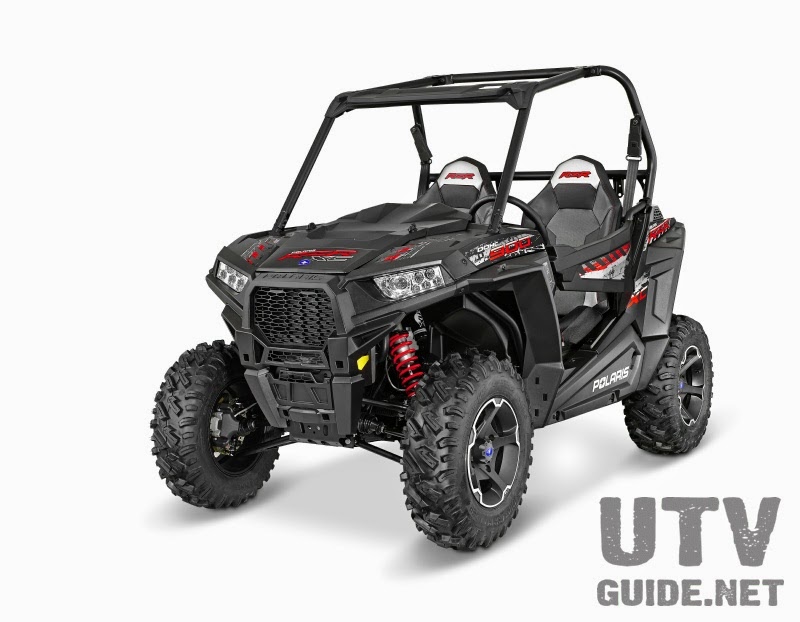 |
| 2015 Polaris RZR 900 XC Edition |
Sealed floor seams and equipment pass-throughs keep the occupants cleaner; while dual removable floor drains allow for easier clean out of the cabin.
The RZR 900 and RZR S 900 are even easier to service due to the ease of access of the major components. The air filter, spark plugs and oil fill are now located under the removable box panel in the cargo box of the vehicle while a panel between the seats houses the dipstick and oil filter, and is accessible without removing the seats. The vehicles feature an integrated transmission with only one check/fill point and grease zerks for both the inboard and outboard bushings of the A-arms. To add electric accessories easier, the vehicles feature a terminal block for wiring under the hood and a bigger battery with 44 Amp-hours of capacity and 575 cold-cranking amps.
RZR enthusiasts love to accessorize their vehicles and the RZR 900 and RZR S 900 feature integrated accessory mounting locations, hidden wire routing areas within the cab frame and more than 130 accessories for more customization.
The purpose-built vehicle chassis is exclusively engineered for Polaris accessories. With integrated mounting points situated along the vehicle frame and pass-through areas for routing wires, accessories can be attached with minimal installation time.
Additions, such as rock sliders and bumpers, easily attach and fit securely to the vehicle’s frame due to Polaris’ innovative Lock & Ride® Expanding Anchor; a revolutionary piece of hardware that expands as it is inserted into a mounting point. Lock & Ride® windshields, rear panels, roofs and doors work seamlessly with each other and install directly onto designated mounting points, making installation simple, and providing superior fit and finish.
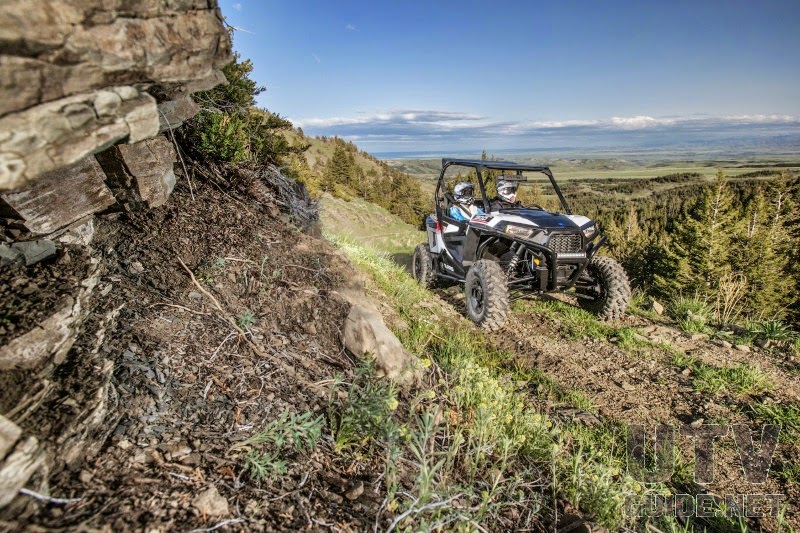 |
| Polaris RZR S 900 |
About Polaris Industries:
Polaris is a recognized leader in the powersports industry with annual 2013 sales of $3.8 billion. Polaris designs, engineers, manufactures and markets innovative, high quality off-road vehicles, including all-terrain vehicles (ATVs) and the Polaris RANGER® and RZR® side-by-side vehicles, snowmobiles, motorcycles and on-road electric/hybrid powered vehicles.
Polaris is among the global sales leaders for both snowmobiles and off-road vehicles and has established a presence in the heavyweight cruiser and touring motorcycle market with the Victory and Indian Motorcycle brands. Additionally, Polaris continues to invest in the global on-road small electric/hybrid powered vehicle industry with Global Electric Motorcars (GEM), Goupil Industrie SA, Aixam Mega S.A.S., and internally developed vehicles. Polaris enhances the riding experience with a complete line of Polaris Engineered Parts, Accessories and Apparel, Klim branded apparel and ORV accessories under the Kolpin and Cycle Country brands. Polaris Industries Inc. trades on the New York Stock Exchange under the symbol “PII”, and the Company is included in the S&P Mid-Cap 400 stock price index.
Information about the complete line of Polaris products, apparel and vehicle accessories are available from authorized Polaris dealers or anytime at www.polaris.com.
Follow us on Facebook at www.facebook.com/UTVGuide

No Comments