Originally published October 2, 2008. This article has been updated and reformatted with full-size photography to preserve the first wave of Kawasaki Teryx aftermarket development. The products shown are historical and may no longer be available.
The original 2008 Kawasaki Teryx 750 4×4 had only been on the market for a matter of months when the 10th Annual Sand Sports Super Show opened in Costa Mesa, California. Despite the vehicle’s recent introduction, aftermarket companies arrived with an impressive range of model-specific suspension, performance, protection and steering components.
The speed of that development demonstrated how much the UTV industry had changed. The Yamaha Rhino had already created a thriving market for custom side-by-side equipment, and manufacturers were ready to apply those lessons to Kawasaki’s new V-twin recreation platform.
Among the new products displayed at the 2008 Sand Sports Super Show were three different long-travel suspension systems, multiple exhausts, UHMW underbody protection, replacement bodywork and specialized steering components.
Together, they provide an unusually complete snapshot of the aftermarket surrounding the first-generation Kawasaki Teryx.

Why the 2008 Kawasaki Teryx Attracted Builders
Kawasaki introduced the Teryx 750 for the 2008 model year with a 749cc V-twin engine, selectable four-wheel drive, a locking front differential, independent suspension and a tilting cargo bed.
The Teryx retained more utility than the sport-focused Polaris RZR, but its compact two-seat chassis and V-twin engine made it an appealing foundation for recreational builds. It offered substantially more performance potential than the single-cylinder Yamaha Rhino while retaining useful trail and cargo capabilities.
The factory machine was only a starting point. Its limited suspension travel, basic underbody protection and restricted factory engine calibration created immediate opportunities for aftermarket companies.
The Teryx’s development from this original carbureted model into a successful trail, racing and four-seat platform is documented in our complete history of the Kawasaki Teryx and Teryx4.
Three Approaches to Teryx Long-Travel Suspension
Long-travel suspension was one of the largest product categories surrounding the early Teryx. Wider suspension increased stability while additional wheel travel allowed the vehicle to absorb larger bumps, whoops and dune transitions.
Three companies displayed substantially different Teryx systems at the 2008 show.
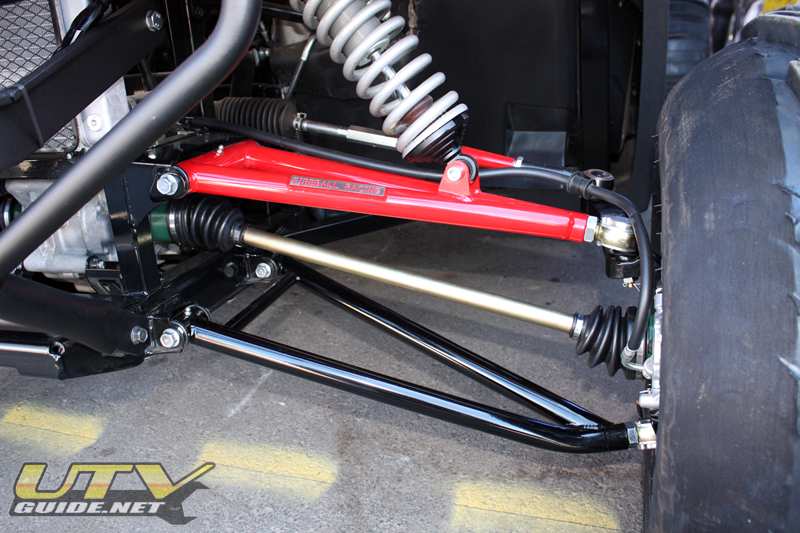
Long Travel Industries Teryx Suspension
Long Travel Industries introduced a tubular long-travel suspension package for the Kawasaki Teryx. The system replaced the factory control arms and used longer axles to accommodate the increased vehicle width.

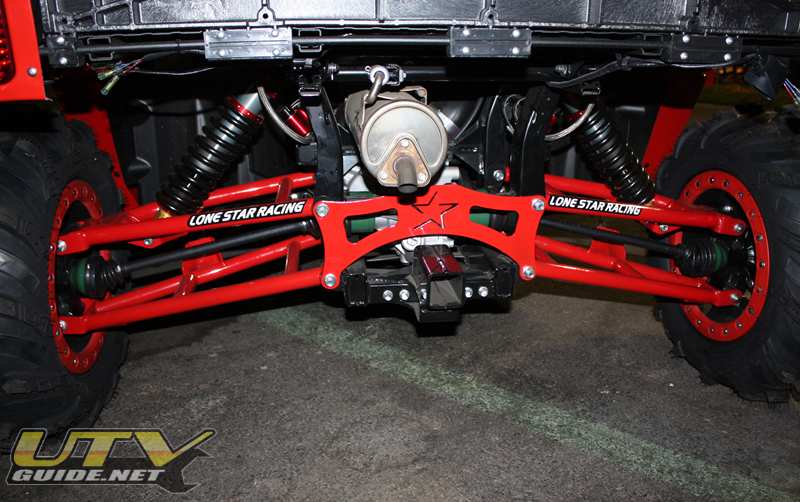
Lone Star Racing Plus-Five-Inch Kit
Lone Star Racing displayed its advertised plus-five-inch Teryx long-travel suspension system. Lone Star had extensive experience building ATV and Yamaha Rhino suspension, making the new Kawasaki a logical addition to its product range.

Fireball Racing Plus-Six-Inch Kit
Fireball Racing took another approach with its advertised plus-six-inch Teryx package. The wide tubular suspension reflected the aggressive dune-oriented style that had developed around highly modified Yamaha Rhinos.

The number of competing systems was remarkable for such a new vehicle. It indicated that suspension manufacturers expected the Teryx to become an important dune, desert and recreational platform.
UTVGuide.net ultimately selected a Funco Motorsports system with Sway-A-Way shocks for our own 2008 Kawasaki Teryx build project. Our original Teryx long-travel suspension report documents that installation and its effect on vehicle width, wheel travel and stability.
Early Teryx Exhaust Systems
The carbureted Teryx’s V-twin attracted immediate attention from performance companies. Intake, ignition, clutch and exhaust modifications became common first-stage upgrades as owners searched for more power from the original 749cc engine.
Three different exhaust systems at the show illustrated how rapidly that market was developing.
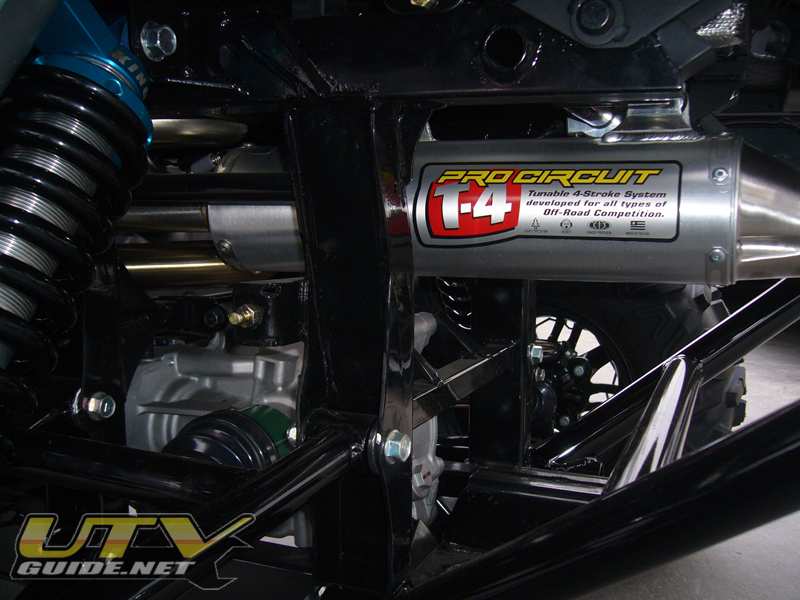
Pro Circuit Dual Exhaust
Pro Circuit displayed a dual-exhaust system with separate mufflers mounted beneath the rear cargo bed. The system gave the Teryx the appearance and sound associated with a more performance-focused V-twin build.

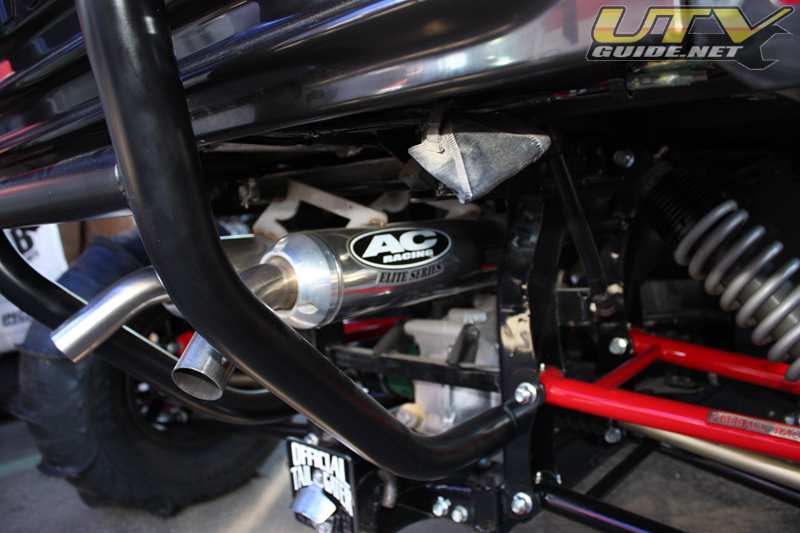
AC Racing Dual Exhaust
AC Racing also introduced a dual-exhaust arrangement for the Teryx. Multiple companies entering the same category within the vehicle’s first year demonstrated the demand for additional V-twin performance.

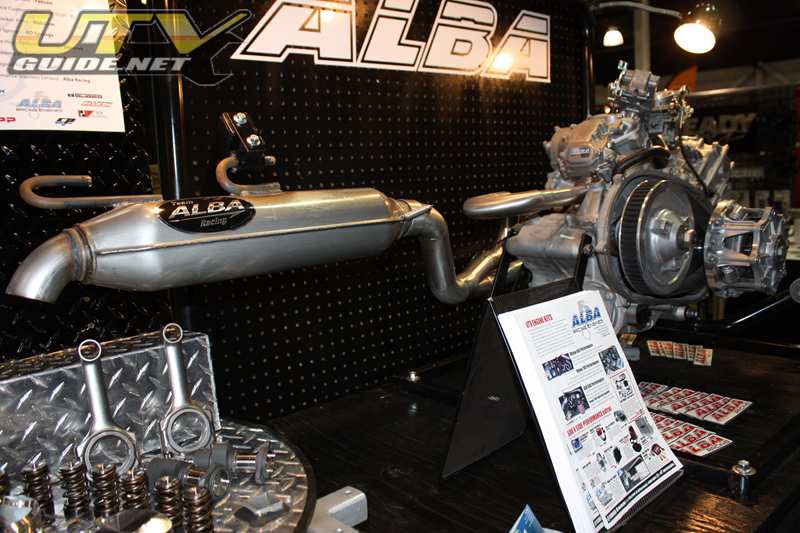
Alba Racing Full Exhaust
Alba Racing displayed a complete Teryx exhaust system. Full systems could replace more of the original exhaust path than a simple slip-on, allowing manufacturers to change tubing dimensions and routing along with the muffler.

These historical exhausts should not be interpreted as current product recommendations. Availability, sound requirements and public-land regulations have changed considerably since 2008.
Factory UTV UHMW Skid Plate
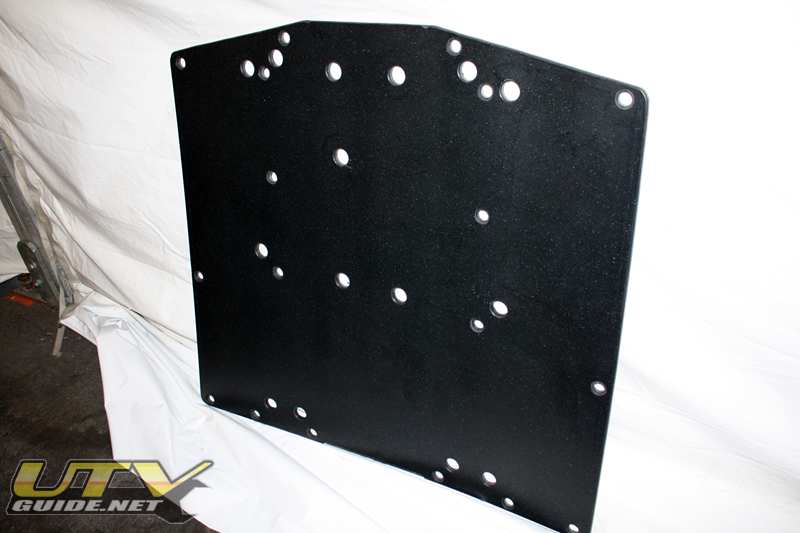
Factory UTV displayed an UHMW skid plate system for the Teryx. The factory underbody protection left portions of the chassis vulnerable, particularly when the vehicle was used on rocky trails.
Ultra-high-molecular-weight polyethylene provided a combination of impact resistance and a relatively slick surface that could slide across rocks. The material would become widely used for UTV skid plates and suspension protection.

We later installed Factory UTV protection on our own Teryx project, which was used in dunes, desert terrain and on rocky trails including the Rubicon.
Fullbore Innovations Teryx Bodywork
Fullbore Innovations showed replacement plastic that substantially changed the Teryx’s exterior appearance. Custom bodywork had already become popular in the Yamaha Rhino market, and the arrival of a Teryx-specific design showed that appearance upgrades were expanding to Kawasaki’s new platform.

Gear One Centerboard and Steering Components
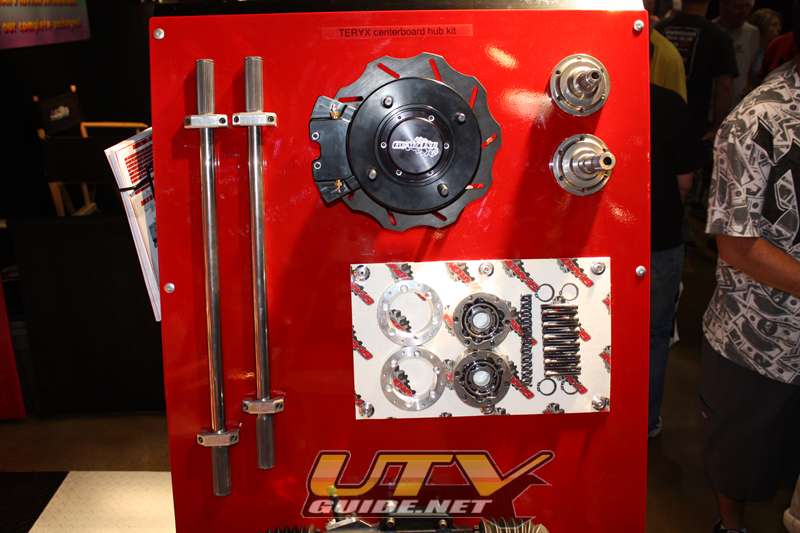
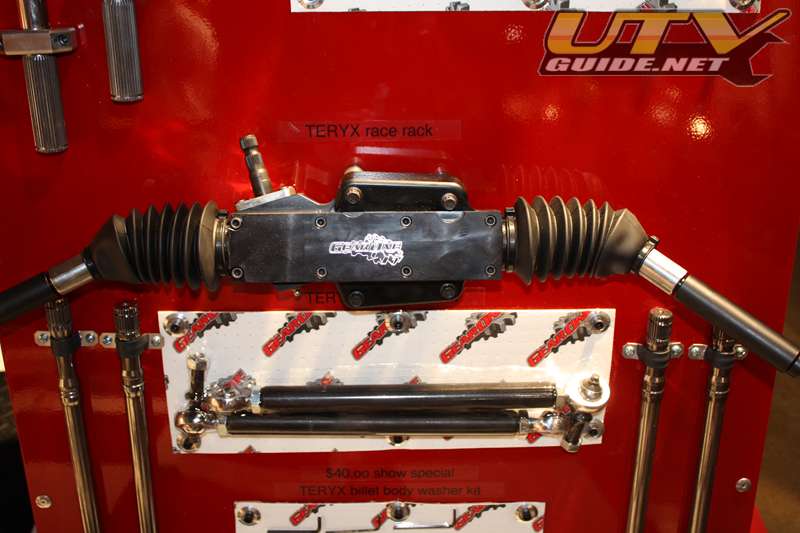
Gear One displayed some of the show’s most specialized Teryx chassis components: a centerboard hub system and an upgraded steering rack.
These were not basic cosmetic accessories. They reflected the increasingly sophisticated engineering being applied to wide, long-travel UTV suspension. As builders increased track width and suspension travel, steering geometry, component strength, axle configuration and wheel loads became increasingly important.
Gear One Teryx Centerboard Kit

Gear One Teryx Steering Rack

What These Products Reveal About the Early Teryx
The most significant part of this collection is not any single product. It is how complete the Teryx aftermarket had become before the vehicle’s first model year was over.
By September 2008, owners could choose among multiple long-travel suspension systems and exhaust configurations. They could add expanded UHMW protection, replace the bodywork and install specialized steering and hub components intended for extensively modified vehicles.
That rapid development demonstrated three things:
- The Yamaha Rhino had already established a viable market for high-end UTV components.
- Builders recognized the performance potential of the Teryx’s compact chassis and V-twin engine.
- Side-by-sides were becoming dedicated recreation and performance vehicles rather than utility machines fitted with a few universal accessories.
Our 2008 UTV history feature places this development alongside the rise of the Polaris RZR, the introduction of the wider RZR S and the maturing Yamaha Rhino aftermarket.
For additional photographs and vehicles from the event, see our complete report from the 2008 Sand Sports Super Show.
Explore more vehicle development, racing, reviews and historical coverage in our Kawasaki UTV archive.
More Sand Sports Super Show Coverage
Explore UTVGuide.net’s complete Sand Sports Super Show coverage archive, with annual recaps, photographs and product highlights documenting the evolution of the UTV industry from 2007 through today.