By Jon Crowley
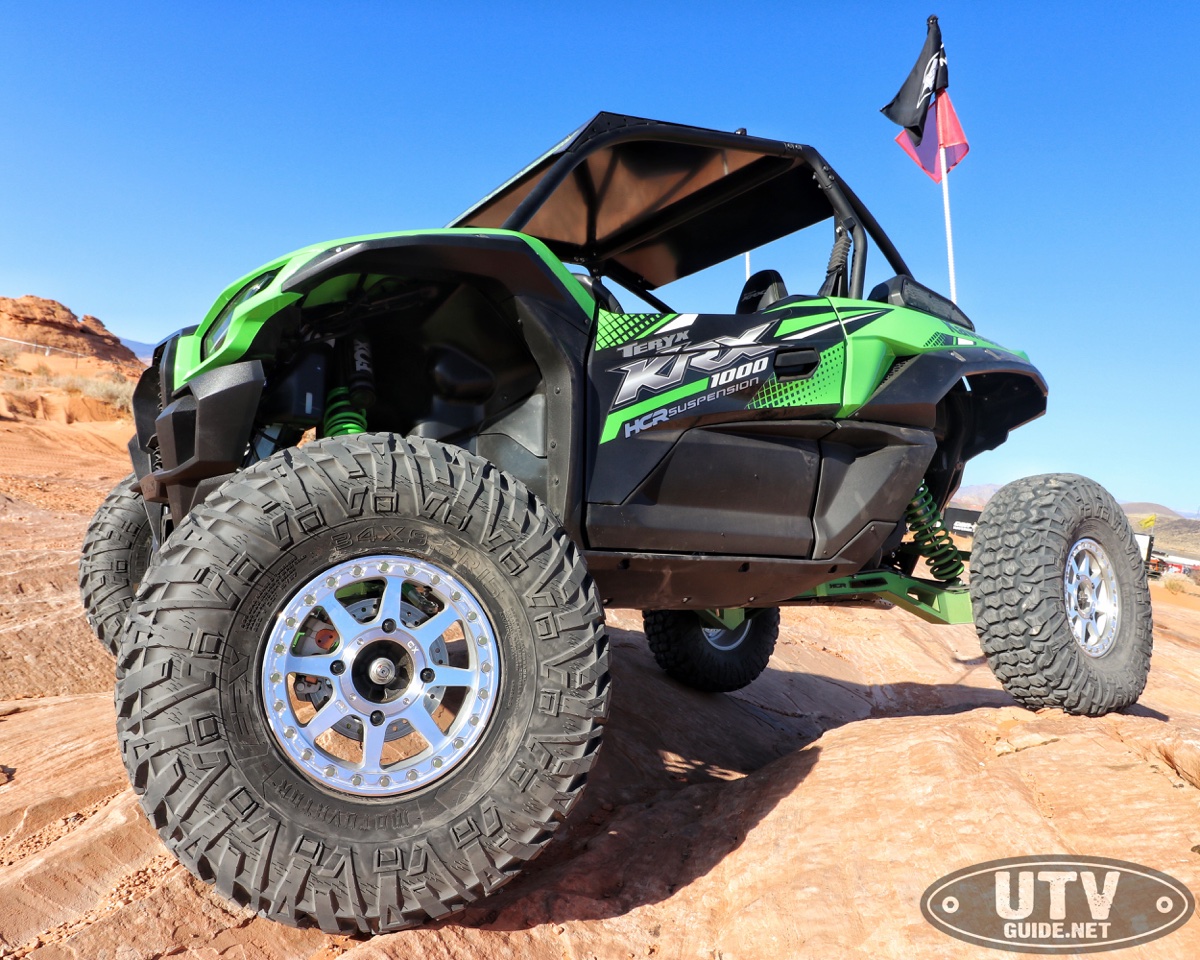
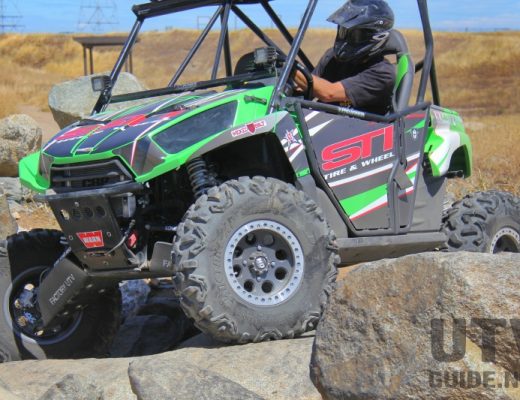
Not long after the Kawasaki Teryx KRX 1000 arrived for the 2020 model year, HCR Racing brought two long-travel KRX builds to Utah’s Sand Hollow to demonstrate what the new platform could do with more width, larger tires and experienced drivers behind the wheel.
I met up with the HCR Racing crew during the 2019 SxS Adventure Rally and watched both machines tackle Sand Hollow’s steep sandstone climbs, ledges and off-camber obstacles. It was an early look at the KRX 1000’s potential as a dedicated technical rock-crawling platform.
HCR Racing’s Long-Travel KRX 1000
HCR Racing, based in Cedar City, Utah, had already spent more than a decade developing suspension components for sport, recreation and utility UTVs. Its catalog extended from machines such as the Honda Pioneer to high-performance platforms such as the Can-Am Maverick X3.
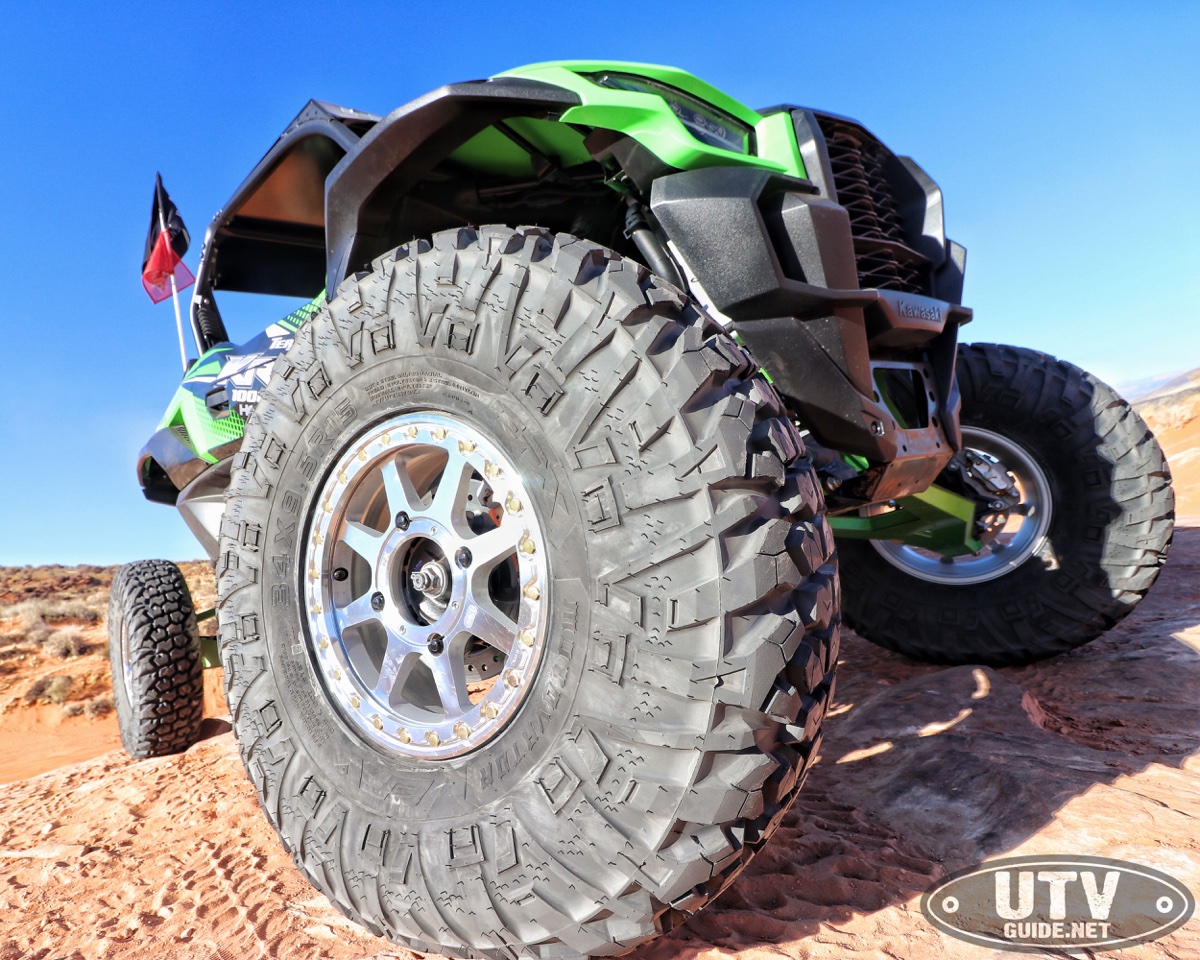
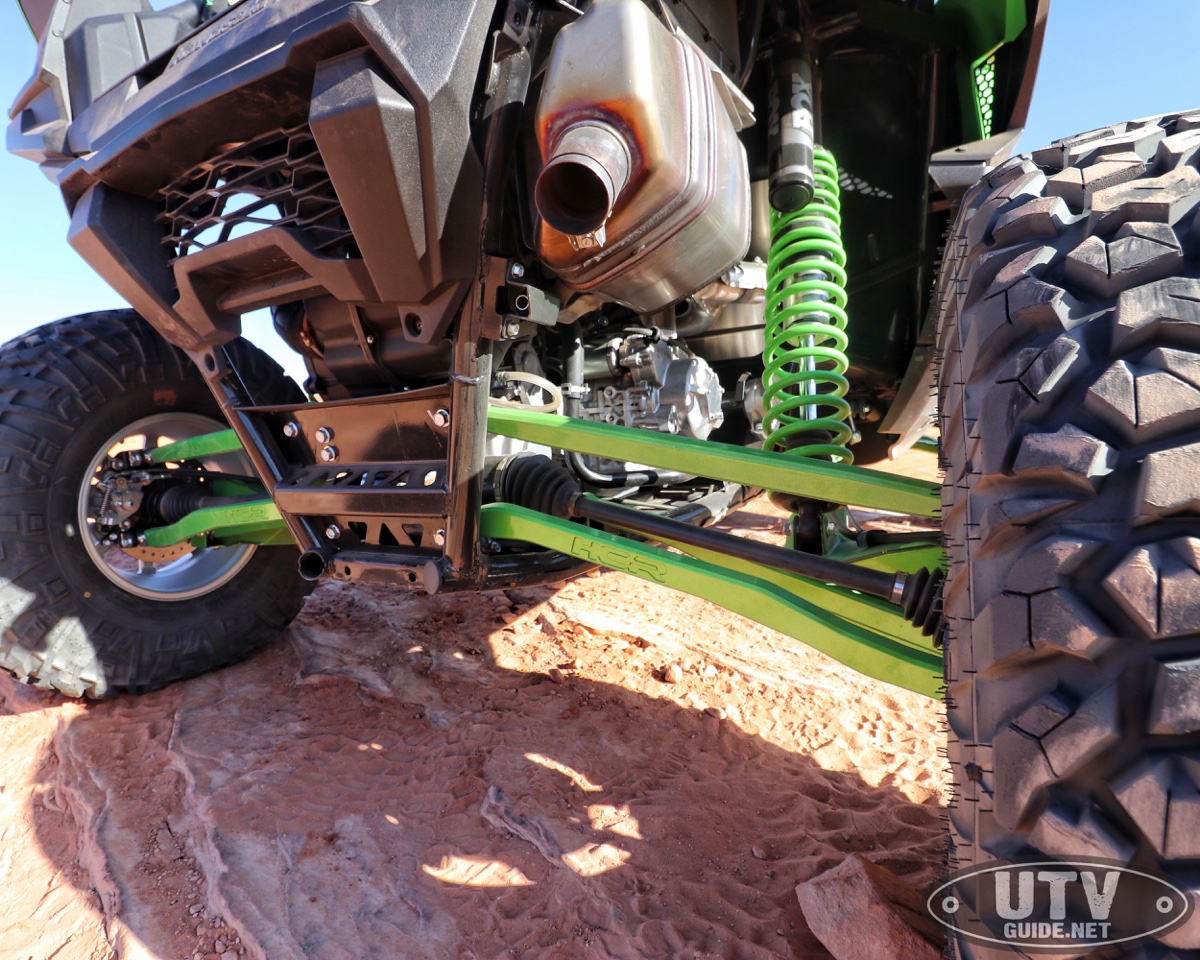
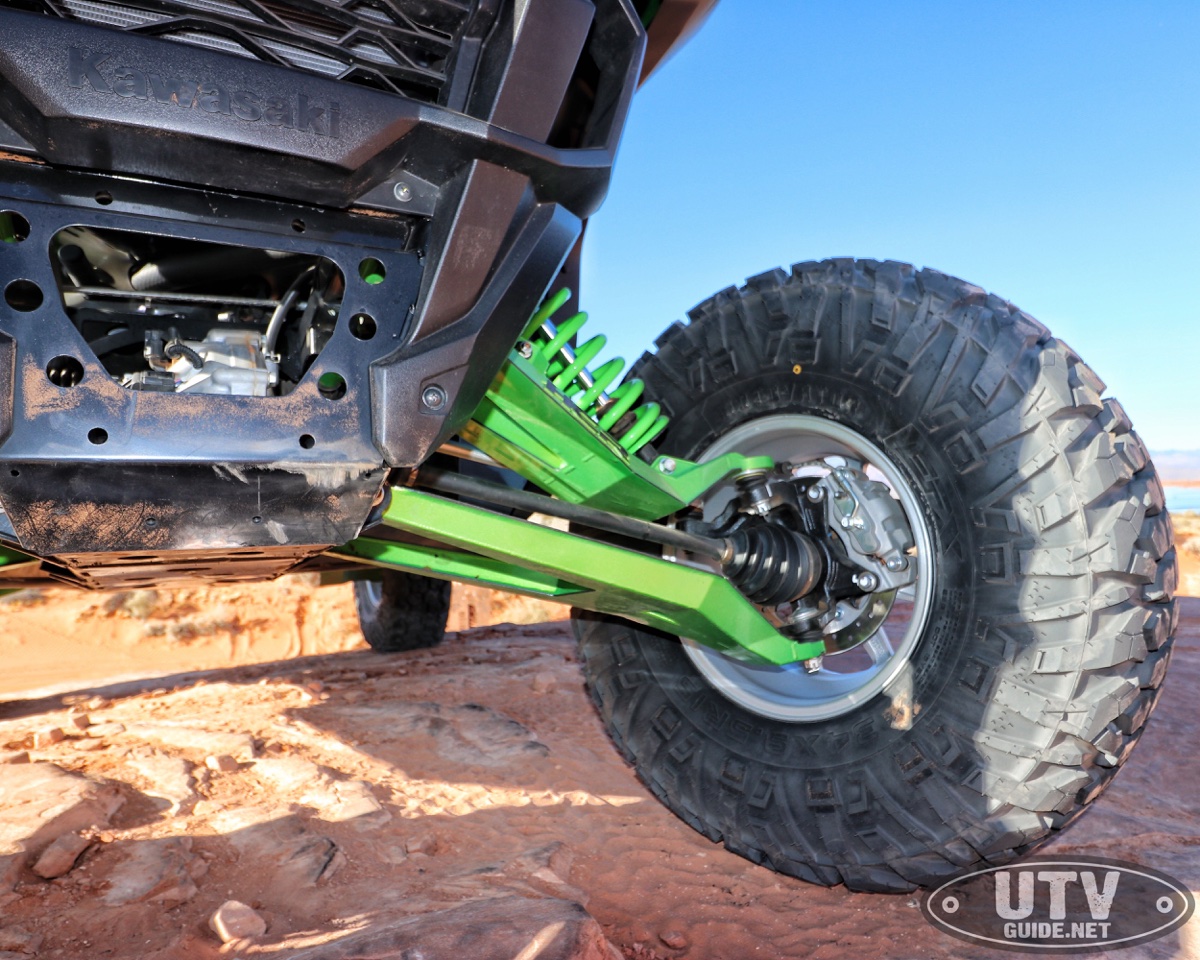
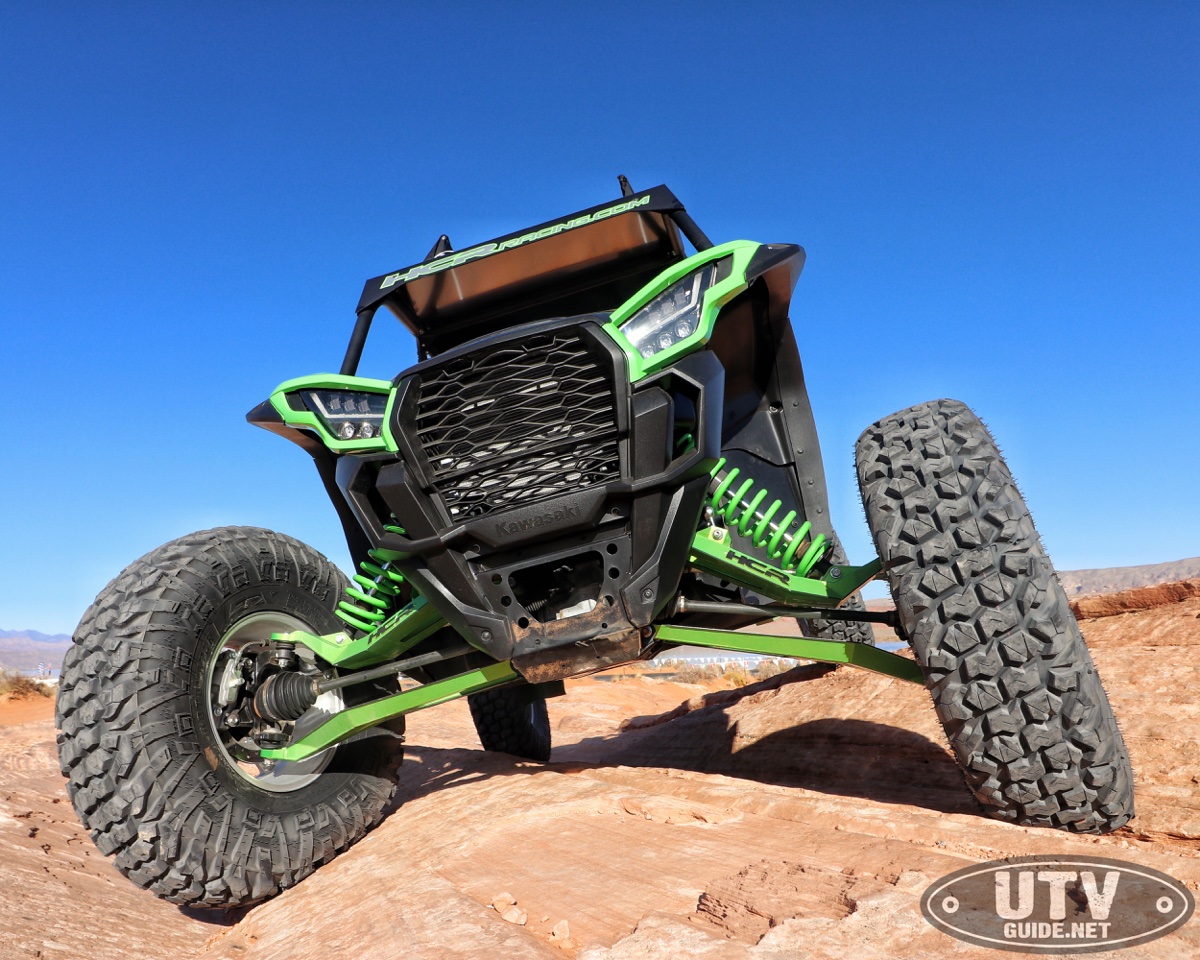
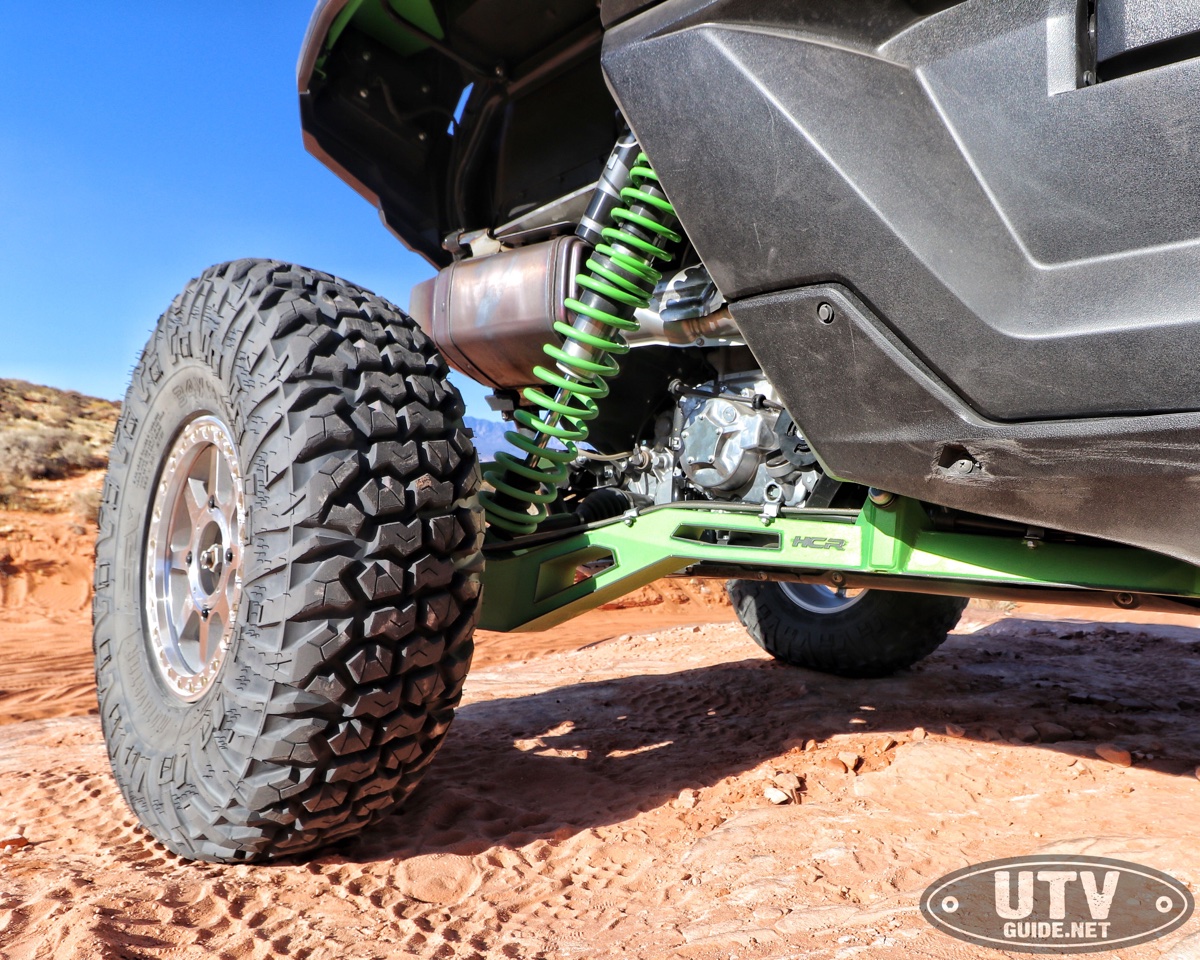
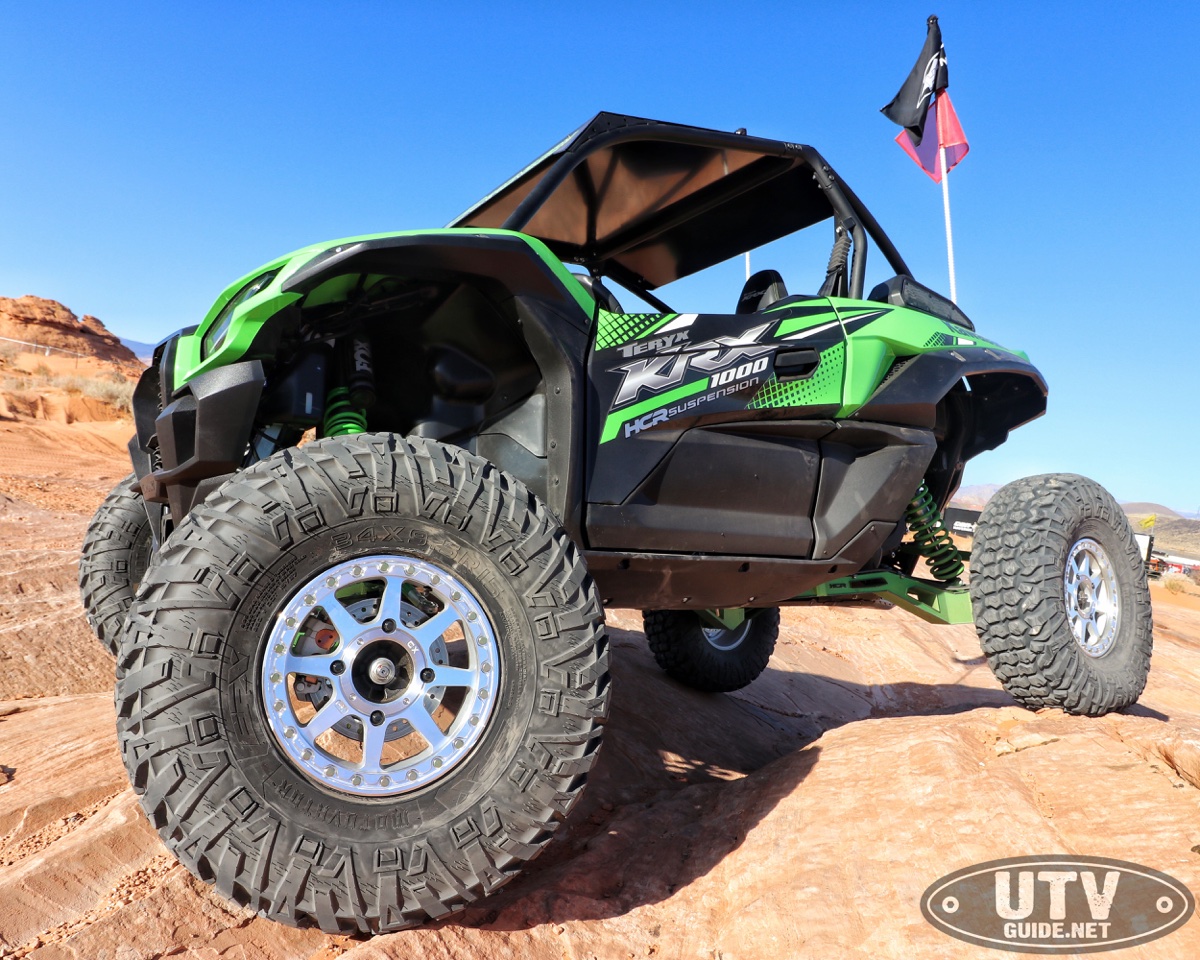
For the Kawasaki, HCR developed a long-travel suspension system for the KRX 1000 that increased the vehicle’s overall width from the stock 68 inches to approximately 72 inches. The additional track width created a more stable footprint for steep climbs and off-camber terrain while the high-clearance suspension components helped the KRX negotiate large ledges and uneven rock formations.
That extra width is especially valuable at Sand Hollow. The terrain frequently places one side of the vehicle much higher than the other, and a wider stance can reduce body roll and give the driver more confidence when choosing a difficult line. The tradeoff is that a 72-inch machine is less suitable for narrow trails and may be subject to width restrictions in some riding areas.
Rock Crawling at Sand Hollow
The KRX 1000 was a natural candidate for this type of build. Its substantial chassis, long wheelbase, low-range gearing and controlled power delivery gave drivers a solid foundation for technical terrain. HCR’s suspension and the larger tires added clearance and stability without changing the basic character of the vehicle.
The video below shows the green HCR-equipped KRX working through Sand Hollow’s sandstone obstacles.
34-Inch EFX MotoVator Tires
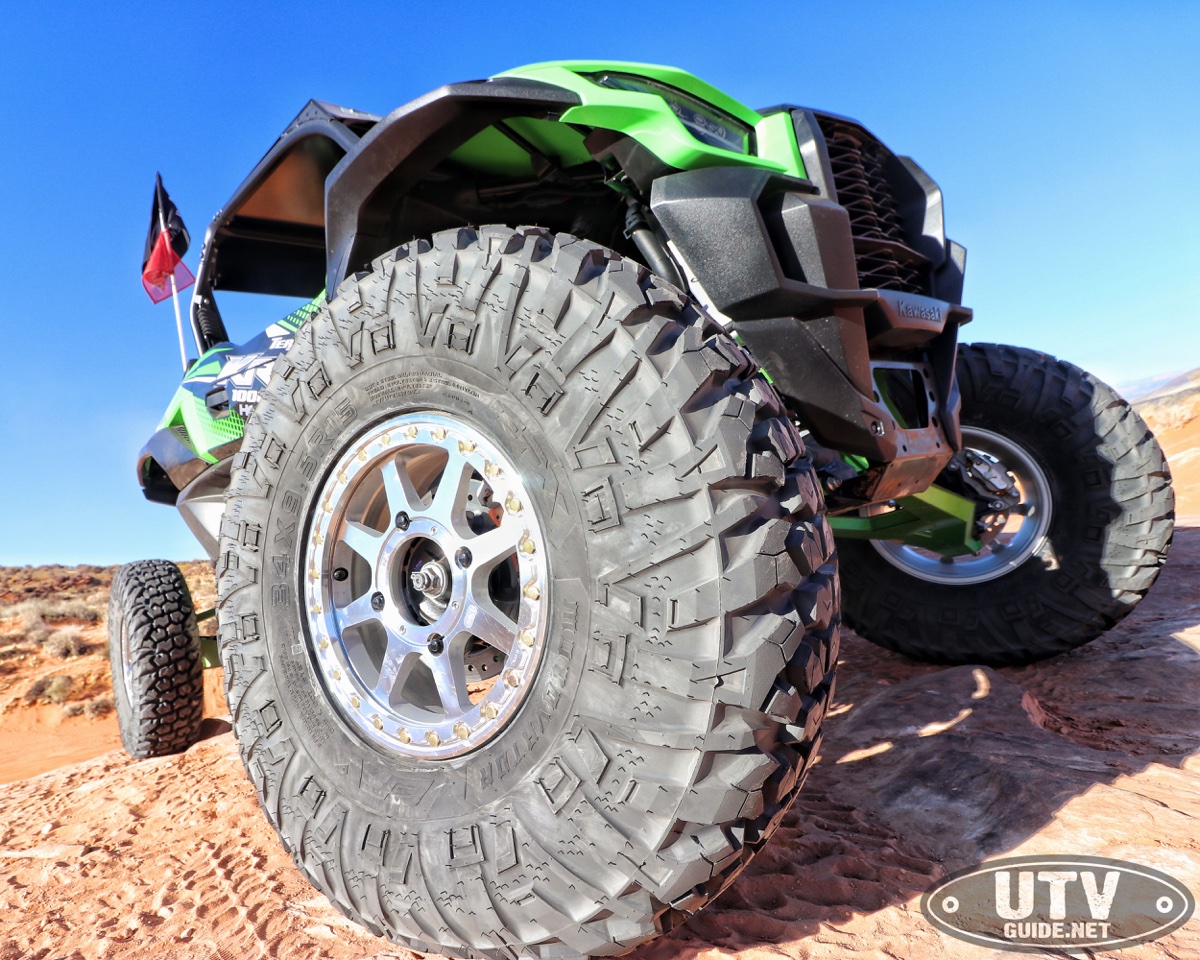
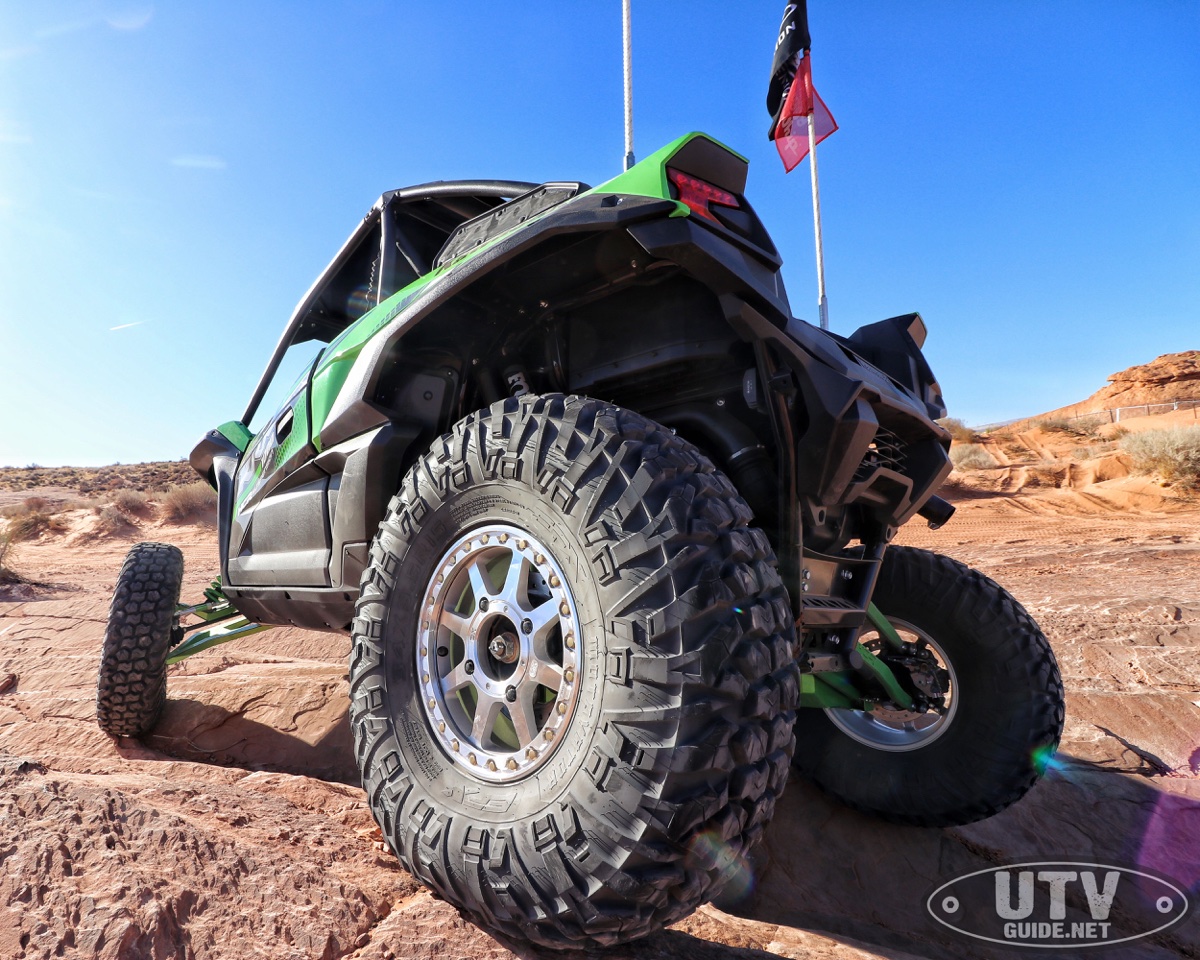
The green KRX 1000 combined the 72-inch HCR long-travel suspension with 34-inch EFX MotoVator tires mounted on KMC beadlock wheels. Moving to a 34-inch tire increased ground clearance under the chassis and helped the vehicle roll into and over abrupt rock faces.
Larger tires can also affect gearing, steering effort, clutching and stress on driveline components. On technical terrain, however, the added clearance and larger contact patch can make the difference between clearing an obstacle and hanging the chassis on a ledge.

KRX 1000 With Maxxis RoxxZilla Tires
HCR also brought a white-and-blue KRX 1000 fitted with Maxxis RoxxZilla tires. The two builds demonstrated that the suspension package could be paired with different tire choices depending on the owner’s terrain and priorities.
RoxxZillas became a popular choice for technical rock crawling because of their flexible construction and aggressive tread. At Sand Hollow, where traction on sandstone is generally excellent, precise tire placement and controlled power delivery remain critical on the steepest obstacles.
What the Sand Hollow Test Demonstrated
These early HCR builds showed how well the KRX 1000 responded to modifications aimed at technical rock crawling. The stock vehicle already provided a strong chassis and predictable low-speed control. The wider suspension, 34-inch tires and beadlock wheels expanded its capability without requiring the drivers to attack every obstacle with excessive momentum.
The result was a pair of KRX 1000s that looked composed on terrain capable of exposing weaknesses in suspension geometry, ground clearance and chassis balance. The drivers still had to choose their lines carefully, but both machines made difficult Sand Hollow obstacles look remarkably manageable.
The HCR Racing long-travel suspension system for the Kawasaki Teryx KRX 1000 increases the vehicle’s width from the stock 68 inches to 72 inches. The kit includes high-clearance front A-arms, rear trailing arms, radius rods and replacement axles, while retaining the factory shocks. HCR lists fitment for two-seat 2020–2025 KRX 1000 and four-seat 2023–2025 KRX4 1000 models. Owners should confirm current fitment and availability directly with HCR before ordering.
For more coverage of the platform, see the 2026 Kawasaki Teryx KRX 1000 lineup and the purpose-built KRX 1000 Rock Edition.
Read more Kawasaki UTV news, reviews and model coverage on UTV Guide.