


The redesigned 2014 Kawasaki Teryx LE gave us a much better starting point for an adventure-oriented build than the previous two-seat Teryx. Its longer wheelbase improved stability, while the large cargo bed and two sealed storage compartments behind the seats made it practical for camping, exploring and long trail rides.
Our goal was to retain that versatility while improving suspension performance, ground clearance, protection, occupant safety, recovery capability and comfort. The finished Teryx needed to handle everything from family trail rides at Prairie City to Johnson Valley, Moab and repeated trips across the Rubicon Trail.

Before exploring the modifications, read our 2014 Kawasaki Teryx review for a closer look at the redesigned chassis, 783cc V-twin engine, storage capacity and trail performance. You can also see where this model fits within the broader history of the Kawasaki Teryx.
Why We Chose the 2014 Kawasaki Teryx
The 2014 model represented a major redesign for Kawasaki’s two-seat Teryx. Engine displacement increased from 749cc to 783cc, and Kawasaki revised the clutching, drivetrain and chassis. The wheelbase grew by nearly 10 inches, but the compact overall length helped the Teryx remain maneuverable on tight trails.
What made this model especially appealing for an adventure build was its cargo arrangement. In addition to the tilting bed, Kawasaki provided two sealed storage compartments behind the seats. That gave us separate places for tools, recovery equipment, camera gear and supplies without using up the entire bed.
The Teryx LE also included LED headlights, a roof, cast-aluminum wheels, a front brush guard, painted bodywork and color-matched suspension components. Those were worthwhile factory upgrades, but our plans went well beyond the LE package.
Stage One: Protection and Initial Testing
Prairie City SVRA – January 2014
Our first outing was at Prairie City SVRA while the Teryx was still close to stock. This was also an opportunity for my daughter to become familiar with off-road driving in a predictable environment.

The first important additions were Factory UTV UHMW skid plates and rock sliders. The factory Teryx was already a capable trail vehicle, but full underbody protection was essential for the rocky destinations we intended to visit.
We also installed a Dynojet Power Commander V with programming from V-Force John. At that stage, the Teryx retained its factory suspension, cage, seats, wheels and tires.
Our initial impressions confirmed that the redesigned Teryx was a strong platform. The longer wheelbase felt more stable than the previous model, the upright seating position provided excellent visibility and the engine delivered controllable low-speed power.
For another perspective on the nearly stock vehicle, read 2014 Kawasaki Teryx Is Ready for Adventure.
Stage Two: HCR Long-Travel Suspension
Johnson Valley – February 2014
The next major step was an HCR Racing long-travel suspension system. The wider suspension increased stability and wheel travel while giving the Teryx more capability in rough desert terrain and technical rock sections.

For this stage of the build, we mounted 28-inch STI Roctane XD tires on OMF Performance beadlock wheels. Inside the cab, we added a Rugged Radios communication system and an Axia Alloys panoramic mirror. Factory UTV UHMW protection remained underneath the vehicle.
The wider stance and added suspension capability made the Teryx more composed when the terrain became rough. It also established the foundation we needed before moving to larger tires and more demanding rock-crawling trips.
Stage Three: Cage, Seats and Adventure Equipment
SDR Motorsports fabricated a new roll cage, roof and front bumper. The cage improved protection while giving the Teryx a lower and cleaner profile than the tall factory ROPS. SDR then helped integrate many of the remaining components into the build.

Cab upgrades included PRP seats and harnesses, an SSV Works audio system, a Rugged Radios communication system, an Axia Alloys panoramic mirror and a DragonFire Racing steering wheel.


Recovery equipment consisted of a Warn XT40 winch fitted with Custom Splice synthetic winch line and a billet fairlead. A Lowrance GPS handled navigation, while the securely mounted fire extinguisher provided another important safety measure.


A Muzzys Performance dual exhaust and the Power Commander V addressed engine performance, while auxiliary lighting improved visibility around the vehicle after dark.


Stage Four: 30-Inch Tires and Final Trail Setup
For the completed configuration, we moved to 30-inch STI Roctane XD tires on STI HD5 beadlock wheels. The larger tires increased ground clearance and gave the Teryx a larger contact patch for rock crawling.

The larger tires added rotating weight and increased the load placed on the drivetrain, but they also supplied the clearance needed for the Teryx to negotiate larger rocks. The HCR suspension and wider stance helped make the bigger tire package workable.
Rally on the Rocks – May 2014
Rally on the Rocks in Moab was the first major test of the completed build. Over four days, we drove some of the area’s best-known routes:
- Hell’s Revenge
- Cliff Hanger and Moab Rim
- Poison Spider and Golden Spike
- Behind the Rocks

Moab brought all the upgrades together. The HCR suspension increased stability and articulation, while the 30-inch tires provided added clearance. Factory UTV skid plates and sliders protected the chassis whenever the available clearance was not enough.
The Warn winch provided recovery insurance, and the PRP seats, harnesses, navigation and communications equipment made long trail days more comfortable and manageable.
Rubicon Trail Testing
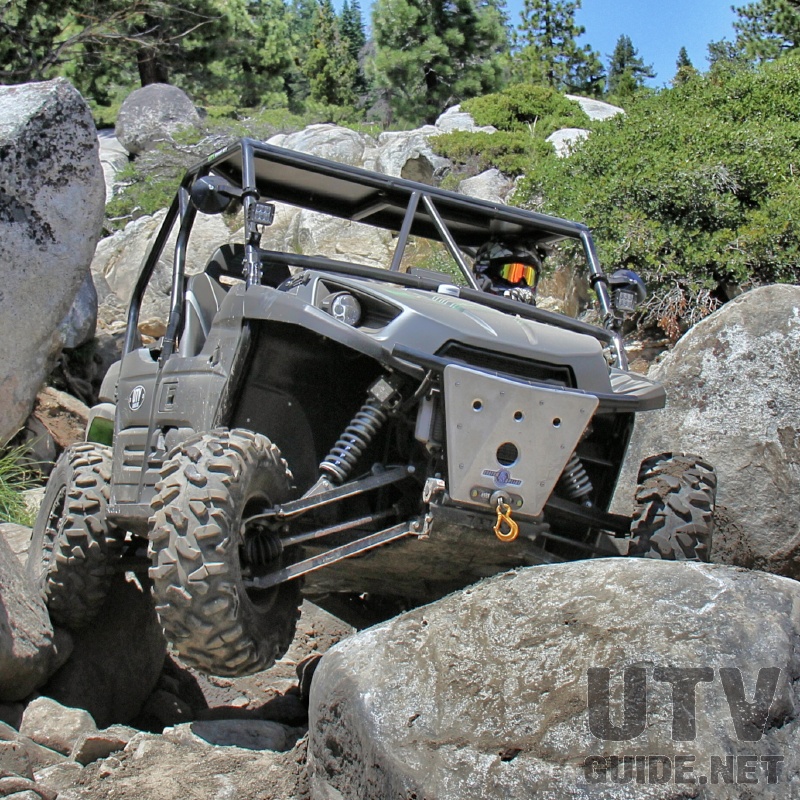
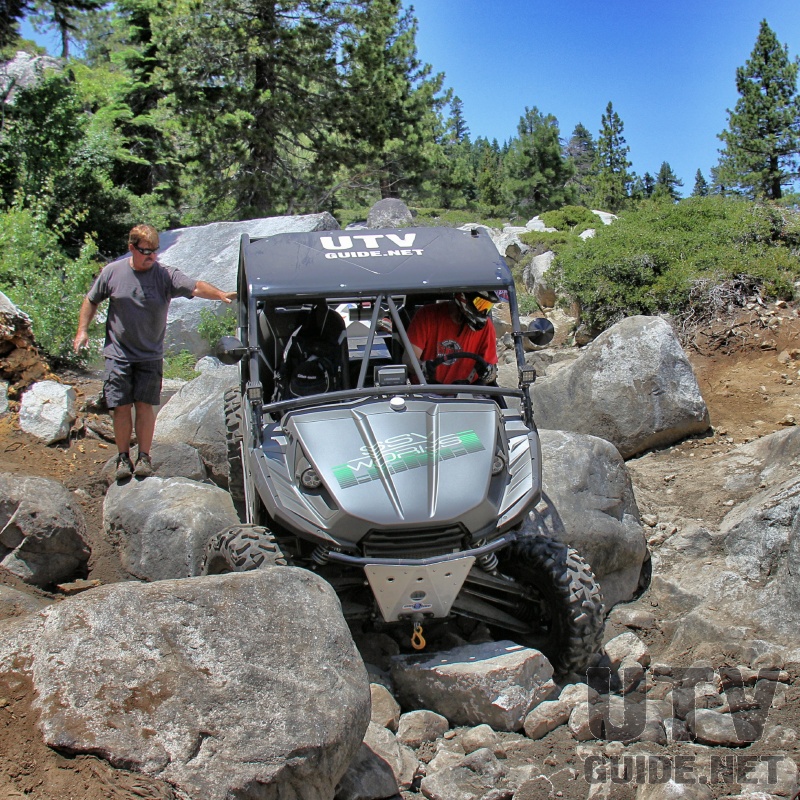
The Rubicon Trail became the most important proving ground for the build. We made several trips during 2014 and returned again in July 2015. These outings ranged from quick day trips to camping trips with more equipment carried in the bed and sealed storage compartments.
Day Trip to Little Sluice – May 2014
Our first trip after Moab was a quick run from Loon Lake to Little Sluice. The Teryx’s compact dimensions remained an advantage in tight rock sections, even after the wider HCR suspension was installed.


Rubicon Camping Trip – June 2014
The June camping trip demonstrated why the redesigned two-seat Teryx worked so well as an adventure vehicle. The cargo bed carried bulky camping equipment, while the storage compartments behind the seats kept smaller equipment protected from dust and weather.


Rubicon Trail – August 2014


Rubicon Day Trip – July 2015
By July 2015, the Teryx had accumulated more than a year of use in rocks, desert terrain and multi-day adventure rides. The return trip to the Rubicon confirmed that the combination of suspension, protection, larger tires and practical cargo capacity continued to work well.

Sand Sports Super Show – 2014
The finished build was also displayed in the SSV Works booth at the 2014 Sand Sports Super Show. The Teryx demonstrated how Kawasaki’s recreation-utility platform could be transformed without eliminating the bed and storage features that made it practical.

2014 Kawasaki Teryx Build Specifications
| Area | Modification | Purpose |
|---|---|---|
| Suspension | HCR Racing long-travel suspension | Increased width, wheel travel, stability and rough-terrain performance |
| Protection | Factory UTV UHMW skid plates and rock sliders | Protected the chassis and underside in technical rocks |
| Cage and body | SDR Motorsports cage, roof and bumper | Improved occupant protection, recovery integration and appearance |
| Wheels and tires | 30-inch STI Roctane XD tires and STI HD5 beadlock wheels | Added ground clearance, traction and bead retention |
| Recovery | Warn XT40 winch, Custom Splice synthetic line and billet fairlead | Provided self-recovery capability for remote trail rides |
| Seating | PRP seats and harnesses | Improved support and occupant retention |
| Communications | Rugged Radios Vertex VX2200 radio | Allowed vehicle-to-vehicle communication on group rides |
| Navigation | Lowrance GPS | Supported route finding during long trail rides |
| Audio | SSV Works stereo | Added trail entertainment |
| Performance | Muzzys dual exhaust and Dynojet Power Commander V | Revised engine tuning and exhaust flow |
| Accessories | Axia Alloys mirror and fire-extinguisher mount | Improved visibility and carried emergency equipment securely |
| Lighting | Auxiliary LED and rock lighting | Improved nighttime visibility around the vehicle |
How the Build Worked
The completed 2014 Kawasaki Teryx became much more capable in technical terrain without losing the qualities that originally made it attractive. It still had a functional bed and useful sealed storage, but it gained the suspension, protection, ground clearance and recovery equipment needed for serious adventure rides.
The long-travel suspension and 30-inch tires made the biggest difference in difficult terrain. The SDR cage, PRP seating and harnesses improved the occupant area, while the radio, GPS, winch and additional lighting made the Teryx better prepared for remote trips.
Just as importantly, the build was tested rather than simply displayed. Prairie City, Johnson Valley, Moab and multiple Rubicon trips exposed it to everything from family trail driving and high-desert terrain to slickrock and large Sierra granite obstacles.
Final Thoughts
Looking back, the 2014 Teryx was one of Kawasaki’s best two-seat adventure platforms. It combined a compact footprint with better stability, excellent forward visibility, a useful cargo bed and storage space that was uncommon in the recreation UTV market.
This build pushed its rock-crawling and rough-terrain capability considerably farther while preserving its practical side. It was not built solely for maximum speed or extreme suspension travel. It was built to carry two people and their equipment into remote terrain, handle difficult trails and return under its own power—and that is exactly what it did.


