
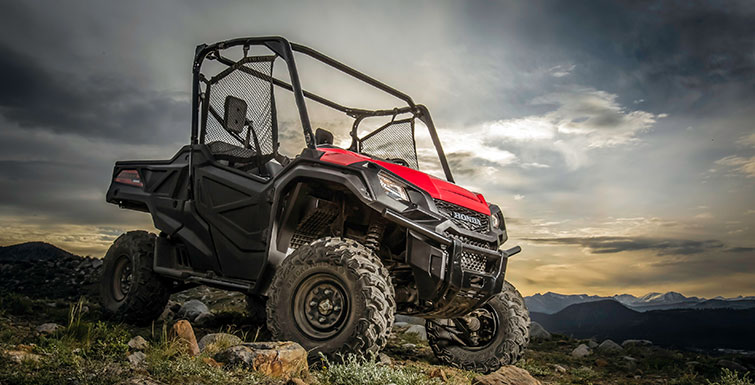
TORRANCE, Calif. (June 11, 2015) Honda today announced the addition of two brand-new full-size side-by-side models – the groundbreaking Pioneer 1000 and Pioneer 1000-5to its 2016 lineup. With class-leading displacement and payload, a 6-speed fully automatic Dual Clutch Transmission (DCT) and a full list of features and options, the flagship Pioneer 1000 promises to raise the bar in terms of power, performance and capability in both work and recreation applications.Were very excited about the all-new 999cc engine weve developed for these new Pioneers, said Lee Edmunds, Manager of Motorcycle Marketing Communications at American Honda. Weve also added the industrys only fully automatic mechanical transmissionthe 6-speed Dual Clutch Transmission. With steel gears, the DCT offers true engine braking, seamless shifting and a smooth, reliable transfer of power.
Pioneer 1000/1000-5
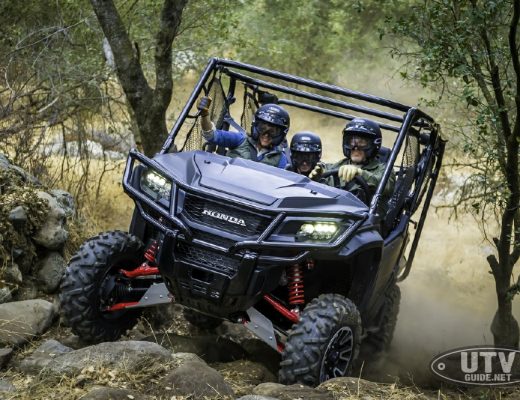
Immediately assuming its position as the clear leader in the full-size multipurpose SxS category, Hondas new-from-the-ground-up, no-compromise Pioneer 1000 is powered by a purpose-built inline, twin-cylinder, Unicam® 999cc engine. Its also the first side-by-side with a 6-speed fully automatic DCT, a state-of-the-art beltless transmission that is durable, efficient and easy to use. Designed, developed and produced according to Hondas holistic methodology, the largest Pioneer is smooth-riding and extremely versatile. Built in the USA using domestically and globally sourced parts, the Pioneer 1000 is offered in four different configurations, from the base three-person version to the Deluxe five-person model, which features 14-inch aluminum wheels, 27-inch radial tires, LED headlights and electric power steering. Every Pioneer 1000 comes standard with four-wheel-drive, as well as a high-low sub-transmission and 4-mode differential lock, while the five-person model features auto-leveling rear suspension and a full-size convertible bed with Hondas exclusive QuickFlip seating. An extensive range of Honda Accessories is available, and the Pioneer 1000 is covered by a one-year warranty.
Honda Technology, Through And Through.
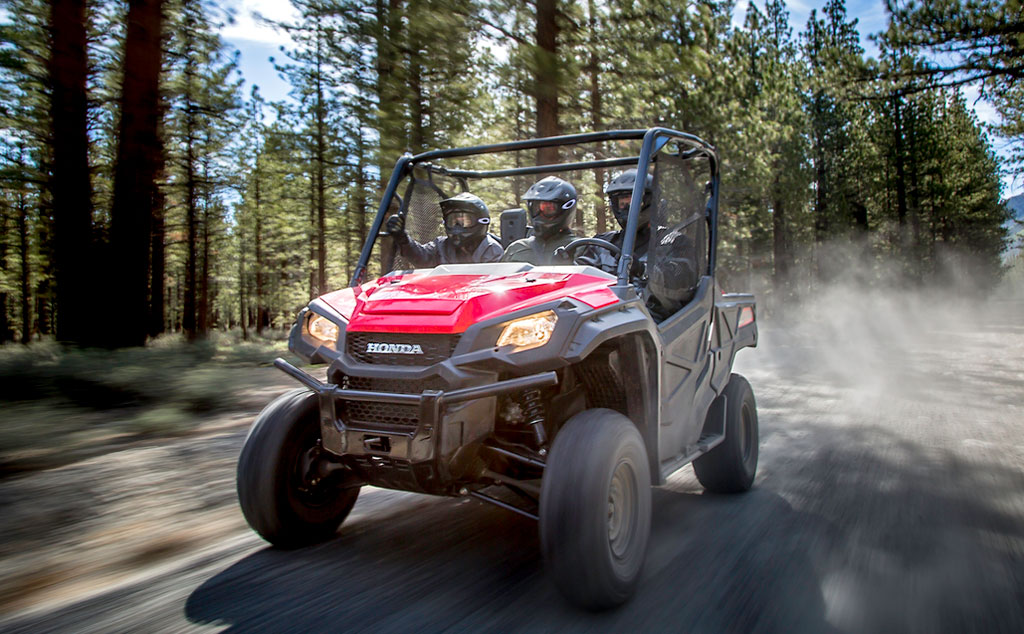
From stem to stern, the new Honda Pioneer 1000 puts everything weve learned designing off-road bikes, ATVs, Side-by-Sides and autos into one package that nobody else can touch. Its a tour de force of the best we can deliver: features you need, the reliability everyone wants, and the build quality that always puts Honda out in front. Ever hear anyone complain that their new vehicle is too good, that its too reliable or built too well? Didnt think so. But you do hear lots of folks say they wish theyd bought quality the first time. And that means choosing a Honda.
Powerful 999cc Parallel Twin Engine
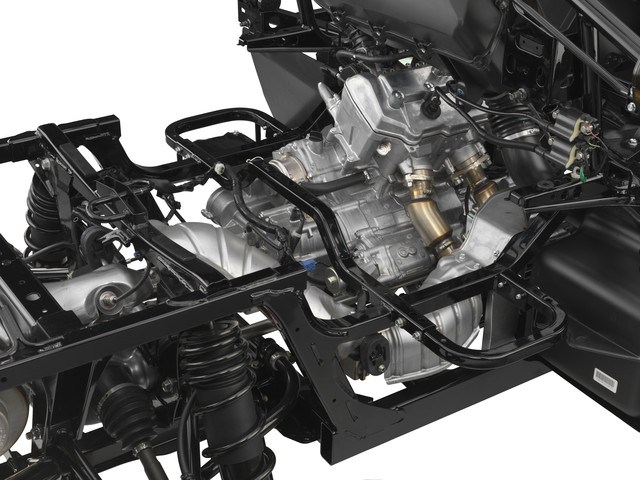
A flagship Side-by-Side starts with a flagship engine, and the all-new Pioneer 1000 features one of our best. A class-leading 999cc liquid-cooled parallel twin, its the largest in the industry. And its also one of the smartest, utilizing Hondas proprietary Unicam® cylinder-head design, perfected in our high-output motocross bikes. Built specifically for the Pioneer 1000, the engine is specially tuned to produce the horsepower and torque this SxS demands.
Fully-Automatic 6-Speed DCT Transmission
The Pioneer 1000s Automatic Dual Clutch Transmission features six forward speeds plus reverse and two gearing ranges (high and low). The Pioneer 1000 EPS also adds paddle shifting and three shift modes (standard, sport and manual). It can do all the shifting for you, as smooth and seamless as any automatic, but can also give you total control to shift yourselfits the best of all worlds!
Advanced Transmission Logic
The Pioneer 1000 is more than toughits Honda Smart. Here are some examples: The Pioneer 1000s advanced, fully automatic Dual-Clutch Transmission senses how youre riding, monitoring throttle position and input, engine RPM, vehicle speed and more. Relaxed drivers get smooth shifts and lower engine speed for a smoother, quieter ride. More sporting drivers get quicker shifts and higher engine speeds to maximize engine torque and power. Going downhill? The Pioneer 1000 stays in a lower gear for superior engine braking.
Hauling / Towing Capacity
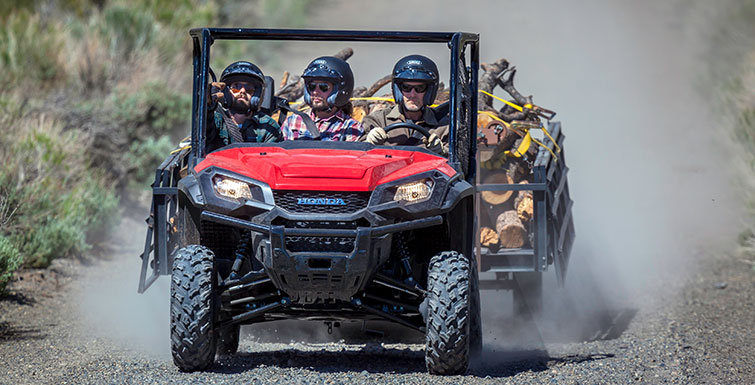
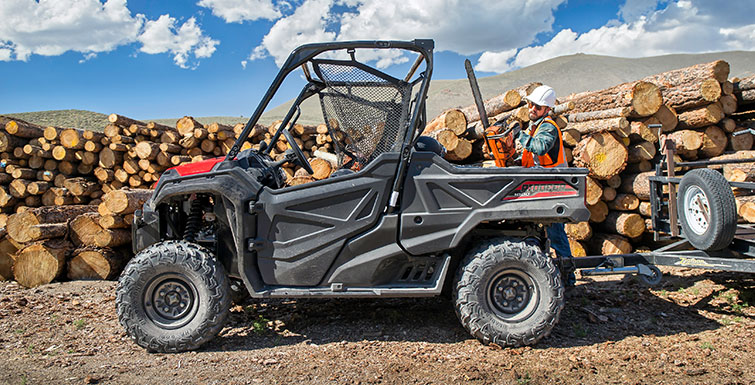
You can load a full half-ton into the Pioneer 1000s bed. And when its time to unload, the beds tilting feature makes dumping firewood, gravel, feed or other items easy. And because its able to tow a full ton (2000 pounds), the Pioneer 1000 can take on big jobs that otherwise would have required a tractor or a truck.
Automatic Load Leveling Rear Suspension
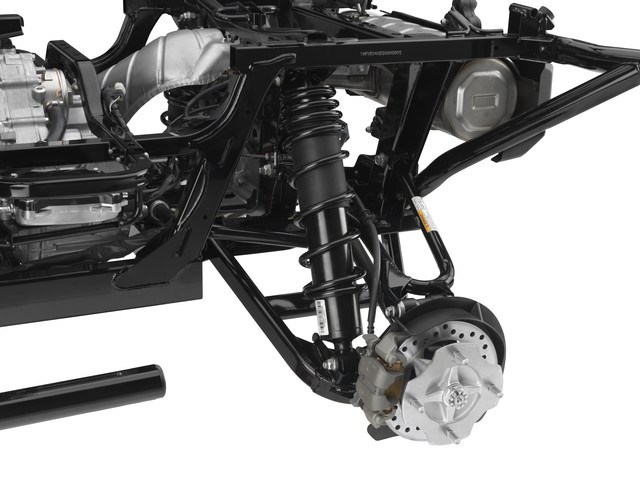
When you fill the two rear seats or put a bigger load into the Pioneer 1000-5s bed, the rear suspension automatically senses the increase and adjusts the ride height to compensate. This maintains ground clearance and maximizes comfort when loaded.
Two Models To Choose From
The all-new Pioneer 1000 is available in two distinct models. The base model is loaded with features, and the Pioneer 1000 EPS adds Electric Power Steering along with a host of other features.
Pioneer 1000-5
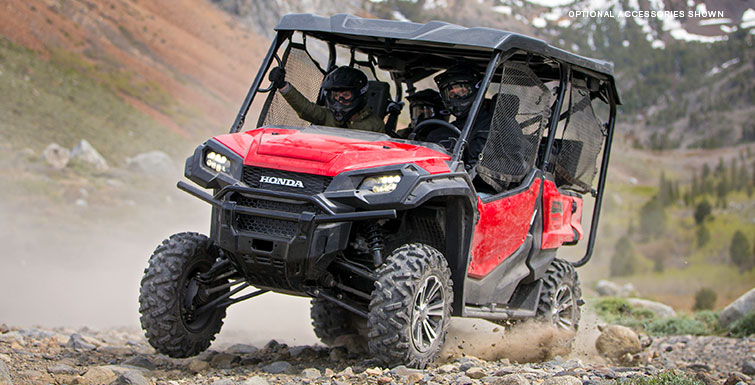
The ultimate side-by-side in every way, the radical Pioneer 1000-5 delivers more inside and out, front to back. It starts with a class-leading 999cc twin-cylinder engine. The industrys first and only fully automatic 6-speed Dual Clutch Transmission. And Hondas exclusive QuickFlip® seating that allows you to go from a 3-seater, to a 4-seater, to a 5-seater.
But it doesnt stop there, because the Pioneer 1000-5 also has a fully-selectable driveline that lets you choose between 2- and 4-wheel drive, and open or locked differentials front and rear. A high/low dual-range subtransmission. Fully-independent suspension in the front, and the back. And a hauling capacity of 1000 pounds, with a towing capacity of a full ton.
This is what more delivers. More power when you need it, more performance where it counts, all to help you get more out of every adventure.
Multiple Seating OptionsAble to carry anywhere from one to five occupants, the Pioneer 1000-5 features a three-place bench seat up front along with a pair of QuickFlip® rear seats in the back. The two additional passenger seats fold flat when not in use, giving you unrestricted bed access and superior capacity.
Honda Pioneer 1000-5 Chassis and SuspensionEngineered for uncompromising comfort and capability, the Pioneer 1000-5 features 27-inch tires, 10.5 inches of front suspension travel and 10.0 inches in the rear, and over a foot of ground clearance, so its built to take on your biggest adventures.
Honda Pioneer 1000-5 Chassis RefinementsThe Pioneer 1000-5s chassis may not be the first thing you see, but its one of the first things youll notice when youre on the trail. The independent, long-travel suspension, excellent ground clearance and large tires all work in concert to deliver superior ride comfort and superb traction. The rubber-mounted engine and exhaust system insulates you from annoying vibration, so your driving experience is like riding in first class, not economy. And on the Pioneer 1000-5, a special self-leveling rear suspension automatically compensates for changing loads.
Check Out the Honda Pioneer 1000 Flagship SxS
Everyones talking about the all-new Pioneer 1000, and for good reason. Whats the next best thing to driving one yourself? Seeing one in action. And thats exactly what you can do with this new video. Lets go for a ride!
Colors
- Pioneer 1000: Red, Olive
- Pioneer 1000 EPS: Red, Orange, White, Honda Phantom Camo
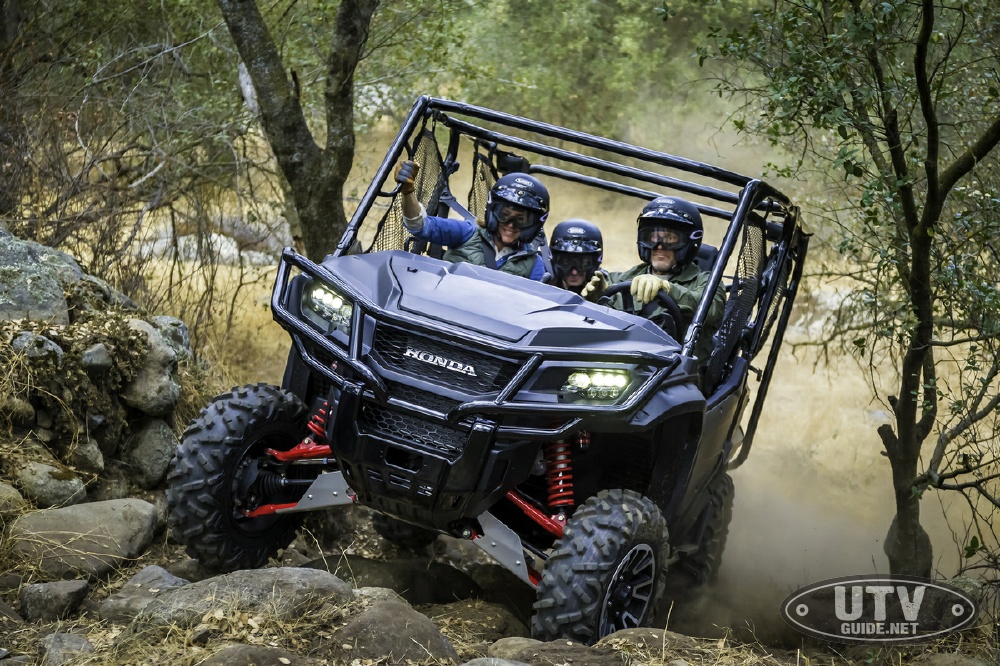
2017 Honda Pioneer 1000-5 LE with a new I-4WD system
2017 Honda Pioneer 1000-5 LE
Honda unveiled two new 2017 limited-edition versions of its popular flagship side-by-side, the Pioneer 1000-5 LE and Pioneer 1000 LE, both of which come with a new I-4WD system. Never before used in the powersports industry, this intelligent system is a direct result of Honda’s automotive-engineering prowess, and offers three great benefits: brake traction control, hill-start assist and electronic brake force distribution. Combined with the Pioneer 1000’s Torque Biasing Limited Slip differential, I-4WD can provide as much tractive force as a locking differential but with reduced steer effort and kickback. The result is excellent grip on a wide range of challenging surfaces, a more relaxed driving experience, and no need to stop and engage diff-lock.
ABOUT AMERICAN HONDA
American Honda Motor Co., Inc., is the sole distributor of Honda motorcycles, scooters, ATVs and Side-by-Sides in the U.S. American Honda’s Motorcycle Division conducts the sales, marketing and operational activities for these products through independent authorized Honda retail dealers. For more information on Honda products, go to powersports.honda.com.

No Comments