
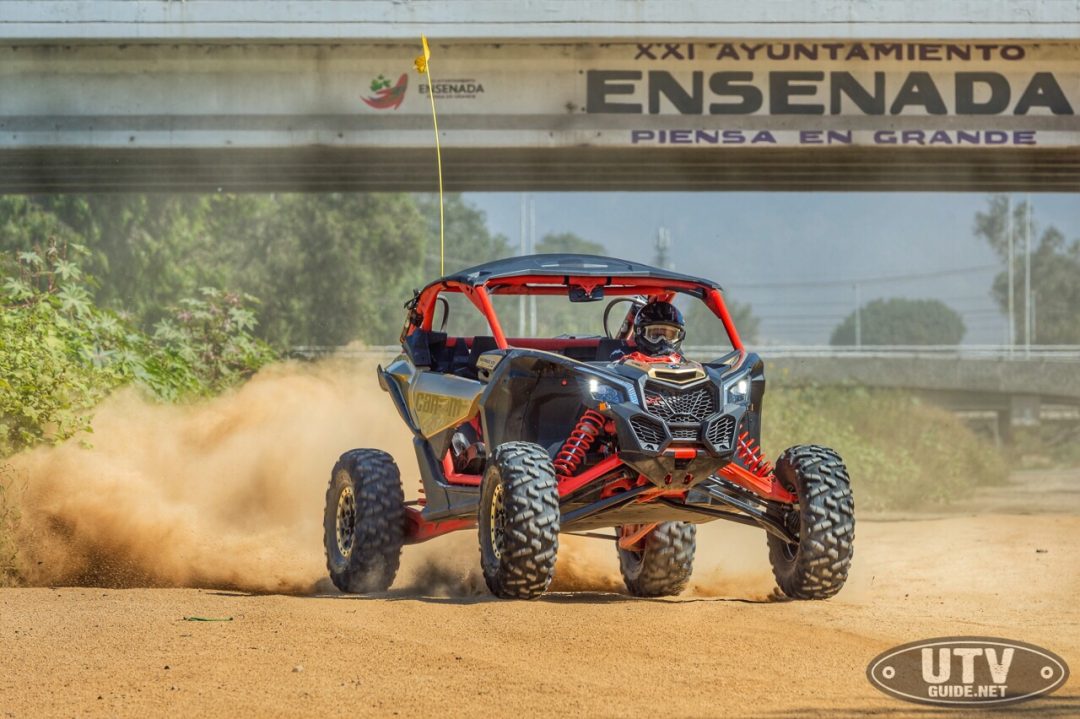
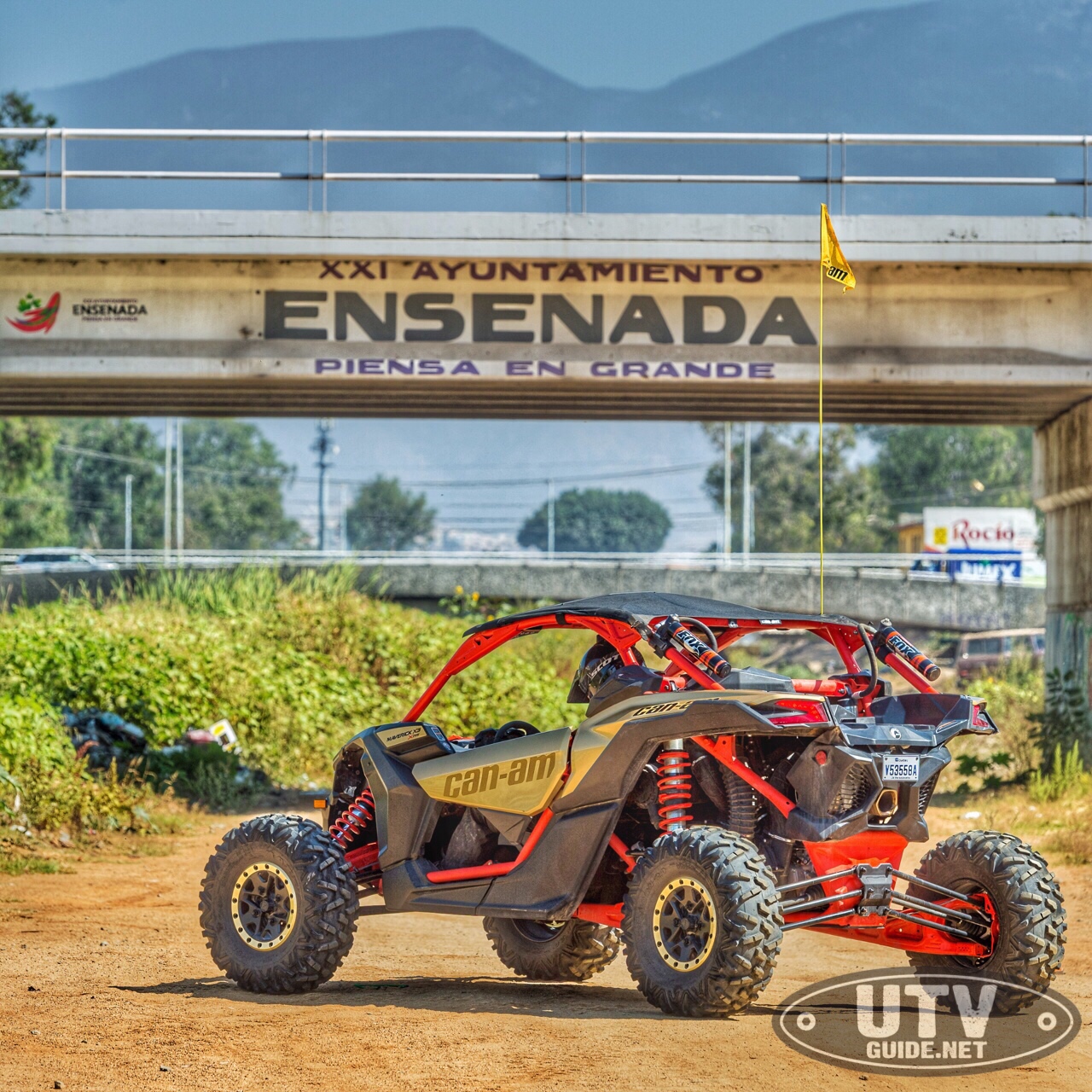
Ensenda Mexcio – Can-Am Maverick X3 Baja Adventure
Full 2018 Can-Am Lineup Details: 2018 Can-Am Off-Road Lineup Adds Power and Diversity and 2018 Can-Am Maverick X3 Bumped to 172HP
By Jon Crowley
Can-Am unveiled their new flagship sport side-x-side at Club BRP in Orlando in August and the internet has been buzzing ever since. I had a chance to get behind the wheel for a quick test at the dealer meeting, and I knew Can-Am had something special. See First Look at the Can-Am Maverick X3 for my thoughts after my initial ride.
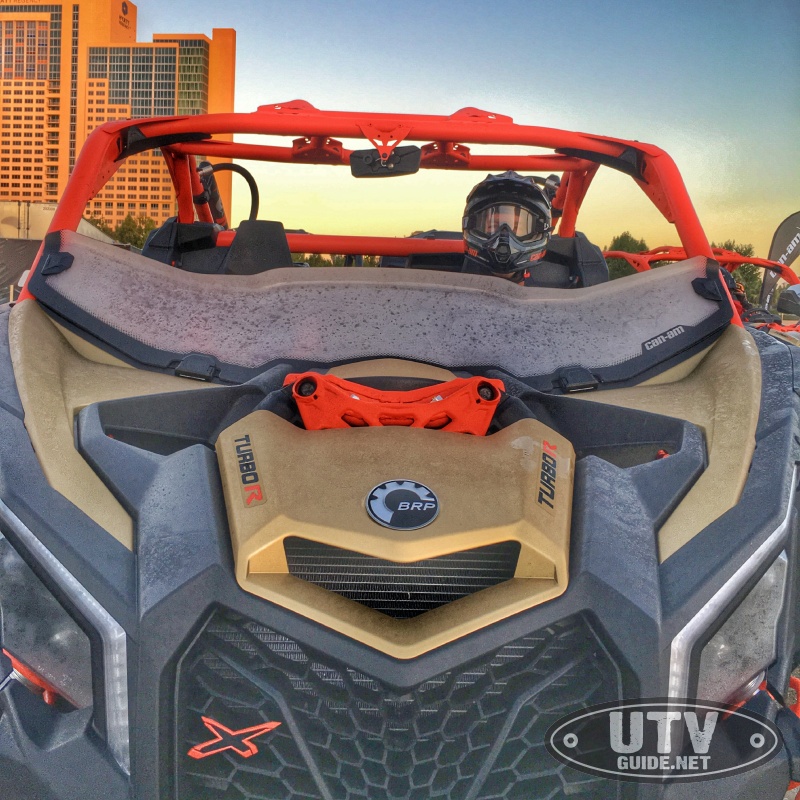
Testing the new Maverick X3 X rs at Club BRP
Then while attending the2016 UTV Invasion in Idaho a few short weeks later, we got to spend about an hour in aCan-Am Maverick X3 X rs in the dunes. This was a much more suitable test drive and it had us itching for more (see Can-Am Maverick X3 Dune Review).
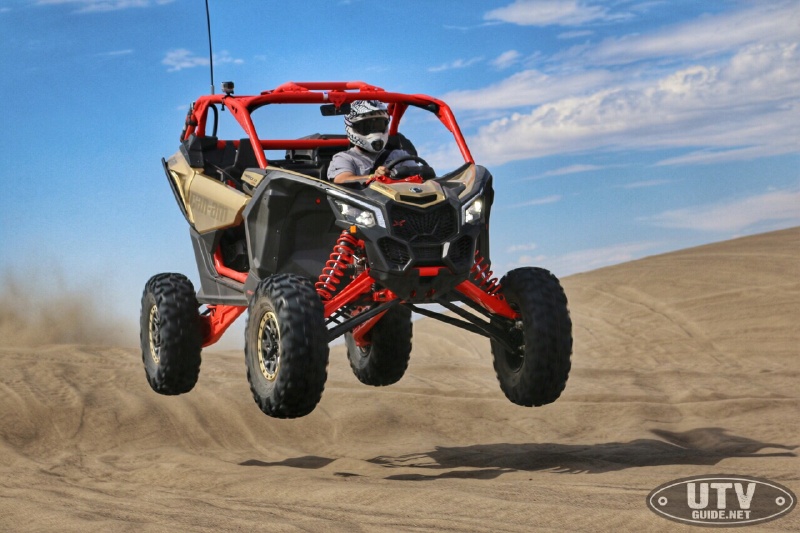
Testing the Maverick X3 X rs in the dunes
The wait for more seat time after Idaho didn’t last long. Fast forward just a few days, and I was on a plane to San Diego to join other editors on a two-day trip in Baja with Can-Am in the new Maverick X3! The plan was to take a fleet of Maverick X3’s from Ensenda to Mike’s Sky Ranch and back to Ensenada. Over 250 miles total over two days was an ambitious plan, but I was super excited to have some solid seat time in the different types of terrain that Baja can offer.
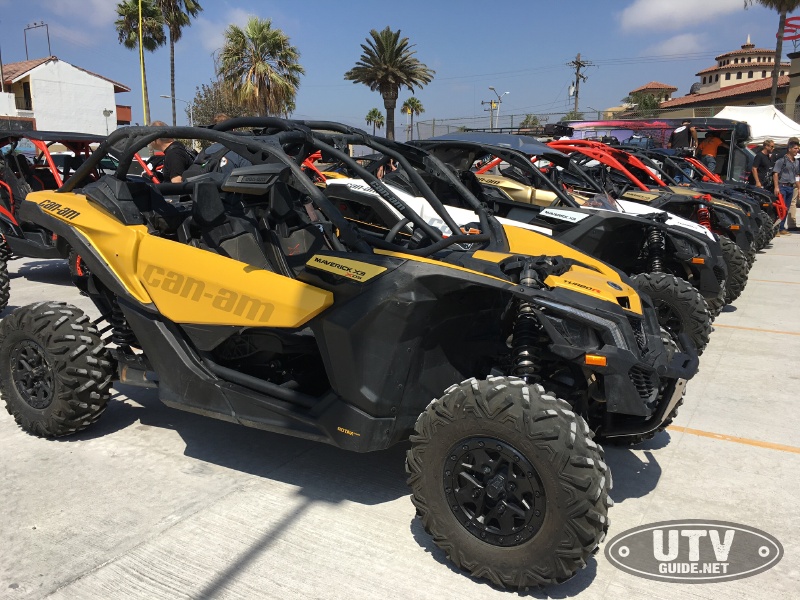
Maverick X3’s at San Nicolas Hotel
After flying into San Diego, I met up with other editors, Can-Am and the folks from Go Baja Riding for a bus ride down to Ensenda. Our stop for the first night was the San Nicolas Hotel & Casino where we had a full technical overview of the Maverick X3. In the morning it was time to ride!
Now before we get into the ride, let me preface my experience by setting the stage a bit. The Mavericks we drove in Baja were all pre-production units that had been through 1500 demo rides in Orlando, then spent at least a day in Arizona at a dealer event before being sent to Mexico. It was obvious that the machines were not new, and had not been treated nicely. The folks at Can-Am had a tough time just getting the units to Mexico in time, and did not have time for general service before we hit the trail.
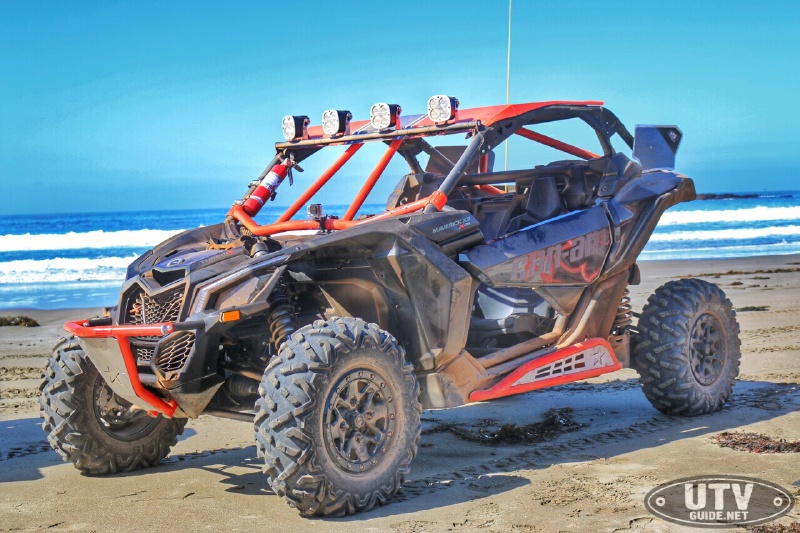
Maverick X ds with LSR accessories
The first day we hit the trail at Santo Tomas. I spent the morning behind the wheel of a Maverick X ds that was decked out with accessories from Lonestar Racing. The Maverick X ds is the mid-level Maverick X3 that is 64-inches wide with upgraded FOX RC2 shocks and 29-inch Bighorn tires.
We drove from San Tomas down to the beach near Punta Cabras. If you’ve never driven in Baja before, one thing that you need to get used to real quick is dust. We tried our best to space out, but if you don’t have much wind, you just have to live with it.
Getting into the Maverick X3 takes a tug on a strap located on the inside of the door. While not that difficult to figure out and use, I prefer a button or lever style latch mechanism. The door latches closed and stays closed just fine, but the strap used to open the door is a little more awkward than what you find on a RZR or Teryx.
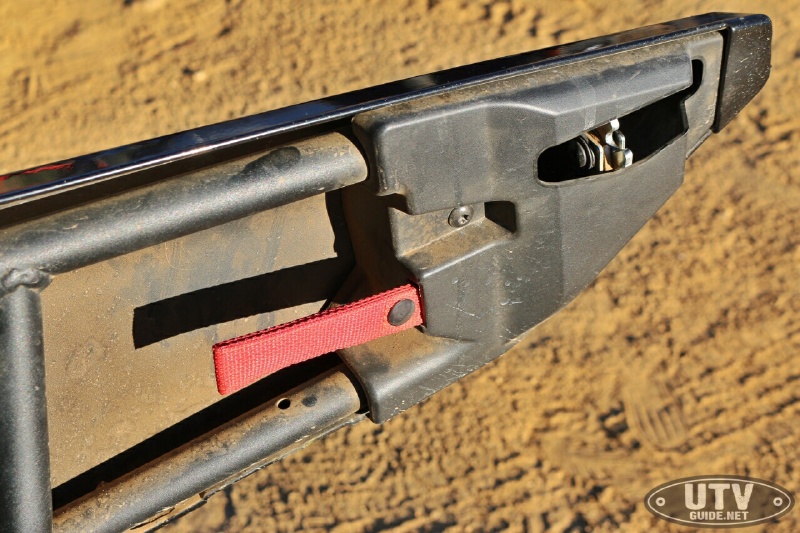
Maverick X3 Door Latch Mechanism
Once inside, I found the seat slider to be easy to use and gave my 6′ 1″ frame plenty of space. As a passenger, this is even more noticeable compared to a RZR where your right leg is much closer to the seat than your left. And if you want to spend a couple of minutes, you can even lower the seat 2 more inches in a few minutes with tools. The Maverick X3 is actually the first vehicle I have ever been in where I could actually move the seat forward one position and still have enough legroom. I preferred the selection all the way to the back for my legs, but in that position, the steering wheel felt too far away. This is something that an aftermarket steering wheel could easily change up for me.
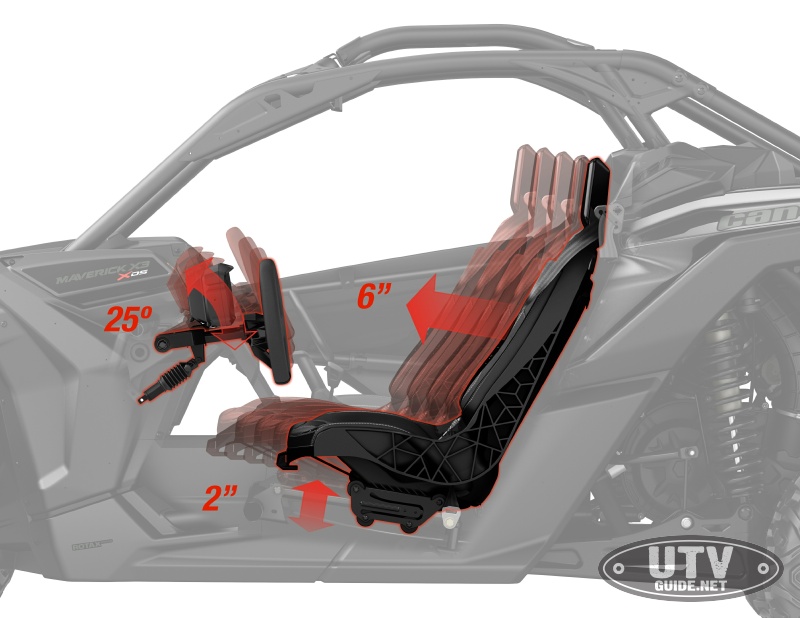
Tons of legroom in the Maverick X3
Once we hit the trail, you notice a deep growl from the triple cylinder Rotax that is familiar if you have ever ridden a Sea-Doo watercraft. It has a nice tone to it and you can easily spin the tires on a gravel road at almost any speed. Off-idle it didn’t really set me back in my seat, but the mid-range torque is incredible. I found myself using the power often during the next two days to lighten the front end instead of stabbing the brakes for an obstacle. Little rollers in the road were also a blast when you had just a split second to boost up the speed to lift the tires up and over for a jump. Anywhere from 30 MPH to 70 MPH acceleration is violent and addictive. I would bet there is plenty of extra power left for the aftermarket tuners to tap into as well. The new CVT did a great job delivering the power to the wheels.
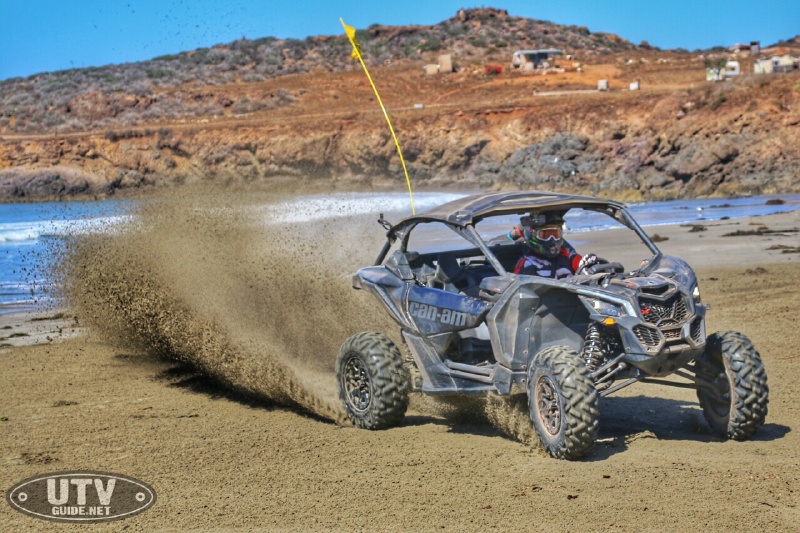
The turbocharged triple-cylinder Rotax makes it easy to toss a roost in the sand
One thing I didn’t like is the location of the CVT and engine intake. As you can see in the picture below, the intake for both is located directly behind the driver’s head. While the intake noise didn’t bother me at first, it started to wear on me after several hours on the trail. It is possible that this has something to do with the units being pre-production, because some units were louder than others.
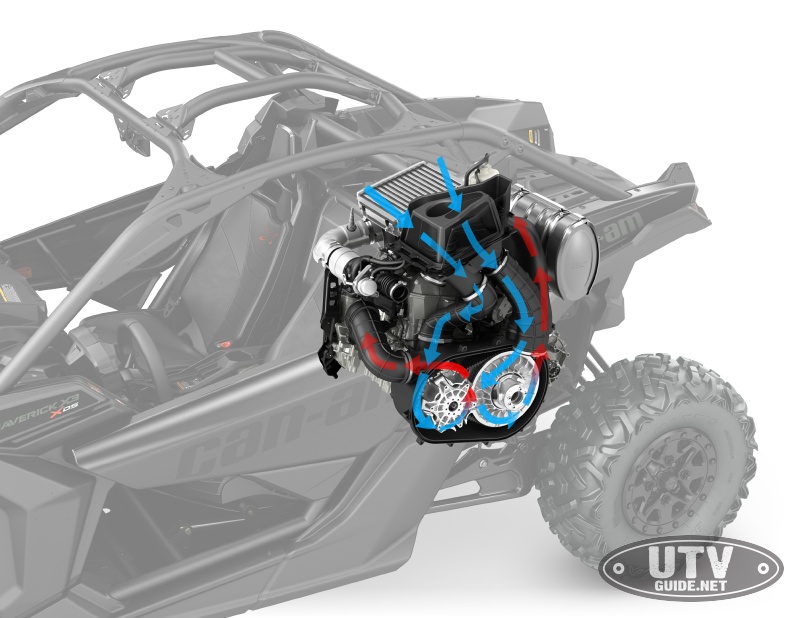
Maverick X3 CVT Intake is right behind the driver’s head
BRP touts that this 900cc ACE Rotax is very efficient, but over the course of the two days, we were constantly topping off the fuel tanks. Consequently I was never able to get an idea how far we could travel with the 10.5 gallon fuel tank. The tank on the Maverick X3 is one gallon more (9.5 gallons vs. 10.5 gallons) than the RZR XP Turbo so I am hopeful we can get 100+ miles out of a tank. It does seem odd to have the tank in front of the passenger, but other than at fill-ups, it never crosses your mind and the car felt very balanced regardless.
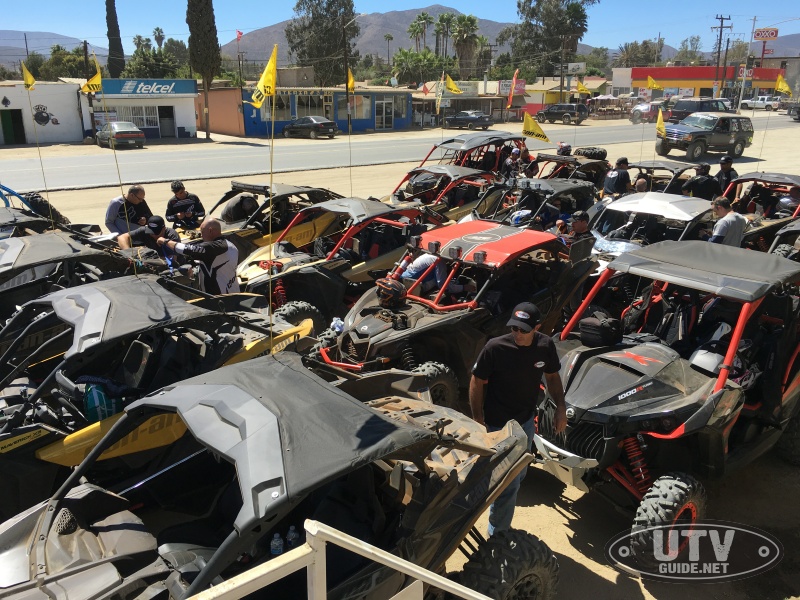
Lunch and Fuel Stop in San Vincente
After lunch and a fuel top-off at San Vincente, I switched from the Maverick X3 X ds to the base model Maverick X3. Both are 64-inches wide, and the biggest differences between the two are FOX QS3 shocks on the base model vs. FOX RC2 on the X ds, and 28-inch Bighorn tires on the base vs. 29-inch Bighorns on the X ds.
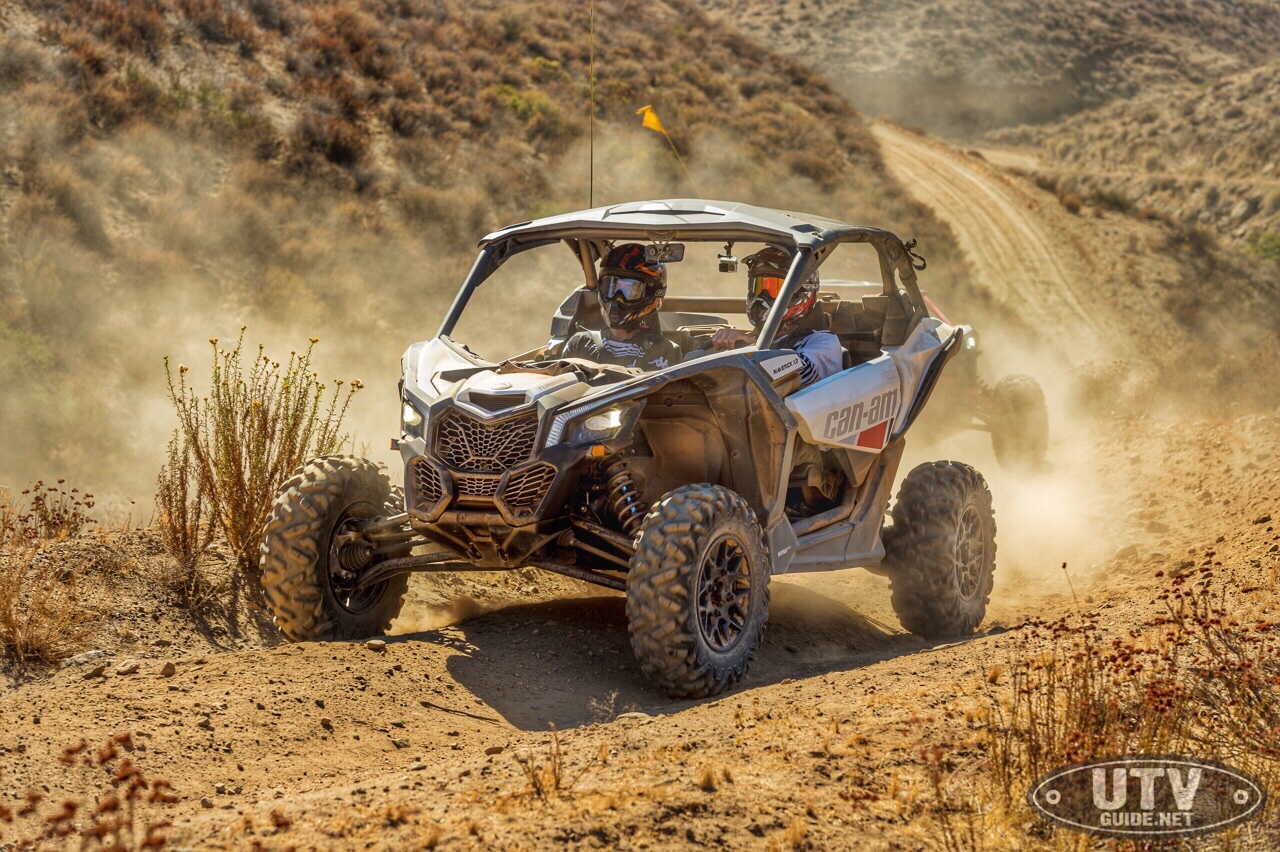
Base model Maverick X3 Turbo
On both cars, I feel that the ride was a little ruff over small chop than I would have expected. We heard that this was not the final shock/spring package and this would be improved for production versions, but I cannot confirm. Both of these units handled g-out situations well but I think the X ds with FOX RC2’s should be able to handle small chop with a more plush ride than the QS3 shocks. We didn’t hit any big whoops at speed on day one so I cannot comment there.
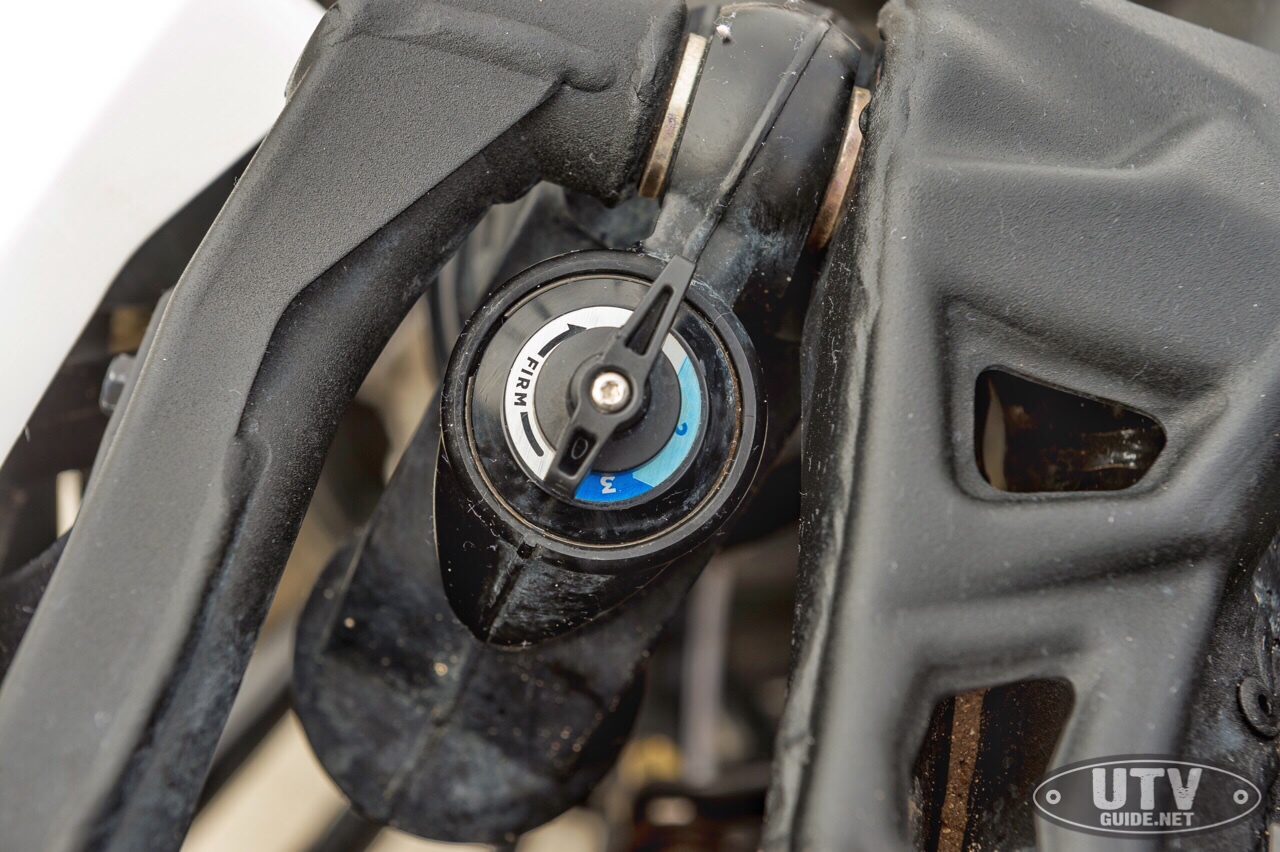
FOX QS3 Shock on the base model Maverick X3
We did hit lots of fast gravel roads with a lot of curves and the quick ratio steering was great. I like the adjustability of the tri-mode DPS (Dynamic Power Steering). You can adjust your desired level of power steering input on-the-fly. The Maverick X3 also comes with front and rear sway bars and they were setup as I like. Give me some sway, so the shocks can work independently, but don’t let it get too out of hand.
We ended up the day at Mike’s Sky Ranch as the sun was setting after well over 100 miles on the trail.
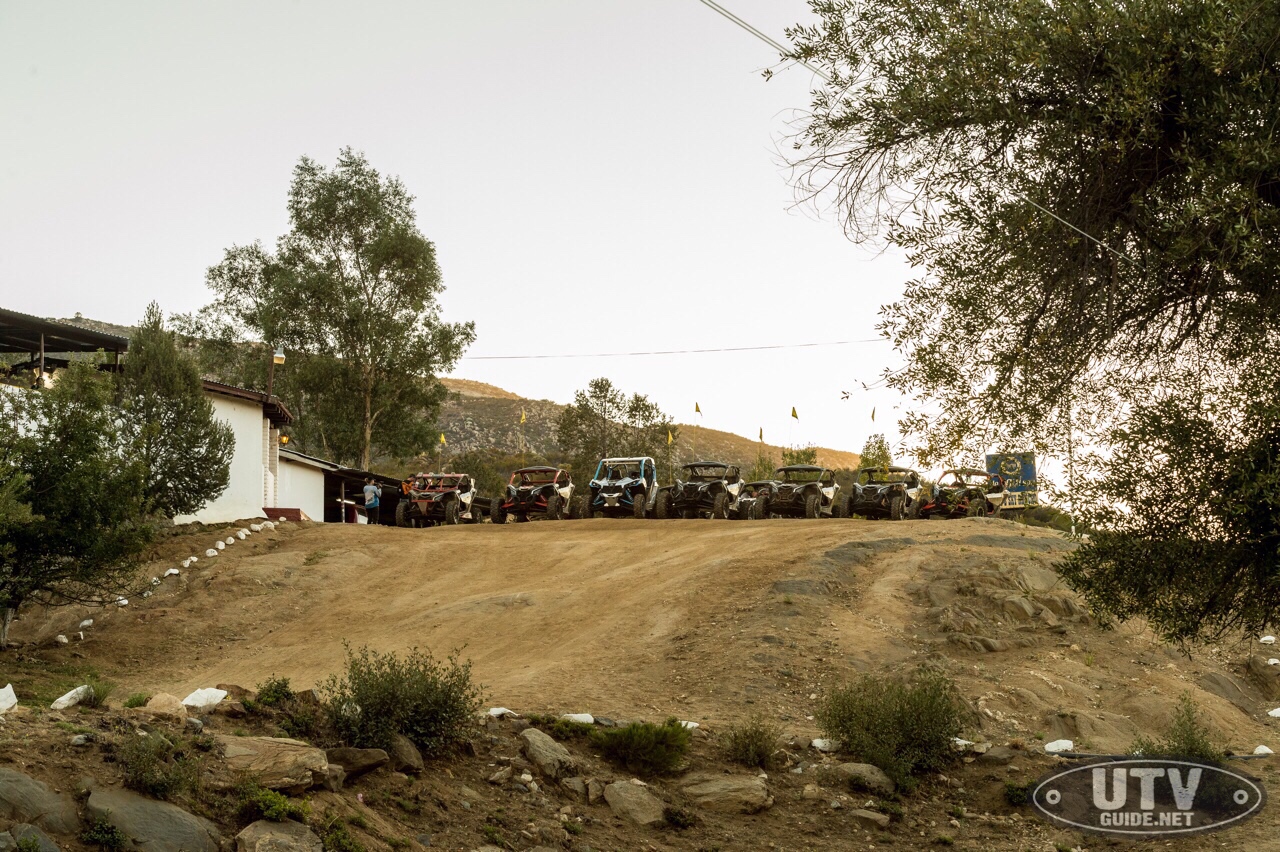
MIke’s Sky Ranch
The next day we had another 100+ mile day on tap as we were headed out to Valley Trinidad, up the Goat Trail, over to El Alamo, up in elevation to the pine forest over at Laguna Hanson then down the hill to Ojos Negros. For this day, I jumped behind the wheel of a 72-inch wide Triple Black Maverick X3 X rs.
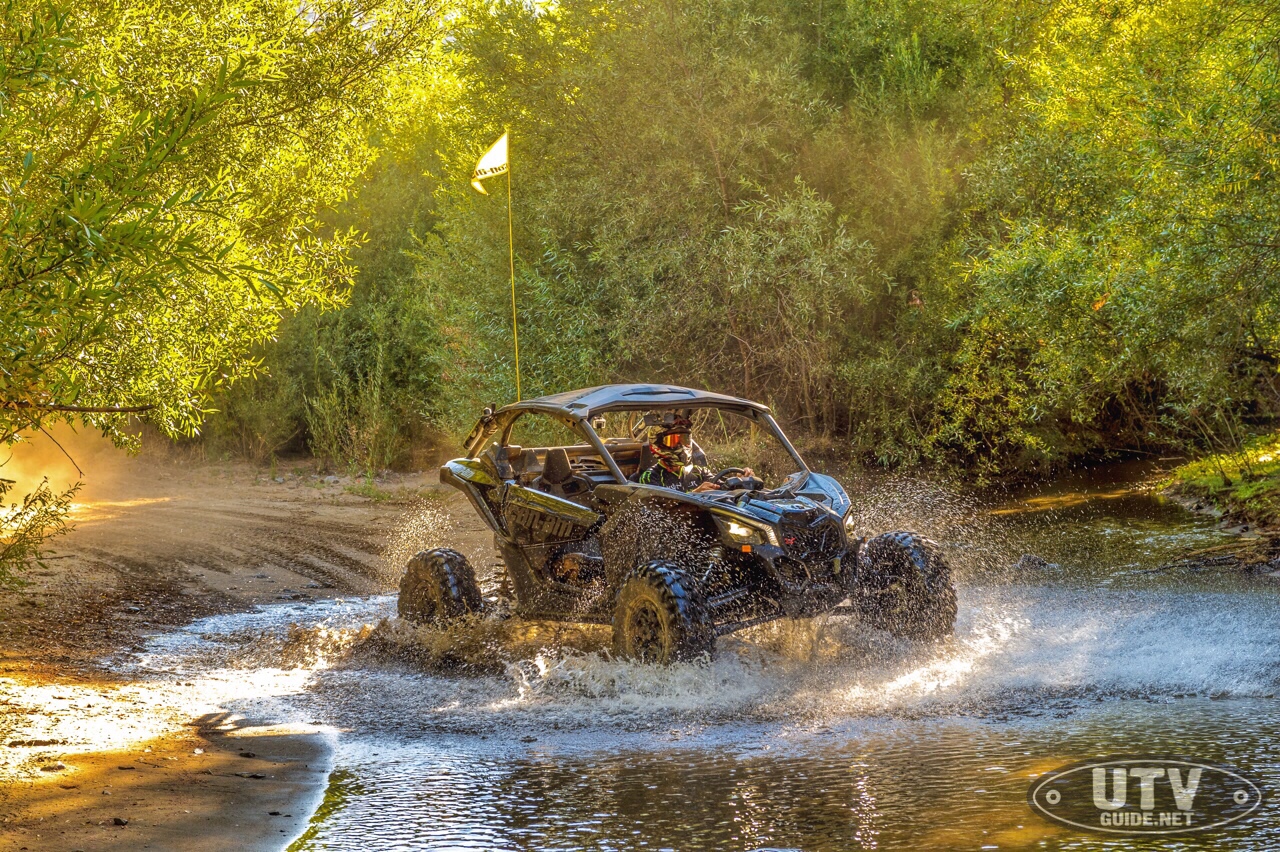
Triple Black Can-Am Maverick X3 X rs at Mike’s Sky Ranch
It was fairly slow going with lots of dust in the early morning all the way into Valley Trinidad where we fueled up again. Then up the highway a bit until we reached the famous “Goat Trail”. The Goat Trail is a steep, narrow climb that can easily take out several vehicles during a Baja 1000 race. We certainly weren’t at race speed, but it was nice to get the Maverick X3 in low-range for some technical crawling. While definitely nothing like rock crawling on the Rubicon or Moab, it did give me an idea of low-range capabilities. Low range is sufficiently low to climb the Goat Trail with enough control so you don’t smoke a CVT belt. That is the good news for rock crawlers or anyone that needs slow-speed with enough RPM to keep the car under control.
The bad news for rock crawlers is the front differential on the Maverick X3. Although the front differential looks very beefy, it comes with standard BRP Visco-Lok. While this is of no consequence for dunes and desert riders, rock crawlers will find this unacceptable. Visco-Lok is a progressively and automatically locking front differential system, once 4×4 mode is selected. The system intelligently transfers power from a slipping front wheel to the opposing wheel with traction. The front differential works just fine everywhere except when you want to rock crawl. The wheel that loses traction and spins, must do so for several revolutions before power is transferred to tire with traction. BRP came out with the QE or “Quick Engagement” version of the Visco-Lok which is better than the standard version, but still not good enough for and serious rock crawling. If you are thinking that the Maverick X3 would be ideal for King of the Hammers, you had better figure out an aftermarket solution to manually lock and unlock the front differential. This shouldn’t be too hard since I understand the differential is the same/similar that is used on the Can-Am Defender. And if you plan to bomb through the desert, this is of little consequence.
After the Goat Trail, the real fun began for the day. The pace quickened and a breeze kept the dust from hanging over the trail. Our path to El Alamo was over the course used for many Baja 1000s over the years and there were tons of whoops, g-outs and generally ugly desert race course type terrain. I was thrilled to be in the flagship Maverick X3 X rs with its 72-inch width with 22-inches of front and 24-inches of rear wheel travel. Both front and rear feature FOX internal bypass shocks and the 102-inch wheelbase is a foot longer than a RZR XP.
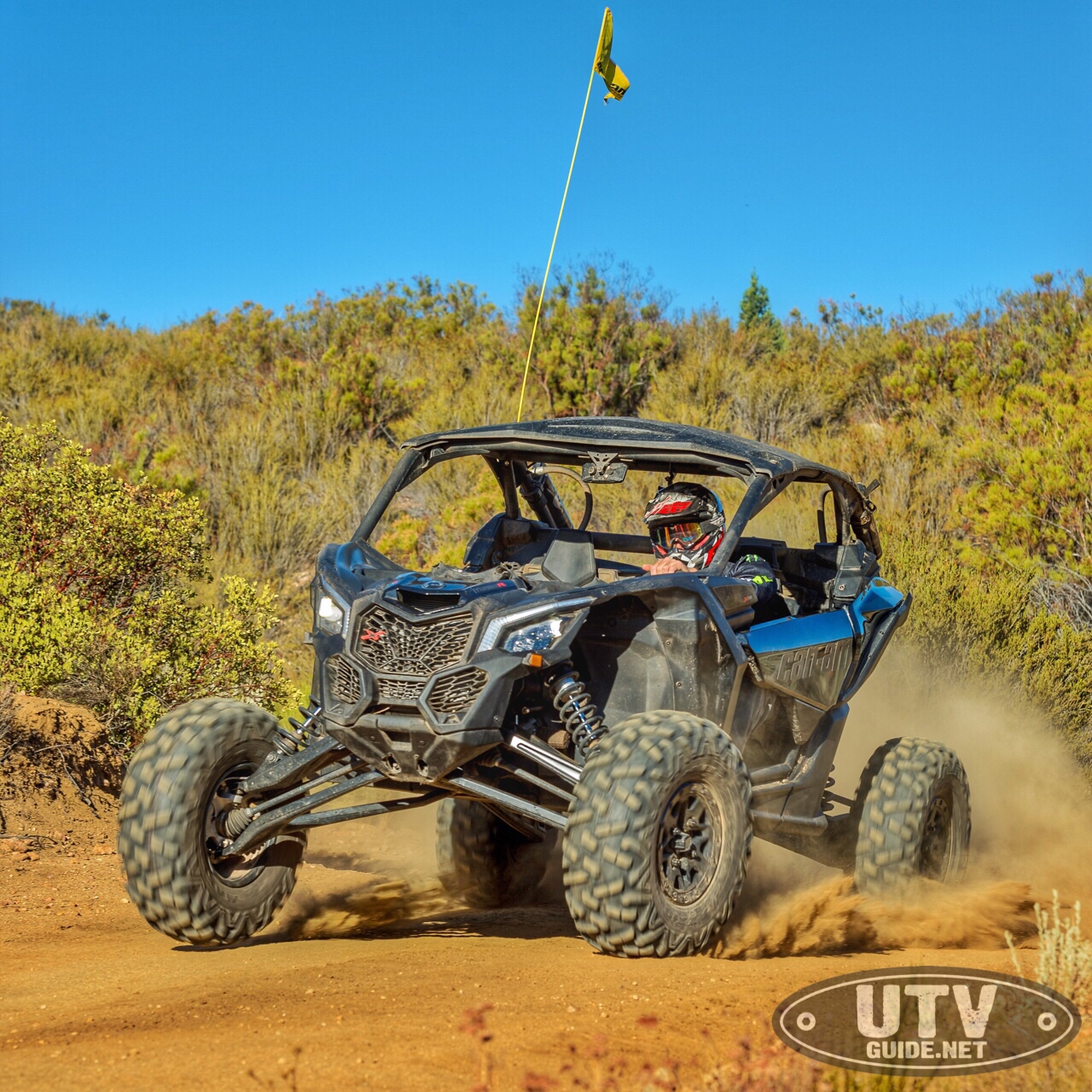
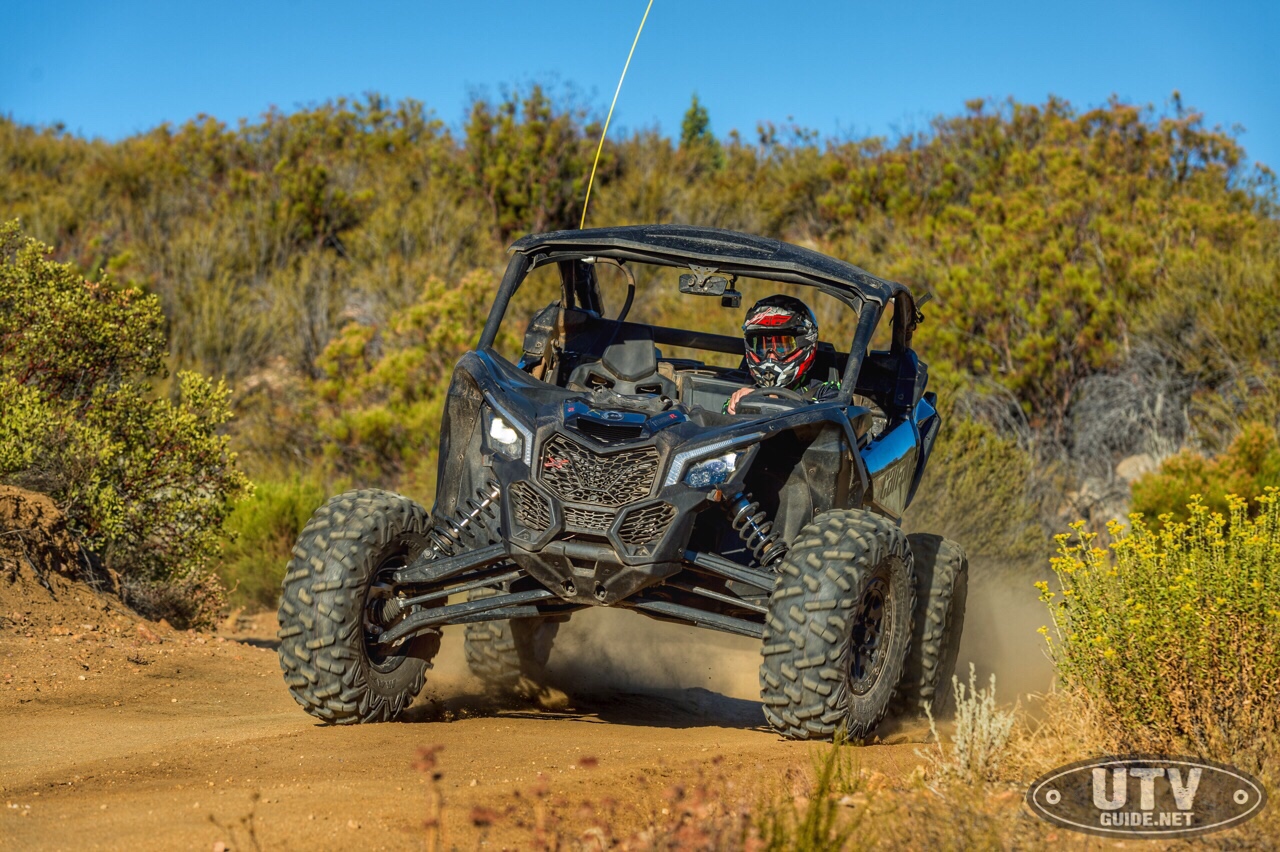
Triple Black Can-Am Maverick X3 X rs with 30-inch Maxxis Bighorn Tires
Normally I hate travelling through this type of terrain, but the X rs ate it up! Even when I checked up and hacked back on the throttle, the Maverick X3 stayed in control where I could then get back into it. I was looking for ugly stuff just because it put a smile on my face seeing how well the trophy truck inspired trailing arms soaked up the big hits. There were even a few occasions where instead of hitting the brakes hard, I did the opposite and gave the turbocharged triple-cylinder Rotax more throttle. The front-end lightened and the rear-end soaked up the hit. So much fun!
After a break at El Alamo, we headed up in elevation to Laguna Hanson and into the pine forest. Super pretty part of the trip, but it was slower going and the dust was hanging on more in the trees. From the pine forest we headed down the hill to Ojos Negros on some fast and fun roads where the Maverick X3 is really a lot of fun. Just wish that the road could closed in the opposite direction so I could have a close course session.
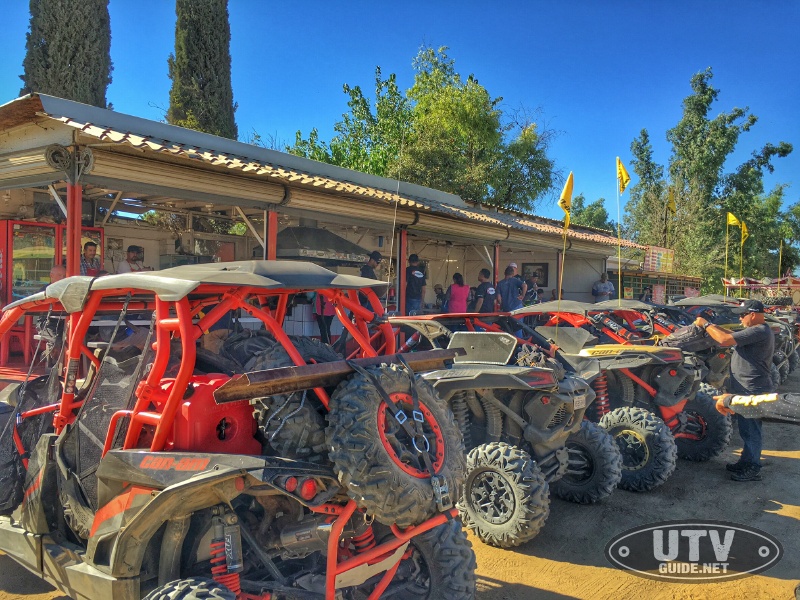
Taco stop in Ojos Negros
We stopped for tacos in Ojos Negros, then headed back to Ensenada where we quickly cleaned up and got on the van for the ride back to San Diego. The adventure through Baja was big fun. Definitely a larger group than I prefer when you are doing 100+ miles on the trail. I prefer group size of 4 to 6 cars with everyone equipped with car-to-car radio communications and GPS. Rugged Radios is a accessories partner on the Maverick X3, so adding radio should be easy. Our group did experience a hand full of flat tires, and a few blown CVT belts. Hard to know for sure what caused the belt failures because the belts were not new and had been driven by hoards of dealers on a very tight, wet track in Orlando. Plus a solid day or two in Arizona at a dealer event.
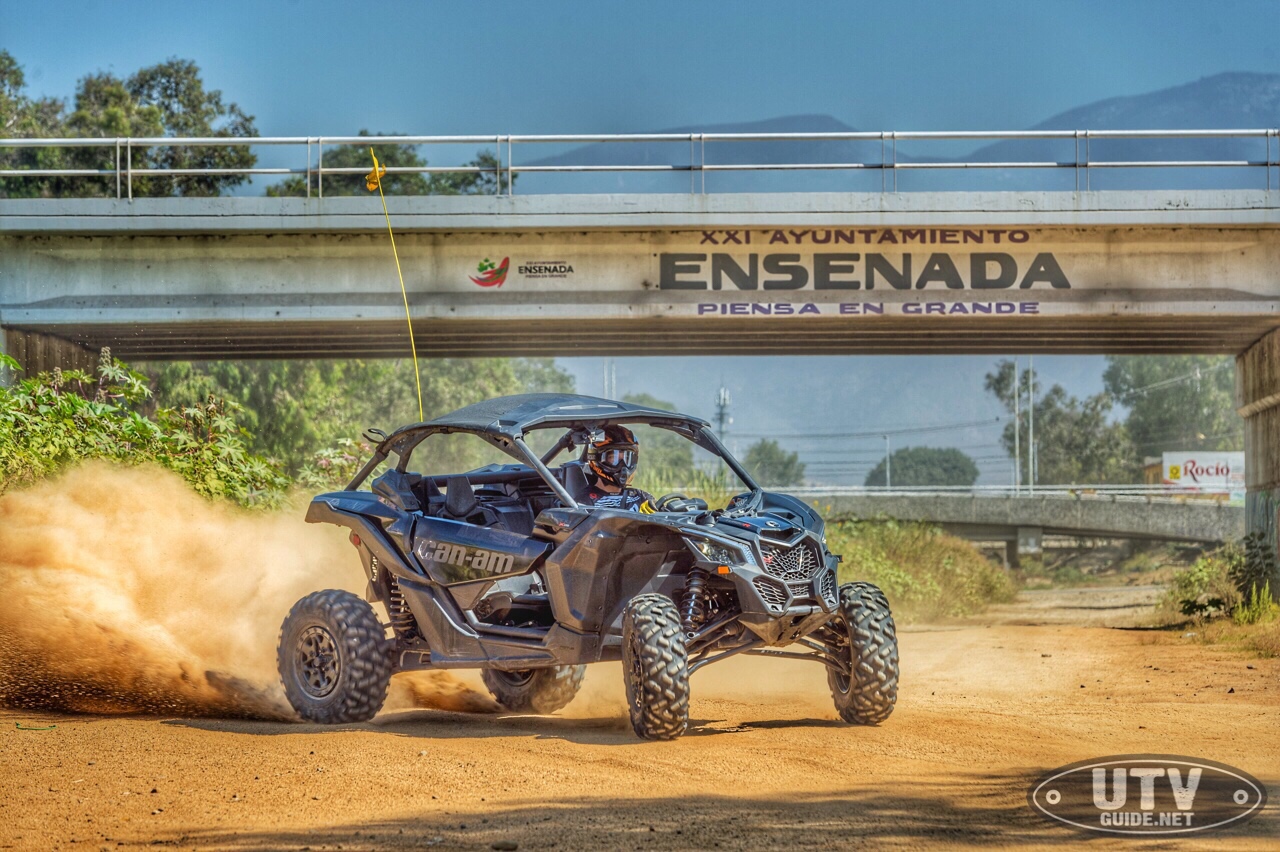
Baja Adventure with the Can-Am Maverick X3
Overall I believe Can-Am has raised the bar in the sport UTV market segment, especially when you look at the Maverick X3 X rs. Factory long travel with 22/24 inches of travel is amazing in a 102-inch wheelbase for the desert. And although the horsepower comparison between the RZR XP Turbo at 144 HP and the Maverick X3 Turbo at 154 HP isn’t all that much on paper, when you get behind the wheel of the X3 you can feel the difference and it is exhilarating. Couple the X3’s suspension and power with a low, comfortable seat position and you have a winner for the desert.
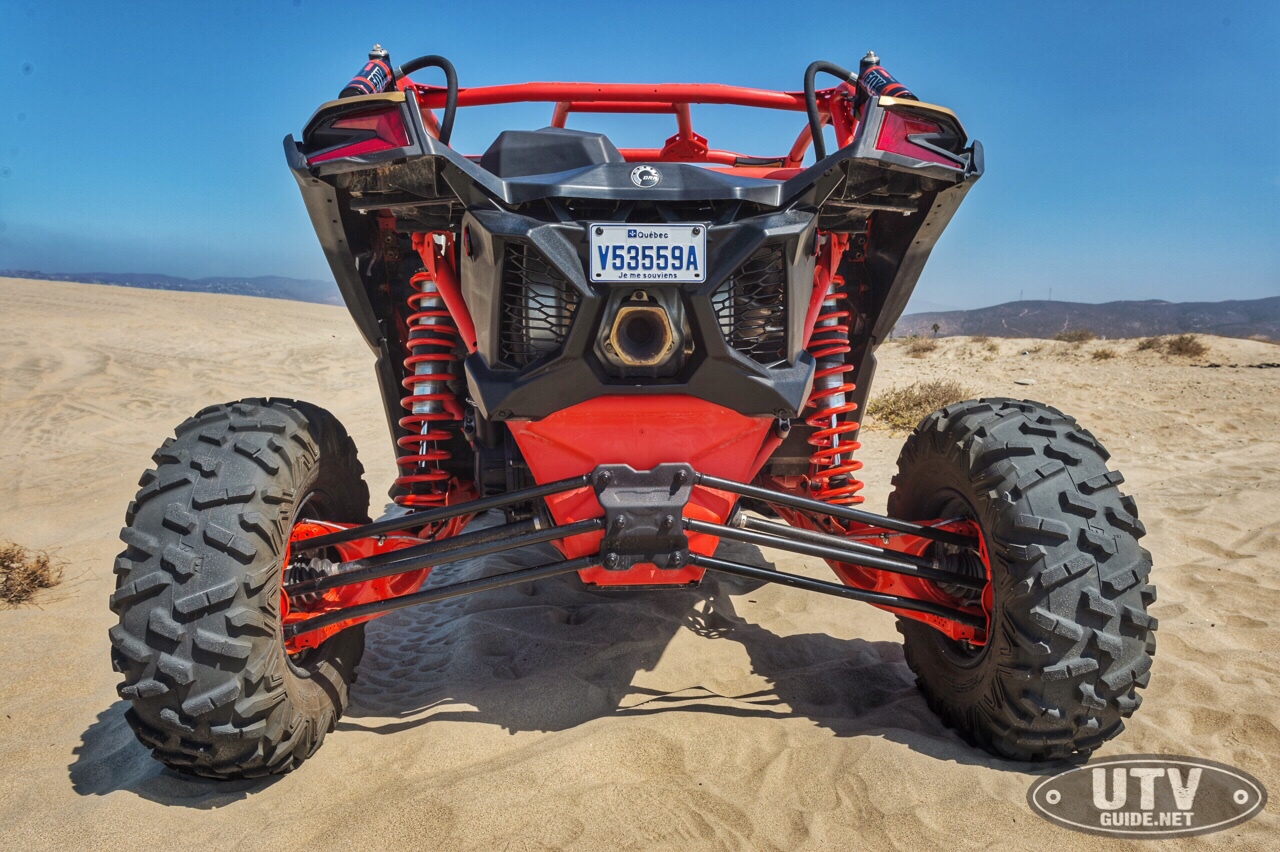
Business End of the Can-Am Maverick X3 X rs – 24″ Travel with FOX IBP Shocks
Maverick X3 Likes:
-
Power/Torque
-
Suspension
-
Factory long travel option with Maverick X3 X rs
-
Seating position with option to lower. Super sporty feeling with low center of gravity
-
Legroom
-
CVT belt location makes belt changes much easier than previous Mavericks
-
Adding 4-point harnesses is easy with slotted seats and tabs behind seat
-
Quick ratio steering
-
Tri-Mode Dynamic Power Steering (DPS) let’s you adjust to your desired level of steering input
-
102-inch wheelbase is ideal for desert two-seat UTV
Maverick X3 Dislikes:
-
Engine/CVT Intake noise behind driver’s head
-
Door latch mechanism
-
Lack of front differential locker makes rock crawling improbable
-
Ride not very plush in small chop
Maverick X3 MSRP
- Maverick X3 TURBO R White–$22,999
- Maverick X3 X ds TURBO R Triple Black–$24,999
- Maverick X3 X ds TURBO R Circuit Yellow–$24,999
- Maverick X3 X rs TURBO R Triple Black–$26,699
- Maverick X3 X rs TURBO R Gold & Can-Am Red–$26,899
Maverick X3 X rs Turbo R Specifications
- 72 in. (182.9 cm) wide
- 14-in. aluminum beadlock wheels with 30-in. Maxxis Bighorn 2.0 tires
- 22-in. (55.9 cm) of front suspension travel and 24-in. (61 cm) of rear suspension travel
- Fully adjustable FOX 3.0 PODIUM RC2 remote reservoir shocks with bypass
- Ground Clearance 15 in.
- Full roof and heavy-duty HMW skid plate
- 10.5-gallon (40 L) fuel tank
- Maverick X3 X rs TURBO R Triple Black–$26,699
- Maverick X3 X rs TURBO R Gold & Can-Am Red–$26,899
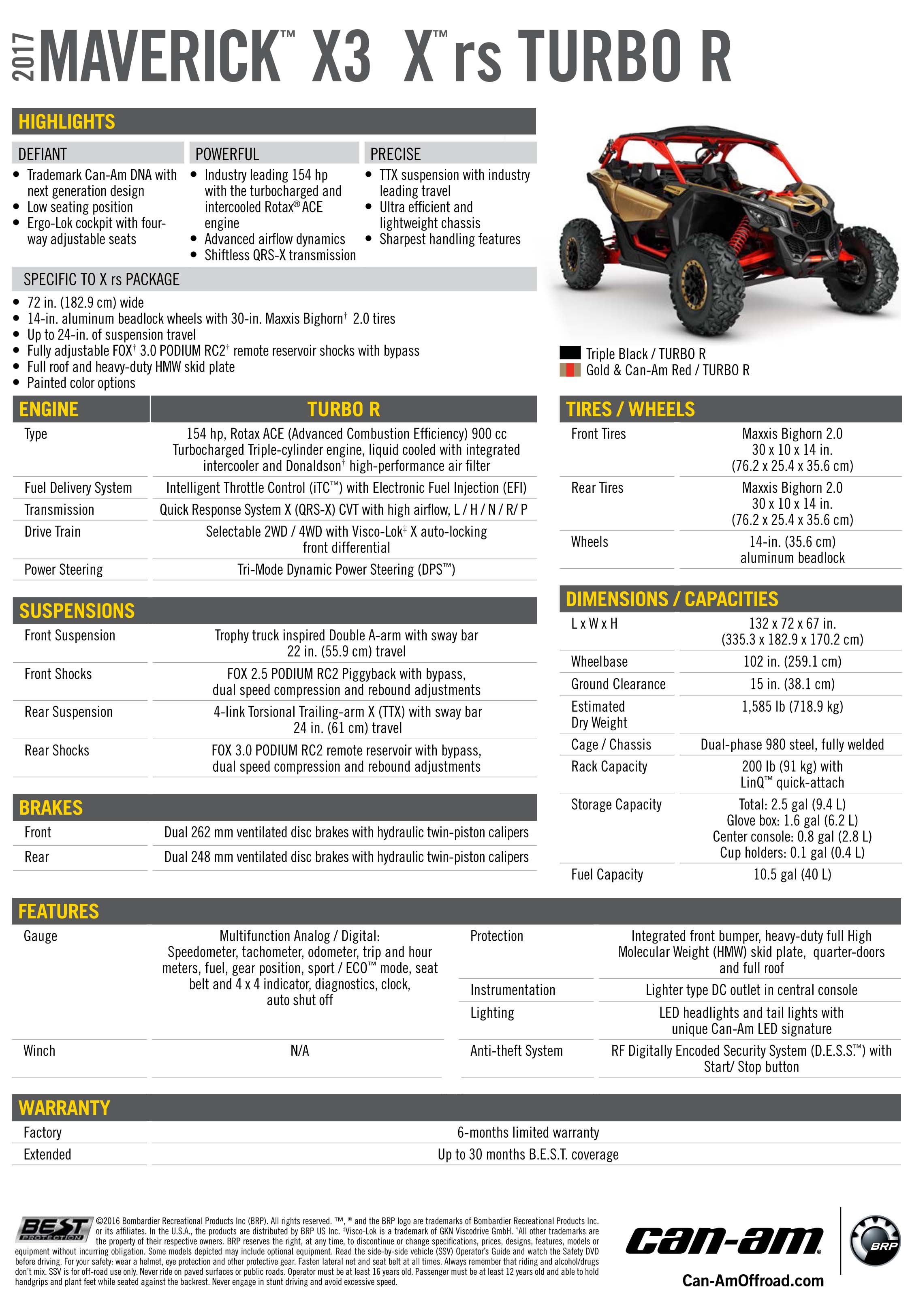
Maverick X3 X rs Specifications (click to enlarge)
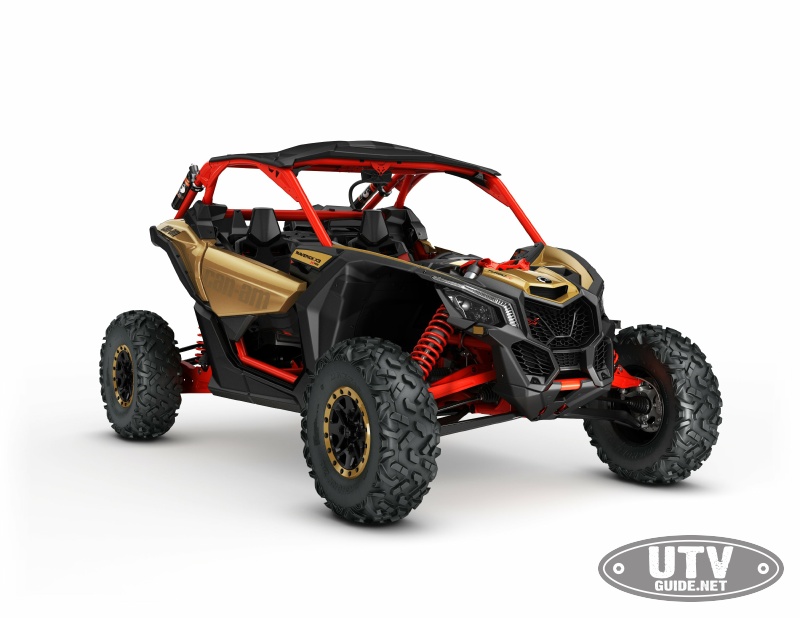
Maverick X3 X rs
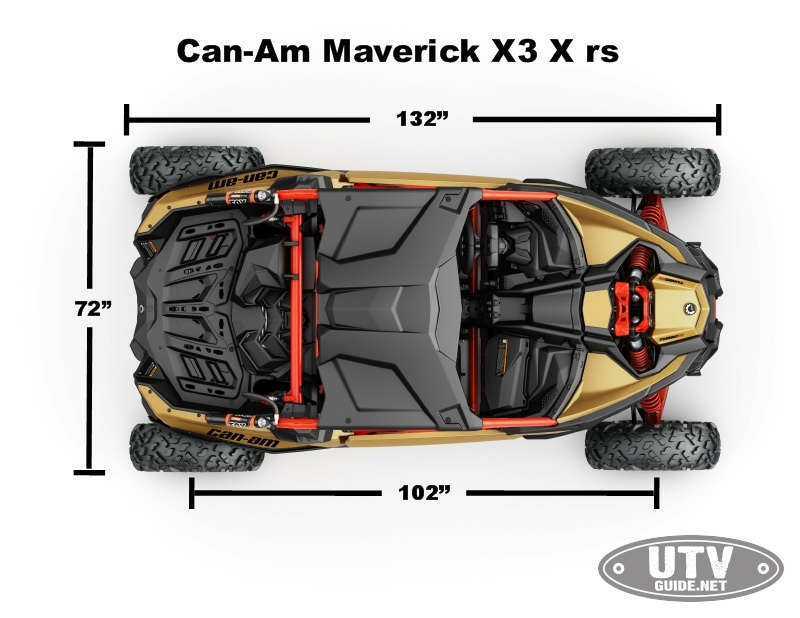
Maverick X3 X rs: 72″ wide x 132″ Long x 102″ Wheelbase
More Resources:
- Can-Am Maverick X3 Dune Review
- Can-Am Maverick X3 X rs
- Can-Am Maverick X3 Side-by-Side Vehicle WINS Vegas To Reno Race
- First Look at the Can-Am Maverick X3
- Maverick X3 Family
- 2017 Sport UTV Comparison
Manufacturer Info:
Can-Am, Bombardier Recreational Products Inc.
BRP (TSX: DOO) is a global leader in the design, development, manufacturing, distribution and marketing of powersports vehicles and propulsion systems. Its portfolio includes Ski-Doo and Lynx snowmobiles, Sea-Doo watercraft, Can-Am all-terrain and side-by-side vehicles, Can-Am Spyder roadsters, Evinrude and Rotax marine propulsion systems as well as Rotax engines for karts, motorcycles and recreational aircraft. BRP supports its line of products with a dedicated parts, accessories and clothing business. With annual sales of over CA$3 billion from 105 countries, the Company employs approximately 7,100 people worldwide.


No Comments