


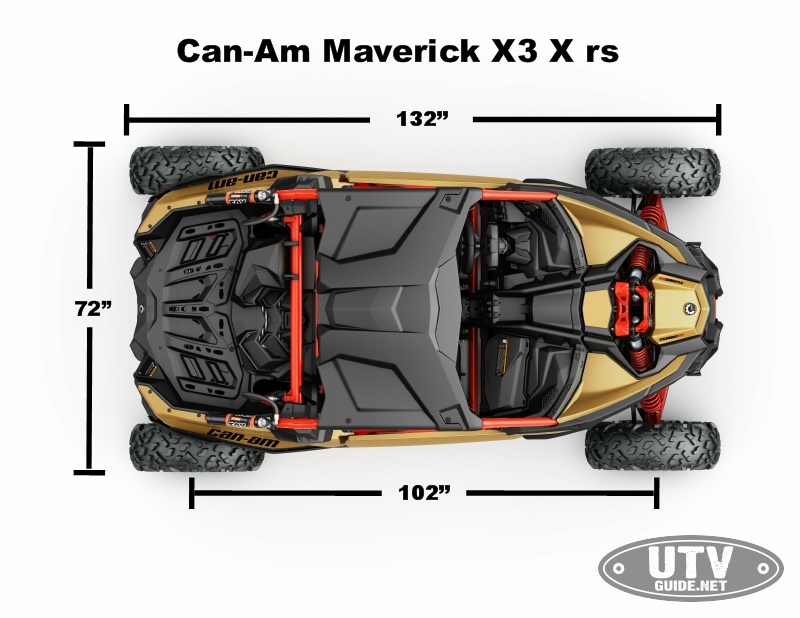
The 2017 Can-Am Maverick X3 X rs Turbo R was the widest and most heavily suspended model in the original Maverick X3 lineup. Built for dunes, desert riding and high-speed open terrain, the 72-inch-wide X rs combined a 154-horsepower turbocharged Rotax engine with a 102-inch wheelbase, 30-inch tires and up to 24 inches of suspension travel.
When Can-Am introduced the Maverick X3 for the 2017 model year, it represented a major change from the original first-generation Can-Am Maverick. The X3 used an all-new chassis, a turbocharged three-cylinder engine, a lower seating position and a rear suspension design inspired by desert racing.
This page covers the specifications and features of the original 2017 Maverick X3 X rs Turbo R. Horsepower, suspension components, pricing and other details changed during later model years.

2017 Can-Am Maverick X3 X rs at a Glance
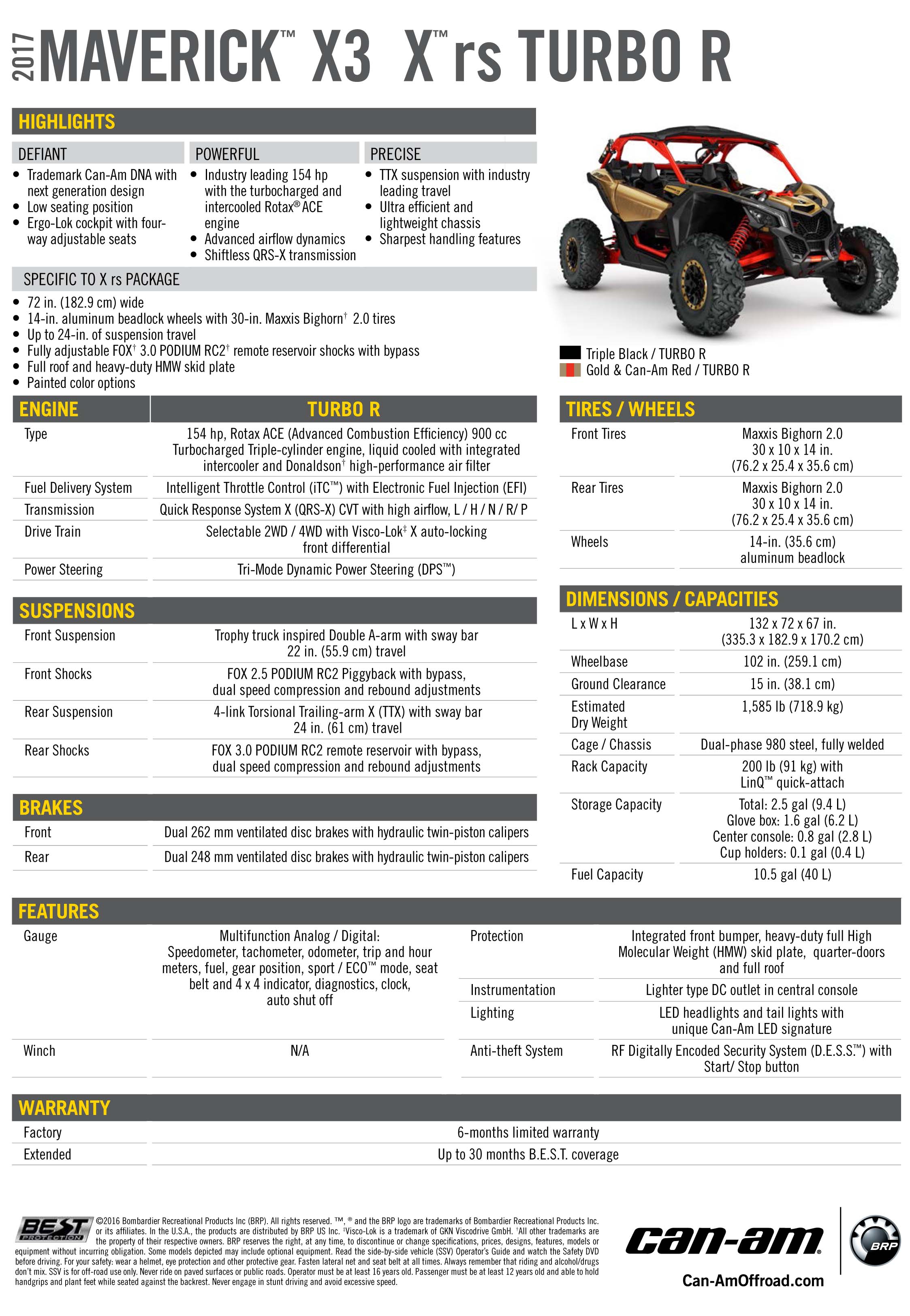
| Specification | 2017 Maverick X3 X rs Turbo R |
|---|---|
| Engine | Turbocharged and intercooled 900cc Rotax ACE inline three-cylinder |
| Horsepower | 154 hp at 7,500 rpm |
| Torque | 113 lb-ft at 7,000 rpm |
| Transmission | QRS-X continuously variable transmission |
| Width | 72 inches |
| Wheelbase | 102 inches |
| Front suspension travel | 22 inches |
| Rear suspension travel | 24 inches |
| Ground clearance | 15 inches |
| Tires | 30-inch Maxxis Bighorn 2.0 |
| Wheels | 14-inch aluminum beadlock wheels |
| Fuel capacity | 10.5 gallons |
What Made the Original X3 X rs Different?
The X rs occupied the top position in the three-model 2017 Can-Am Maverick X3 family. While the standard Maverick X3 and X ds measured 64 inches wide, the X rs stretched to 72 inches and received longer suspension arms, additional wheel travel, larger rear shocks and 30-inch tires.
Its 102-inch wheelbase was also unusually long for a two-seat sport UTV in 2017. The extra length helped keep the chassis settled through whoops and rough desert terrain while the 44/56 front-to-rear weight distribution placed more weight over the driven rear wheels.
The tradeoff was maneuverability. At 72 inches wide and 132 inches long, the X rs was designed primarily for open desert and dunes rather than narrow wooded trails.
154-Horsepower Turbocharged Rotax Engine
Power came from a 900cc Rotax ACE inline three-cylinder engine equipped with a turbocharger and intercooler. Can-Am rated the original engine at 154 horsepower at 7,500 rpm and 113 lb-ft of torque at 7,000 rpm.
Can-Am claimed a 0–60 mph time of 4.9 seconds. The engine worked with the company’s QRS-X CVT, which was calibrated to maintain power delivery without the interruption of a conventional gear change.
The engine was positioned behind the seats, while the turbocharger was mounted close to the engine to shorten the intake and exhaust paths. Three elevated air intakes supplied the engine, CVT and intercooler with air while helping reduce exposure to dust and debris.


Long-Travel TTX Rear Suspension
Suspension was the defining feature of the Maverick X3 X rs. The front used arched double A-arms with 22 inches of travel, while Can-Am’s four-link TTX trailing-arm rear suspension delivered 24 inches of travel.
The TTX layout used a large trailing arm supported by three additional links. These links controlled rear-wheel alignment throughout the suspension stroke, helping reduce unwanted toe change and bump steer as the wheels moved through their travel.


FOX Internal-Bypass Shocks
The X rs received fully adjustable FOX shocks developed to complement its long-travel suspension:
- Front: FOX 2.5 PODIUM RC2 piggyback shocks with bypass, dual-speed compression and rebound adjustment
- Rear: FOX 3.0 PODIUM RC2 shocks with remote reservoirs, bypass, dual-speed compression and rebound adjustment
The larger 3.0-inch rear shocks provided additional oil capacity and damping control for repeated high-speed impacts. Compression and rebound adjusters also allowed owners to tune the suspension for different terrain, vehicle loads and driving styles.

Driver-Focused Cockpit and Controls
The Maverick X3 introduced a lower, more enclosed seating position than the original Maverick. Its Ergo-Lok cockpit placed the driver and passenger deeper in the chassis, giving the vehicle a sports-car-like driving position and helping lower the center of gravity.
The driver controls included a flat-bottom steering wheel with a quick 1.5-turn lock-to-lock ratio. Tri-Mode Dynamic Power Steering offered minimum, medium and maximum steering-assist settings.
Two throttle modes—Eco and Sport—changed throttle response, while Intelligent Throttle Control helped smooth accelerator input when the driver’s foot moved over rough terrain. The seats offered fore-and-aft and vertical adjustment, and their integrated harness openings simplified the installation of four-point restraints.

Brakes, Electrical Output and Protection
Braking was handled by twin-piston calipers at all four wheels. The front used 262 mm brake discs, while the rear used 248 mm discs. Can-Am positioned the master cylinder inside the cockpit to provide additional protection from trail debris.
A 650-watt magneto supplied power for the vehicle’s electrical systems and provided capacity for accessories such as auxiliary lighting, radios and audio equipment.
The X rs package also included a full roof and a heavy-duty HMW skid plate to protect the underside of the chassis.

2017 Maverick X3 X rs Turbo R Pricing
Can-Am offered the original X rs in two color combinations:
- Triple Black: $26,699 MSRP
- Gold and Can-Am Red: $26,899 MSRP
These were original 2017 model-year suggested retail prices and do not represent current used-vehicle values.
How the Original Maverick X3 X rs Drove
The specifications established the X rs as a serious desert machine, but its character became clearer from behind the wheel. Its long wheelbase, wide stance and substantial suspension travel helped it remain composed through rough terrain, while the low seating position made the driver feel connected to the chassis.
During our 2017 Can-Am Maverick X3 review in Baja, the combination of acceleration, suspension travel and cockpit ergonomics stood out. The X rs was particularly well suited to fast desert terrain, although its 72-inch width and Visco-Lok front differential made it less appropriate for narrow trails and technical rock crawling.
We also tested the machine in the sand during our Can-Am Maverick X3 X rs dune review, where the turbocharged engine and long-travel suspension were a natural fit.
Why the 2017 Maverick X3 X rs Matters
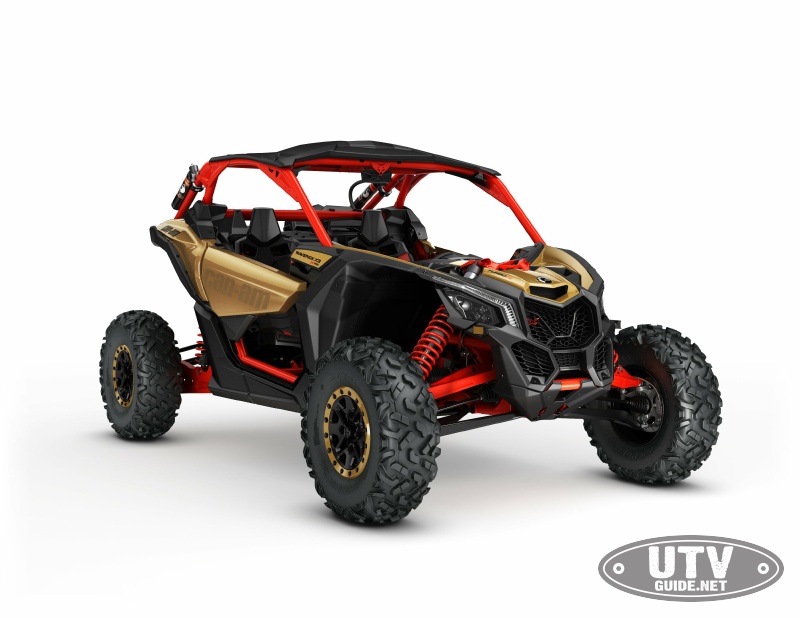
The first Maverick X3 X rs helped move production sport UTVs closer to purpose-built desert cars. Its 72-inch stance, 102-inch wheelbase, 24 inches of rear travel and adjustable 3.0-inch FOX shocks were exceptional specifications for a showroom UTV in 2017.
Can-Am increased Maverick X3 power in later years and introduced additional packages, four-seat MAX models and specialized versions. However, the original 154-horsepower X rs established the basic engine, chassis and suspension formula that would define the Maverick X3 platform for years.


