


Originally published August 17, 2026. This first-look report covers the original 154-horsepower 2017 Can-Am Maverick X3 as it was introduced at Club BRP.
Can-Am completely reset its approach to the high-performance side-by-side market when it unveiled the 2017 Maverick X3. I attended the Club BRP dealer event, where a small group of media members received an early look at the new machine and a brief opportunity to drive the wide Maverick X3 X rs.
This was not yet the kind of extended evaluation we would later conduct during our 250-mile Can-Am Maverick X3 review in Baja. However, the dealer introduction gave me time to examine the chassis, engine placement, suspension and cockpit before taking the X3 onto a short test course.
The Maverick X3 represented much more than another update to the original Maverick. Its low seating position, three-cylinder turbocharged engine, long wheelbase and purpose-built suspension made it an entirely new high-performance UTV platform.
154-Horsepower Turbocharged Rotax ACE Engine

The first Maverick X3 arrived with a turbocharged and intercooled 900cc Rotax ACE three-cylinder engine producing 154 horsepower. At its introduction, that made the X3 the most powerful production UTV available.
ACE stands for Advanced Combustion Efficiency. The engine belonged to a broader family of Rotax powerplants used across several BRP product lines, but its installation behind the occupants was a major departure from the previous Maverick design.
Moving the engine behind the seats helped Can-Am lower the cockpit and improve access to the CVT area. An air-to-air intercooler was also mounted behind the occupants, close to the engine and turbocharger.
Even at the unveiling, the compact turbocharger and robust engine platform made it apparent that the aftermarket would quickly pursue power levels beyond the original 154-horsepower rating. That prediction proved accurate as the X3 developed into one of the most heavily modified performance UTV platforms in the industry.
Long-Travel Maverick X3 X rs Suspension


The 72-inch-wide 2017 Can-Am Maverick X3 X rs Turbo R was clearly aimed at dunes, open desert and rough high-speed terrain. It was approximately 10 inches wider than the contemporary Polaris RZR XP Turbo and used its additional width to support substantially longer suspension travel.
The X rs provided 22 inches of front travel and 24 inches at the rear. FOX 2.5 Podium RC2 shocks were fitted up front, while large FOX 3.0 Podium RC2 internal-bypass shocks controlled the TTX four-link trailing-arm rear suspension.
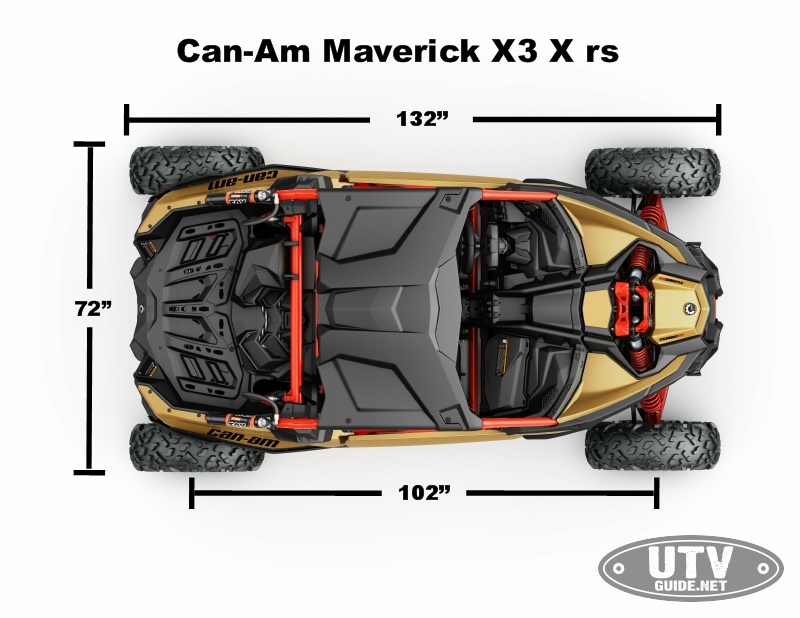
Can-Am stretched the two-seat chassis to a 102-inch wheelbase. That placed it between the short two-seat and longer four-seat sport UTVs of the period.
Desert racers and dune riders had already discovered that a longer wheelbase could help a UTV remain settled through whoops and rough terrain. The two-seat X3 offered much of that stability without requiring a four-seat chassis.
The Maverick X3 X rs had a listed dry weight of 1,585 pounds. It was heavier than the RZR XP Turbo, but it was also wider, longer and equipped with substantially more suspension travel. Can-Am used relatively small-diameter chassis tubing and said the new design improved rigidity while controlling weight.
Low, Sports-Car-Like Seating Position
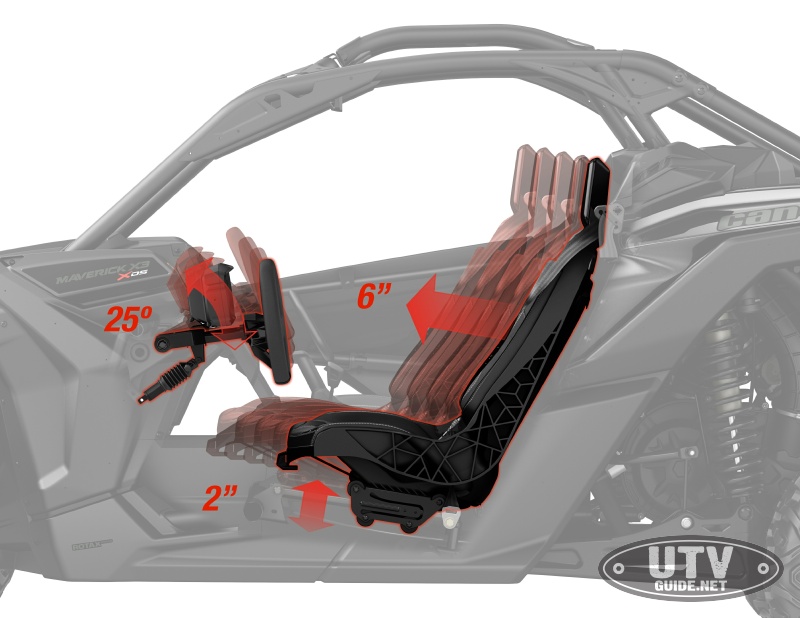
The low seating position was one of the X3’s most immediately noticeable changes. Instead of feeling as though you were sitting on top of the vehicle, the cockpit placed the driver and passenger down inside the chassis more like a sports car.
Can-Am made that possible partly by moving the 10.5-gallon fuel tank away from its traditional location beneath the seats. The tank was positioned ahead of the passenger, behind the front bodywork and glove-box area. Multiple seat-mounting positions also allowed the seats to be lowered farther.

The roll cage attached to the chassis through bolted mounting plates rather than the weld-in bung arrangement commonly used on earlier UTVs. That was an important detail for aftermarket cage manufacturers preparing products for the new platform.
Can-Am also anticipated owners installing aftermarket safety equipment. The chassis included mounting provisions behind the seats for harnesses, and the factory seats incorporated openings for proper shoulder-harness routing.
Radiator, Intercooler and Turbo Placement

The radiator sat high at the front of the chassis near the shock mount. The location placed it in clean airflow, although the exposed front end made a protective bumper a logical addition for riders concerned about collision damage.
Unlike the water-to-air arrangement used on the contemporary RZR XP Turbo, the X3 employed an air-to-air intercooler behind the seats. Keeping it close to the engine simplified the system and reduced the length of the intake plumbing.

Removing the cover between the seats exposed the compact turbocharger. Its small size helped the engine respond quickly, while also leaving the aftermarket considerable room to develop larger turbochargers and higher-output engine packages.
Brief Maverick X3 X rs Test Drive

The morning after the dealer presentation, we were able to drive the Maverick X3 on a small course near the host hotel. Heavy rain had left the track muddy, and its limited size was not ideal for evaluating a 72-inch-wide, 154-horsepower desert UTV. Even so, the drive offered an early impression of the cockpit, power delivery and overall feel.
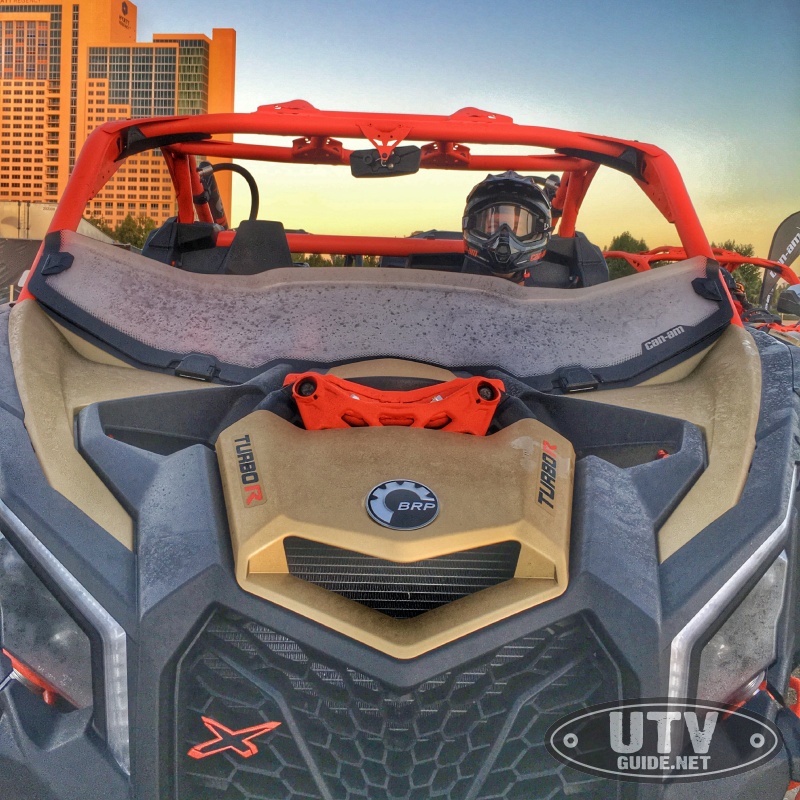
Despite its size, the X3 felt proportional from the driver’s seat. The door opened using a strap positioned near the A-pillar, and the low cockpit felt dramatically different from the original Maverick. Forward visibility was improved, although the large dashboard and long bodywork extended well ahead of the driver.
The three-cylinder Rotax produced a deeper exhaust note than the naturally aspirated Yamaha YXZ1000R. Initial acceleration did not feel as abrupt as I expected from the horsepower figure, but the X3 gathered speed rapidly once it was moving.
The short track did not provide enough room or rough terrain to evaluate the long-travel suspension properly. Its chassis dimensions, shock package and stability nevertheless made its intended mission clear: this machine had been designed for terrain much faster and rougher than the small demonstration course.
The X3 X rs came with 30-inch Maxxis Bighorn 2.0 tires. Looking at the available clearance during the introduction, it appeared that 32-inch tires could be fitted without major interference—an observation that became increasingly relevant as owners began building X3s for desert racing and rock crawling.
Our Original 2017 Maverick X3 Verdict

The original Maverick X3 blurred the line between a conventional sport UTV and a purpose-built off-road buggy. Its low cockpit, 102-inch wheelbase, wide stance and 24 inches of rear suspension travel were far removed from the recreational side-by-sides that had defined the category only a few years earlier.
The 72-inch X rs was unquestionably designed for open desert and dunes. Riders restricted to narrow forest trails were better served by one of the 64-inch X3 packages or a narrower trail machine.
My biggest concern during the introduction was the Visco-Lok QE front differential. It did not provide the positive and predictable front-wheel engagement I wanted for serious technical rock crawling. That was particularly relevant to anyone considering the X3 for an event such as King of the Hammers.
For its intended high-speed terrain, however, the X3 was one of the most significant new UTVs we had seen. Later testing in Baja and the dunes confirmed that the platform was more than an impressive collection of specifications.

2017 Can-Am Maverick X3 Prices
These were the U.S. manufacturer’s suggested retail prices announced for the original 2017 models:
- Maverick X3 Turbo R: $22,999
- Maverick X3 X ds Turbo R: $24,999
- Maverick X3 X rs Turbo R, Triple Black: $26,699
- Maverick X3 X rs Turbo R, Gold and Can-Am Red: $26,899
More 2017 Maverick X3 Coverage
- 2017 Can-Am Maverick X3 Review: 250 Miles in Baja
- Can-Am Maverick X3 X rs Dune Review
- 2017 Can-Am Maverick X3 X rs Specifications
- 2017 Sport UTV Comparison
- Complete 2017 Can-Am UTV Lineup
For current models and manufacturer information, visit Can-Am Off-Road.


