Arctic Cat Prowlers Make UTV History at 2008 Baja 1000

Arctic Cat Prowler XTZ 1000

In 2008, two Arctic Cat Prowlers crossed the finish line of the SCORE Baja 1000 and established an important milestone in side-by-side racing history.

The Bi-Polar Racing/Arctic Cat team finished first and second in the Sportsman UTV class at the 41st Tecate SCORE Baja 1000. More importantly, the two Prowlers became the first UTVs to officially complete the legendary desert race.

The achievement came during a formative year for the side-by-side industry. Recreational UTVs were still relatively new, organized UTV racing was developing rapidly and completing more than 600 miles of Baja terrain in a production-based machine remained an enormous challenge.

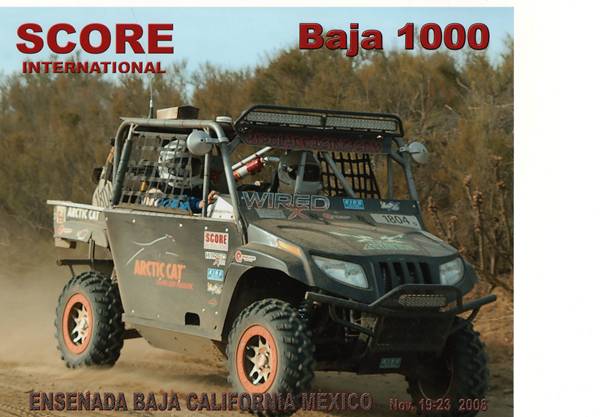
Arctic Cat Prowler XTZ 1000 Wins the UTV Class

The winning machine was a 2009 Arctic Cat Prowler XTZ 1000 entered by Bi-Polar Racing.

Jim Creagan and Tim Wagner drove the Prowler for the first 409 miles before Chris Fallon and Aaron Bahner took over for the remainder of the course. The team completed the approximately 634-mile race in 27 hours, 57 minutes and 20 seconds, averaging about 22.6 mph.

The victory was especially significant because the Prowler remained relatively close to its production configuration. In addition to the required competition roll cage and safety equipment, the team added auxiliary lighting, King shocks, upgraded tires and beadlock wheels.

Readers can see the machine and its race equipment in greater detail in our feature on the Bi-Polar Racing Arctic Cat Prowler XTZ 1000.

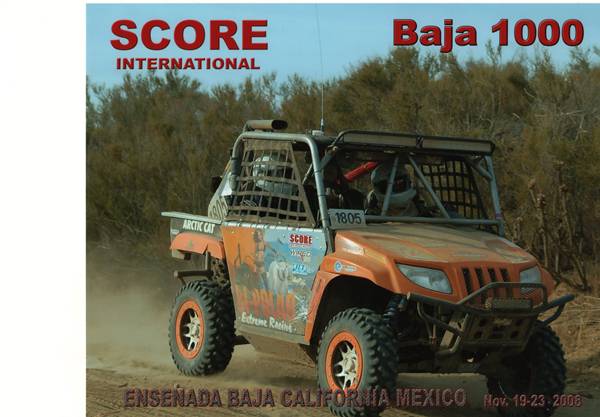
Arctic Cat Prowler 700 XTX Finishes Second

A second Bi-Polar Racing entry, a 2009 Arctic Cat Prowler 700 XTX EFI, followed the XTZ 1000 across the finish line.

The Prowler 700 was driven by three driver and co-driver combinations:

  • Shane Morgan and Tabor Cresap
  • Scott Sorenson and Justin Serface
  • Casey Squires and Mike Connors

The team finished in 28 hours and 13 minutes, giving Arctic Cat the top two positions in the Sportsman UTV class.

An FST Polaris RZR was credited with third place, while entries based on the Kawasaki TERYX and Yamaha Rhino failed to finish. Our complete 2008 SCORE Baja 1000 race report and photo gallery includes additional competitors from the early UTV field.

Arctic Cat Prowler XTZ 1000 racing in the 2008 Baja 1000

Returning After Falling Short in 2007

The historic finish followed a frustrating first attempt one year earlier.

Bi-Polar Racing entered the 2007 Baja 1000 with an Arctic Cat Prowler and made it approximately 810 miles before a broken suspension bolt ended the effort. Although the team did not reach the finish, getting that far provided valuable experience for another attempt.

Bi-Polar Racing returned in 2008 with two machines and a better-prepared support program.

According to team co-owner and driver Jim Creagan, neither Prowler suffered a mechanical failure during the race. The 700 encountered one flat tire, but the team reported that its pit crews otherwise did little more than add fuel.

“We were the first-time finishers and first-time winners in this greatest of all races because of a total team effort,” Creagan said. “From start to finish, every person fulfilled their role perfectly and each Prowler performed magnificently.”

Nearly Stock Prowlers Take on Baja

Although describing any Baja 1000 race vehicle as “stock” requires some qualification, the two Prowlers retained their original production-based powertrains and chassis configurations.

The primary competition modifications included:

  • Race-legal roll cages and safety equipment
  • Auxiliary lighting for overnight driving
  • King shocks
  • GBC Motorsports tires
  • TrailReady beadlock wheels

The winning XTZ 1000 used GBC Grim Reaper tires, while the second-place 700 XTX ran GBC Dirt Commander tires.

The performance helped validate the Prowler XTZ 1000, which was Arctic Cat’s new flagship side-by-side for 2009. Our archived 2009 Arctic Cat Prowler XTZ 1000 overview covers the production model, while the Arctic Cat Prowler 1000 review documents how the machine performed outside a racing environment.

Why the 2008 Baja 1000 Finish Mattered

UTVs had already started appearing in desert races, but the 2008 Baja 1000 demonstrated that production-based side-by-sides could survive one of the most demanding endurance events in North America.

The Arctic Cat sweep arrived as UTV competition was beginning to develop beyond short-course racing and relatively small Sportsman fields. Manufacturers, racers and aftermarket companies were learning how to prepare these machines for long-distance desert conditions.

The Baja finishes also came during a pivotal period explored in our broader feature, UTV History 2008: The Year the Sport Side-by-Side Took Shape.

Modern SCORE UTVs are faster, wider and far more specialized than the Prowlers that raced in 2008. Many now use turbocharged engines, long-travel suspension, sequential transmissions and purpose-built race chassis. The two Arctic Cats were comparatively simple production machines adapted to survive Baja.

That contrast is precisely what makes their first-and-second-place finish historically important. Bi-Polar Racing proved that a side-by-side could complete the Baja 1000, helping establish the foundation for the highly competitive UTV desert-racing classes that followed.

Creagan Carries the Momentum Into 2009

Jim Creagan and Tabor Cresap returned to Best in the Desert competition at the January 2009 Parker 250, finishing third in the UTV class with the same Prowler 700 XTX EFI that had placed second at the Baja 1000. The team completed the approximately 170-mile race in 4 hours and 55 minutes despite competing with a stock engine, chassis and suspension. The result extended Arctic Cat’s early desert-racing momentum while the team prepared its Prowler XTZ 1000 for the remainder of the season.

Explore additional past and present models in our Arctic Cat side-by-side coverage.