


The 2014 model year gave four-seat UTV buyers four distinctly different choices. The Polaris RZR XP 4 1000, Arctic Cat Wildcat 4 1000 and Can-Am Maverick MAX 1000R targeted high-performance dune and desert driving, while the more compact Kawasaki Teryx4 emphasized maneuverability and technical trail capability.
This buyer’s guide compares the defining features, dimensions and intended uses of these four machines. Specifications and prices reflect the 2014 model year and should be treated as historical information when shopping for a used UTV.
2014 Four-Seat UTVs at a Glance
| Model | Best suited for | Defining feature |
|---|---|---|
| Polaris RZR XP 4 1000 | Dunes, desert and fast trail riding | 107-horsepower engine and 18 inches of rear suspension travel |
| Arctic Cat Wildcat 4 1000 | Rough desert terrain and open trails | Long 136-inch wheelbase and 18 inches of rear travel |
| Can-Am Maverick MAX 1000R | Sport riding with four adults | 101-horsepower Rotax engine and elevated rear seating |
| Kawasaki Teryx4 | Tight and technical trails | Compact 85.7-inch wheelbase |
How the Four-Seat Sport UTV Market Developed
Polaris helped establish the four-seat sport UTV category when it introduced the RZR 4 800 for 2010. It gave families and groups a factory-built alternative to a custom four-seat conversion or a much more expensive sand car.
Polaris raised the performance ceiling with the RZR XP 4 900 for 2012. The success of that machine helped demonstrate that buyers wanted more than an extra row of seats—they wanted four-seat UTVs with serious engines, suspension and terrain capability.
By the 2014 model year, Arctic Cat and Can-Am had entered the segment with stretched versions of their flagship sport machines. Kawasaki followed a different formula with a shorter and more trail-oriented Teryx4.
Polaris RZR XP 4 1000
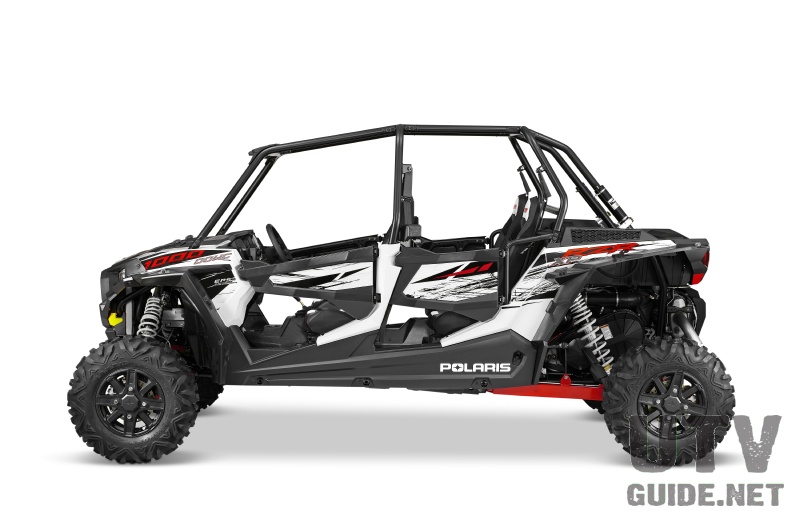
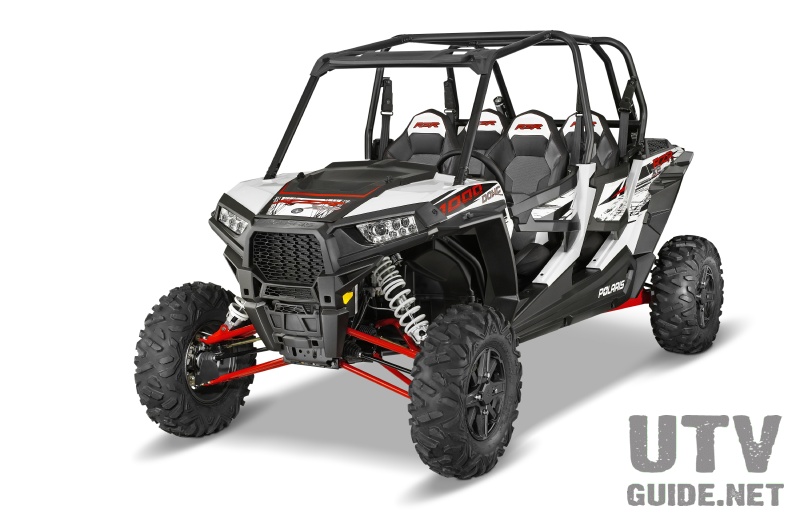
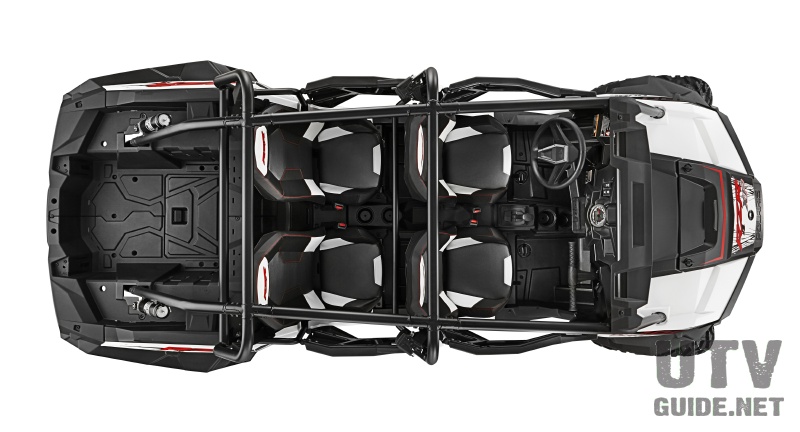
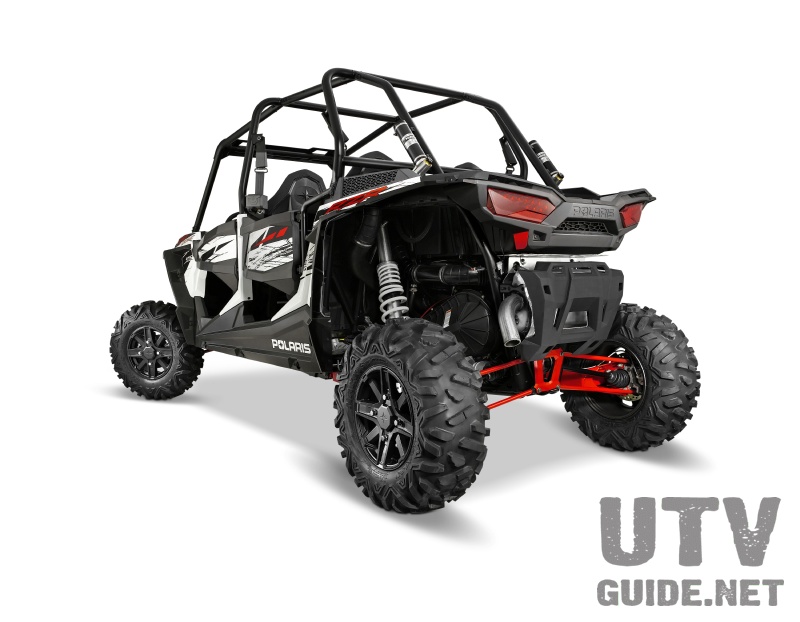
The 2014 Polaris RZR XP 4 1000 was the performance benchmark of this group. Its 999cc ProStar twin-cylinder engine produced a claimed 107 horsepower, giving it the strongest acceleration among the four-seat UTVs compared here.
Polaris paired the engine with a three-link trailing-arm rear suspension and Walker Evans position-sensitive needle shocks. Suspension travel measured 16 inches at the front and 18 inches at the rear. The RZR also came on 29-inch Maxxis Bighorn tires and offered 13.5 inches of ground clearance.
The 117-inch wheelbase was substantially longer than the Kawasaki’s but considerably shorter than the Wildcat 4’s. That balance helped make the RZR XP 4 1000 a versatile choice for dunes, desert terrain and faster recreational trail riding.
Best for: Buyers who prioritize acceleration, suspension performance and broad sport-riding capability.
Arctic Cat Wildcat 4 1000

The Arctic Cat Wildcat 4 1000 approached four-seat performance with the longest wheelbase and some of the most generous suspension travel in the group. Its 951cc V-twin engine was paired with an updated drive clutch intended to improve acceleration and power delivery.
Arctic Cat stretched the Wildcat’s full-perimeter exoskeleton by approximately 29 inches to accommodate the second row. Its 136-inch wheelbase was nearly 19 inches longer than the Polaris and more than 50 inches longer than the Kawasaki.
FOX Podium X shocks provided 17 inches of front travel and 18 inches at the rear. A sway bar helped control the long chassis through corners. That combination favored stability and comfort across rough, open terrain, although the extra length made the Wildcat less maneuverable on tight trails.
Best for: Riders who value suspension travel, stability and rear-passenger space for open desert terrain.


Can-Am Maverick MAX 1000R

Can-Am previewed its four-seat Maverick at the 2012 Sand Sports Super Show before bringing the Maverick MAX to market. The 2014 Can-Am Maverick MAX 1000R used a 976cc Rotax V-twin producing a claimed 101 horsepower.
The MAX chassis added 29.5 inches to the wheelbase of the original two-seat Maverick. The result was a 113.8-inch wheelbase—slightly shorter than the RZR XP 4 1000 and far shorter than the Wildcat 4.
One of the Maverick MAX’s most important passenger-focused features was its stadium-style rear seating. The rear seats sat 3.5 inches higher than the front seats, improving forward visibility for passengers.
Can-Am also took a different suspension approach. Its compact Torsional Trailing A-arm rear suspension was designed to reduce unsprung weight and control geometry changes through the suspension’s movement. FOX 2.5 Podium shocks provided 14 inches of travel.
Best for: Buyers looking for strong V-twin performance, a roomy cockpit and better visibility from the rear seats.


Kawasaki Teryx4

The 2014 Kawasaki Teryx4 was not intended to match the outright speed of the other three machines. Kawasaki instead packaged four seats into a notably compact chassis suited to tighter trails.
Its 85.7-inch wheelbase was more than 28 inches shorter than the next-shortest machine in this comparison. That helped give the Teryx4 a tight turning radius and made it easier to place on narrow or technical trails.
For 2014, the Teryx4 received a 783cc V-twin engine with more power and torque than the previous version. FOX Podium coilover shocks and electronic power steering supported its recreational trail focus.
The Teryx4 also provided a 350-pound cargo-bed capacity, the highest figure in this group. That made it a more practical choice for riders who wanted to combine family recreation with light utility work.
Best for: Technical trails, compact riding areas and owners who value maneuverability and utility over maximum speed.


2014 Four-Seat UTV Specification Comparison
| Specification | Can-Am Maverick MAX | Kawasaki Teryx4 | Polaris RZR XP 4 1000 | Arctic Cat Wildcat 4 |
|---|---|---|---|---|
| Engine | 976cc V-twin | 783cc V-twin | 999cc twin | 951cc V-twin |
| Claimed horsepower | 101 hp | Not published | 107 hp | Not published |
| Width | 64 in. | 62 in. | 64 in. | 64 in. |
| Length | 148.1 in. | 125.2 in. | 146 in. | 149 in. |
| Wheelbase | 113.8 in. | 85.7 in. | 117 in. | 136 in. |
| Ground clearance | 13 in. | 11.1 in. | 13.5 in. | 13 in. |
| Front/rear travel | 14/14 in. | 8/8.3 in. | 16/18 in. | 17/18 in. |
| Cargo-bed capacity | 200 lb. | 350 lb. | 300 lb. | 300 lb. |
| Power steering | Yes | Yes | Yes | Yes |
| Starting MSRP when new | $18,299 | $13,399 | $21,999 | $19,599 |
Specifications and MSRPs vary by trim and reflect information published for the 2014 model year.
Which 2014 Four-Seat UTV Was the Best Choice?
There was no single answer for every buyer. The Polaris RZR XP 4 1000 offered the strongest overall performance package, while the Arctic Cat Wildcat 4 favored maximum wheelbase and suspension travel. The Can-Am Maverick MAX combined competitive power with excellent rear-passenger visibility, and the Kawasaki Teryx4 was the clear choice for tighter trails and light utility use.
Used-UTV shoppers should place more importance on maintenance history, modifications and overall condition than small differences in the original specifications. A well-maintained example with documented service is generally a better purchase than a neglected machine with more horsepower or suspension travel.


