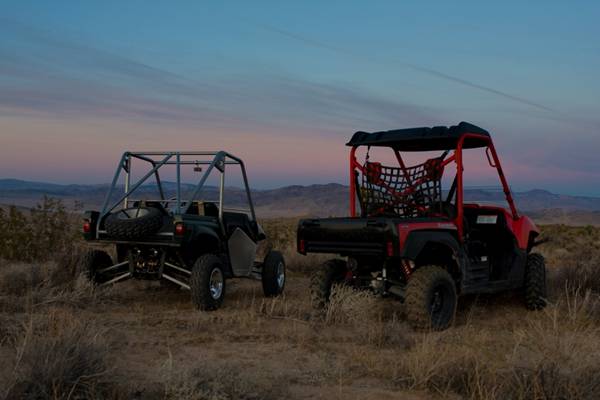
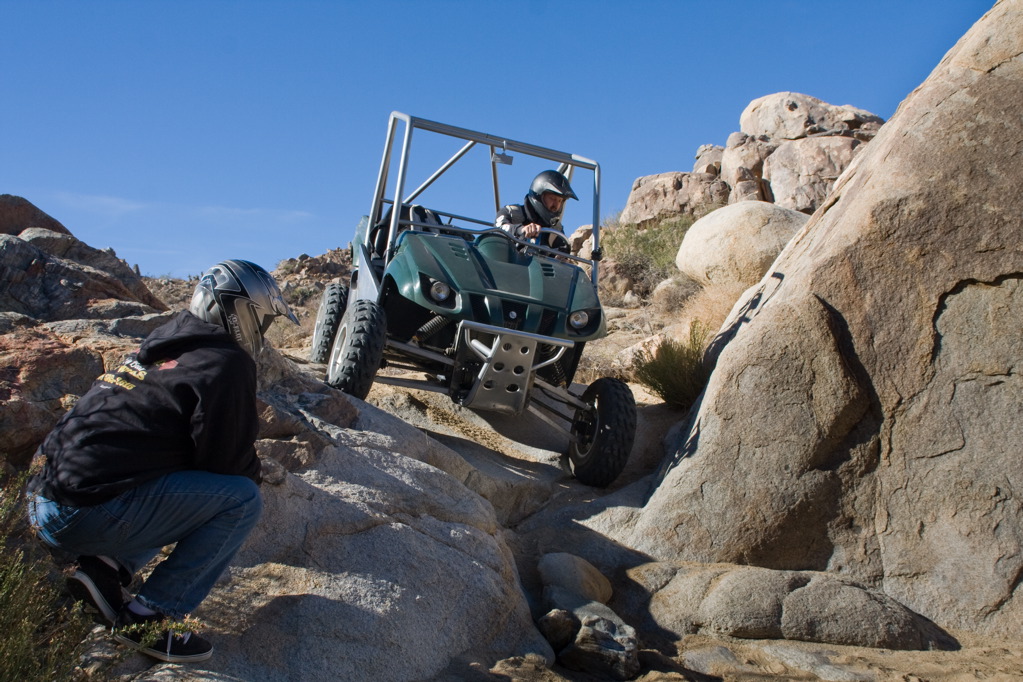
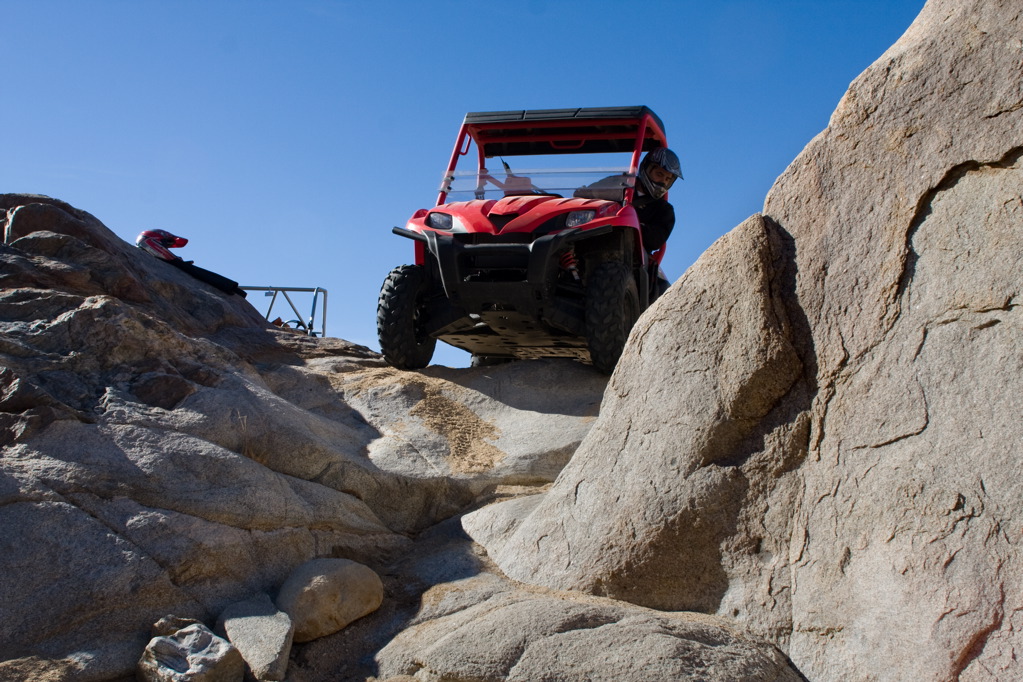
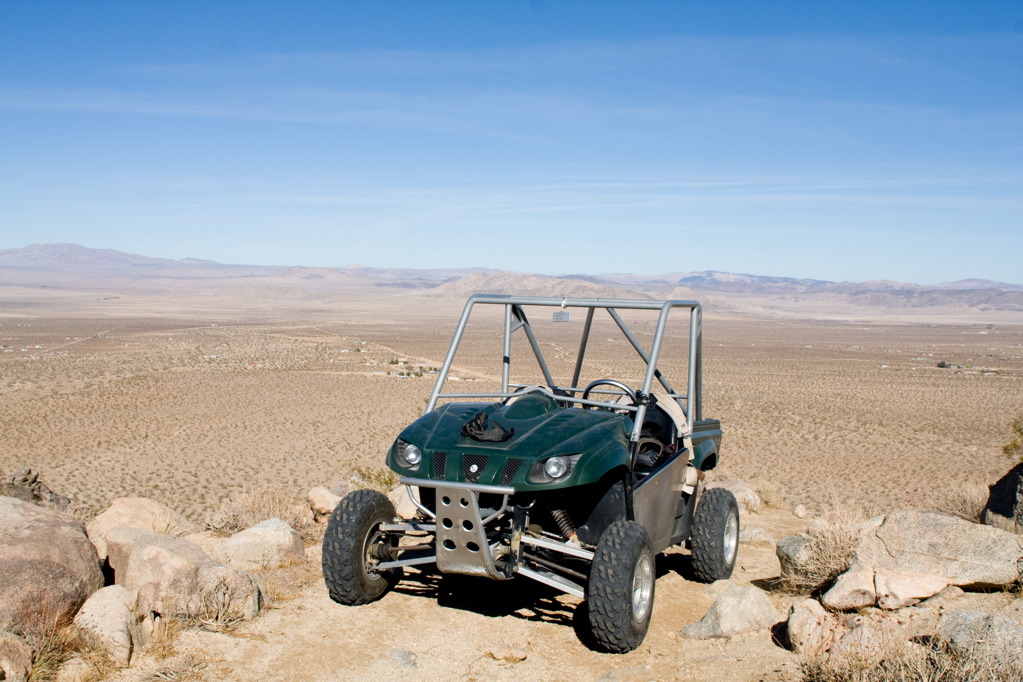
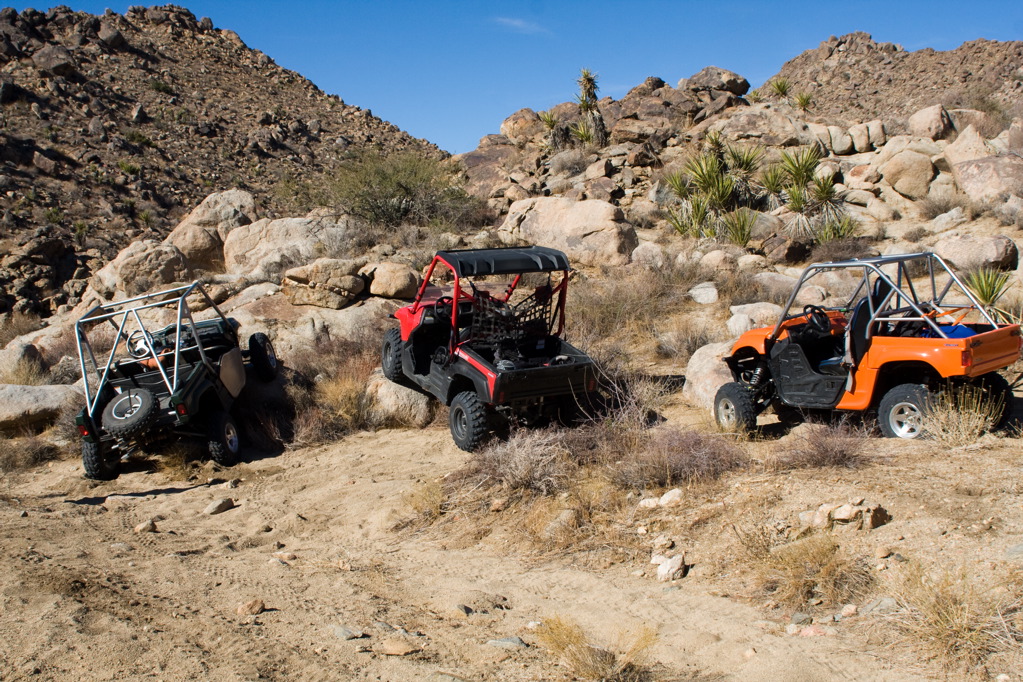
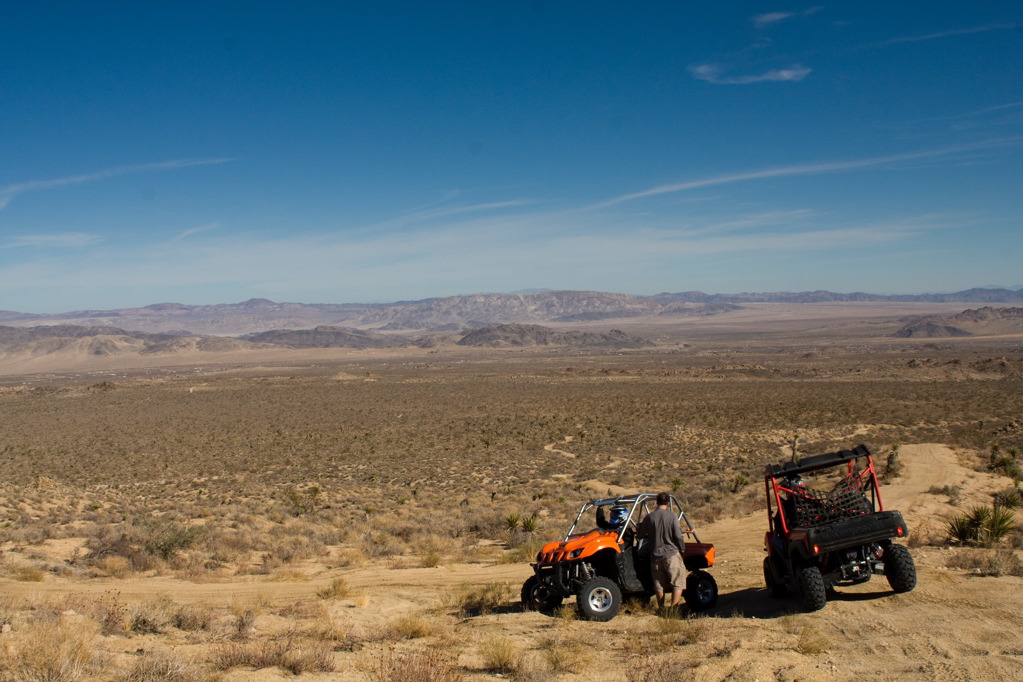
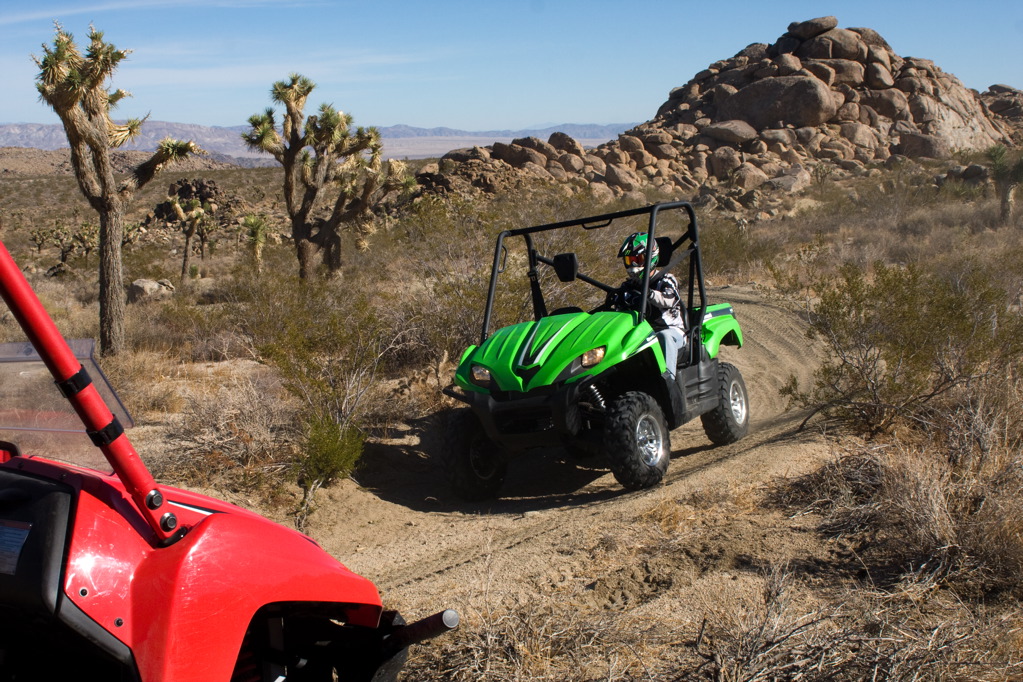
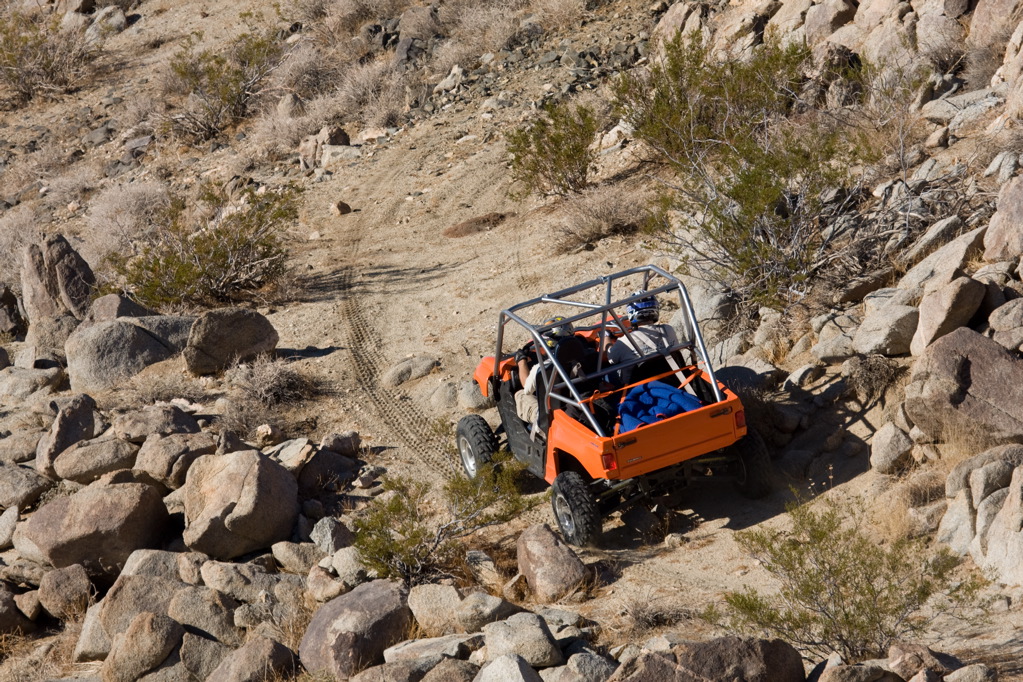
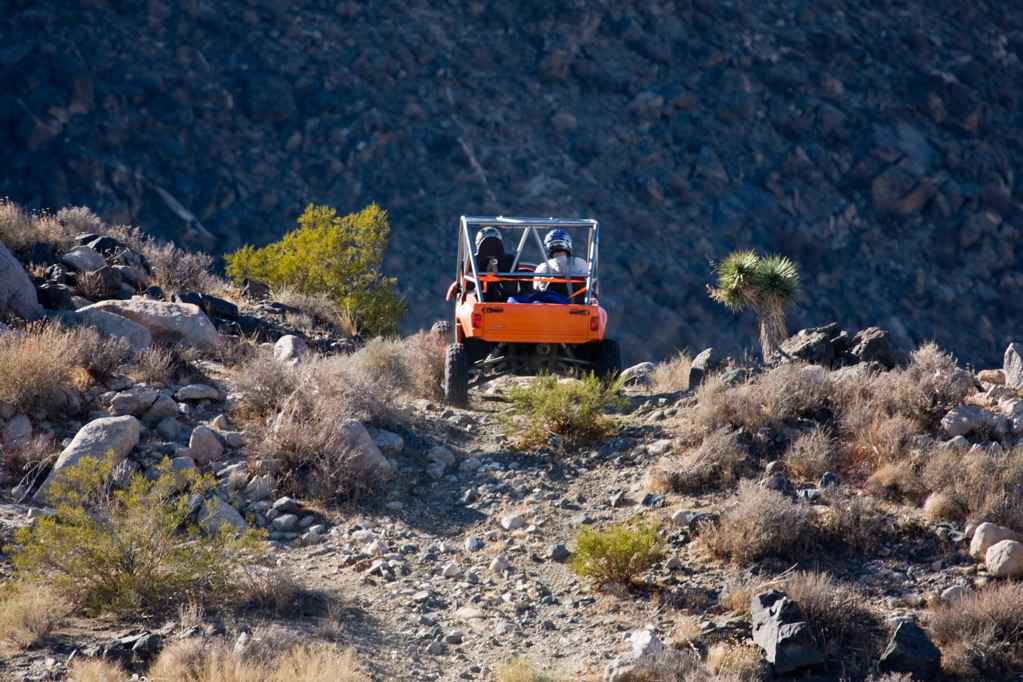
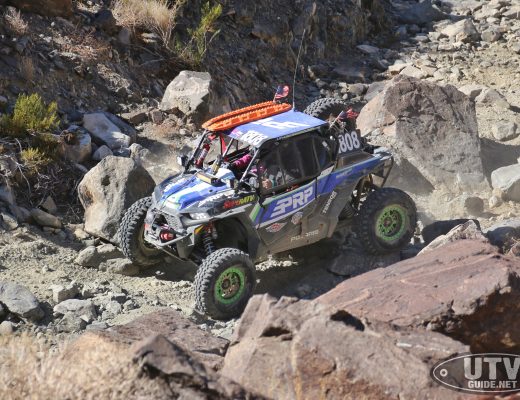
In November 2008, we headed to Johnson Valley with a small group of Yamaha Rhinos and a Kawasaki Teryx for a weekend of desert riding, rock crawling and nighttime exploration.
King of the Hammers already existed as a competition for unlimited 4400 rock-crawling vehicles, but UTVs had not yet joined the event. That would change just a few months later, when the first King of the Hammers UTV exhibition was held in February 2009.
These photos therefore capture Johnson Valley at an important moment in UTV history. The Yamaha Rhino aftermarket was well established, the Kawasaki Teryx was still new and builders were beginning to discover whether modified side-by-sides could handle the area’s combination of open desert, sandy washes and technical rocks.

Exploring Johnson Valley in Early UTVs
Johnson Valley’s varied terrain made it an ideal place to test the rapidly evolving recreational UTVs of the period. A single ride could include higher-speed desert roads, loose washes, steep hills and rocky routes where suspension travel, ground clearance and careful tire placement became far more important.
The machines on this trip were considerably different from today’s factory-built rock-crawling UTVs. The Yamaha Rhinos and Kawasaki Teryx used relatively small tires, compact chassis and limited factory suspension travel. Tackling more difficult terrain often required substantial aftermarket work.


Long-Travel Yamaha Rhinos
The Yamaha Rhino was still one of the most important recreational side-by-sides in 2008. Its compact dimensions, selectable four-wheel drive and enormous aftermarket made it a popular foundation for desert, dune and rock-crawling builds.
Several Rhinos on this trip were equipped with widened long-travel suspension. These systems generally replaced the factory control arms, shocks and axles to increase wheel travel and improve stability. The added suspension performance helped early UTVs maintain traction and control in terrain that extended beyond their original utility-focused designs.
The Rhino’s transformation from a recreation-utility vehicle into a highly customizable trail and rock machine is an important part of the history of the Yamaha Rhino.


An Early Kawasaki Teryx in Johnson Valley
The Kawasaki Teryx was a much newer platform when this trip took place. Its V-twin engine and recreation-oriented chassis gave builders another promising alternative to the Rhino and Polaris RZR.
The Teryx photographed on this trip was a 2009 fuel-injected model. Taking it to Johnson Valley provided an early opportunity to see how Kawasaki’s platform handled the area’s mixture of desert and rock terrain.
The Teryx would soon become a regular sight at King of the Hammers. Its early development and influence are covered in our history of the Kawasaki Teryx.


Before the First King of the Hammers UTV Race
King of the Hammers originated before this trip as a race for unlimited 4400 vehicles. Those purpose-built rock crawlers combined high-speed desert capability with the equipment needed to survive Johnson Valley’s most difficult rock trails.
UTVs were added to King of the Hammers in February 2009. The inaugural UTV competition was conducted as an exhibition with five documented entries. Although the course and field were modest compared with later races, the event established side-by-sides as part of KOH race week.
Mitch Guthrie won the inaugural exhibition, followed by Brandon Schueler and Casey Currie. Bob Roggy and Jon Crowley finished fourth in a Kawasaki Teryx.
Read the complete results and see the race photography in our report on the first King of the Hammers UTV race.
The Kawasaki used for that inaugural competition was prepared with a cage, doors, skid protection, rock sliders, communications equipment, navigation, suspension upgrades and other components needed for Johnson Valley. See the complete 2008 Kawasaki Teryx King of the Hammers race build.
What began as a five-vehicle exhibition developed into one of the most demanding UTV competitions in the world. The complete progression is documented in our history of the King of the Hammers UTV race.

Night Riding in Johnson Valley
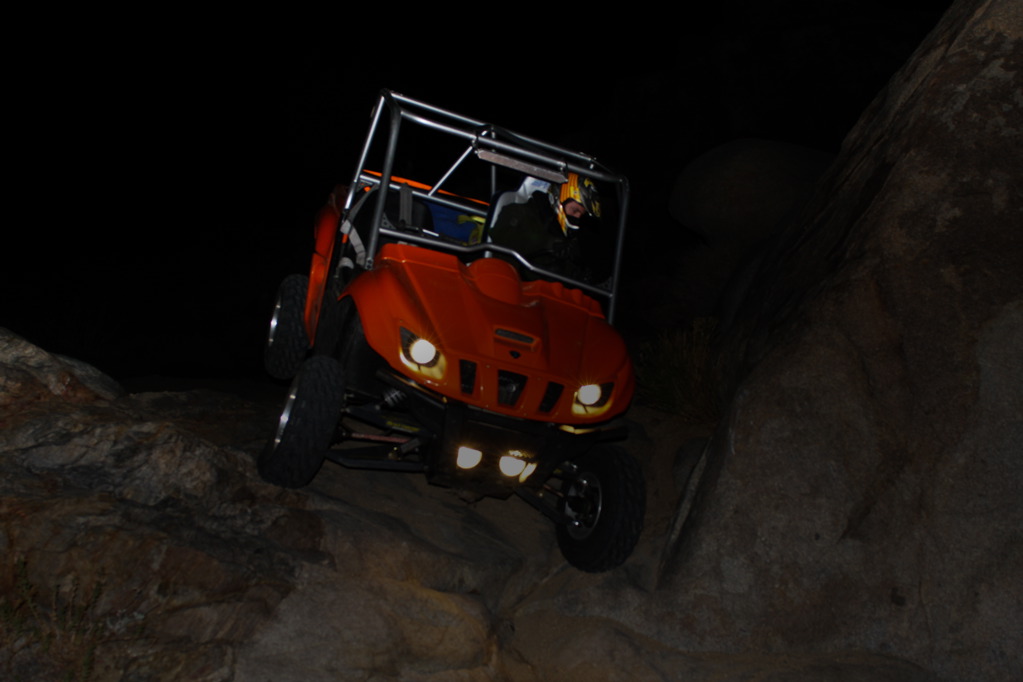
The group continued riding after sunset. Nighttime travel added another challenge for early UTVs, particularly before modern LED light bars became common equipment.
Auxiliary lights helped drivers identify rocks, washes and changes in elevation, but dust could reflect the light back toward the vehicle. Traveling with other machines also provided valuable support in an isolated area where mechanical problems or navigation mistakes became more difficult to manage after dark.


The Fight to Protect Johnson Valley
This trip also took place during a critical period for public access. Proposals to expand the Marine Corps Air Ground Combat Center at Twentynine Palms created concern that a substantial portion of Johnson Valley could be transferred or closed to recreational use.
Off-road organizations, businesses and enthusiasts organized to demonstrate Johnson Valley’s recreational and economic importance. UTVGuide.net followed that effort as the proposal developed, including SEMA’s campaign to protect the Johnson Valley OHV area and a later alternative plan for the Twentynine Palms expansion.
The land-use story is an important part of this 2008 trip report. Without sustained involvement from off-road enthusiasts and advocacy organizations, recreational access to Johnson Valley could have been affected much more severely.
Johnson Valley Photo Gallery
The following photographs provide additional views of the Yamaha Rhinos, Kawasaki Teryx and terrain encountered during the November 2008 ride.


A Snapshot of UTV History
This November 2008 trip was more than a casual weekend in the desert. It captured the Rhino and Teryx during the formative years of recreational UTV development and documented side-by-sides in Johnson Valley immediately before they became part of King of the Hammers.
The vehicles were comparatively simple, and nearly every major performance improvement required aftermarket fabrication. Long-travel suspension, additional lighting, stronger protection and carefully selected tires helped these early machines explore terrain that would eventually drive the development of an entirely new class of factory-built rock-crawling UTVs.
This story is part of a pivotal period when the Yamaha Rhino aftermarket, Polaris RZR and Kawasaki Teryx reshaped the side-by-side industry. Explore the complete story in our history of the UTV industry in 2008.
Historical note: This article documents a November 2008 trip. Johnson Valley boundaries, access rules, military shared-use closures and route conditions can change. Before visiting, consult current Bureau of Land Management information, official maps and posted closure notices.