


Editor’s note: This article is a historical guide to long-travel suspension developed for the original Polaris Ranger RZR 800. The specifications and availability shown below reflect the early RZR aftermarket around 2008–2009. Many of these kits have since been discontinued, and some manufacturers are no longer in business.
When the original Polaris Ranger RZR reached consumers in the summer of 2007, it immediately attracted the attention of the UTV aftermarket. Several suspension companies received preproduction machines for research and development, and by the 2007 Sand Sports Super Show, we counted 12 different long-travel systems for the new sport side-by-side.
The speed of that development showed how important the original RZR had become. Companies that had helped build the Yamaha Rhino long-travel market quickly began developing wider A-arms, longer axles, reinforced mounting points and vehicle-specific shocks for the RZR.
This archive preserves the specifications and photographs we collected during that formative period. For more context on the machines that reshaped the UTV market, see our 2008 UTV history and history of the Polaris RZR.
Stock Polaris RZR Before Long Travel
The original 50-inch Polaris Ranger RZR used fully independent double-wishbone suspension with 9 inches of front-wheel travel, 9.5 inches of rear-wheel travel and 10 inches of ground clearance. Its 77-inch wheelbase was approximately 2 inches longer than the Yamaha Rhino’s, while the lower seating position helped the RZR feel more stable in stock form.


Fireball Racing +6-Inch Long-Travel Conversion


Why Install Long-Travel Suspension?
A properly engineered long-travel kit can increase suspension travel and track width while improving stability and control over rough terrain. Some early kits also stretched the RZR’s wheelbase by moving the front wheels forward, the rear wheels rearward, or both.
These conversions were substantial investments. Trying to reach long travel in stages could cost more because stock-length shocks, axles, tie rods and brake lines generally could not be reused in the final configuration. Owners also needed to consider the finished width, ride height and overall length before confirming that the modified RZR would still fit in a trailer or toy hauler.
Polaris eventually offered a dealer-installed long-travel conversion for the original 50-inch vehicle. Read the period announcement: PURE Polaris Long-Travel Upgrade for the Ranger RZR.
What Was Included in an RZR Long-Travel Kit?
A-Arms
Most kits replaced the factory control arms with wider chromoly-tube, boxed-steel, billet-aluminum or mild-steel arms. Material alone did not determine strength; tubing size, joint placement, welding quality and overall geometry were equally important. Kits were commonly offered unfinished, powder coated in a standard color or finished in a custom color.
A-Arm Hardware
Inner pivots could use replacement bushings or heim joints. Outer connections varied between heims, uniballs and retained OEM ball joints. Joint quality, serviceability, adjustability and protection from sand or mud were important considerations.
Axles and CV Joints
Increasing track width required longer axles. Less expensive kits sometimes reused the original CV joints with replacement axle shafts, while more complete systems included assembled axles with new inner and outer CV joints. Labor needed to transfer the original CVs could narrow the price difference between the two approaches.
Tie Rods and Steering
Some kits supplied complete extended tie rods, while others used extensions with the original components. Steering geometry and bump steer were just as important as the strength of the tie rods themselves.
Shocks and Shock Towers
Longer coilover shocks were a defining part of a true long-travel conversion. Shock length, spring rates, motion ratio and internal valving needed to match the suspension geometry and vehicle weight. Some systems included or offered upper shock towers that moved the mounting points upward and outward.
Spindles, Brake Lines and Frame Reinforcement
Most early kits retained the factory spindles, although upgraded spindles were available for racing and jumping. Extended brake lines were normally required. Wider suspension also placed more leverage on the chassis, making gussets and reinforced shock or control-arm mounts especially important for aggressive use.
Questions to Ask Before Buying a Used Kit
- Is the kit complete, including axles, tie rods, brake lines and shock mounts?
- Were its shocks built and valved for this exact kit?
- Does installation require welding or permanent frame modifications?
- Are replacement bushings, heims, uniballs and axle components still available?
- Will the OEM wheels clear the arms, steering and brake components?
- Can the original front and rear sway bars be retained?
- How does the kit change track width, wheelbase and overall ride height?
- Are frame gussets or shock-mount reinforcements required?
- Will the finished RZR still fit through the intended trails and inside its trailer?
Historical Polaris RZR 800 Long-Travel Kits
Important: “Available” and “in development” describe each product’s status when this guide was originally maintained. They are not statements of current availability.
ARS-FX / ZBROZ Racing
- Period status: Available
- Width increase: 4.5 inches per side
- Wheelbase change: 0.5 inch forward and 1 inch rearward
- Wheel travel: 12 inches
- Shocks: EXIT


ATVonics
- Width increase: 6 inches per side
- Shocks offered: KING, FOX, ELKA or Walker Evans
Billet Equipped
- Period status: Available
- Shocks: ELKA

CST Performance Suspension
- Period status: Available
- Width increase: 3 inches per side
- Wheelbase change: None
- Wheel travel: 12 inches
- Shocks: Walker Evans Racing


Direct Concept Engineering
- Width increase: 4 inches per side
- Wheelbase change: 1 inch forward and 1 inch rearward
- Wheel travel: 13 inches
- Shocks: Radflo


DragonFire Racing
DragonFire Racing offered both +4-inch and +6-inch-per-side configurations.
- Period status: Available
- +4 kit wheelbase change: 2 inches longer
- +4 kit wheel travel: 13 inches


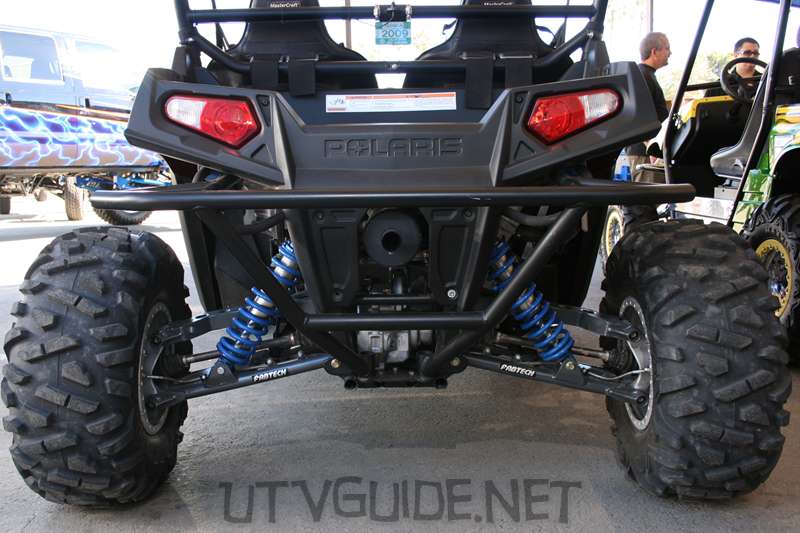
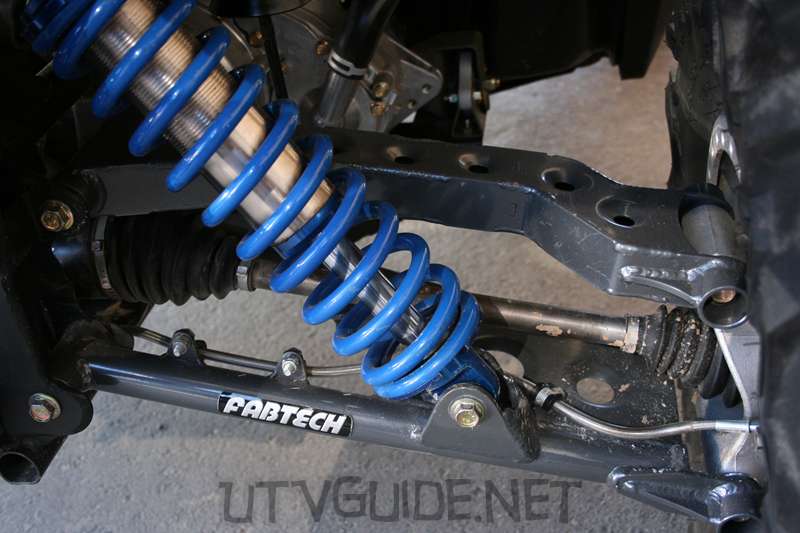
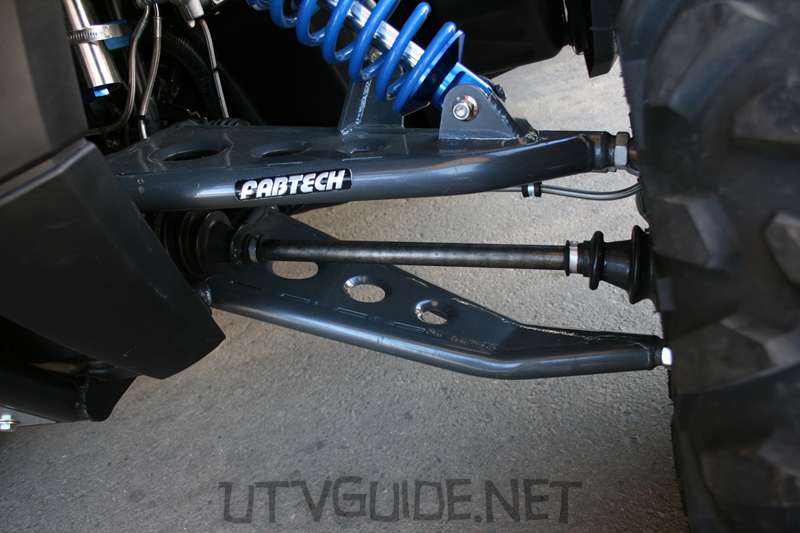
Fabtech Motorsports
- Period status: In development
- Shocks: Fabtech Dirt Logic


Fireball Racing
Fireball offered multiple configurations for the original RZR and later adapted its wide system for the RZR S.
- Period status: Available
- First configuration: 6 inches wider per side
- Wheelbase change: 1 inch forward and 2 inches rearward
- Shocks: Bilstein or ELKA
- Wide configuration: 10 inches wider per side on the original RZR, or 5 inches per side over the RZR S
- Wide-kit wheel travel: More than 16 inches


FST Motorsports
- Period status: Available
- Width increase: 6 inches per side
- Wheelbase change: 2 inches forward and 2 inches rearward
- Wheel travel: 14.75 inches
- Shocks: KING with dual-rate springs
- Other components: Front and rear shock-relocation towers, front skid/support brackets and rear frame supports


HCR Racing
- Width increase: 6 inches per side
- Wheelbase change: 1 inch forward and 1 inch rearward
- Wheel travel: 15 inches
- Shocks: KING
- Axles: Summers Brothers


Holz Racing Products
Holz offered +4- and +6-inch configurations.
- Period status: Available
- +4 kit wheel travel: 11.75 inches
- +6 kit wheel travel: 13 inches
- Shocks: FOX


Houser Racing
- Period status: Available
- Width increase: 4 inches per side
- Wheelbase change: None
- Shocks offered: FOX, ELKA or Custom Axis


iShock / Hydrodynamics
- Period status: Available
- Width increase: 6 inches per side
- Shocks: iShock

Lonestar Racing
Lonestar Racing offered MTS mid-travel and XTR long-travel systems for the original RZR, plus an XTR configuration for the wider RZR S.
- MTS width increase: 4 inches per side
- MTS wheelbase change: 1 inch rearward
- MTS wheel travel: 12–13 inches
- MTS shocks: ELKA or Bilstein
- XTR width increase: 8 inches per side
- XTR shocks: FOX or ELKA


Long Travel Industries
- Period status: In development
- First configuration: 6 inches wider per side with 15 inches of travel
- Second configuration: 4 inches wider per side with 12 inches of travel


Magnum Offroad
- Width increase: 6 inches per side
- Wheelbase change: None
- Wheel travel: 10 inches


Polaris RZR S Factory Long Travel
- Width increase over the original RZR: 5 inches per side
- Wheelbase change: None
- Wheel travel: 12 inches
- Shocks: FOX Podium
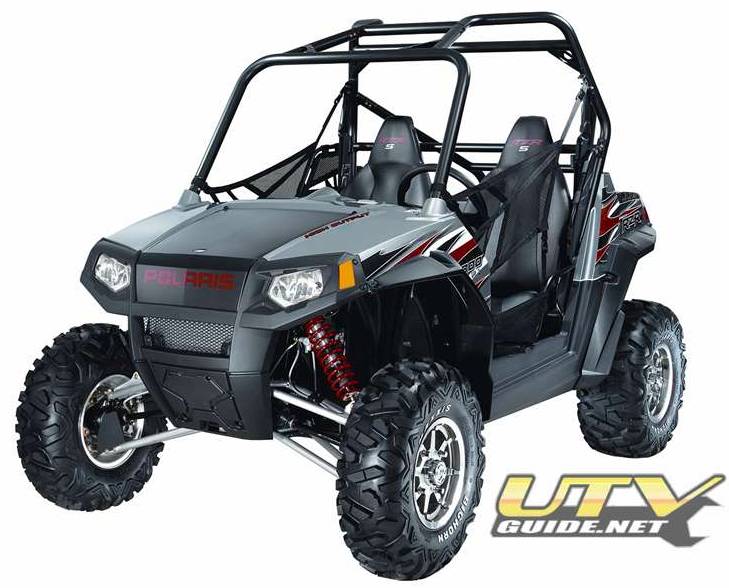
Polaris effectively validated the wider-RZR concept with the 2009 RZR S. Its approximately 60-inch stance, 12 inches of suspension travel and FOX Podium shocks delivered much of what owners had previously sought through aftermarket conversions. The factory RZR S suspension was not initially sold as a standalone kit.
Rancho Suspension
- Shocks: Rancho Suspension

RZR Tech / Spectrum Sand Sports
RZR Tech offered several stages ranging from mid-travel arms to a substantially wider long-travel system.
- +3-inch system: 12 inches of wheel travel, 1-inch wheelbase extension and stock or ELKA shocks
- +5-inch system: Replacement arms for the RZR S
- +6-inch system: 14 inches of travel, approximately 2.75 inches of additional wheelbase and KING or ELKA shocks
- Other components: Replacement tie rods and ball joints


Shaw’z Metal Fabrications
- Period status: Available
- Width increase: 6 inches per side
- Wheelbase change: 2 inches forward and 2 inches rearward
- Wheel travel: 15 inches front and 14 inches rear
- Shocks: FOX


Sniper Sand Cars
- Period status: Available


SuperATV
- Period status: Available
- Width increase: 6.5 inches per side
- Wheelbase change: 2 inches forward and 2 inches rearward
- Shocks offered: Titan or KING


Todd’s Custom Billet
- Period status: Available
- Construction: 6061 billet-aluminum control arms
- Width increase: 6.5 inches per side
- Wheelbase change: 2 inches forward and 2 inches rearward
- Wheel travel: 14 inches


Tower Works Fabrication
- Period status: Available
- Width increase: 6 inches per side
- Wheelbase change: 5/8 inch forward and 1.5 inches rearward
- Wheel travel: 15.75 inches
- Shocks: FOX


Trophy Engineering
- Period status: Available


XMF
- Period status: Available
- Width increase: 6 inches per side
- Shocks: Walker Evans Racing


What the Early RZR Long-Travel Market Changed
These kits represent an important stage in sport-UTV development. The original RZR arrived as a compact 50-inch machine, but owners quickly demonstrated demand for greater width, more wheel travel, stronger suspension components and shocks calibrated for aggressive dune and desert use.
Polaris responded with the wider RZR S, and later RZR generations incorporated suspension travel and chassis dimensions that would have required a major aftermarket conversion on the original RZR. Modern sport UTVs have moved well beyond these early specifications, but many of the design priorities remain familiar: better geometry, controlled wheel travel, durable joints, properly tuned shocks and reinforced chassis mounting points.
For broader period coverage, visit our UTV long-travel buyer’s guide archive.


