


Editor’s note: This buyer’s guide covers the 32-inch UTV tires available to us in 2016. Tire models, specifications and availability may have changed, but the guide remains a useful look at the choices available as 32-inch tires began moving into the UTV mainstream.
By 2016, increasing horsepower and stronger drivetrains had made 32-inch UTV tires a practical option for high-performance sport UTVs. A 32-inch tire provided additional ground clearance and a larger contact patch, but choosing the right tire involved more than selecting the most aggressive tread pattern.
Tire weight, wheel diameter, construction and intended terrain could make a noticeable difference in acceleration, steering, suspension response and drivetrain durability. We assembled seven 32-inch tires that represented the leading desert, rock-crawling and all-terrain choices available at the time.
2016 32-Inch UTV Tire Comparison
| Tire | Size | Wheel | Construction | Best suited for |
|---|---|---|---|---|
| STI Chicane RX | 32x10R15 | 15-inch | 8-ply radial, DOT marked | Desert, hardpack and mixed terrain |
| MRT Race | 32x10R15 | 15-inch | Kevlar-reinforced competition tire | Desert racing and fast mixed terrain |
| MRT X-ROX DD | 32x10R14 | 14-inch | 8-ply, sticky compound, DOT compliant | Rock crawling |
| ITP UltraCross R Spec | 32x10R15 | 15-inch | 8-ply radial | Desert and slickrock |
| STI Roctane XD | 32x10R14 | 14-inch | 8-ply radial | Rock crawling and rugged trails |
| Arisun After Shock XD | 32x10R14 | 14-inch | 8-ply radial with aramid reinforcement | Desert, hardpack and rocks |
| GBC Kanati Mongrel | 32x10R15 | 15-inch | All-terrain radial, DOT approved | Mixed terrain and street-legal UTV use |
What to Consider Before Installing 32-Inch Tires
Tire and Wheel Weight
The primary drawback to moving up to a 32-inch tire is the additional rotating and unsprung weight. A heavier tire-and-wheel combination can reduce acceleration, increase braking distances and make the suspension work harder. It also places additional load on the CVT belt, clutching, axles, CV joints and differentials.
Published tire weights were not always easy to verify in 2016, so buyers needed to compare the complete mounted tire-and-wheel package whenever possible. A lightweight 32-inch setup could be easier on a UTV than a heavily built smaller tire.
14-Inch Versus 15-Inch Wheels
A 32-inch tire mounted on a 14-inch wheel has more sidewall than the same-diameter tire on a 15-inch wheel. That additional sidewall can improve compliance and allow the tire to conform to rocks when air pressure is reduced.
A 15-inch wheel provides a shorter sidewall and often a more precise feel at higher speeds. It can also provide additional clearance around larger brake components. Neither wheel diameter is automatically better—the choice depends on the vehicle and terrain.
Clearance and Gearing
Additional tire diameter raises the UTV and improves clearance under the chassis, but it also creates taller effective gearing. That can reduce low-speed response and increase belt heat. Some vehicles may require clutching changes, suspension adjustments or additional fender clearance.
Before buying, check the tire manufacturer’s actual mounted diameter and width. A tire labeled 32 inches may measure differently depending on wheel width and air pressure.
STI Chicane RX 32x10R15
The STI Chicane RX used a split-knob, non-directional tread pattern intended to balance high-speed stability, predictable cornering and long tread life. Its 8-ply radial carcass was DOT marked and designed to remain flexible enough for a reasonably smooth ride.
Best for: Drivers looking for a versatile desert and hardpack tire that could also handle connecting roads where legal.
Buyer consideration: The closely arranged tread favored predictable handling and mileage over the deep bite of a dedicated mud or rock tire.
For more detailed driving impressions, see our 32x10R15 STI Chicane review.


MRT Race 32x10R15
The MRT Race was positioned as a lightweight competition tire with Kevlar reinforcement and a separated tread design. Its tread and shoulder arrangement was intended to maintain directional control across rocks, gravel, dirt and other changing surfaces encountered during off-road racing.
Best for: Racers and aggressive drivers prioritizing lower rotating weight and high-speed performance.
Buyer consideration: Competition-focused construction and weight savings should be balanced against the durability needed for recreational riding far from support.

MRT X-ROX DD 32x10R14
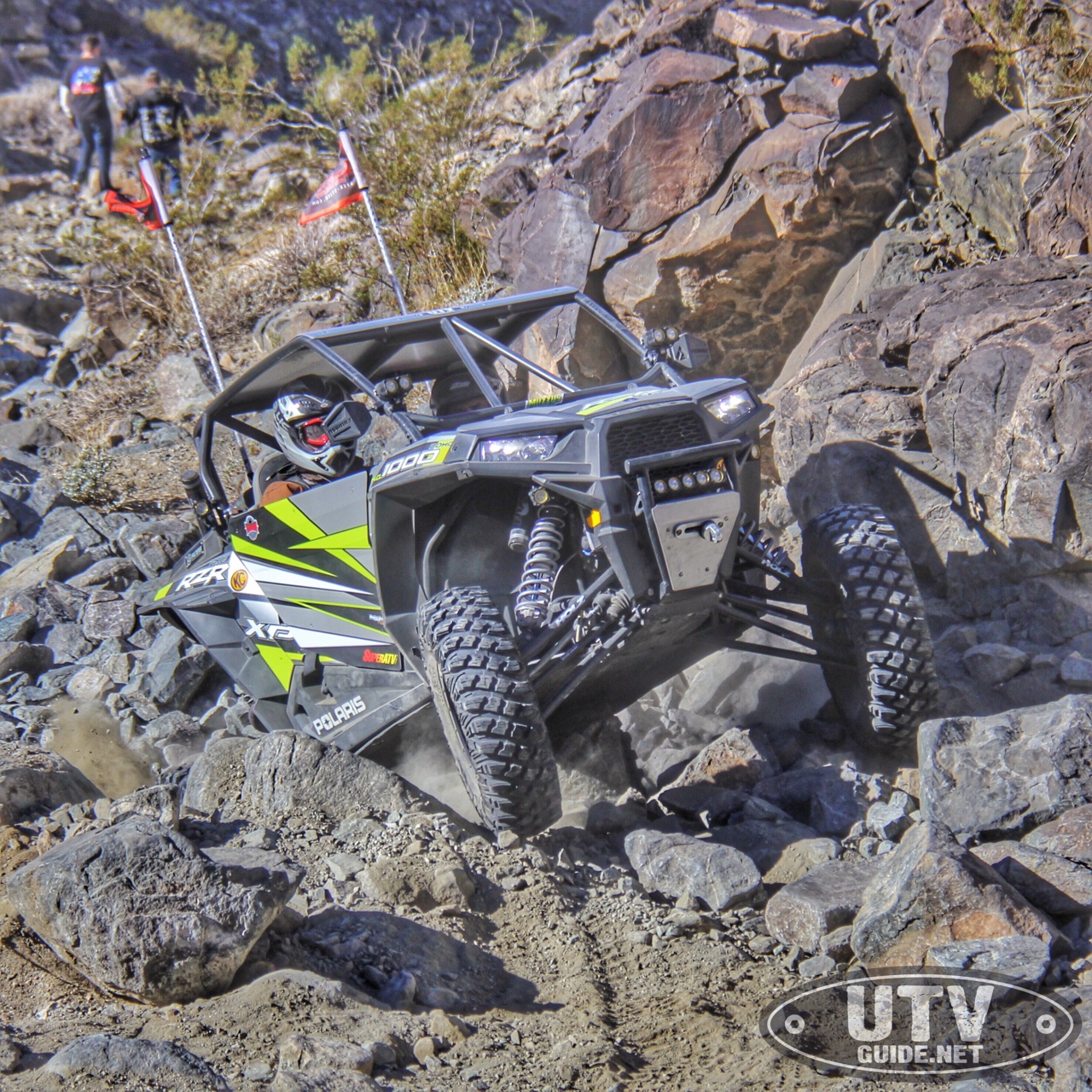
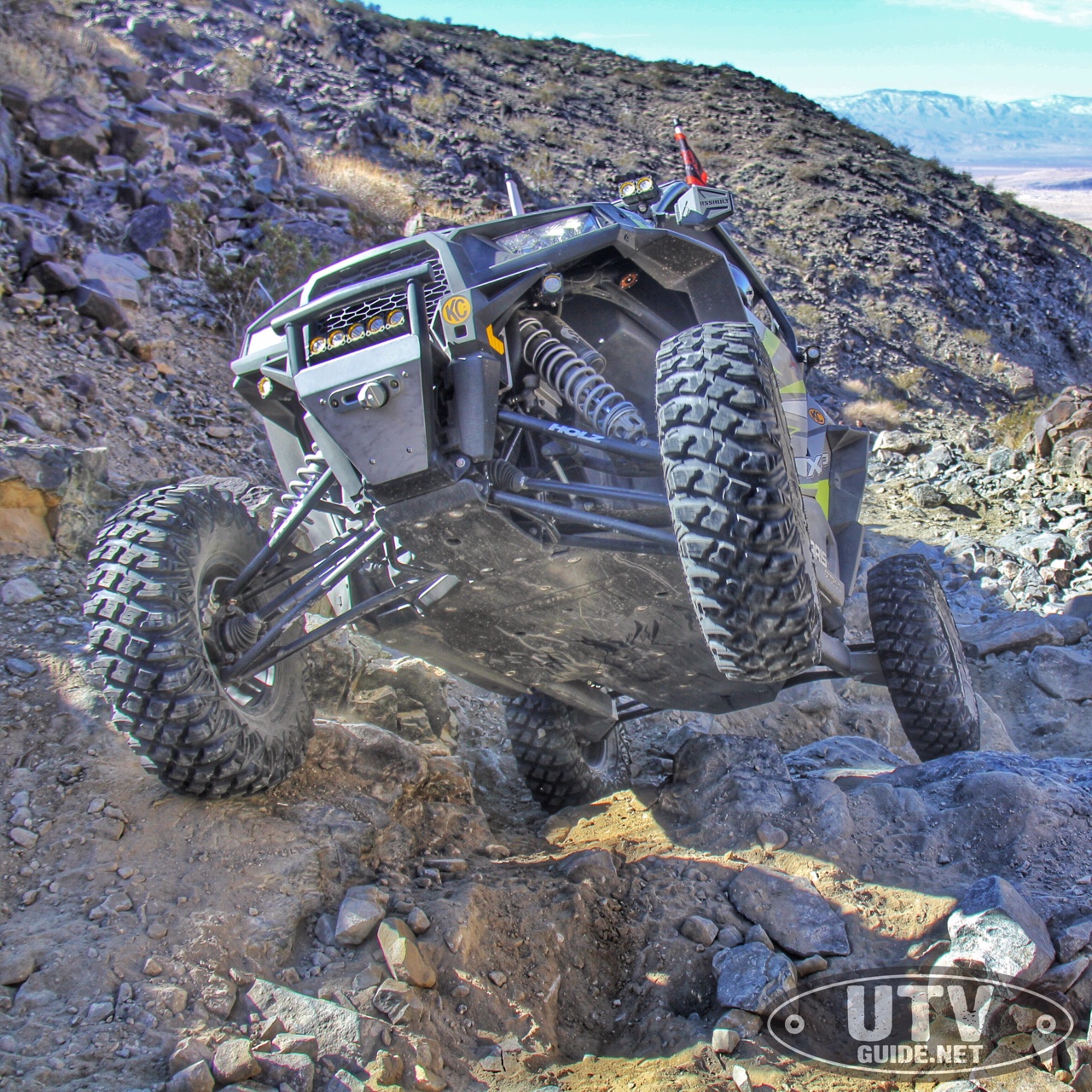
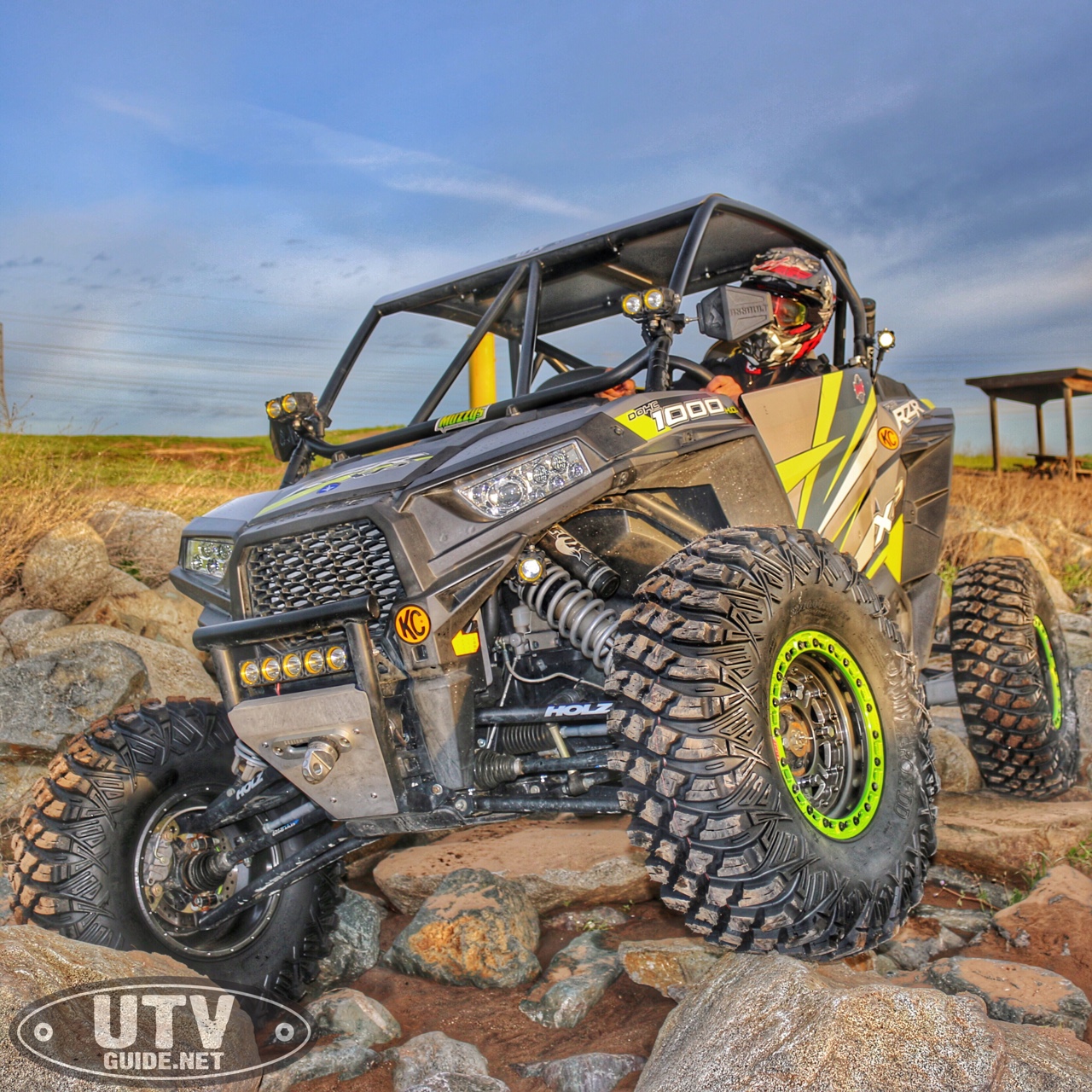
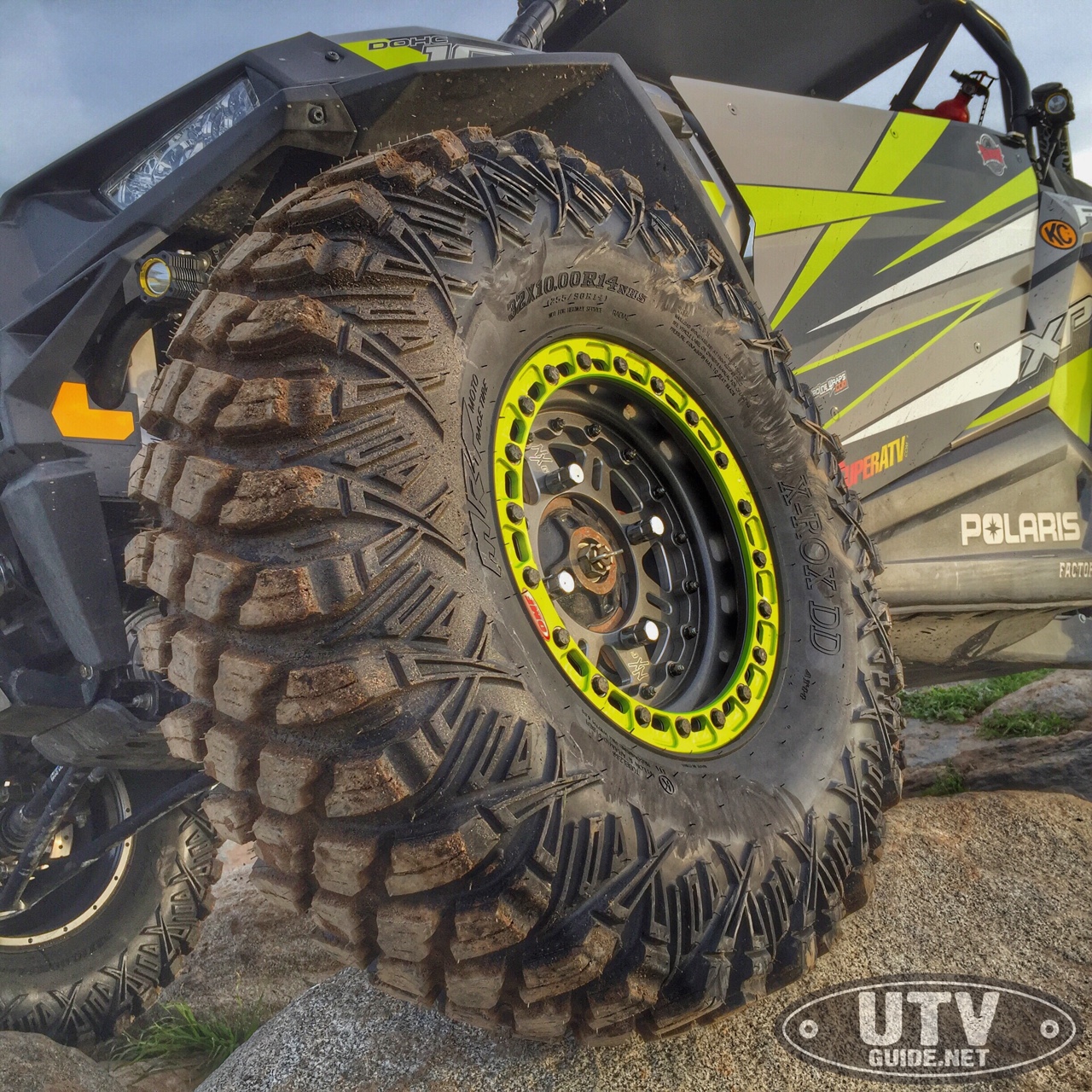
The MRT X-ROX DD was the rock-crawling choice in the MRT lineup. It combined an 8-ply carcass, a claimed 1,330-pound load rating and a soft compound designed to grip rock. The tire was also promoted as DOT compliant.
Best for: Technical rock crawling where traction and tire conformity were more important than high-speed tread life.
Buyer consideration: A sticky compound can improve rock traction but will generally wear faster than a harder all-terrain compound when used extensively on abrasive hardpack or pavement.
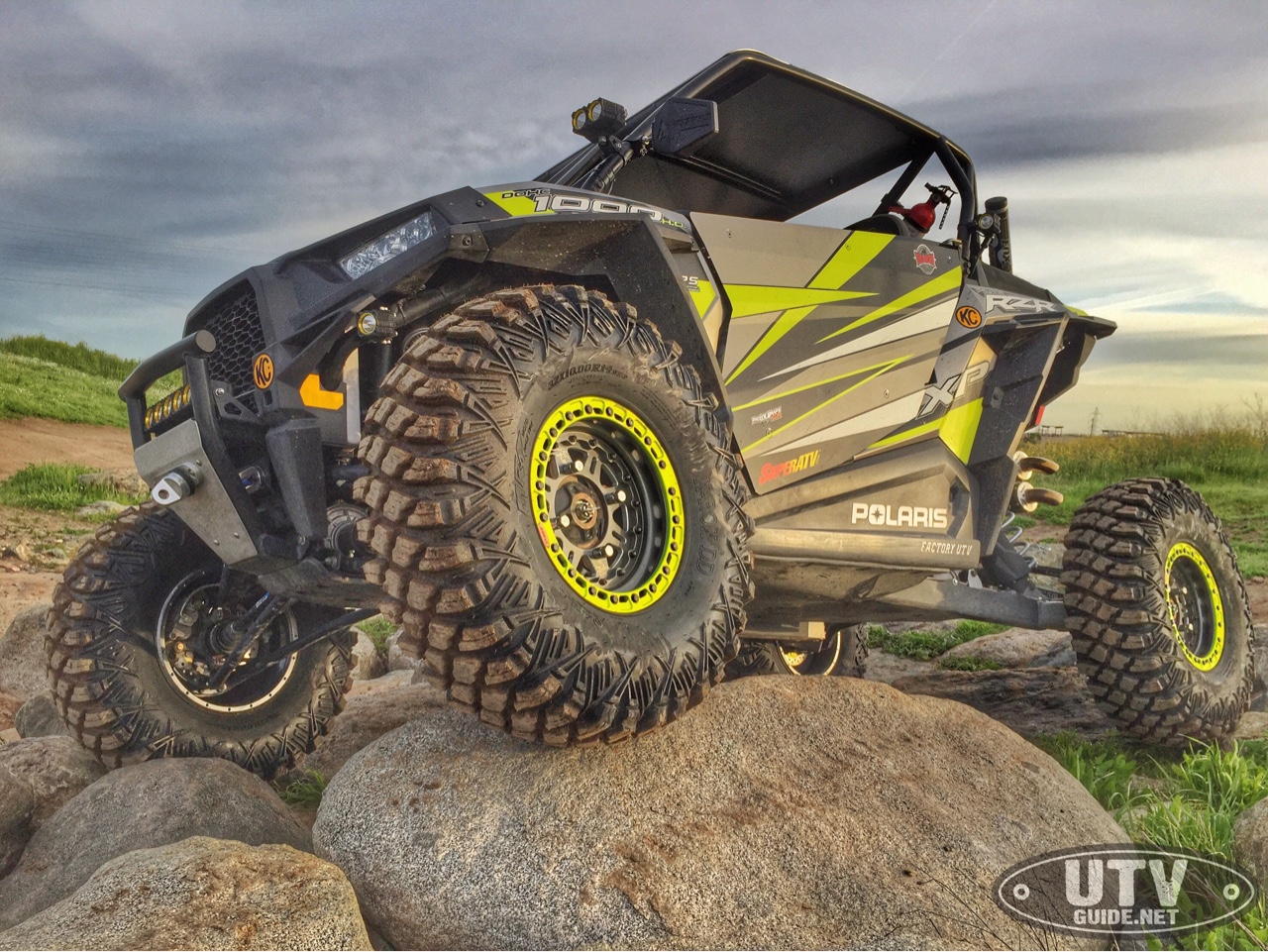
ITP UltraCross R Spec 32x10R15
The ITP UltraCross R Spec combined an 8-ply radial carcass with an open, non-directional tread pattern. It was designed as a multi-surface tire with the durability required for desert terrain and enough tread flexibility for slickrock.
Best for: Desert riders who also encounter rocks, sand and mixed trail conditions.
Buyer consideration: Its open tread made it more terrain-versatile than a closely spaced hardpack tire, although it was not a substitute for a dedicated deep-mud tire.
See the tire installed on our Polaris RZR XP Turbo build.


STI Roctane XD 32x10R14
The STI Roctane XD used an 8-ply radial carcass and a heavier-denier nylon cord to provide puncture resistance while retaining enough flexibility for trail comfort and rock traction. Its tread compound was intended to balance durability with grip on smooth rock surfaces.
Best for: Rock crawling, rugged trail riding and riders who place a high priority on carcass strength.
Buyer consideration: The Roctane’s substantial construction made durability one of its strengths, but buyers should consider the weight of the complete tire-and-wheel package before installing it on a lower-powered UTV.
More photos can be found in our August 2015 Polaris RZR XP 1000 build spotlight.

Arisun After Shock XD 32x10R14
The Arisun After Shock XD was developed around desert racing and hard-terrain use. Its 8-ply radial carcass incorporated an aramid-reinforced layer positioned between nylon layers around the shoulder and sidewall for additional puncture protection.
Closely spaced, siped tread blocks were designed to provide a smooth feel on hardpack while remaining compliant enough to climb across rocks.
Best for: Desert and hardpack riders who wanted reinforced shoulder and sidewall protection without moving to a dedicated rock-crawling tread.
Buyer consideration: The closely spaced tread blocks favored hard surfaces and predictable handling more than loose mud.


GBC Kanati Mongrel 32x10R15
The GBC Kanati Mongrel was a DOT-approved all-terrain radial designed for UTVs that encountered a wide variety of surfaces. Its tread provided a compromise between off-road traction, hard-surface stability and ride quality.
Best for: Recreational riders covering hardpack, desert, rocks and legal road connections with one tire.
Buyer consideration: The Mongrel’s strength was versatility. Riders focused exclusively on loose sand, deep mud or technical rock crawling would be better served by a terrain-specific tire.


Which 32-Inch UTV Tire Was the Best Choice in 2016?
There was no single best tire for every UTV or riding area. The right choice depended on where and how the vehicle would be driven:
- Desert and hardpack: STI Chicane RX, MRT Race or Arisun After Shock XD
- Desert with frequent rocks: ITP UltraCross R Spec
- Technical rock crawling: MRT X-ROX DD or STI Roctane XD
- Mixed terrain and legal road connections: GBC Kanati Mongrel
The lightest suitable tire was generally the best starting point for performance, but carcass strength mattered in sharp rocks and high-speed desert terrain. Buyers also needed to account for actual tire dimensions, wheel offset, clutch calibration and clearance at full steering lock and suspension compression.


