


Long before lithium-ion electric UTVs became mainstream, UTV Guide spent more than a year working with the original 2010 Polaris RANGER EV. We used the electric utility vehicle around our Northern California property, at horse shows and on trails, eventually passing 100 operating hours without any significant problems.
This was not a short media test. The RANGER EV hauled hay, firewood, fencing supplies, compost and concrete bags. It pulled a rough-cut mower and drag harrow, worked through wet pasture and transported equipment around livestock without the noise of a gasoline engine.
For specifications and the history behind Polaris’ first production electric UTV, see our 2010 Polaris RANGER EV overview. This page preserves our original month-by-month ownership log and photographs.
Polaris RANGER EV Long-Term Review Summary
- Time tested: More than one year and 100 operating hours
- Primary jobs: Property maintenance, hauling, mowing, pasture work and equestrian events
- Charging: Plugged into a standard outlet every few days and normally ready the next morning
- Standout features: Quiet electric power, immediate low-speed torque, Turf Mode and On-Demand AWD
- Reliability: No significant problems during our test period
What We Learned After 100 Hours
The RANGER EV proved much more useful than a conventional golf cart. Its 500-pound-capacity tilting cargo box, two-inch receiver, selectable drivetrain and four-wheel-drive capability allowed it to perform legitimate utility work. The electric motor produced enough low-speed torque to tow equipment, pull through thick grass and cross muddy sections of pasture without struggling.
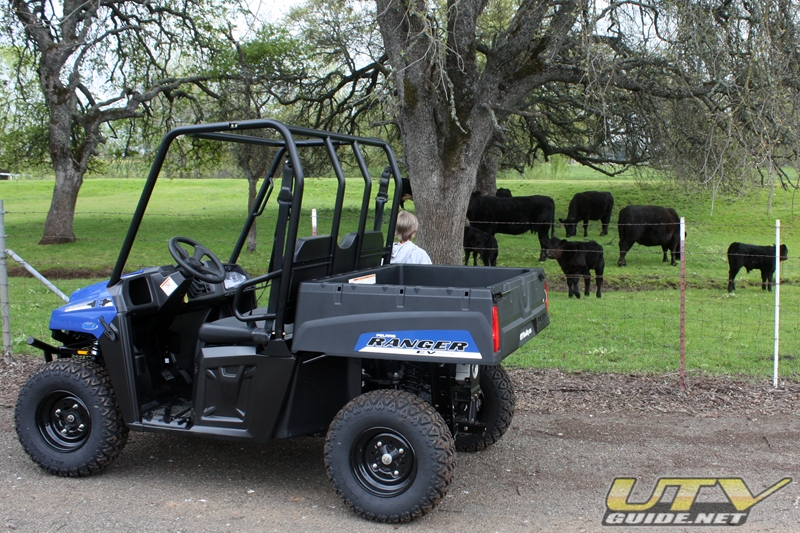
Quiet operation was one of its greatest advantages. Cattle and horses were less likely to be disturbed as we approached, making the EV particularly valuable at equestrian facilities. Turf Mode was equally useful around lawns and wet ground because unlocking the rear differential reduced tire scuffing while turning.
The original lead-acid battery system could not match the performance, charging speed or usable energy of a modern electric UTV such as the Polaris RANGER XP Kinetic. Even so, our experience showed that an electric drivetrain could handle real farm and property-maintenance work years before lithium-ion UTVs reached the market.
Polaris RANGER EV Ownership Log
October 2011: Horse and Hound Show


The RANGER EV was ideal for the Horse and Hound Show at Leone Equestrians. Golf carts were everywhere, but the midsize RANGER provided a useful cargo box while remaining nimble around the horses.
The selectable drivetrain was another advantage. With the switch, we could choose unlocked two-wheel drive for Turf Mode, locked two-wheel drive or On-Demand AWD when additional traction was needed.
September 2011: Quiet Transportation Around Horses

Both kids were competing at the Pickwick Medal show, and the EV became invaluable for traveling between the gates and barn. Its cargo box carried saddles and other supplies, while the quiet electric drivetrain helped us avoid spooking the horses.
August 2011: Rough-Cut Mowing

The RANGER EV and our towable rough-cut mower helped keep the grass under control around Crowley Ranch.
June 2011: Passing 100 Hours

While mowing a field, I looked down and saw that the RANGER EV had passed 100 operating hours. The vehicle was more than a year old, received regular use and was still going strong without any significant issues.
Most jobs involved hauling hay, chicken feed, firewood, tools or concrete bags, but we also regularly used the EV to tow our Kunz rough-cut mower. Our pasture was frequently wet and muddy, making four-wheel drive essential.
Charging remained simple. We plugged the vehicle in every few days, and it was ready to work the following morning.
May 2011: Pulling a Downed Tree

We used the RANGER EV to carry tools while trimming branches. I also attached a strap to a dead tree and dragged it to the burn pile. Despite the thick grass and mud, the electric RANGER pulled away without hesitation.
April 2011: Compost and Storm Cleanup

We hauled compost to bare and low areas in the lawn. The RANGER EV’s compact dimensions and unlockable Turf Mode rear differential made it well suited to the job without unnecessarily damaging the grass.

The EV also hauled downed branches through the alpaca pasture. Its relatively light footprint helped reduce rutting on the wet ground. Nelly seemed comfortable next to it, perhaps because the electric drivetrain allowed us to approach without engine noise.
February 2011: Winter Storm Cleanup

Winter storms in Northern California left numerous branches to clear. The EV’s compact size, relatively low ground impact and four-wheel-drive capability helped it cross muddy sections without cutting deep ruts.
January 2011: Clay, Compost and Fencing

We used the cargo box to remove wet red clay left from digging fence-post holes.

Without a tractor and front bucket, the tilting cargo box also made the RANGER EV a practical way to relocate our compost pile.

The midsize chassis could reach areas that would have been difficult to access with a larger UTV or pickup.

We hauled a five-foot roll of no-climb fencing across a muddy section of pasture. Two-wheel drive was not enough, but On-Demand AWD carried the load through without getting stuck.

The EV also transported gates, posts and tools out to the pasture.
December 2010: Firewood and Yard Cleanup

The RANGER EV’s compact dimensions and Turf Mode made it useful for winter cleanup. It could maneuver without tearing up the ground, while locked two-wheel drive and AWD remained available for muddy areas.

After mowing and raking, we loaded leaves and other debris into the cargo box and hauled everything to the compost pile.
November 2010: Wood and Storm Debris

We used the EV to gather firewood from around the property and transfer it into the truck. Its midsize chassis was particularly useful around gates and narrow walkways.

Several storms created a mess in the yard, giving the RANGER EV another opportunity to haul downed branches.
October 2010: Working Around the Pasture and Garden


We hauled three loads of compost to the garden. The manual tilt bed made unloading the mixture of decomposed leaves and manure considerably easier.

Our friends won the neighborhood’s largest-pumpkin contest, and my daughter and I used the EV to carry the 138-pound pumpkin back to their house.
September 2010: Heavy Property Work

We hauled dirt to several low spots in the pasture. The RANGER EV was lighter than a truck, Turf Mode reduced damage to the wet ground and the dump box simplified unloading. By this point, the hour meter showed 61 hours.

The electric RANGER regularly towed our Kunz rough-cut field mower.


We also pulled a heavy drag harrow while preparing the pasture for seeding. The harrow’s tines broke up the soil, yet the EV handled the load without struggling.


The same vehicle moved oak firewood and hauled yard debris to the burn pile.


Grass clippings and oak leaves were hauled to the compost pile. The RANGER EV’s cargo box was rated to carry 500 pounds, and its tilt function made quick work of unloading.
August 2010: Hay and Irrigation Work

The cargo box was useful for hauling hay and straw around the property.

When a two-inch distribution line developed a leak, the EV carried shovels, a pump and PVC fittings to the difficult-to-access repair location.

We also used it to check cattle and operate the pasture sprinklers.
July 2010: Lake Almanor and Plumas National Forest
We took the RANGER EV to Lake Almanor for the Fourth of July weekend. It participated in the Chester parade and joined two trail rides in the Plumas National Forest.


June 2010: Bark, Solar Equipment, Cattle and Brush

The tilting cargo box made the RANGER EV a practical vehicle for hauling and unloading bark.


We used the EV to carry parts and tools to a solar well-pump installation.

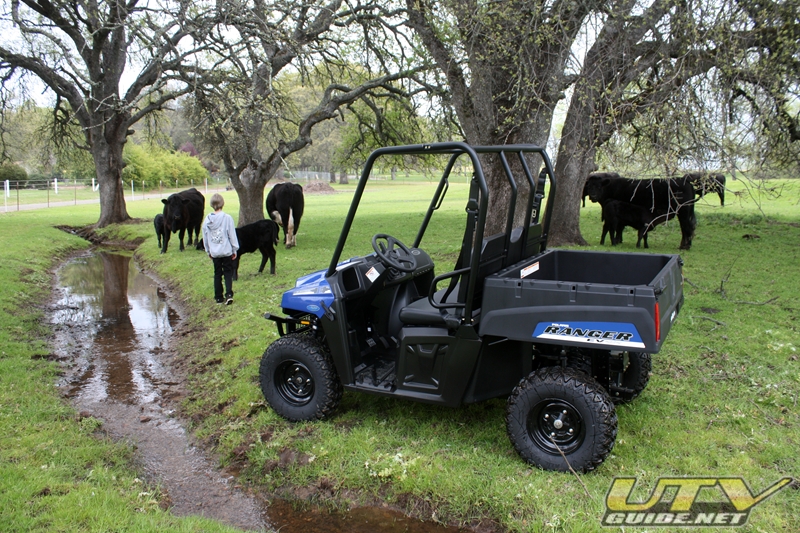
The cattle were curious when the nearly silent RANGER EV approached with hay in its cargo box.

Brush removal was another routine job for the electric RANGER.
May 2010: Fencing, Turf Mode and a Chicken Coop


We transported old fencing around the yard and pasture. The calves were especially interested in the quiet new vehicle.

Turf Mode allowed us to drive across the lawn without the locked rear differential tearing up the grass during turns.

The EV’s low-speed torque also proved sufficient to pull a new chicken coop into position.
April 2010: Delivery and First Jobs


One of the first jobs was transporting 15-gallon redwood trees. The 500-pound-capacity Lock & Ride cargo box gave the RANGER EV substantially more utility than a typical golf cart.
At the Capital City Classic Tournament Horse Show at Leone Equestrians, the EV moved through crowded aisles while carrying equipment. Its quiet operation and maneuverability were ideal around the horses.


After taking delivery of the demo vehicle, we immediately used it to check the cattle. The lack of engine noise allowed us to get noticeably closer before disturbing them. We also drove through sloppy mud, where the On-Demand AWD system provided the necessary traction.


June 2009: First Drive at Polaris
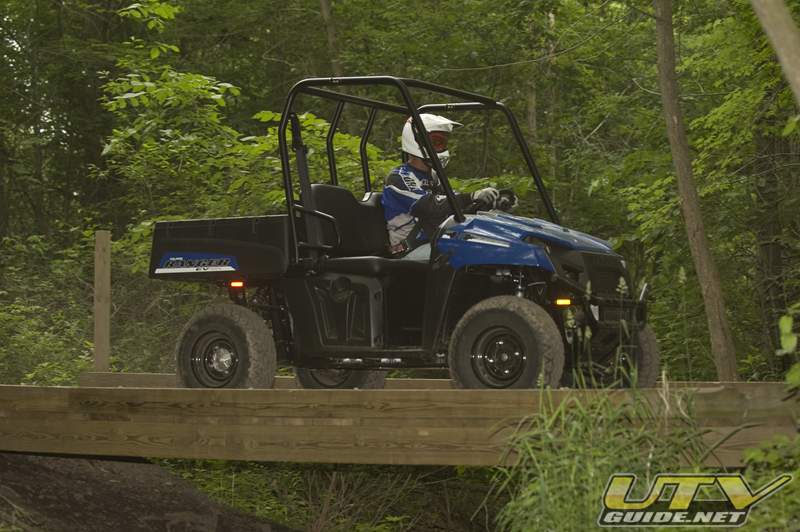
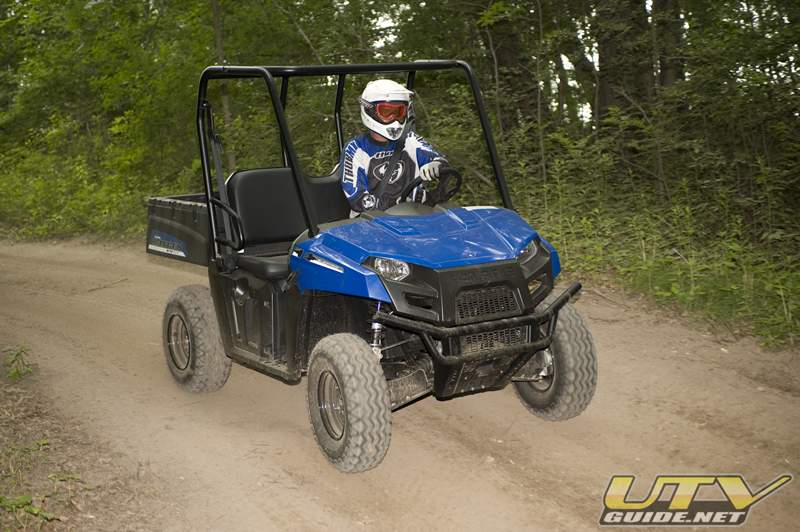
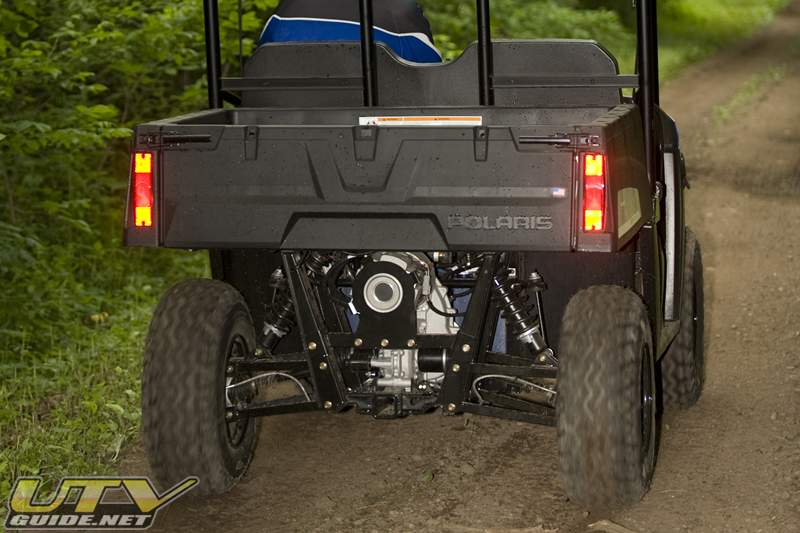
Before receiving our long-term demo unit, UTV Guide drove the new 2010 Polaris RANGER EV at the Polaris research and development facility in Minnesota.

Long-Term Verdict
After more than a year and 100 operating hours, the original RANGER EV had proven itself as a legitimate compact utility vehicle. It could haul, tow and work through mud while remaining quiet enough for livestock, horses and residential property maintenance.
Its lead-acid battery pack, limited speed and lengthy charging time are dated by current standards. However, the essential advantages we observed—quiet operation, immediate torque, simple home charging and reduced maintenance—remain central to modern electric UTVs.
The original RANGER EV was not merely an electric golf cart with off-road tires. Its cargo capacity, Turf Mode and On-Demand AWD made it a useful working side-by-side and an important predecessor to Polaris’ current electric RANGER models.


