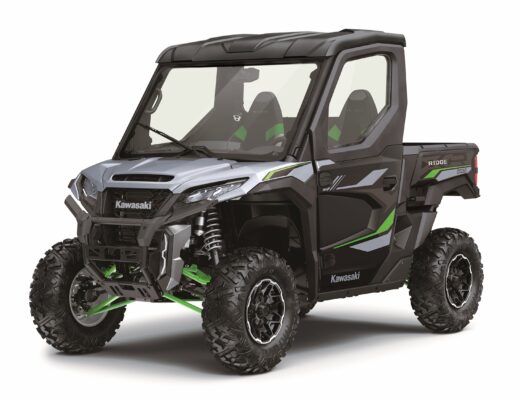
2011 Kawasaki Mule 600
Information:
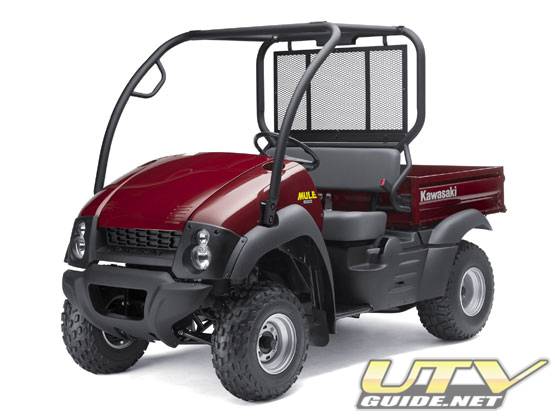
When it comes to great tools, a just the basics approach is often your best bet. So it is with Kawasakis two-wheel-drive Mule 600, a utility vehicle so affordable, so durable and so capable youll wonder how you ever got along without one. Whether its wandering through the local woods with a picnic basket in the bed, working an inner-city construction job, or hauling tools, supplies and two adults to a job site on the other side of the ranch, the Mule 600 is up to the job. Even better, the Mule 600 is easily transportable, fitting nicely in the bed of a full-sized pickup.
Hard-Working, Durable and Priced Right. Whats Not To Like?
 When it comes to great tools, a just the basics approach is often your best bet. So it is with Kawasakis two-wheel-drive Mule 600, a utility vehicle so affordable, so durable and so capable youll wonder how you ever got along without one. Whether its wandering through the local woods with a picnic basket in the bed, working an inner-city construction job, or hauling tools, supplies and two adults to a job site on the other side of the ranch, the Mule 600 is up to the job. Even better, the Mule 600 is easily transportable, fitting nicely in the bed of a full-sized pickup. When it comes to great tools, a just the basics approach is often your best bet. So it is with Kawasakis two-wheel-drive Mule 600, a utility vehicle so affordable, so durable and so capable youll wonder how you ever got along without one. Whether its wandering through the local woods with a picnic basket in the bed, working an inner-city construction job, or hauling tools, supplies and two adults to a job site on the other side of the ranch, the Mule 600 is up to the job. Even better, the Mule 600 is easily transportable, fitting nicely in the bed of a full-sized pickup.
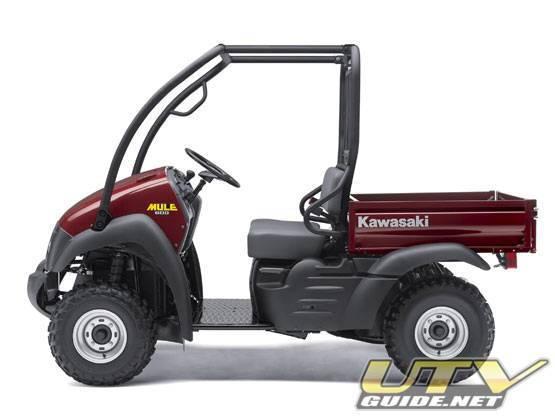
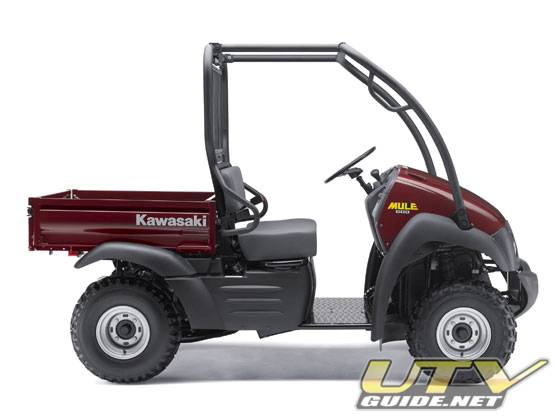
The Mule 600s wide-ranging usefulness isnt hard to recognize thanks to its strong and reliable single-cylinder engine, easy-to-use continuously variable transmission (CVT), spacious cab, handsome, curved body panel styling, dual-mode rear differential, comfy-riding independent front suspension, strong, steel-tube frame and powerful hydraulic brakes.
User-friendly hardware abounds, and includes automotive-type controls and a gear selector within easy reach on the dashboard, two large cup holders, a passenger-side glove box and passenger grab handle. Even more storage space is located beneath the Mule 600s hinged front hood.
 The Mule 600s air-cooled, 401cc, single-cylinder, four-stroke engine maintains ideal operating temperatures with help from an efficient cooling fan. An enrichener that partially opens the throttle during ignition allows easy engine starts. The Mule 600 can be started in forward or reverse gear, provided the brake is applied, and it incorporates mud flaps by the rear tires to minimize mud clogging the engine area. The Mule 600s air-cooled, 401cc, single-cylinder, four-stroke engine maintains ideal operating temperatures with help from an efficient cooling fan. An enrichener that partially opens the throttle during ignition allows easy engine starts. The Mule 600 can be started in forward or reverse gear, provided the brake is applied, and it incorporates mud flaps by the rear tires to minimize mud clogging the engine area.
Owners will also appreciate the knowledge that the Mule 600 comes equipped with an efficient and durable CVT and a long-lasting drive belt coupled with a dependable, low-maintenance shaft drive system. The dual-mode differential can be locked to maximize traction on slippery or adverse terrain.
The Mule 600 rides on a MacPherson strut suspension up front, while a unit swing-axle handles rear suspension duties. Large 22-inch tires enhance ride quality, and serious stopping power comes via sealed, hydraulic drum brakes on all four wheels.
Bright 35-watt headlights mean the job can start before sunrise or continue after sunset. Increasing its work versatility is a 400-pound-capable tilting cargo bed that features secure, easy to fasten tailgate latches. The Mule 600 can tow up to 1,100 pounds with an optional Kawasaki trailer hitch installed. Other popular Kawasaki accessories available through Kawasaki dealers include an enclosed cab, snow plow, winch, and soft or hard tops.
Features and Benefits
- Rugged and compact off-road utility vehicle
- Easy to use, with low operating costs
- Can be easily transported in the bed of a full-size pickup
- Can tow up to 1,100 pounds with optional Kawasaki trailer hitch installed
- Simple, lightweight, durable and quiet 401cc four-stroke engine
- Modern four-stroke overhead valve design for efficient running and good fuel economy
- Cooling fan helps the engine maintain an ideal operating temperature
- Choke opens throttle during starting so accelerator pedal does not need to be depressed
- Can be started in gear by depressing brake pedal
- Balance weight moves opposite the piston, dramatically reducing vibration, minimizing noise and wear
- Maximizes operator comfort and diminishes fatigue
- Carburetor settings reduce exhaust emissions
- Positive crankcase ventilation system recycles blow-by gases to the intake tract to be burned in the engine
- Muffler has USFS-approved spark arrestor
- California models have a check valve on the fuel tank/charcoal canister connector hose to prevent gasoline from entering the canister when operating on inclines or over rough terrain
- Simple and lightweight CVT is fully automatic and keeps engine speed in the most efficient range for any selected vehicle speed, load or terrain
- An open-sided drive pulley keeps cool for longer belt life
- Belt deflection can be easily adjusted by changing shim thickness of the adjuster bolt located on the outside of the driven converter
- Cooling air flows in from a vent in the cab frame through a special air filter, which keeps out water and dust for increased belt life
- Long-wearing double cog CVT belt
- Locked mode for maximum traction in difficult conditions
- Unlocked mode decreases turning radius and minimizes ground disturbance great for use on grass
Popular Accessories:
- Soft or Hard Top
- Windshield
- Winch
- Enclosed Cab
- Snow Plow
2011 Kawasaki Mule 600 Specifications
Engine: Four-stroke, air-cooled single
Displacement: 401cc
Bore x Stroke: 82 x 76mm
Compression ratio: 8.3: 1
Carburetor: Nikki 6C1026
Air filter: Snorkel-type with two-stage dry replaceable element
Oil filter: Automotive-type spin-on canister
Ignition: Magneto and transistor
Electrical: 12VDC, 14 amp-hour battery, alternator
Transmission: Kawasaki Automatic Power-Drive System (KAPS), with reverse
Final drive: Shaft, dual-mode rear differential
Exhaust: Muffler with USFS-approved spark arrestor
Front Tire Size: 22×9-10 tubeless
Rear Tire Size: 22×11-10 tubeless
Front suspension / wheel travel: MacPherson strut / 3.1 in.
Rear suspension / wheel travel: Unit swing axle, adjustable shocks / 3.1 in.
Steering: Rack and pinion
Brakes: Four-wheel hydraulic drum
Fuel capacity: 4.1 gallons
Curb weight: 954 lbs.
Overall length: 108.8 in.
Overall width: 52.6 in.
Overall height: 70.1 in.
Wheelbase: 70.0 in.
Ground clearance: 6.1 in.
Roll over protective structure (ROPS): This structure meets ROPS requirements for wheeled tractors under SAE J1194, 7.1.1, 7.1.2, and 7.5. This structure also meets FMVSS 216 Roof Crush resistance requirement
Cargo bed dimensions (LxWxH): 41.1 x 35.4 x 9.6 in. / 8.08 cu. ft.
Cargo bed capacity: 400 lbs.
Load capacity: 926 lbs.
Towing capacity: 1,100 lbs.
Turning radius: 10.8 ft.
Top speed: 25 mph, governed
Instruments: Hour meter, 35w headlights, taillight and stoplight
Color Choices: Dark Royal Red
Warranty: 12 Months
Good Times Protection Plan: 12 or 24 months
Manufacturer Info:
Kawasaki Motors Corp., U.S.A.
PO Box 25252
Santa Ana, CA 92799-5252
Website: www.kawasaki.com
2011 Kawasaki Mule 600 Model Home
|


No Comments