
| Kawasaki Mule Pro-FXT Review
By Jon Crowley,UTVGuide.net Kawasaki recently invited journalists to Lincoln Nebraska for a tour of their manufacturing plant and to ride their newest Mule – the 2015 Kawasaki Mule PRO-FXT.
Kawasaki Motors Manufacturing Corp. (KMM)Kawasaki traces its origins to 1878, when Shozo Kawasaki established Kawasaki Tsukiji Shipyard in Tokyo, Japan. Since that time, Kawasaki built their first ship in 1897, their first train in 1911 and their first plane in 1922. Then in 1969, Kawasaki launched their first motorcycle. The high-performance, 2-stroke, 3-cylinder, 498cc H1 was a hit and confirmed Kawasaki’s big bike reputation and position in the U.S. market. In 1973, Kawasaki designed the first JetSki and after obtaining a positive response from trial sales in the U.S., the Company began mass production. In 1974, Kawasaki established a new motorcycle factory in Lincoln, Nebraska, which was the first U.S. manufacturing site for Japanese motorcycle/automobile makers. In January 1975, the new plant started producing the KZ series motorcycles, and in the same year also began producing Jet Ski watercraft. Today, every Kawasaki ATV, UTV and personal watercraft rolls out of the same plant that has been employing Nebraskans for forty years.
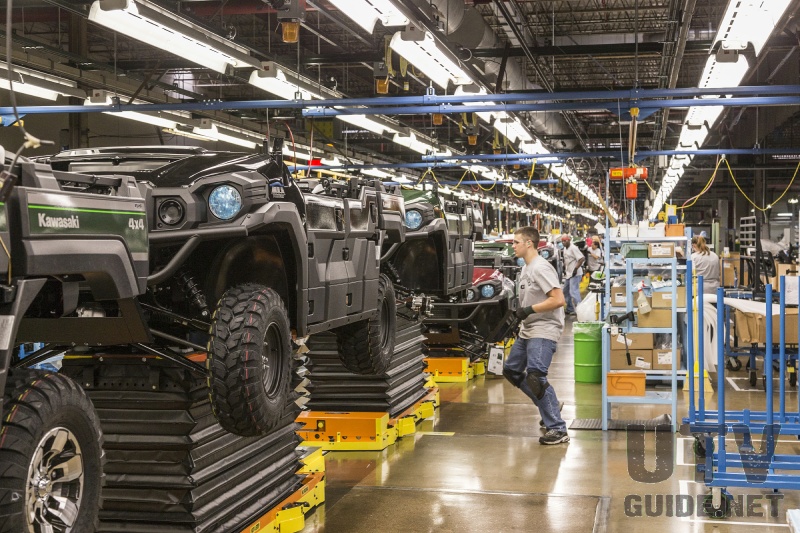
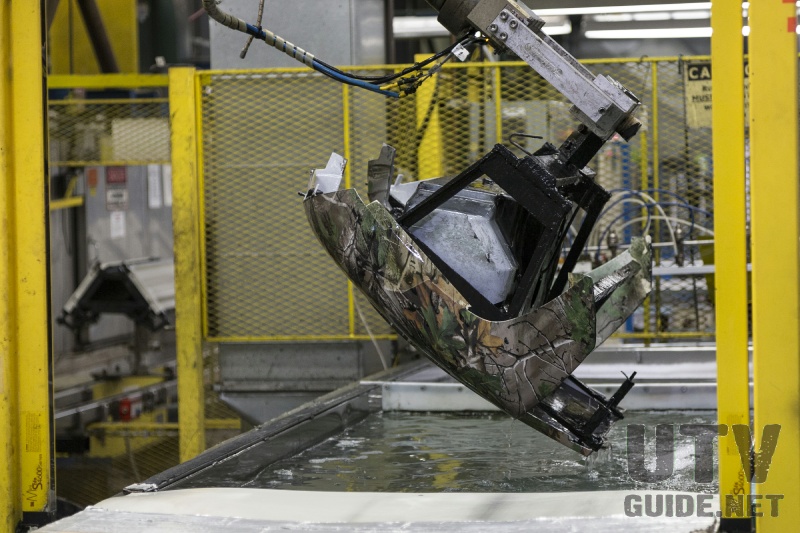
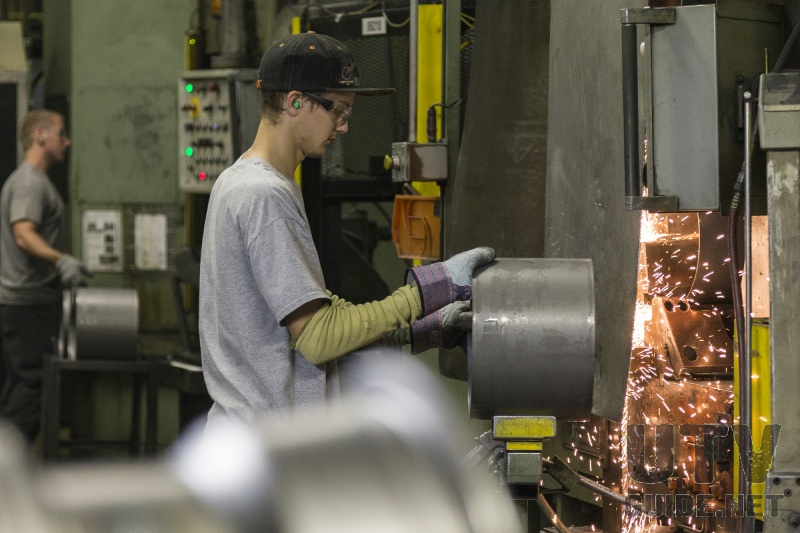
The consumer products manufacturing facility in Lincoln, located on 335 acres of land, has grown since its opening in 1974 from the original 286,000 square feet to nearly 1.3 million square feet of manufacturing, office and warehouse space. In 2001, the rail car plant was completed at the Lincoln site, adding 437,000 square feet for light rail car manufacturing. Over 1,000 people work at the Lincoln facilities, making KMM a major employer in the Lincoln area. In 1989 the Maryville Plant was opened for production of general purpose engines. The Maryville facility has grown to over 700,000 square feet on 113.7 acres of land employing over 600 people. KMM Research and Development Centers are located at the Lincoln and Maryville facilities to meet customer demands as quickly as possible. Kawasaki recently invited media to Lincoln Nebraska for a tour of the manufacturing plant and a ride in their new PRO-FXT Mule, and I was lucky enough to get an invite. The Lincoln plant is an impressive facility that does much more than just assembly. The plant does all the steel cutting, bending, welding, injection molding, painting and more. They even manufacture their own steel wheels from scratch right there in Lincoln.
Kawasaki’s newest Mule has roots that go back to a simple sketch drawn on a napkin back in the 1980’s. Production of that first Mule began in 1988 and since that time, numerous generations of Mule vehicles have made their way into workforce at farms, ranches and golf courses all over the world. For 2015, Kawasaki has taken the Mule to a whole new level with the introduction of their new Mule Pro-FXT. The PRO-FXT is the most-refined version of the Mule to date, with more features, power and comfort.
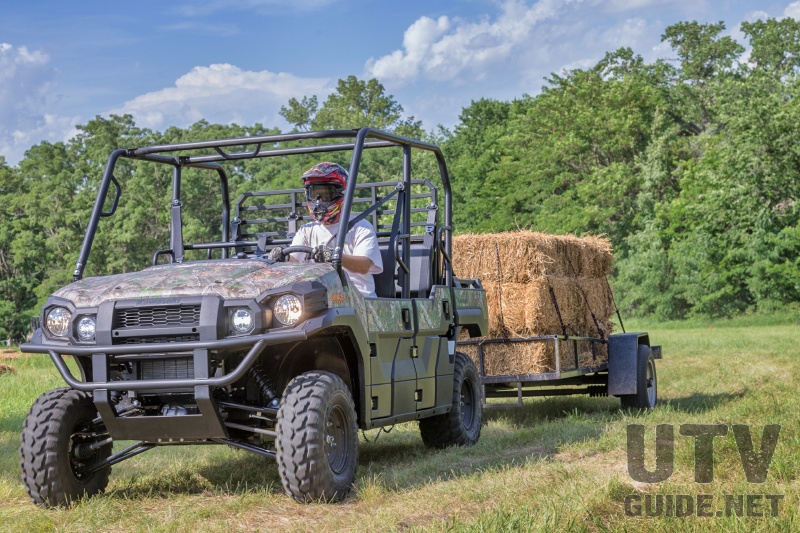
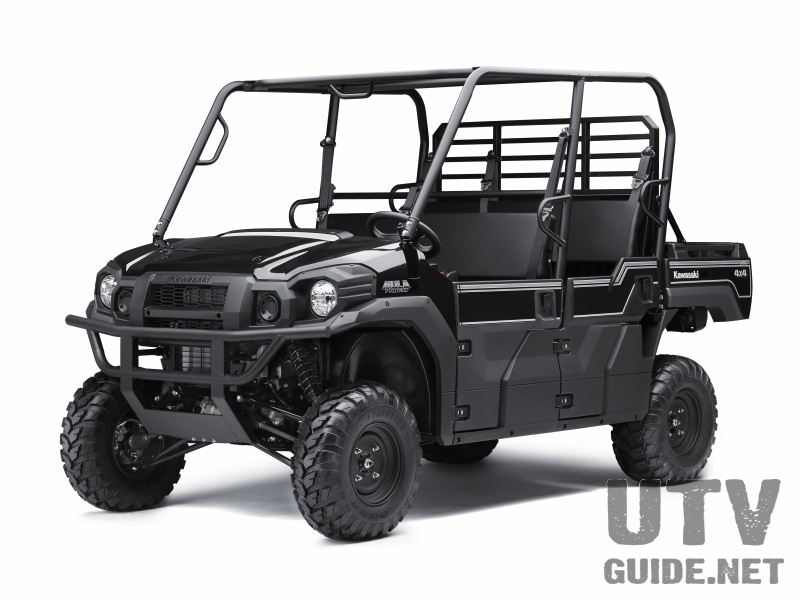
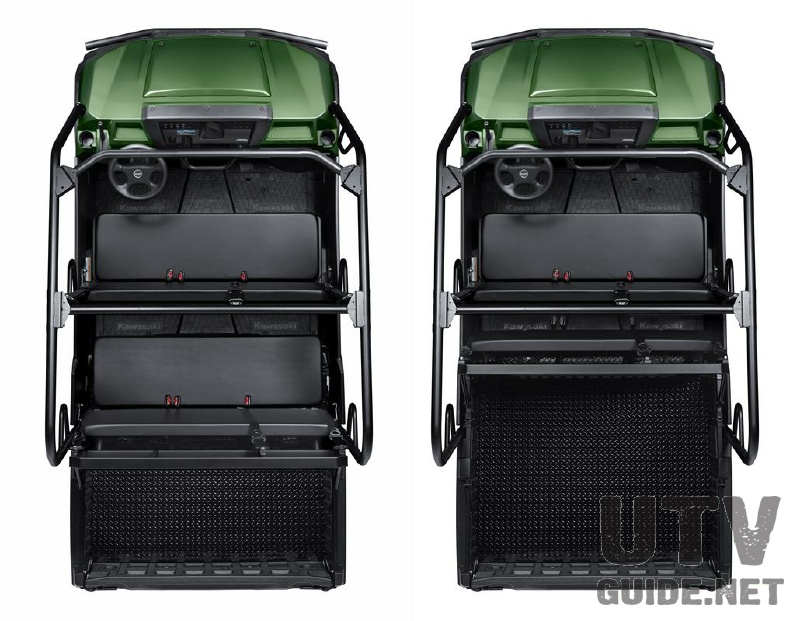
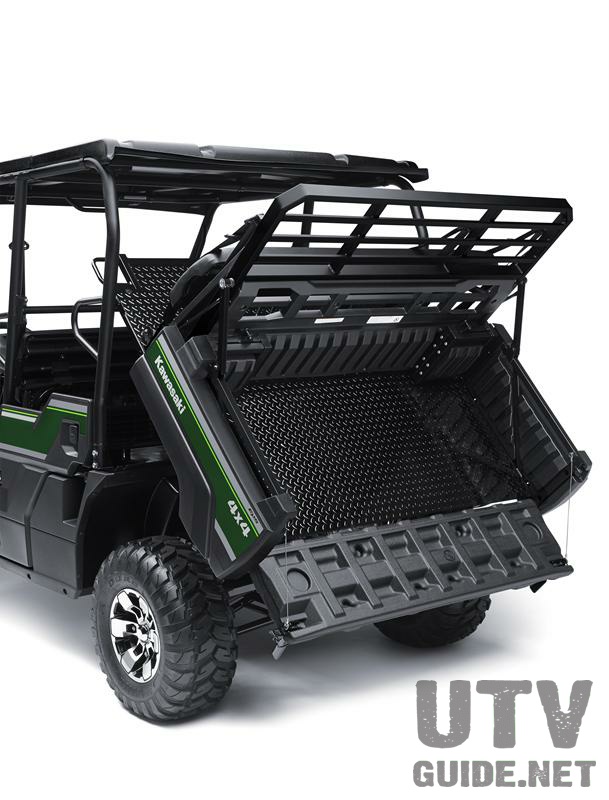
Kawasaki Mule PRO-FXTUpon first look at the new Mule PRO-FXT, it was pretty obvious that it was a completely new machine. Styling is more aggressive, doors are similar to a Teryx, tires are larger and there is room for six people. Diving in a bit deeper, the feature that makes the new Mule PRO-FXT so unique is the Trans Cab mechanism. The Mule PRO-FXT can seat six with a small bed, and then can be transformed from a six-passenger vehicle to a three-passenger with an expanded cargo bed to carry larger payloads carrying up to 1000 lb with three passengers. And the best part of this transformation is it takes just 1 person, 1 round trip, and 1 minute to convert from three to six-passenger mode.
To convert from 6-passenger to 3-passenger mode, you simply unlatch the rear seat and fold it away, slide the cargo wall forward, lower the cargo wall struts and re-attach the seat latches. It is really that quick and easy! The cargo bed length can be adjusted from 22 in the six-passenger configuration, to 42.7 in the three-passenger layout.
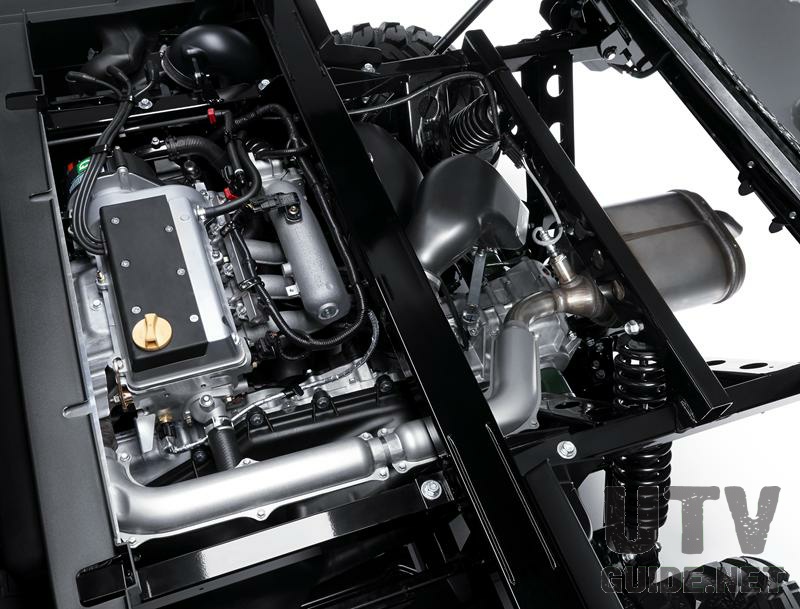
At the heart of the new Mule Pro-FXT is a new 812cc, three-cylinder engine that produces 48 ft-lb(2) of torque. Digital Fuel Injection helps ensure crisp throttle response and fuel economy. The new engine is mounted to a specially tuned Continuously Variable Transmission (CVT). The new CVT is combined with an electrically selectable 2WD/4WD system that has a dual-mode rear differential. Dash-mounted switches allow the driver to instantly engage the systems giving full control over the 4WD and the locking rear differential. Acceleration was smooth, but it certainly did not snap my neck back. The CVT has engine braking that is comparable to other manufacturers, but it will not stay engaged during a steep decent without giving it a little bit of throttle.
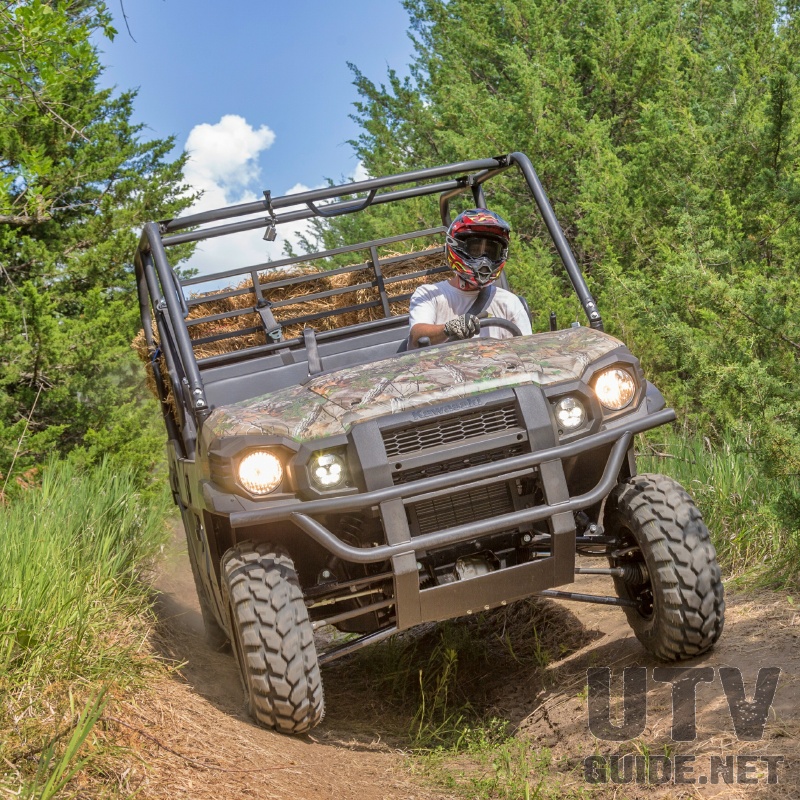
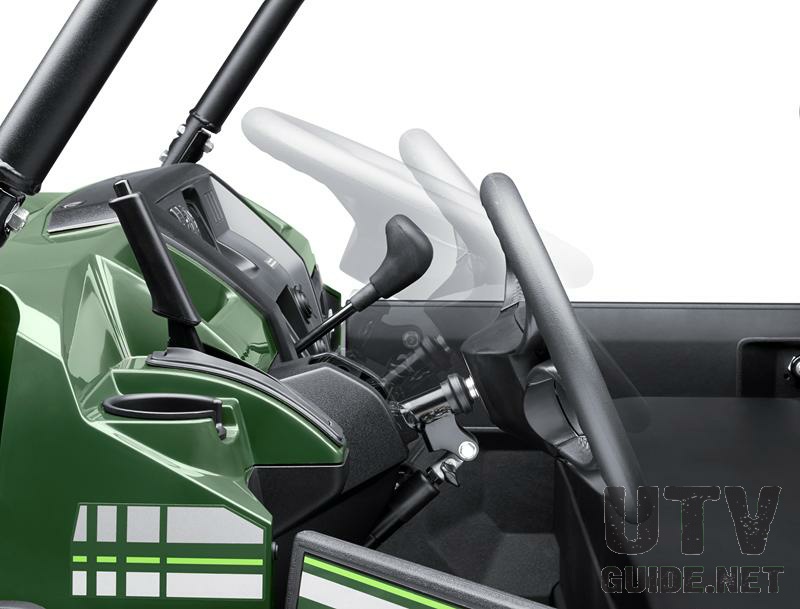
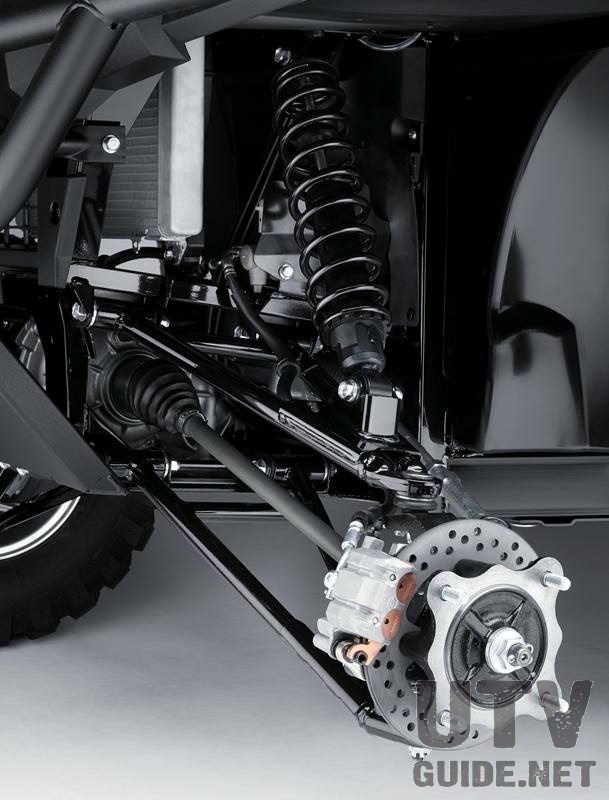
Front and rear suspension offers up 8.7″ of travel for smooth operation even in rough terrain. And the 26″ Duro tires provide great traction and extra ground clearance in a variety of terrain. Kawasaki also designed the new Mule to be surprisingly nimble for its size. With a wheelbase of 92.3 the Mule has a 16 ft. turning radius that makes it the tightest turner of all crew cab models from all manufacturers. A high-capacity generator gives passengers in the PRO-FXT awesome 12-volt charging output when on the trail. 60.8 amps at 2,000rpm is enough power to charge most popular portable devices and LE and Camo models come with rear seat outlets as well. The Electronic Power Steering (EPS) system reduces steering effort, especially at low speeds when turning effort is greatest. The electric motors inertia significantly reduces bump steer and kickback to the steering wheel caused by shocks to the tires for a more comfortable and controlled ride. Input from vehicle speed and torque sensors determines the amount of steering assistance required. In my opinion, the Kawasaki EPS system delivers just the right amount of power to the system.
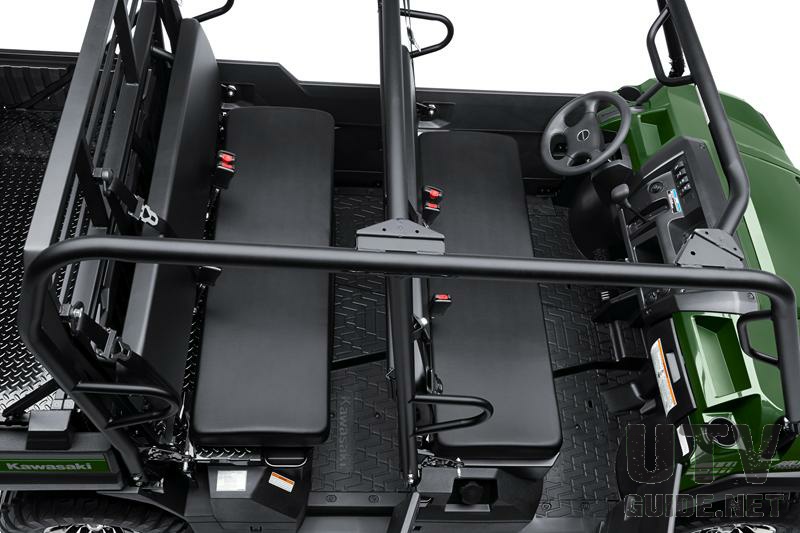
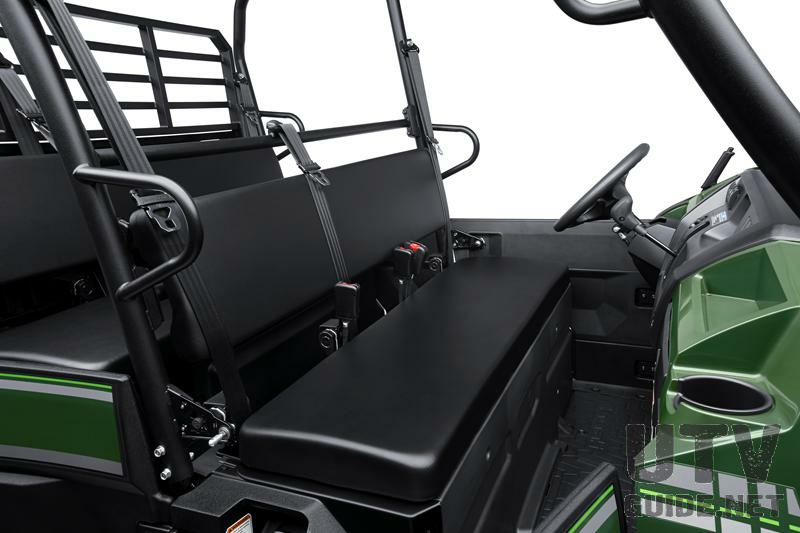
The Cab of the PRO-FXT features two bench seats that combine for a total of six seats. For a work environment, this is a perfect configuration. But if I was going to take the PRO-FXT out hunting or on a long trail ride, I would prefer two seats up front with more support and a console in between them. The MULE PRO-FXT comes standard with the Kawasaki STRONG 3-Year Warranty which really makes a statement about standing behind the product. Overall, Kawasaki did a great job raising the bar with the new Mule PRO-FXT. Although it is the fastest and most powerful Mule ever, it isn’t the sport model many enthusiast were hoping for. The PRO-FXT is more at home on the ranch, farm, jobsite or on the hunt, and this fits Kawasaki’s target market nicely. More Photos:
KAWASAKI STRONG THREE-YEAR WARRANTY Customers can take pride in the knowledge that the new MULE PRO-FXT is assembled from foreign and domestic components right here in America at Kawasakis manufacturing facility in Lincoln, Nebraska. Completing the appeal of the MULE PRO-FXT is Kawasakis promise to keep you running Strong with our standard Kawasaki STRONG Three-Year Warranty. We dont just want you to enjoy the King of Mules, we want you to live the MULE lifestyle and be inspired by its heritage: a heritage of powerful, durable, fun-to-drive vehicles. ABOUT KAWASAKI Kawasaki Motors Corp., U.S.A. (KMC) markets and distributes Kawasaki motorcycles, ATVs, Side x Sides, and Jet Ski® watercraft through a network of almost 1,200 independent retailers, with close to an additional 7,400 retailers specializing in general purpose engines. KMC and its affiliates employ nearly 3,100 people in the United States, with approximately 300 of them located at KMC’s Irvine, California headquarters. Kawasakis tagline, Let the good times roll., is recognized worldwide. The Kawasaki brand is synonymous with powerful, stylish and category-leading vehicles. Information about Kawasakis complete line of powersports products and Kawasaki affiliates can be found on the Internet atwww.kawasaki.com. |




No Comments