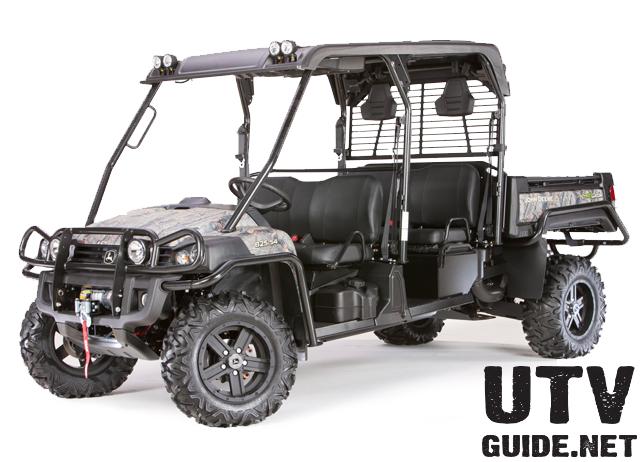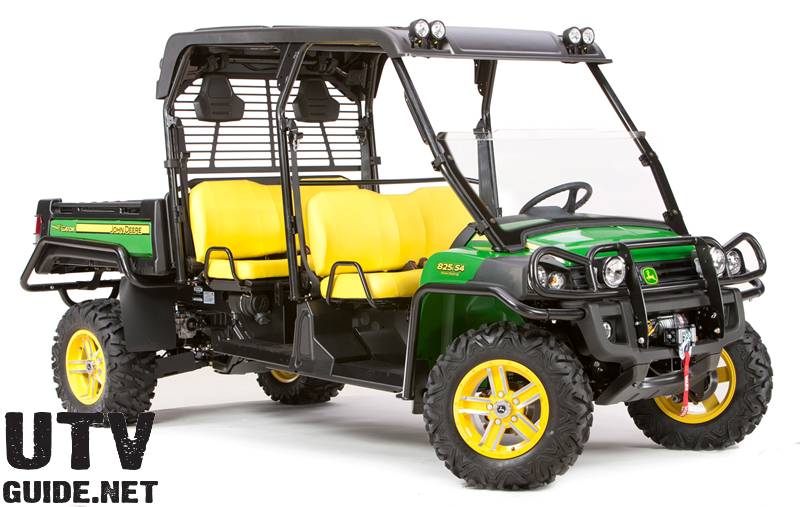
The John Deere Gator XUV 825i S4 expanded Deere’s heavy-duty crossover utility platform with seating for four. Introduced for the 2013 model year, the crew-style Gator combined the 825i’s 50-horsepower, three-cylinder gasoline engine, 44-mph top speed and 1,000-pound cargo box with a second row of seating and a longer chassis.
Although the XUV 825i S4 has been replaced by newer full-size Gators, it remains relevant on the used market. Its combination of passenger capacity, selectable four-wheel drive, Low range and serious hauling ability makes it particularly useful for farms, ranches, hunting properties and commercial operations.
This guide covers the Gator 825i S4’s engine, convertible rear seating, cargo capacity, specifications and the areas buyers should inspect before purchasing a used machine.
Model status: The XUV 825i S4 is a legacy model. Buyers interested in new Gators can compare the latest Work Series, Mid-Size XUV and Full-Size XUV machines in our current John Deere Gator lineup guide.
Four-Passenger Version of the Gator 825i
The original two-seat John Deere Gator XUV 825i was introduced for the 2011 model year and represented an important performance step for the Gator family. Its independent suspension, 50-horsepower engine and approximately 44-mph top speed helped move the Gator beyond the traditional low-speed utility-vehicle market.
The 825i S4 carried that crossover formula into a longer, four-passenger platform. The “S4” designation identified its two-row seating arrangement, allowing it to transport a driver and three passengers while retaining the separate rear cargo box.
At approximately 154 inches long with a 114-inch wheelbase, the S4 was substantially longer than the 119-inch, two-seat 825i. That extra length provided room for the rear passenger area but also increased the vehicle’s turning radius and breakover exposure on tight or uneven trails.
Convertible Rear Seat and Cargo Platform
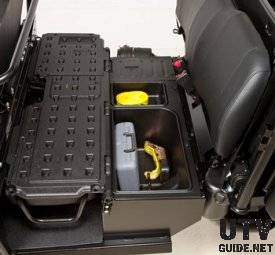
One of the 825i S4’s most useful features was its convertible rear passenger area. With the rear seat upright, the Gator could carry two additional occupants. A large storage compartment beneath the rear seat provided protected space for tools, recovery equipment and smaller supplies.
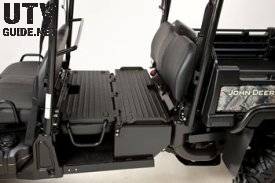
When additional cargo space was more important than passenger capacity, the rear seat could be folded down to create a flat platform with integrated tie-down points. Contemporary product information rated this convertible platform to carry up to 400 pounds.


This arrangement gave the 825i S4 more flexibility than a conventional crew UTV with a permanently fixed rear bench. Owners could configure the machine for passengers, protected storage or additional cargo depending on the job.
812cc Three-Cylinder Engine
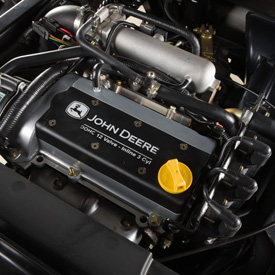
The Gator 825i S4 used an 812cc, liquid-cooled inline three-cylinder gasoline engine with electronic fuel injection, dual overhead camshafts and four valves per cylinder. In its original configuration, the engine produced 50 horsepower and a claimed 47 lb-ft of torque.
Power was delivered through a continuously variable transmission with High, Low, Neutral, Reverse and Park. Low range was particularly important when towing, carrying heavy loads or traveling slowly across steep and difficult terrain.
John Deere listed a top speed of approximately 44 mph. That was considerably faster than Deere’s traditional work-focused Gators and allowed the 825i S4 to cover large properties efficiently while still delivering useful recreational performance.

Four-Wheel Drive and Independent Suspension
The 825i S4 was equipped with selectable four-wheel drive, a limited-slip front differential and a switch-operated locking rear differential. Operators could leave the rear differential unlocked when driving across lawns or other delicate surfaces, then lock it when additional traction was needed.
Fully independent dual A-arm suspension provided approximately 8 inches of travel at the front and 9 inches at the rear. Ground clearance reached approximately 11 inches.
Power steering was standard on the original S4 and included an anti-kickback function. That was especially valuable on a long, relatively heavy utility vehicle when maneuvering at low speeds, carrying cargo or traveling through ruts and rocky terrain.
The longer wheelbase generally provided a stable ride, but the S4 was not as maneuverable as the two-seat 825i. Buyers planning to use one primarily on narrow wooded trails should consider its overall length and turning requirements.
Cargo Box, Payload and Towing
Behind the rear seats, the 825i S4 retained John Deere’s full-size deluxe cargo box. The steel-and-composite box measured approximately 45 inches long, 52 inches wide and 12 inches deep, providing 16.4 cubic feet of cargo volume.
The box was rated to carry up to 1,000 pounds and included a truck-style tailgate, numerous integrated tie-down points and removable side panels. Removing the sides allowed the box to function as a flatbed-style platform for wider or unusually shaped materials.
A gas-assisted manual dump made unloading easier, while a power-lift system was available for owners regularly transporting dirt, gravel, firewood, manure or other dense material.
Towing capacity was rated at 1,500 pounds. As with any utility vehicle, passengers, accessories, tongue weight and cargo must be considered as part of the total vehicle load rather than treating every published capacity as simultaneously available.

John Deere Gator 825i S4 Specifications
| Engine | 812cc liquid-cooled, four-stroke inline three-cylinder |
|---|---|
| Fuel system | Electronic fuel injection |
| Valvetrain | Dual overhead camshafts; four valves per cylinder |
| Horsepower | 50 hp |
| Maximum torque | Approximately 47 lb-ft |
| Transmission | CVT with High, Low, Neutral, Reverse and Park |
| Drive system | Selectable 2WD/4WD with limited-slip front differential and locking rear differential |
| Top speed | Approximately 44 mph |
| Seating capacity | Four |
| Front suspension | Independent dual A-arm; approximately 8 inches of travel |
| Rear suspension | Independent dual A-arm; approximately 9 inches of travel |
| Ground clearance | Up to approximately 11 inches |
| Length | Approximately 154 inches |
| Width | Approximately 62 inches |
| Height with OPS | Approximately 75 inches |
| Wheelbase | Approximately 114 inches |
| Fuel capacity | Approximately 7.3 gallons |
| Cargo-box dimensions | Approximately 45 x 52 x 12 inches |
| Cargo-box volume | 16.4 cubic feet |
| Cargo-box capacity | 1,000 pounds |
| Folding rear platform capacity | Up to 400 pounds |
| Towing capacity | 1,500 pounds |
Specifications can vary by model year, configuration, tires and installed equipment. Confirm the serial number and applicable operator’s manual when evaluating an individual machine.
825i S4 vs. 825i
| Feature | Gator 825i | Gator 825i S4 |
|---|---|---|
| Seating | Two or three, depending on seat configuration | Four |
| Wheelbase | Approximately 79 inches | Approximately 114 inches |
| Overall length | Approximately 119 inches | Approximately 154 inches |
| Rear convertible platform | No | Yes |
| Cargo-box capacity | 1,000 pounds | 1,000 pounds |
| Towing capacity | 1,500 pounds | 1,500 pounds |
| Best advantage | Shorter and more maneuverable | Additional passengers and cargo flexibility |
The two-seat 825i is the better fit for tight trails and jobs that rarely require more than one passenger. The 825i S4 makes more sense when carrying a crew, family members or hunting partners is a regular part of the vehicle’s workload.
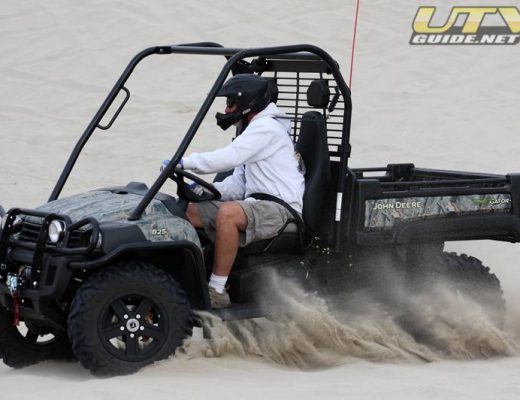
Our John Deere Gator 825i long-term review documents how the underlying platform performed while hauling firewood, rocks, fencing supplies and other materials around working property. We also tested its recreational side during a Gator 825i dune review at Sand Mountain.
What to Check When Buying a Used Gator 825i S4
Many 825i S4 models were purchased specifically for work, so condition and maintenance history are more important than appearance or hours alone. Inspect the following areas before buying:
- CVT operation: Acceleration should be smooth without excessive belt slipping, shuddering or unusual clutch noise.
- Four-wheel drive: Confirm that four-wheel drive and the rear differential lock engage correctly and that the dashboard indicators operate.
- Engine and cooling: Check for difficult starting, smoke, fluid leaks, overheating and debris packed into the radiator.
- Steering and suspension: Inspect bushings, ball joints, wheel bearings, tie rods and shocks for looseness or leakage.
- Long S4 chassis: Examine the frame, underside and suspension mounting points for damage from high-centering or overloading.
- Rear-seat mechanism: Fold and raise the seat to verify that its hinges, latches and cargo platform remain secure.
- Cargo box: Inspect the box mounts, tailgate, dump pivots and power-lift system, if equipped.
- Brakes: Test stopping performance and verify that the parking brake holds the loaded vehicle on an incline.
- Cab and accessories: Look carefully at aftermarket roofs, windshields, heaters, lights and winches for poor wiring or incomplete installation.
- Maintenance records: Documented engine-oil, filter, drivetrain-fluid and CVT-belt service adds meaningful value.
How the 825i S4 Fits Into Gator History
The 825i S4 was an important extension of the full-size Gator platform because it demonstrated that Deere could add crew seating without abandoning the cargo box and work capability that defined the 825i.
Later models evolved the same basic concept through the XUV825M S4 and other four-passenger Gators. John Deere’s newest full-size XUV 845 and XUV 875 generation places greater emphasis on three-across seating, increased towing capability, factory HVAC cabs and precision-ag technology. Four-passenger buyers can also find smaller S4 configurations in the current Mid-Size XUV family.
For the complete progression from the early AMT utility vehicles through the 825i and today’s XUV models, see our history of the John Deere Gator.
John Deere Gator 825i S4 Frequently Asked Questions
How much horsepower does the Gator 825i S4 have?
The original John Deere Gator XUV 825i S4 produces 50 horsepower from an 812cc inline three-cylinder gasoline engine.
How fast does a John Deere Gator 825i S4 go?
John Deere listed a top speed of approximately 44 mph. Actual speed depends on vehicle condition, tires, load, elevation and terrain.
How many people does the 825i S4 seat?
The Gator 825i S4 provides seating for four occupants in two rows.
Does the rear seat fold down?
Yes. The rear seat folds to create a flat cargo platform with tie-down points. Contemporary product information rated the platform for up to 400 pounds.
How much can the Gator 825i S4 tow?
The 825i S4 has a rated towing capacity of 1,500 pounds. Passenger weight, cargo, trailer tongue weight, terrain and braking conditions must also be considered.
Is the Gator 825i S4 still manufactured?
No. The XUV 825i S4 is a legacy model primarily available used. John Deere subsequently offered the similar XUV825M S4, while its current lineup includes Mid-Size S4 models and newer full-size XUV platforms.
Is a used John Deere Gator 825i S4 worth buying?
A well-maintained 825i S4 can still be a capable farm, ranch, hunting or property-maintenance vehicle. Its four seats, Low range, selectable four-wheel drive, 1,000-pound cargo box and folding rear platform remain useful. The biggest considerations are condition, maintenance history and whether its long chassis suits the buyer’s terrain.
Final Thoughts
The John Deere Gator XUV 825i S4 successfully adapted the capable 825i platform for owners who needed to transport more people. It retained the full-size cargo box, 1,500-pound towing rating and crossover performance of the two-seat model while adding a versatile rear passenger area that could be converted into additional cargo space.
Its long wheelbase makes it less maneuverable than a two-seat Gator, and newer models offer improved cabs, controls and technology. Nevertheless, a properly maintained 825i S4 remains a practical used utility vehicle for buyers who value passenger capacity and work capability more than the latest equipment.
Explore more John Deere Gator models, reviews and news on UTVGuide.net.