


By Cody Hooper
The original 2017 Can-Am Maverick X3 X rs arrived with specifications that seemed almost unbelievable for a production side-by-side: 154 turbocharged horsepower, a 72-inch stance, a 102-inch wheelbase and up to 24 inches of suspension travel. We got our first extended opportunity to drive Can-Am’s new flagship at the 2016 UTV Invasion in the Idaho dunes.
This was an early demonstration drive rather than a long-term test, but the dunes gave us enough room to evaluate the X3 X rs cockpit, turbocharged power delivery, high-speed handling and groundbreaking suspension. There were unconfirmed reports that the demonstration vehicles may have been calibrated conservatively for tour duty, so our comments reflect how the vehicle performed during this particular test.
For the complete model breakdown, prices and differences between the three original versions, see our 2017 Can-Am Maverick X3 lineup guide. Jon Crowley also attended the original Club BRP unveiling for our Maverick X3 first look.

Can-Am’s Maverick X3 demo fleet at the 2016 Idaho Dunes UTV Invasion
2017 Maverick X3 X rs Test Overview
- Test location: Idaho dunes
- Event: 2016 UTV Invasion
- Engine: 900cc turbocharged and intercooled Rotax ACE triple
- Claimed output: 154 horsepower
- Width: 72 inches
- Wheelbase: 102 inches
- Suspension travel: 22 inches front and 24 inches rear
- Tires: 30-inch Maxxis Bighorn 2.0
- Original MSRP: $26,699–$26,899
A Cockpit Unlike Other Early Sport UTVs
Slipping into the Maverick X3 immediately distinguished it from every other UTV available at the time. The cabin was relatively simple, but the low seating position, long wheelbase and generous legroom created the impression that you were sitting down inside the chassis rather than on top of it.
Taller drivers and passengers had plenty of room. Visibility over the hood was acceptable for taller occupants, although some shorter drivers wanted a higher seating position. The seat could be adjusted fore and aft and lowered vertically, but it did not provide a factory option for raising a shorter driver farther above the hood.
The seats felt snug and supportive without being uncomfortable. Pedal placement was excellent, although the reach to the steering wheel felt long for some drivers. An aftermarket steering wheel and hub could shorten that reach.
The standard three-point belts did not rub our necks, but the X3’s speed and suspension capabilities made proper multipoint restraints an obvious upgrade for aggressive driving or competition use.

The interior plastics were nicely molded, and Can-Am provided several useful storage pockets. The glove box had a reasonably large vertical opening. Passenger legroom was especially impressive because the wheel openings did not intrude heavily into the cockpit. The passenger could extend both legs and brace against the angled footrests.
The rear cargo area was essentially an open rack rather than a traditional cargo bed. It gave the sport-focused X3 a small measure of utility, and Can-Am developed LinQ accessories that could be mounted there for additional storage.
Starting and Shifting the Maverick X3
The familiar Can-Am push-button ignition returned, but the Digital Encoded Security System key attached to a ball-shaped post on the dashboard. We would have preferred a proximity-style key that could remain in the driver’s pocket.
The engine would only start with the transmission in Park or Neutral. Gear selection was straightforward, although the plastic around the shifter gates on our demonstration vehicle was already showing cosmetic wear. It did not affect operation, but it stood out on an otherwise premium machine.
Turbocharged Engine Performance
The 900cc Rotax ACE triple came to life with a mellow but muscular exhaust note. It sounded entirely different from the high-revving Yamaha triple used in the YXZ1000R.
Clutch engagement and initial power delivery were smooth and authoritative, with very little perceptible CVT lag. The engine did need a moment to build boost, but once the turbo came alive, the X3 produced a strong and sustained surge of power.
That power was delivered progressively enough to preserve traction during hard cornering. The X3 X rs would drift when provoked, but it did not step sideways unexpectedly. Its power felt substantial without being intimidating, making this a very fast vehicle that remained approachable.

The X3 X rs came with 30-inch Maxxis Bighorn 2.0 tires on beadlock wheels.
Pressing the throttle produced a swelling rush of power and a throaty sound from the single exhaust outlet. The response was not as immediate as the naturally aspirated Yamaha YXZ1000R, but torque arrived quickly enough to lighten the front end when needed.
22/24-Inch FOX Suspension
We spent our driving time in the X rs, which was eight inches wider than the original Maverick X3 and X3 X ds. Its long boxed front A-arms and massive rear trailing arms delivered 22 inches of front travel and 24 inches at the rear.
Large FOX Podium RC2 shocks controlled that travel. The front used 2.5-inch shocks, while the rear employed massive 3.0-inch remote-reservoir shocks with internal bypass technology. Compression and rebound adjustment gave owners the ability to tune the suspension for terrain and driving style.
Full droop showed how much wheel travel the original X3 X rs offered.
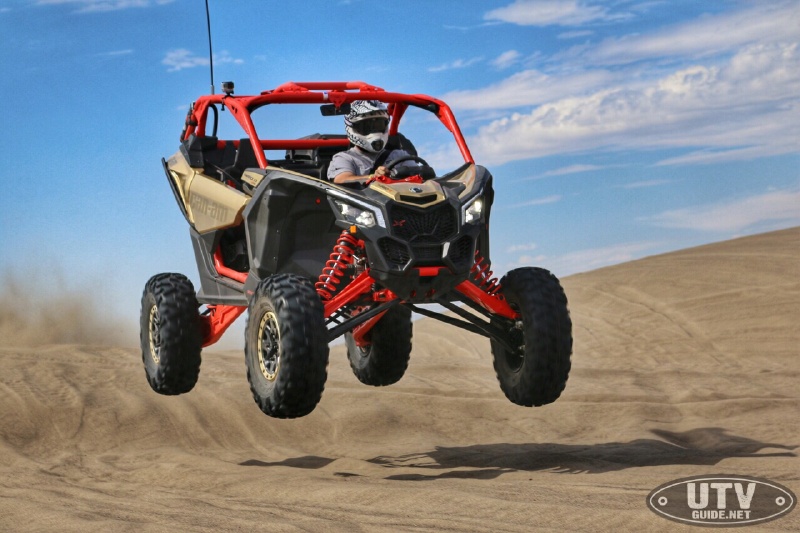
Damping was exceptionally controlled and delivered an impressive balance between ride quality and bottoming resistance. Large drop-offs and G-outs seemed to disappear beneath the vehicle. The amount of aggression the X3 allowed was startling because the chassis rarely became unsettled, even across awkward off-camber jumps and uneven dune transitions.
The X3 particularly excelled through deep whoops. It gave the driver enough confidence to stay on the throttle and concentrate on pointing the vehicle in the intended direction while the suspension managed the terrain.

The Maverick X3 X rs suspension absorbed deep whoops with remarkable control.

The X3 X rs suspension approaching full compression in the Idaho dunes
Steering and Dune Handling
The power steering isolated nearly all feedback from the front tires. Steering effort was well weighted, but drivers who prefer to feel more of the terrain through the wheel might find it overly filtered.
The 72-inch X rs was not as nimble as a smaller or narrower sport UTV. It was a physically large machine, particularly by 2016 standards. However, its handling remained neutral and predictable, with only mild understeer when entering a corner aggressively.
Applying throttle helped rotate the vehicle and brought the chassis back into balance. The smooth turbocharged torque made that technique easy to control in the sand.

The ride was not completely flawless. We noticed some high-speed chatter in heavily tracked sand, and several interior materials did not feel as premium as the engine and suspension. Those weaknesses were minor compared with the X3’s overall capability.
Our 2017 Maverick X3 X rs Verdict
The original Maverick X3 X rs marked the beginning of a new era in production UTV suspension. It offered nearly as much usable wheel travel as the original Can-Am Commander and first-generation Maverick combined, along with a stable 102-inch wheelbase and smooth turbocharged power.
Its size reduced some of the agility found in smaller sport UTVs, and the steering provided less feedback than we preferred. However, its ability to absorb whoops, G-outs and awkward dune transitions established a new production-UTV benchmark in 2016.
The X3 X rs felt close to being competition-ready with the addition of appropriate safety equipment. For a dune enthusiast looking for maximum factory suspension performance, it immediately became one of the most compelling choices on the market.
Thanks to Can-Am for providing an extended demonstration opportunity during the UTV Invasion. Our next wish was obvious: more time in the dunes with a set of paddle tires.

The 72-inch Maverick X3 X rs beside a Polaris RZR XP 1000
2017 Can-Am Maverick X3 X rs Specifications
- 900cc turbocharged and intercooled Rotax ACE three-cylinder engine
- Claimed 154 horsepower
- QRS-X continuously variable transmission
- 72 inches wide
- 132 inches long
- 102-inch wheelbase
- 22 inches of front suspension travel
- 24 inches of rear suspension travel
- FOX 2.5 Podium RC2 front shocks
- FOX 3.0 Podium RC2 rear shocks with remote reservoirs and bypass
- 14-inch aluminum beadlock wheels
- 30-inch Maxxis Bighorn 2.0 tires
- 15 inches of ground clearance
- 10.5-gallon fuel tank
- Full roof
- Heavy-duty HMW skid plate
- Triple Black original MSRP: $26,699
- Gold and Can-Am Red original MSRP: $26,899
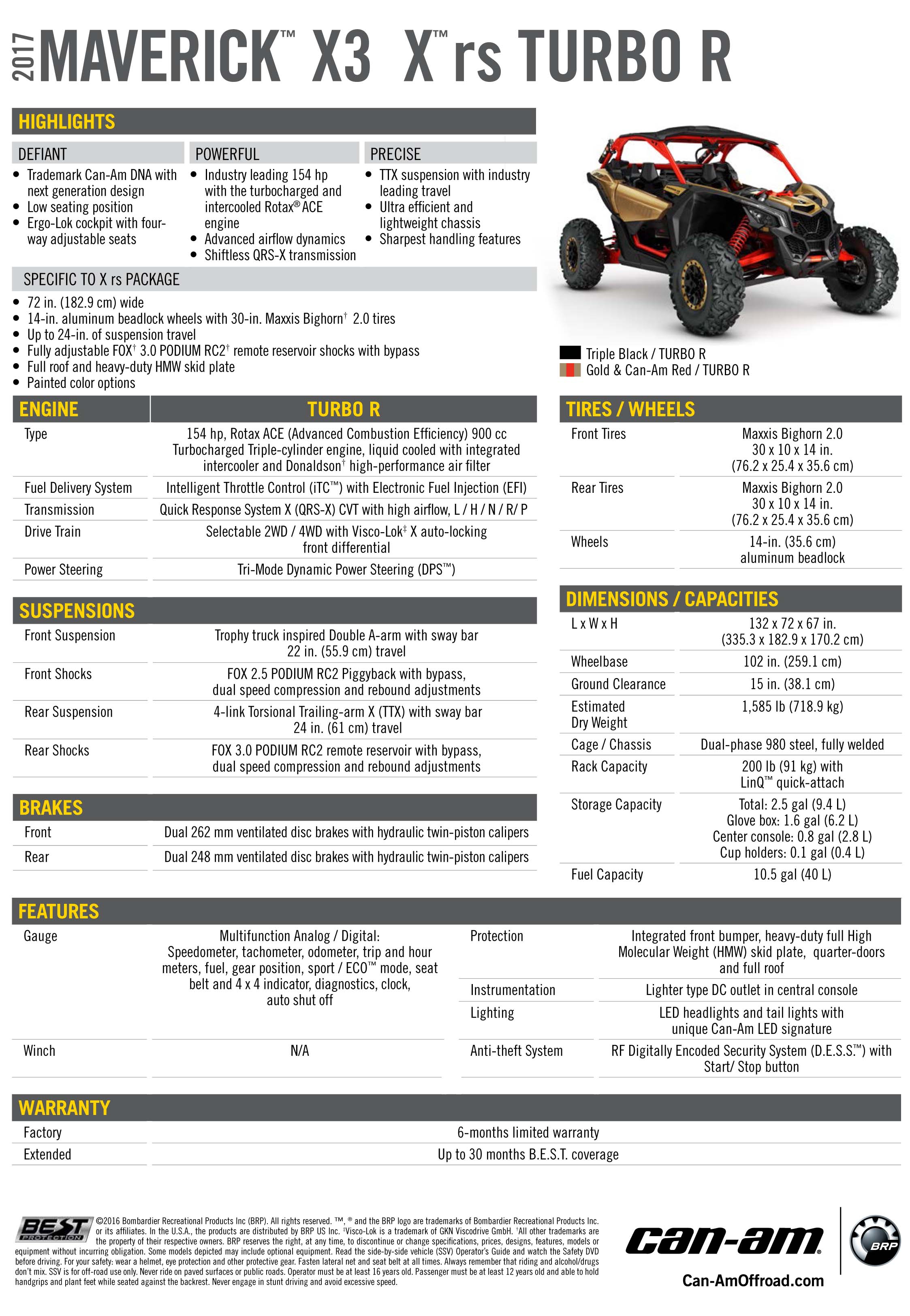
2017 Maverick X3 X rs specifications—click the image to enlarge
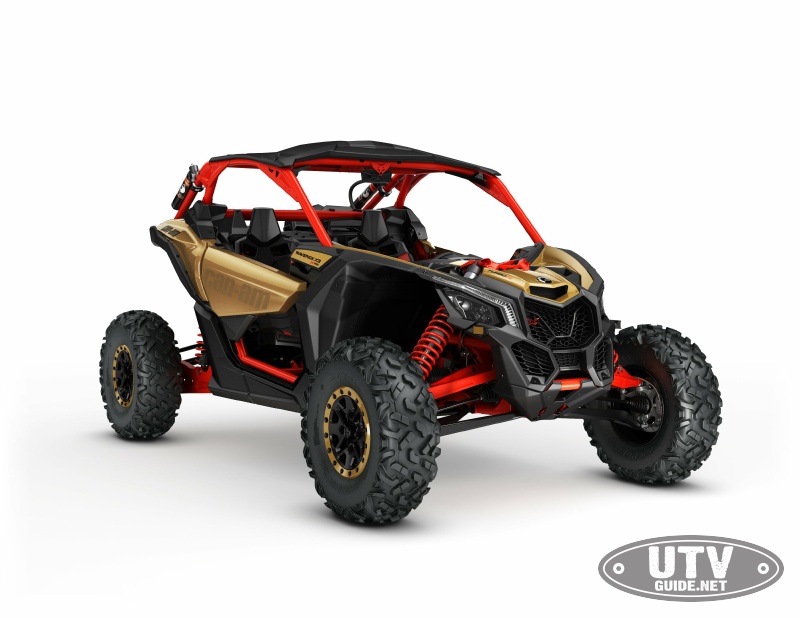
2017 Can-Am Maverick X3 X rs Turbo R

The X3 X rs included a heavy-duty HMW skid plate.
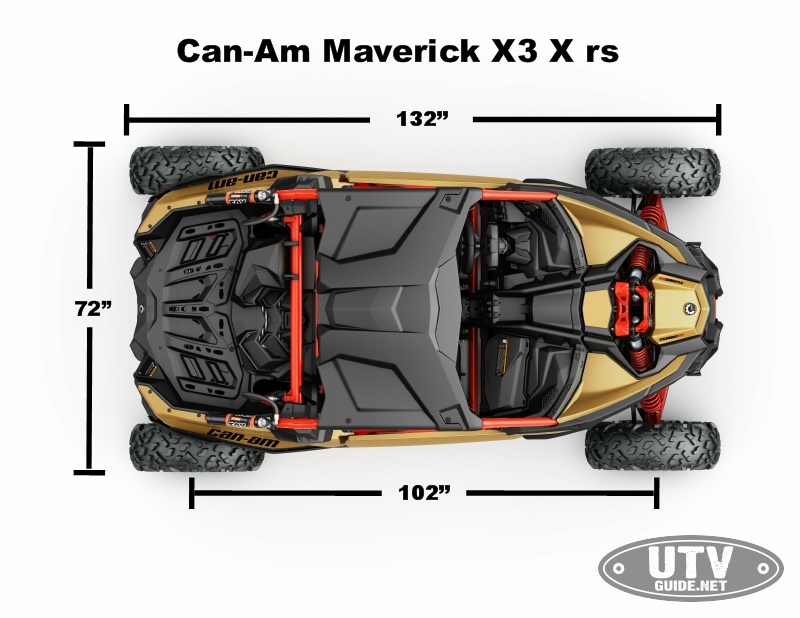
The X3 X rs measured 72 inches wide, 132 inches long and had a 102-inch wheelbase.
More Original Maverick X3 Coverage
- 2017 Can-Am Maverick X3 Models, Specifications and Prices
- 2017 Can-Am Maverick X3 First Look
- 2017 Can-Am Maverick X3 Review: 250 Miles in Baja
- 2017 Can-Am Maverick X3 X rs Specifications and Features
- First Ride in Our Can-Am Maverick X3 X ds
- Maverick X3 vs. RZR XP Turbo vs. Yamaha YXZ1000R
- 2018 Can-Am Maverick X3 Output Increased to 172 Horsepower


