
| 2013 Can-Am Maverick MAX 1000R Review
By Jon Crowley, UTVGuide.net I packed my bags and headed east with Can-Am to Albany, New York for their 2014 model year press event. One of the vehicles I tested was the all-new 2014Can-Am Maverick MAX 1000R. The MAX was first unveiled at 2012 Sand Sports Super Show and it has been a long wait to finally get behind the wheel.
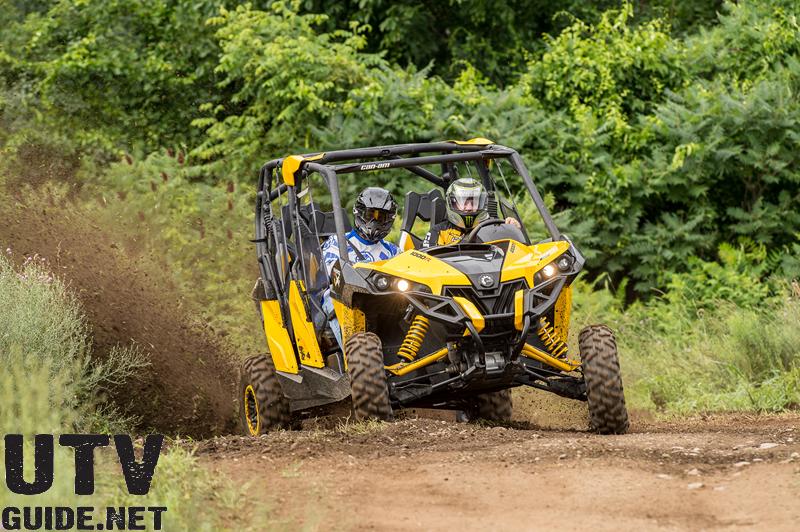
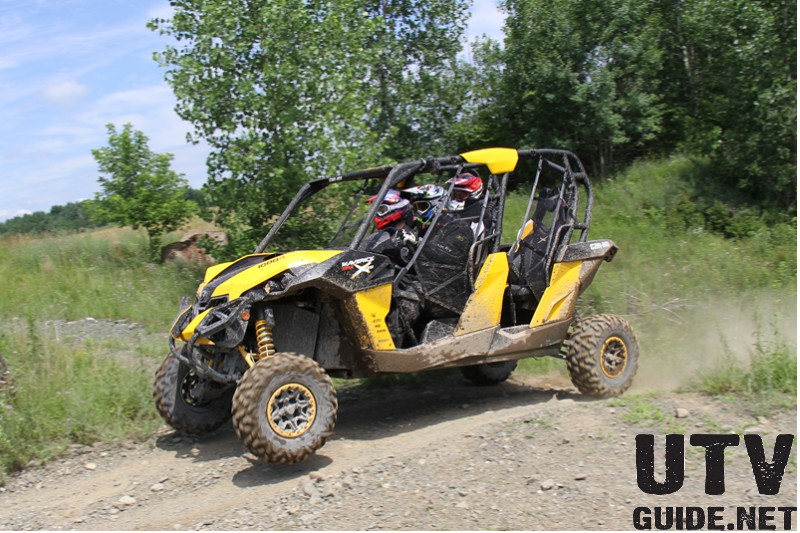
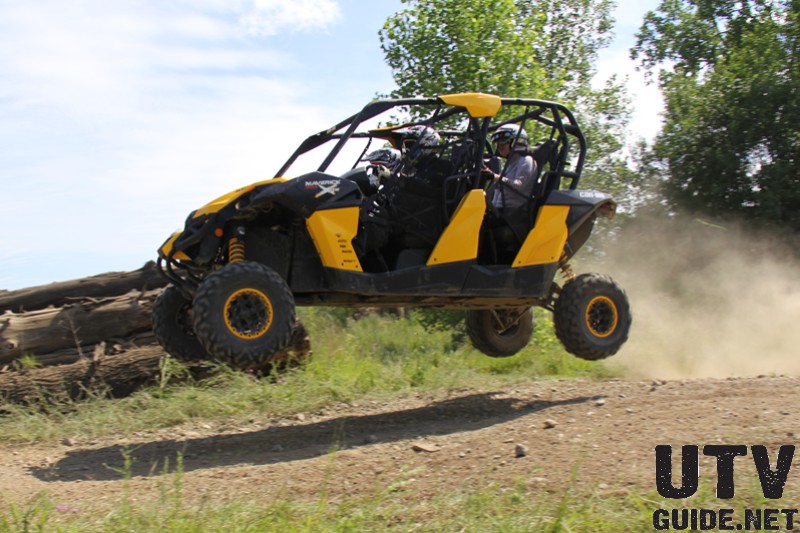
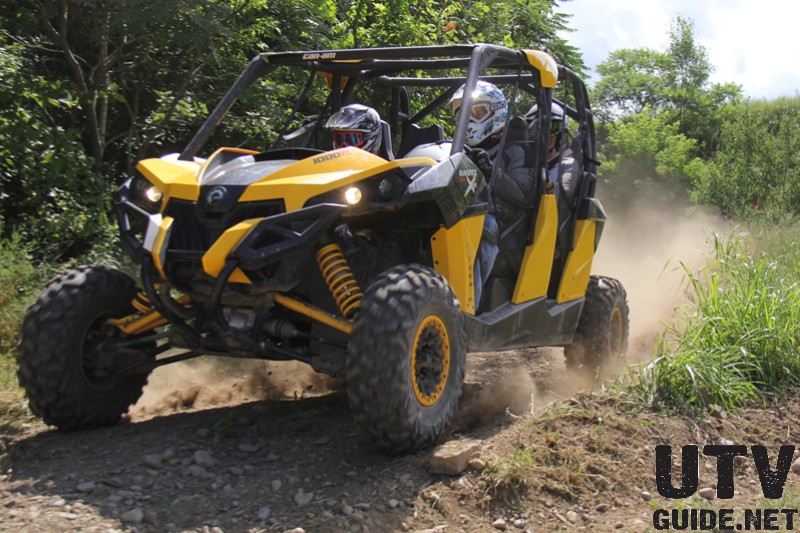
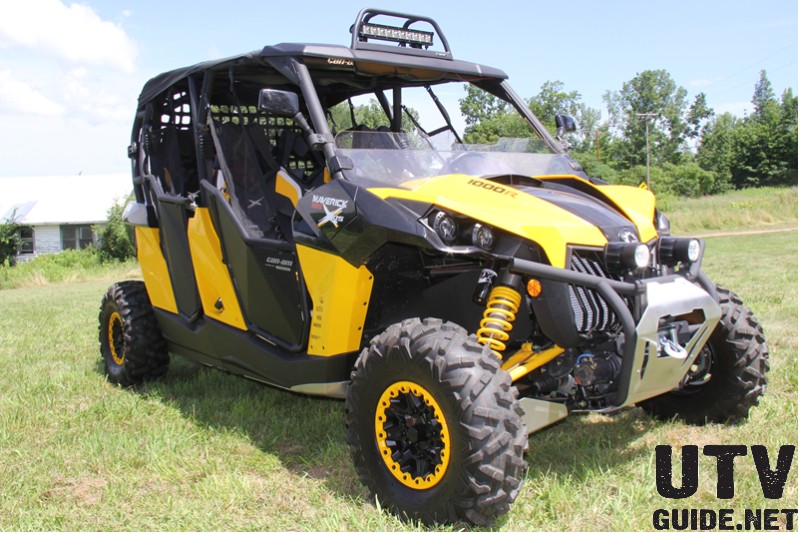
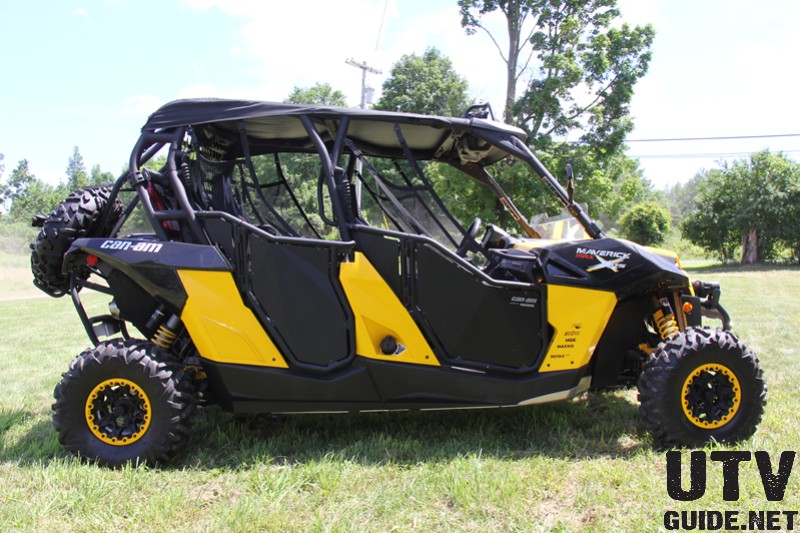
Before jumping behind the wheel, I took a good look at the new machine. The model we drove was a Maverick MAX 1000R X rs DPS. This four-seater has a few extra goodies that the base model does not including Tri-mode Dynamic Power Steering (DPS), Visco-Lok QE, FOX 2.5 Podium Performance Shocks, upgraded gauges, X-trim graphics and beadlock wheels. In my opinion, the DPS and 2.5″ FOX shocks make the X rs is the only way to go. At first glance, the Maverick MAX looks long. Really long. By specifications, it is 147.5 inches long (29.5 inches longer than the Maverick) and has a 113.8 inch wheelbase. By comparison, thePolaris RZR XP 4 has a 107.4 inch wheelbase and is 134.4 inches overall. I was a little skeptical that I would like a vehicle that was that big. Jumping into the front seat, the MAX feels just like a Maverick. One new item that was new to me was the power steering. On the dash it a switch that allows you to toggle through three different levels of steering assistance – High, Medium and Low. I am a huge fan of power steering in a UTV, and a vehicle this big really benefits from it. The Tri-mode DPS can be adjusted on the fly and the current setting appears on the gauge panel. I have a Maverick without power steering, and would like to have power steering in it so I was anxious to see how the new system worked. Right away, I could feel a huge improvement. The settings are easy to manipulate and the steering feedback was spot on. Nicely done Can-Am.
At first we had only two people in the car. Power was great and you almost forgot that you had two more seats in the rear. But when the terrain gets rough or when cornering hard, the extra wheelbase is really noticeable. It is tough to get the MAX out of shape! I was pleasantly surprised at how nimble the MAX felt. On the second day, I decided to do a little riding in the rear seat. I am 6′ 1″ and the Maverick MAX is one of the best for rear-seat comfort. The rear seats are raised 3.5 inches so it has a stadium-seating type feel to it.
Even loaded down with four people, the Maverick MAX had good power. Suspension did well, but if I were to ride much with four people, I would want a little more compression. This adjustment is not a problem with the FOX Podium shocks. The 2.5″ shocks are fully adjustable for Dual-Speed Compression (DSC) and rebound so the ride can easily be tweaked to match terrain and load. Overall, I think Can-Am’s entry into the four-seat sport UTV segment is a home run. Although I would prefer four people to be split up into two different UTVs, that is not a practical approach for many enthusiasts. If you need the ability to haul four people and want a comfortable and sporty vehicle, the Maverick MAX is worth a look. It has great ergonomics, awesome power and an aggressive style. More Maverick MAX Photos:
Maverick MAX 1000r Overview: The all-new 2014 Can-Am Maverick MAX 1000R four-seat side-by-side is purpose built to raise both the performance and comfort levels of the modern multi-passenger off-road vehicle. The MAX offers the same class-leading performance (101-horsepower), handling and ergonomic influences of the two-seat Maverick 1000R, but also benefits from industry-exclusive Can-Am design elements. With a 29.5-Inch longer wheelbase, Dynamic Passenger Comfort system and stadium-style rear seating, the 2014 Maverick MAX 1000R is engineered to accommodate multiple passengers. The Maverick MAX vehicle also has a larger hydraulic disc brake system up front compared to the standard Maverick two-seater. The Maverick MAX platform is available in both a standard model and the X rs DPS performance package, which includes Tri-Mode Dynamic Power Steering, Visco-Lok QE, FOX 2.5 Podium performance shocks, beadlock wheels, X-Team graphics, two color choices and more. The X rs DPS platform also receives the updated 3-D analog / digital gauge background package. Can-Am Maverick MAX 1000R ADDS:
29.5-inch(75 cm) Longer Wheelbase Ergonomics design for rear passengers comfort Stadium-style Rear Seats Maverick MAX 1000R X rs DPS Package Much like the base Maverick 1000R X rs DPS package, the MAX X rs DPS includes Tri-Mode Dynamic Power Steering, which features the exclusive Visco-Lok QE front differential, FOX 2.5 piggyback shocks racing-inspired graphics, lightweight 12- inch aluminum beadlock wheels, and other specialty add-ons. Available in either a black-and-yellow finish or the new white with Can-Am Red and black schematics, the Maverick MAX 1000R X rs DPS also wears the same updated 3-D analog / digital gauge package. Tri-mode Dynamic Power Steering (DPS) Calibrated specifically for use in the Maverick 1000R side-by-side family, BRPs Tri-Mode DPS system offers variable steering assistance and is designed to offer less assist at high speed and more assist at low speed. It also allows the driver to dial in his or her preference with three modes (Hi, Med, Lo). Visco-Lok QE All DPS-equipped Can-Am side-by-side vehicles include Visco-Lok QE calibration giving an even quicker engagement of the front differential. It progressively transfers power from a slipping front wheel to the gripping one automatically with no buttons to push or levers to pull. Plus, theres no wheel hop or driveline wind-up so the system is totally transparent to the driver and extremely easy to steer. Can lock up to 100 percent with no rev or speed limiter. This differential, unlike some competitors differentials, does not have a speed or rev limiter. DPS and Visco-Lok QE, when, combined, improve handling and performance in slow-speed technical terrain. Updated 3-D Analog / Digital Gauge The Maverick MAX 1000R X rs DPS has the same upgraded gauge package found on other model-year 2014 XT, X and Limited vehicles. This system includes a 3-D background for enhanced visual clarity. Featuring state-of-the-art instrumentation with an analog tachometer and speedometer combined with an advanced digital information center. Two color schemes with X-package graphics and seat trim The Can-Am X-Team-inspired black-and-yellow plastic is joined in 2014 by an all-new white with Can-Am red and black color schematic. Both colors include X-package graphics and sponsor logos to enhance the high-performance looks. FOX 2.5 Podium Performance Shocks Developed in collaboration with FOX, the high-grade FOX 2.5 Podium Performance shocks make their first appearance on a factory-built side-by-side vehicle. The re-buildable shocks sit at all four corners and are fully adjustable for Dual-Speed Compression (DSC) and rebound. The 2.5 Podium shocks offer a high-volume 6-inch piggyback oil reservoir and specially formulated oil for improved flow and heat dissipation. Proven technologies such as upper and lower spherical bearing mounts, velocity-sensitive damping control and a high-flow piston, optimize performance in varying terrain. They are designed to be extremely durable with a hard-anodized 2.5-inch aluminum body, forged aluminum piggyback body cap and a 5/8-inch hard chrome-plated, heat-treated shaft. To maintain supreme control, the FOX shocks extension velocity after compression can be fine-tuned to optimize vehicle control. 12-inch aluminum beadlock wheels The Maverick MAX 1000R X rs DPS uses same 12-inch aluminum center-less, computer-optimized wheel design as the standard Maverick, but also mates a full-function yellow beadlock (mechanical fastening device) that makes it nearly impossible for the tire to break its bead from the wheel during heavy acceleration or cornering. Custom steering wheel The three-spoke steering wheel is outfitted with molded grips and a brushed aluminum centerpiece to add to the Can-Am side-by-sides performance looks. X-package seat trim Stitched with the X Package logo and highlighted with white and yellow highlights, the seats on the Maverick look like they were taken right out of a racecar. Manufacturer Info: Can-Am, Bombardier Recreational Products Inc. |

No Comments