2018 Polaris RZR XP Turbo S Rock Crawling Review: Tested in Moab

Polaris RZR XP Turbo S

By Jon Crowley

The 72-inch-wide 2018 Polaris RZR XP Turbo S was introduced as a high-performance machine built to handle everything from fast desert terrain to deep sand and rough trails. During our first few months with the Turbo S, most of our testing focused on desert riding and sand dunes. Rally on the Rocks in Moab, Utah, gave us the opportunity to find out how well this wide, turbocharged RZR worked at low speeds on steep slickrock and technical obstacles.

Moab would also expose one of the Turbo S platform’s most significant compromises: a low-range ratio better suited to maintaining speed than carefully crawling through difficult terrain.

Our First Experience With the RZR XP Turbo S

Our initial time behind the wheel showed that the Turbo S was much more than a standard RZR XP Turbo fitted with a wider suspension. Polaris strengthened the chassis, suspension components, axles, steering and front drivetrain while giving the machine a 72-inch stance, 32-inch tires and 16 inches of ground clearance.

You can read our complete impressions in the Polaris RZR XP Turbo S first ride review.

Polaris RZR XP Turbo S First Impressions

Testing the Turbo S in Desert Terrain

Testing the Turbo S in the Sand Dunes

Preparing the RZR XP Turbo S for Moab

Before heading to Moab for the 2018 Rally on the Rocks, we made several upgrades to improve protection, recovery capability, safety and comfort. The Turbo S arrived with impressive suspension travel and large tires, but a mostly stock machine still needed more protection before tackling serious rock-crawling trails.

Factory UTV UHMW Protection

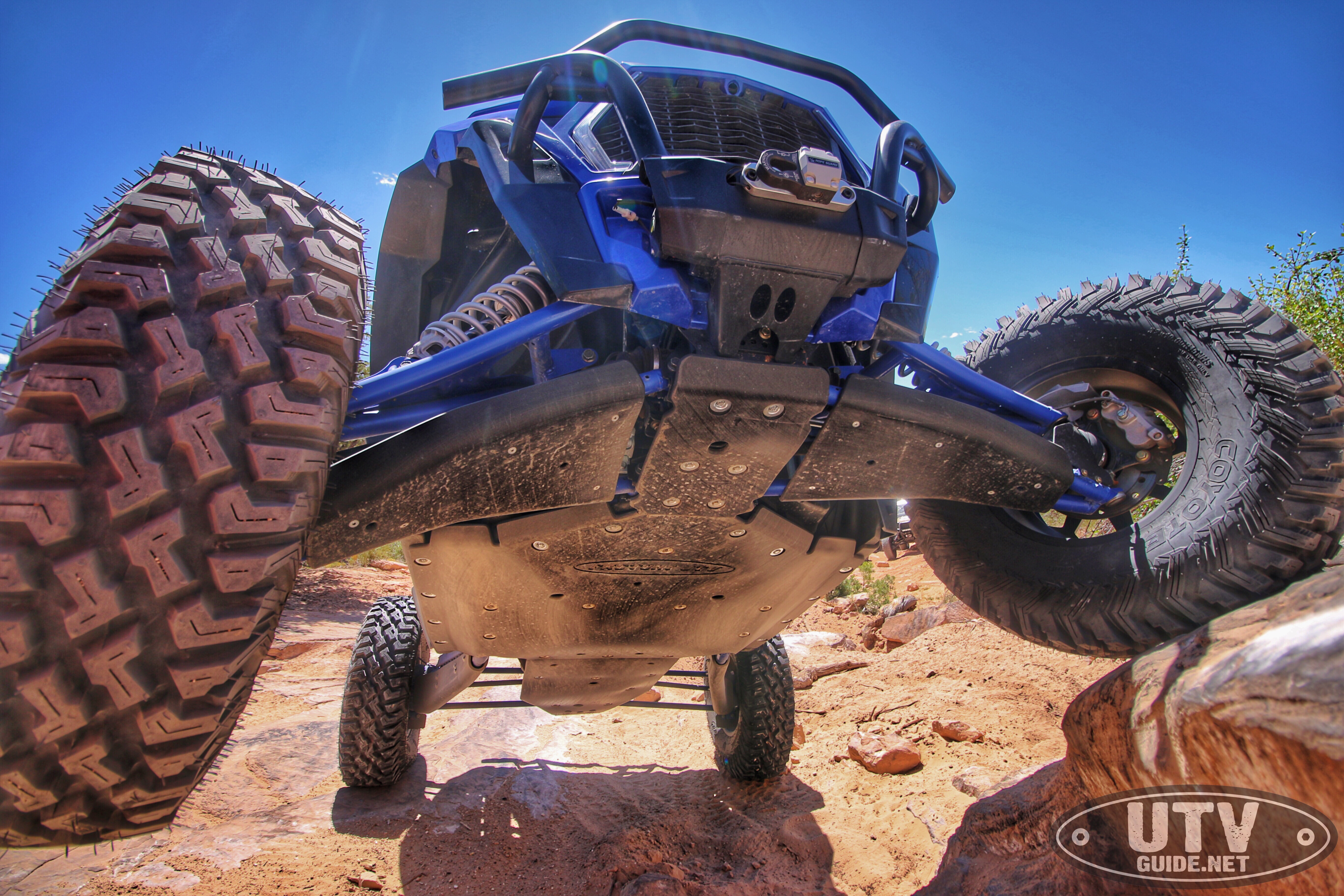
The first priority was protecting the bottom of the RZR. Although the factory skid provided basic coverage, I did not consider it sufficient for repeated contact with ledges and sharp rocks.

We installed Factory UTV UHMW skid plates along with A-arm and trailing-arm guards. Factory UTV had already been building UHMW protection for years, and its products had proven themselves on our other rock-crawling UTVs. The slick UHMW material helps the vehicle slide across rocks while providing more protection for the chassis, drivetrain and suspension components.

Winch and Recovery Equipment

We added Polaris front and rear bumpers along with a Polaris winch. A Factor 55 FlatLink completed the recovery setup and eliminated the conventional exposed winch hook.

Even when the test vehicle does not need the winch, having dependable recovery equipment is important on a group ride. It may be another vehicle on the trail that needs help.

Cage, Doors and Spare-Tire Carrier

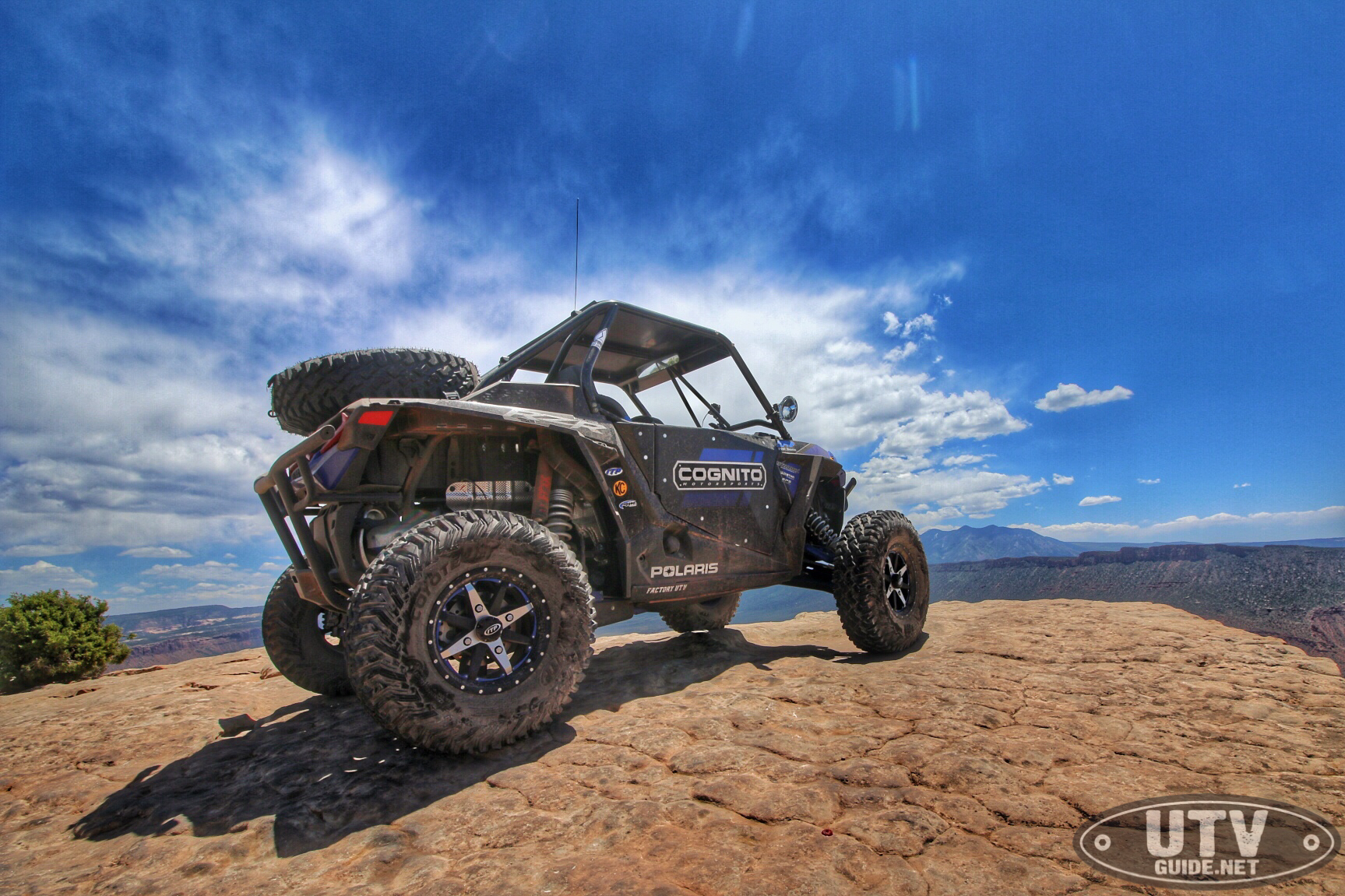
Cognito Motorsports supplied the replacement cage, doors and rear spare-tire carrier. Carrying a full-size spare was especially important in Moab, where sharp rock edges can damage a tire or wheel far from the trailhead.

The elevated tire carrier preserved usable space in the RZR’s cargo bed. That left enough room beneath the spare for tools, recovery gear and supplies.

Seats, Communications and Lighting

Inside the cockpit, we installed PRP seats and harnesses to improve support and occupant security. A Rugged Radios intercom, two-way radio and helmet-air system made it easier to communicate between occupants and with the rest of our group.

We completed the cockpit and safety upgrades with Assault Industries mirrors and a fire-extinguisher mount. KC FLEX LED lights provided additional illumination for early starts, late finishes and nighttime trail repairs.

ITP Coyote Tires and Cyclone Wheels

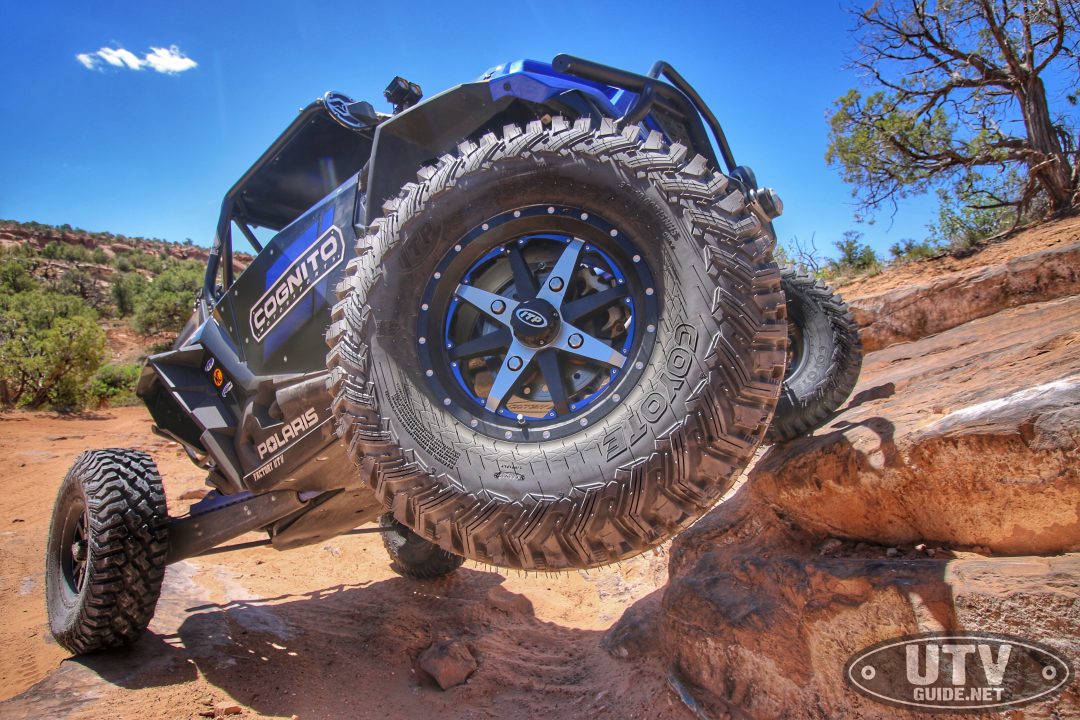
For the Moab trip, we installed a new set of 32-inch ITP Coyote tires on ITP Cyclone wheels. The Coyote’s eight-ply radial construction and predictable traction made it a good match for a machine that needed to transition between hard-packed access roads, loose rock and Moab slickrock.

Read more about the setup in our feature on the ITP Coyote tires and Cyclone wheels used at Rally on the Rocks.

How the RZR XP Turbo S Performed on Moab Slickrock

The 72-inch RZR XP Turbo S proved surprisingly capable in Moab. Its wide stance provided excellent stability on stair-step climbs and off-camber sections, while the upright seating position gave me a clear view of the terrain immediately ahead of the vehicle.

The factory 32-inch tires were another major advantage. Polaris designed the Turbo S around that tire size rather than treating larger tires as an aftermarket addition. The combination of the large tires, 16 inches of ground clearance and high-clearance front A-arms helped the RZR approach ledges without immediately contacting the front suspension or underbody.

The stronger front differential engaged without the alarming noises or harsh behavior sometimes associated with a heavily loaded front drivetrain. Traction was dependable, and the machine felt structurally solid when climbing uneven obstacles.

DYNAMIX Suspension in the Rocks

The RZR DYNAMIX active suspension was useful for more than high-speed desert riding. Comfort mode allowed the suspension to move freely over smaller rocks and uneven trail surfaces, producing a smoother low-speed ride.

Firm mode added suspension support when approaching larger ledges or situations where we wanted to preserve as much ground clearance as possible. It did not physically change the Turbo S ride height, but the additional damping helped reduce suspension compression and chassis movement while negotiating an obstacle.

The ability to switch suspension settings from the cockpit was especially convenient in Moab, where a trail can quickly transition from a relatively smooth section to a steep series of ledges.

The Biggest Limitation: Low-Range Gearing

The Turbo S performed well in the rocks, but its tall low-range gearing was the most noticeable weakness. For technical crawling, the transmission did not provide the low-speed control I wanted.

A lower ratio would allow the driver to move more slowly with less throttle, reduce reliance on the brakes and improve control when placing the tires on ledges. The gearing used in earlier Turbo models—and especially the RZR XP 1000 Rock and Trail Edition—was better suited to technical terrain.

This concern eventually led us to begin testing lower transmission gears in our RZR XP Turbo S.

What We Liked

  • Excellent visibility: The upright seating position made it easier to see obstacles and place the front tires.
  • Stable 72-inch stance: The wide suspension inspired confidence on stair steps, climbs and off-camber slickrock.
  • Factory 32-inch tire platform: The Turbo S was engineered around large tires instead of requiring immediate clearance modifications.
  • Useful DYNAMIX settings: Comfort worked well on smaller rocks, while Firm provided more chassis support around larger obstacles.
  • Strong front drivetrain: The front differential engaged smoothly and provided dependable traction.
  • RIDE COMMAND rear camera: The rear-facing camera helped when backing up or repositioning on the trail. A front camera would have been another worthwhile addition.
  • Usable cargo space: The Cognito spare-tire carrier left room for gear in the bed.

What We Would Change

  • Lower low-range gearing: The stock ratio was too tall for precise technical rock crawling.
  • More substantial underbody protection: Serious rock use called for a full UHMW skid and suspension guards.
  • High-clearance rear radius rods: Additional clearance at the rear suspension would reduce contact with rocks and ledges.

Final Verdict

The 2018 Polaris RZR XP Turbo S was designed primarily as a high-speed, wide-stance performance UTV, but our Rally on the Rocks trip showed that it could also be a highly capable rock crawler. Its stability, visibility, 32-inch tires, ground clearance and DYNAMIX suspension translated well to Moab’s sandstone terrain.

The biggest obstacle was not traction or suspension—it was gearing. A properly lowered low range would make the Turbo S easier to control and better suited to sustained technical crawling. Additional skid protection and higher-clearance rear suspension links should also be considered essential upgrades for owners who plan to spend significant time in the rocks.

Even with those limitations, I came away impressed by how confidently the Turbo S handled Moab. Its ability to run quickly through open terrain and then tackle technical slickrock demonstrated the versatility that made the 72-inch Turbo S an important model in the broader history of the Polaris RZR.


2018 Polaris RZR XP Turbo S rock crawling in Moab during Rally on the Rocks
Our 2018 Polaris RZR XP Turbo S in Moab during Rally on the Rocks.

Polaris RZR XP Turbo S climbing Moab slickrock
The RZR XP Turbo S testing its 72-inch stance and DYNAMIX suspension on Moab slickrock.

More Polaris RZR XP Turbo S Coverage