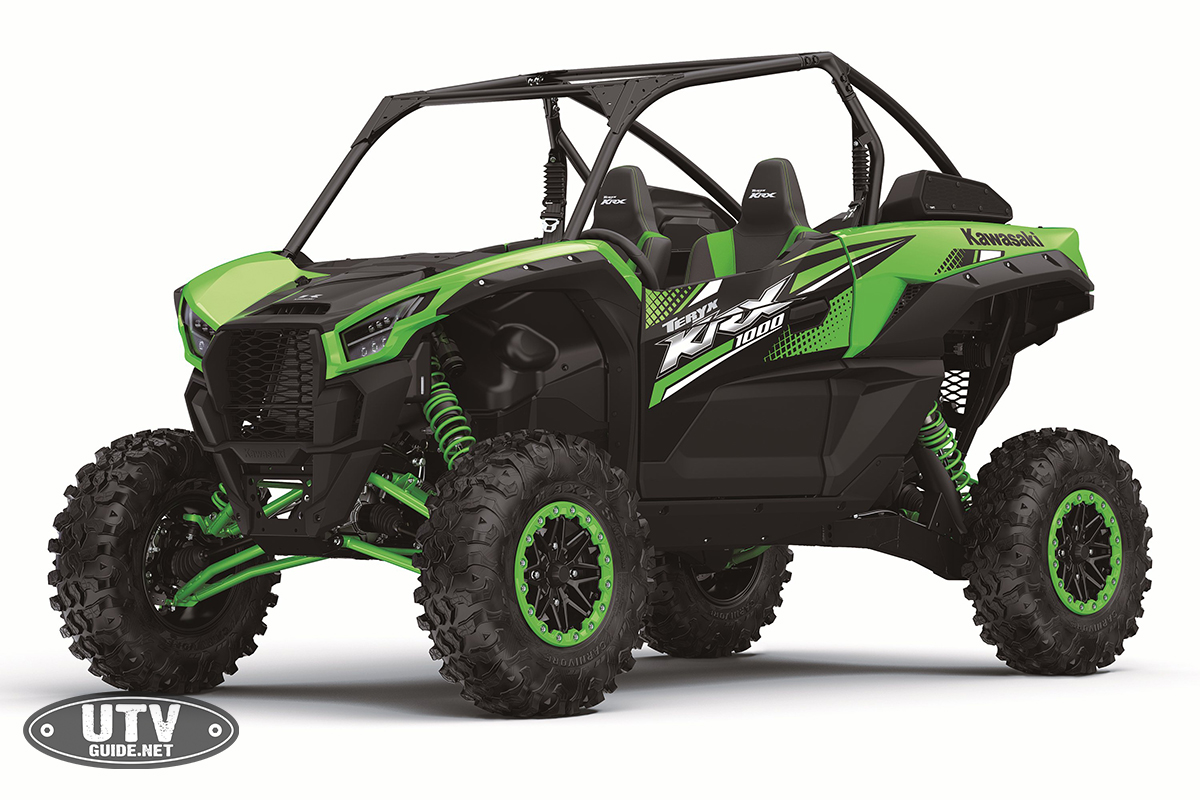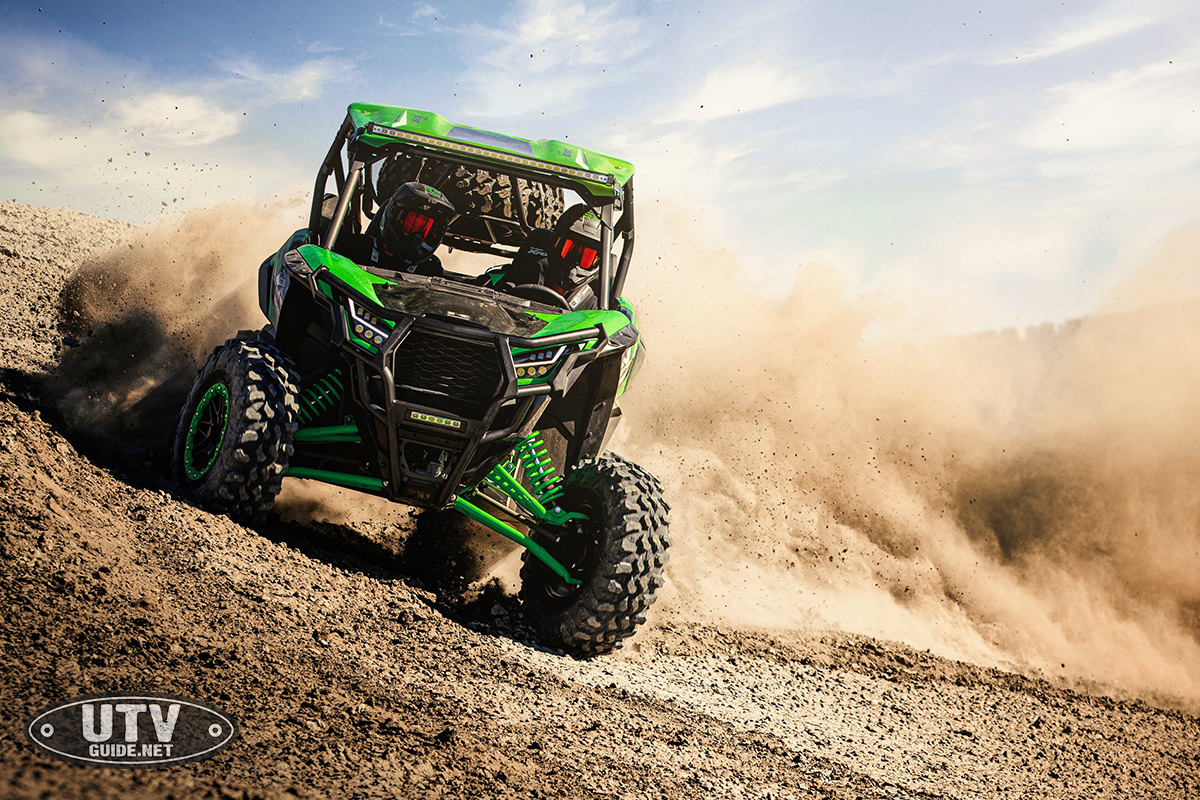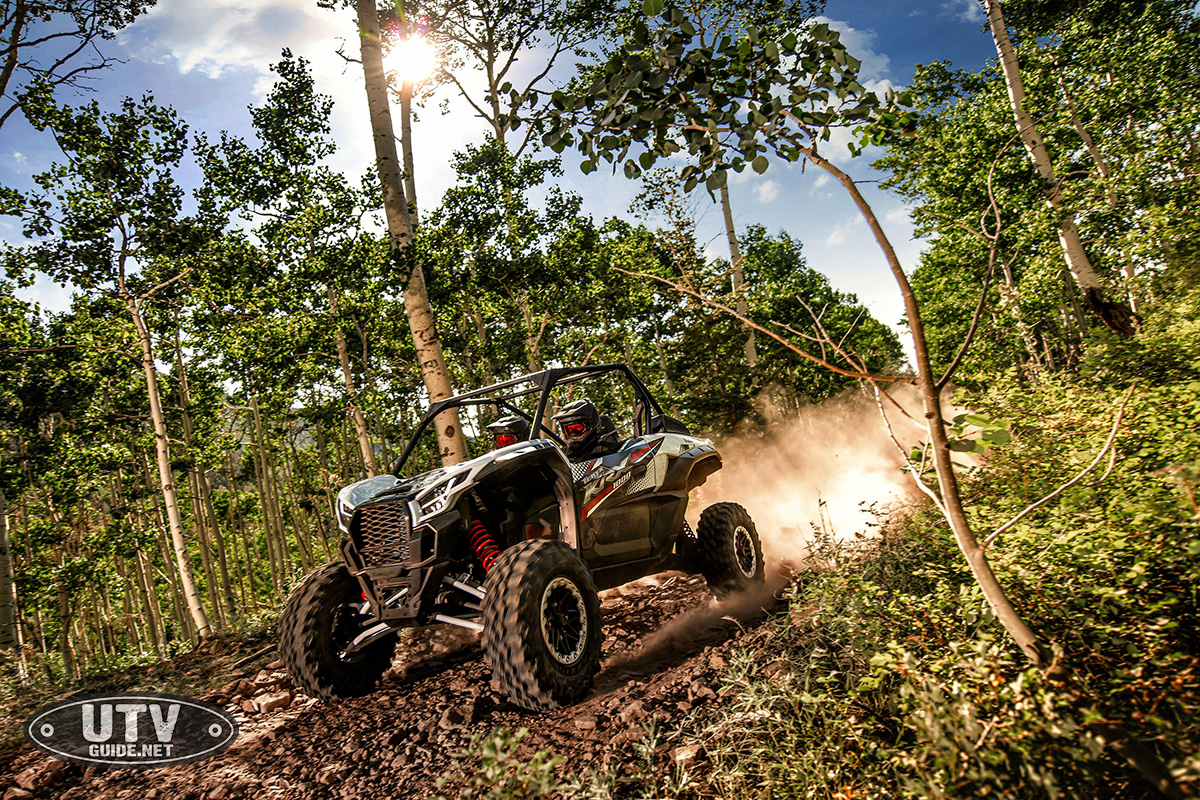
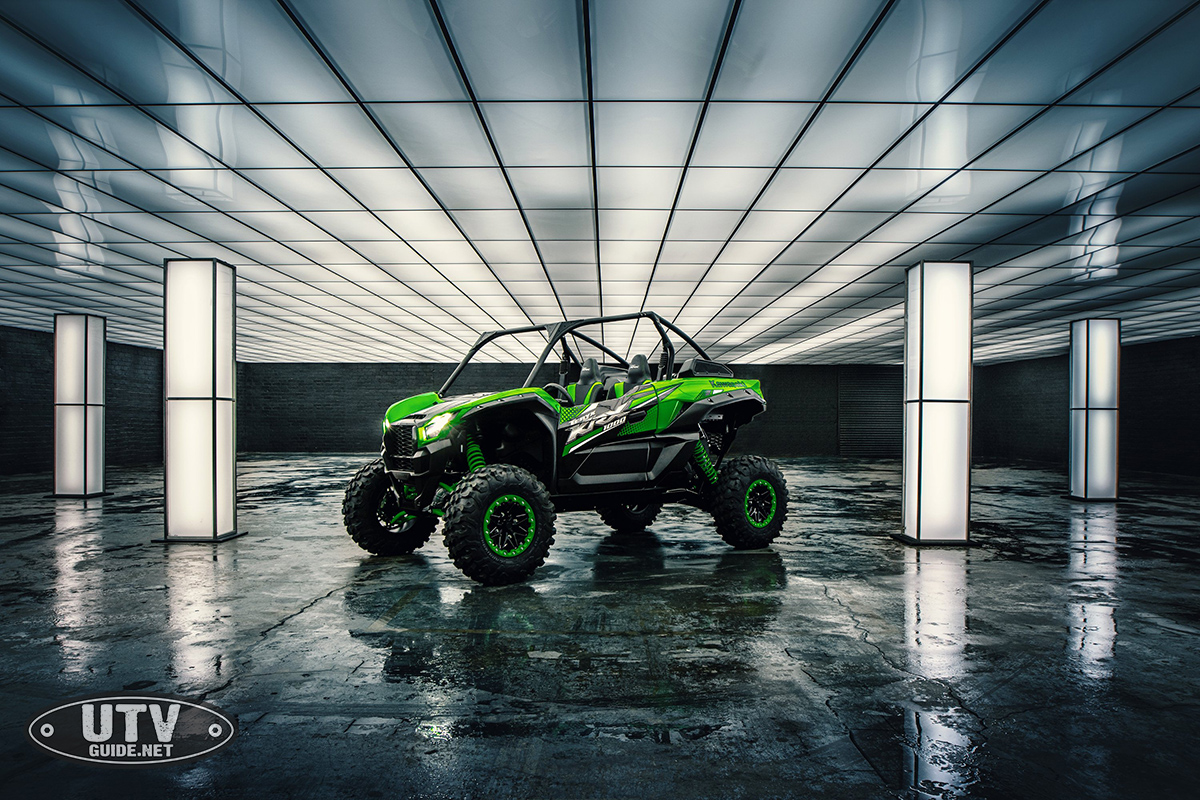
Get ready to experience adventure like never before. The Kawasaki Teryx® KRX® 1000 sport side x side is engineered for high adrenaline adventures and conquering the toughest terrain. Powered by an all-new 999 cc parallel twin engine that is paired with a CVT transmission and centrifugal clutch, the Teryx KRX 1000 has the power to tackle a whooped-out trail and the torque to conquer the most technical rock crawling section. A high-rigidity frame with integrated Roll Over Protection Structure (ROPS) positions the wheels as far apart as possible to provide a sure-footed stance, superb cornering and straight-line stability. Obstacles on the trail are soaked up by FOX 2.5 Podium LSC shock units, which combined with long suspension arms give the KRX 1000 the longest suspension travel in its class. A roomy cockpit features half doors and adjustable high-back bucket seats to deliver outstanding ride comfort no matter the terrain.
The all-new Teryx KRX 1000 side x side is engineered to provide Kawasaki’s dependable, proven performance to outmuscle anything that stands between you and an adventure of a lifetime.
Highlights of the All-New 2020 Teryx KRX 1000
- NEW 999cc liquid-cooled, parallel twin engine with selectable power modes
- NEW Highly rigid frame that incorporates the ROPS as a stressed member
- NEW 19” of front wheel travel and 21” of rear wheel travel
- NEW FOX 2.5 Podium LSC (Low Speed Compression) Shock Units
- NEW Large-volume CVT with centrifugal clutch
- NEW 31” MAXXIS Carnivore tires mounted on 15” bead-lock wheels
- NEW Large rear cargo space
- NEW Nearly 50 Kawasaki Genuine Accessories available (sold separately)
Engine
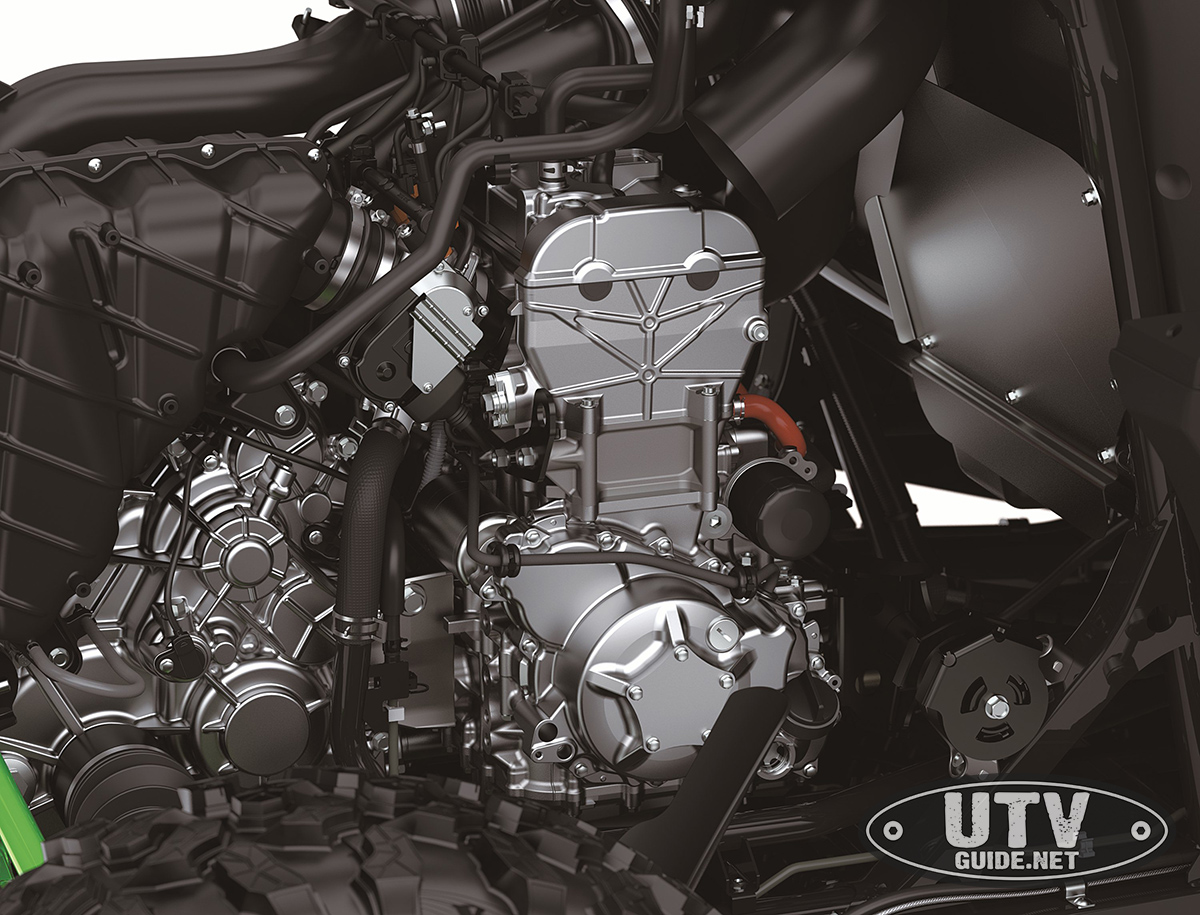
The Teryx KRX 1000 sport side x side’s compact new 999 cc, liquid-cooled, 4-stroke parallel twin engine with a bore and stroke that is set at 92.0 mm x 75.1 mm delivers both high-rpm power and robust low-end torque to accommodate a wide range of situations, from trail running to technical sections.
Dual snorkel air intakes (one for the engine; one for the CVT) are recessed behind the driver and passenger doors and help reduce dust in the intakes. Pre-filters at the intake entrances help ensure minimal dust ingestion and are complimented with a Donaldson air filter located downstream in the engine intake to offer superb dust collection performance.
A large, 20-liter intake chamber helps ensure undisturbed airflow into each of the two intake funnels, enabling a flat torque character to be achieved. The long, race-style intake funnels contribute to the robust low-end torque. The shape and length of the two funnels are different, which helps to achieve a smooth torque feeling. The carefully designed downdraft-style intake layout contributes to improved response, and overall engine height is minimized for a more compact engine.
An electronic throttle valve system enables the ECU to control the volume of both the fuel (via fuel injectors) and the air (via throttle valves) delivered to the engine. Ideal fuel injection and throttle valve position results in smooth, natural engine response and the ideal engine output. Dual 50 mm throttle bodies help flow a large volume of air for quick, crisp response, and fine-atomizing injectors contribute to efficient combustion and engine response. Long-reach spark plugs were chosen to have more contact with the cooling jacket and help to prevent engine knock.
Similar to Kawasaki’s Ninja® ZX™-10R supersport flagship motorcycle, the intake port exits are machined in two stages (first along with the valve seats, then again at an inclined angle) to create a smoother, straighter path for intake air as it enters the combustion chamber. Intake ports are polished – another tuning trick often seen on high-performance motorcycles – further contributing to increased performance. Lightweight cast pistons minimize reciprocating weight, which contributes to high-rpm performance and a low-friction molybdenum coating on the skirts, helping reduce mechanical loss.
Exhaust ports feature D-shaped cross-sections that efficiently expel spent gases for increased performance. Like the intake ports, the exhaust ports are polished to help increase performance. Hydroformed header pipes transition from D-shaped cross-sections, matching the exhaust ports, to circular. Downstream, their diameter increases before joining at the collector and entering the silencer – a design that contributes to both power feeling and quick engine response. A patent pending, innovative balancer weight layout and compact oil pan contribute to the compact engine design. Baffle plates in the oil pan help to ensure that the oil pump is fed with oil even at extreme angles of roll. A large-capacity radiator is ideally situated at the front behind the prominent grill, where it can easily get cooling air, and is positioned so that it is protected by both the grill and the frame.
CVT with Centrifugal Clutch:
Complementing the high-torque response of the powerful 999 cc, liquid-cooled parallel twin engine, the CVT and centrifugal clutch are key to superior acceleration control at very slow speeds. The centrifugal clutch is located between the crankshaft and CVT drive pulley. This position allows it to eliminate the shock of the CVT belt engaging, which facilitates smooth departures from a stop. By eliminating the shock of the CVT belt engaging, the centrifugal clutch facilitates precise throttle control when navigating rock gardens or other tricky terrain and helps to reduce stress to the high-grade CVT belt. The CVT and transmission ratios were selected to offer optimum ride feel while ensuring stable engine braking characteristics. The engine braking offers reassuring support when descending steep inclines.
The Teryx KRX 1000 side x side uses a large-volume CVT, centrifugal clutch, and high-quality belt to cope with the great power and high-rpm operation of the parallel twin engine, contributing to great durability and long life. The three-position transmission (High, Low, and Reverse) enables the KRX 1000 to take on open range as well as tackle tricky technical courses.
On-the-fly electrically selectable 4WD & front differential lock
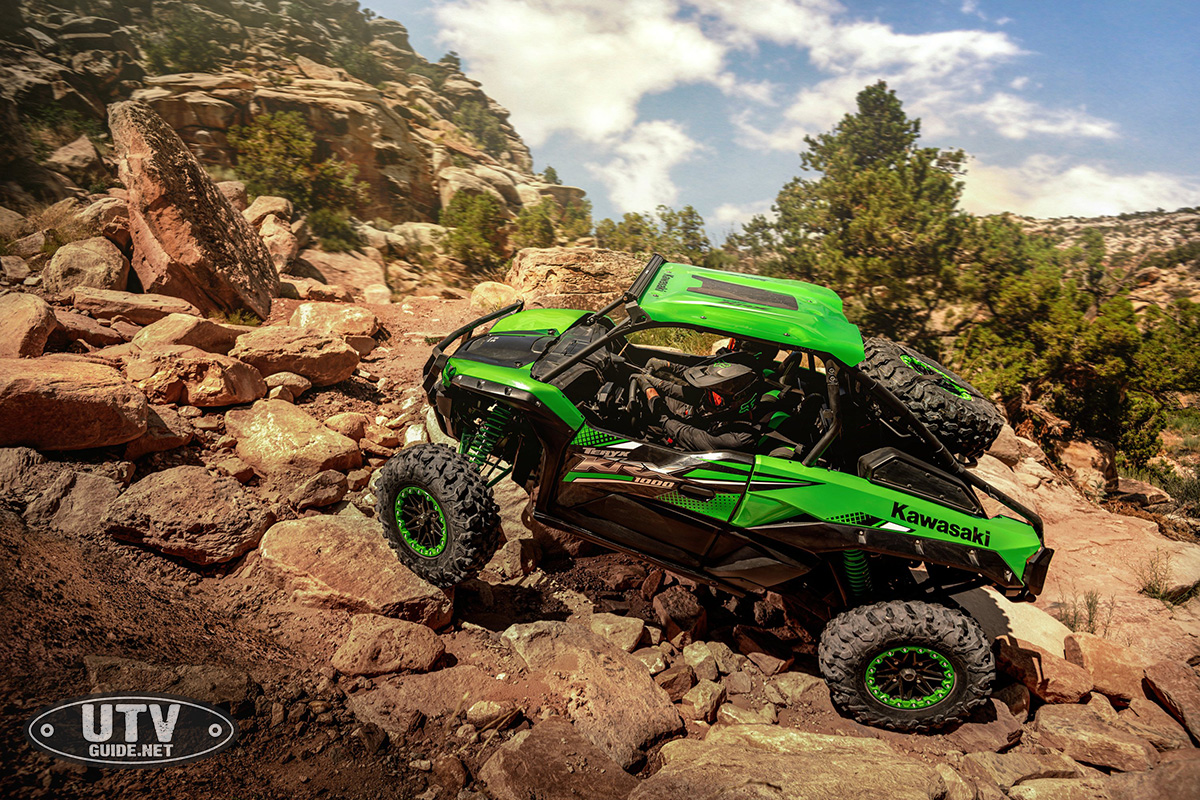
Electronically selectable 4WD and front differential lock allows drivers to quickly and easily switch between drive systems to suit changing terrain and applications while on the go. When a new driving mode is selected, the system engages instantly and smoothly, allowing the driver to control when 4WD or the front differential lock is activated. Locking the front differential causes the front wheels to act as a single axle, preventing wheels from free spinning in low traction situations and providing increased traction when riding over challenging terrain.
Power Mode selection
Two power modes allow drivers to set power delivery to suit preference and conditions. Full Power mode delivers a quick and powerful response from the engine, while a milder throttle response is offered by Low Power mode, ideal for low-speed control when crawling over extreme terrain.
Chassis
The Teryx KRX 1000 side x side features a highly rigid frame with integrated ROPS that was designed using Kawasaki’s advanced dynamic rigidity analysis, and incorporates the ROPS as a stressed member. The energy-absorbing ROPS design helps disperse stress, contributing to durability. The ROPS pillars feature a patent pending arched construction to help disperse stress. The sturdy frame construction was designed using advanced dynamic rigidity analysis to ensure minimum weight with maximum strength. The detailed analysis used during frame development results in an optimized frame design that uses minimal gussets with thicker walls reinforcing the frame at the engine and suspension mounts and other points of high, concentrated stress.
Engineers placed the B-pillars along the same line as the rear shocks, allowing them to effectively counter the forces exerted by the shocks on the frame.
The wheels are positioned as far apart as possible to contribute to the KRX 1000’s overall stance. The 99-inch wheelbase, combined with the long wheel travel, contributes to performance and ride comfort, while its wide 59 inch track helps the vehicle maintain its line when cornering.
The wheels at all four corners extend beyond the bodywork so the tires are the first part of the machine to encounter obstacles on the trail and allow for approach and departure angles of 90 degrees. A large wheel caster of 10 degrees was chosen to contribute to straight-line stability.
The Kawasaki Teryx KRX 1000 side x side’s rear-engine design results in a 46/54 weight bias, and the low body positioning of the fuel tank, and its evenly spaced positioning between the front and rear minimizes the effect of fuel weight on the front-rear weight balance.
The angled shape of the underbody, similar to the hull of a boat, complements the already more than 14 inches of ground clearance. The undercarriage is covered with a combination of plastic and steel skid plates with more than 80% of the protection composed of steel pieces. Additional steel plates behind the front fenders offer further protection to the vehicle from rocks and other flying debris.
Class-leading long travel suspension
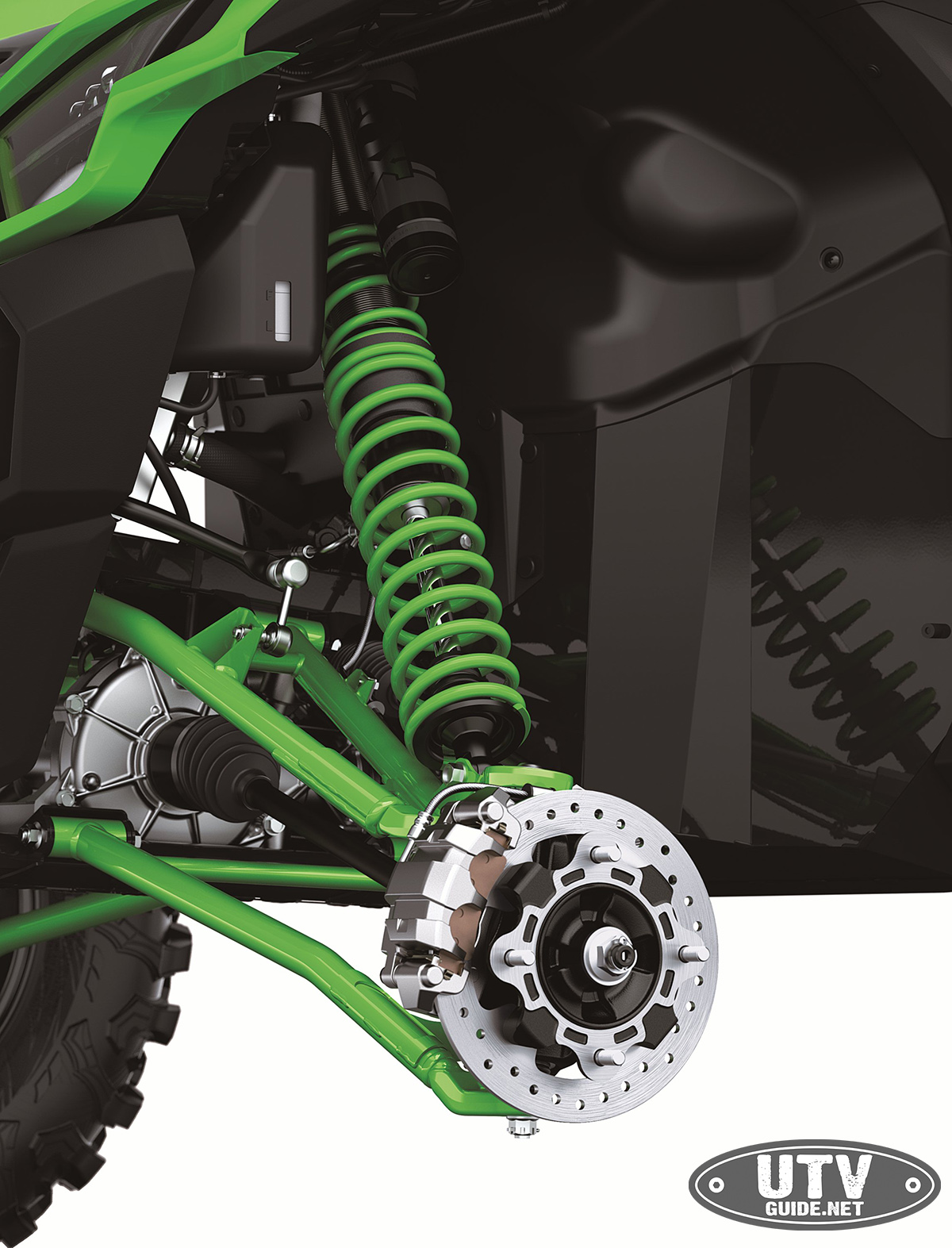
Long suspension arms and massive FOX 2.5 PODIUM LSC shock units easily soak up obstacles encountered on the trail. Long-wheel travel combined with independent suspension action translates to a superior articulation that helps the Teryx KRX 1000 handle technical terrain. The suspension system’s ability to keep all four wheels in contact with the ground keeps the Teryx KRX 1000 moving forward.
Double wishbone front suspension offers 19 inches of travel, while at the rear, 4-link trailing-arm suspension delivers 21 inches of travel. This rear suspension design also minimizes change to the toe-in over the suspension stroke, which helps with straight-line stability as well as contributing to stability during high-speed cornering. Steel suspension knuckles have been incorporated to contribute to the Teryx KRX 1000 side x side’s durability. In addition to off-road capability, the ability of the suspension to soak up bumps with minimal disturbance to the cabin contributes to ride comfort.
The Teryx KRX 1000 features high-performance, single-chamber gas-charged FOX 2.5 PODIUM LSC shocks, which offer excellent fade-resistant damping performance, even in hard conditions. The shocks offer adjustable preload and 24-way compression damping to enable precise setting adjustments. The shocks paired with dual-rate coil-over springs utilize the lower spring rate to help the suspension to soak up minor bumps while the higher-rate spring provides stability during cornering. Both front and rear shocks feature piggyback reservoirs for extra oil volume, helping the shocks run cooler and enabling more stable damping performance under hard conditions. The rear shocks also feature stainless sleeves, offering improved wear resistance for the damper bodies.
Large-diameter hydraulic disc brakes
The Teryx KRX 1000 features large-diameter disc brakes to deliver superb braking force. Four large, 10-inch stainless steel rotors with a thickness of 5.8 mm are stopped by twin-piston calipers with 32 mm pistons gripping the front discs, while single-piston calipers with 38 mm pistons slow the rear. As the driver pushes the brake pedal, the front brakes engage first, followed by the rear brakes. This offers a very natural, linear brake feel that facilitates precision brake force control. Scrapers were added on the inside of the rear brake discs to help remove mud and pulling the parking brake lever activates the rear brakes.
31” tires with 15” bead-lock wheels
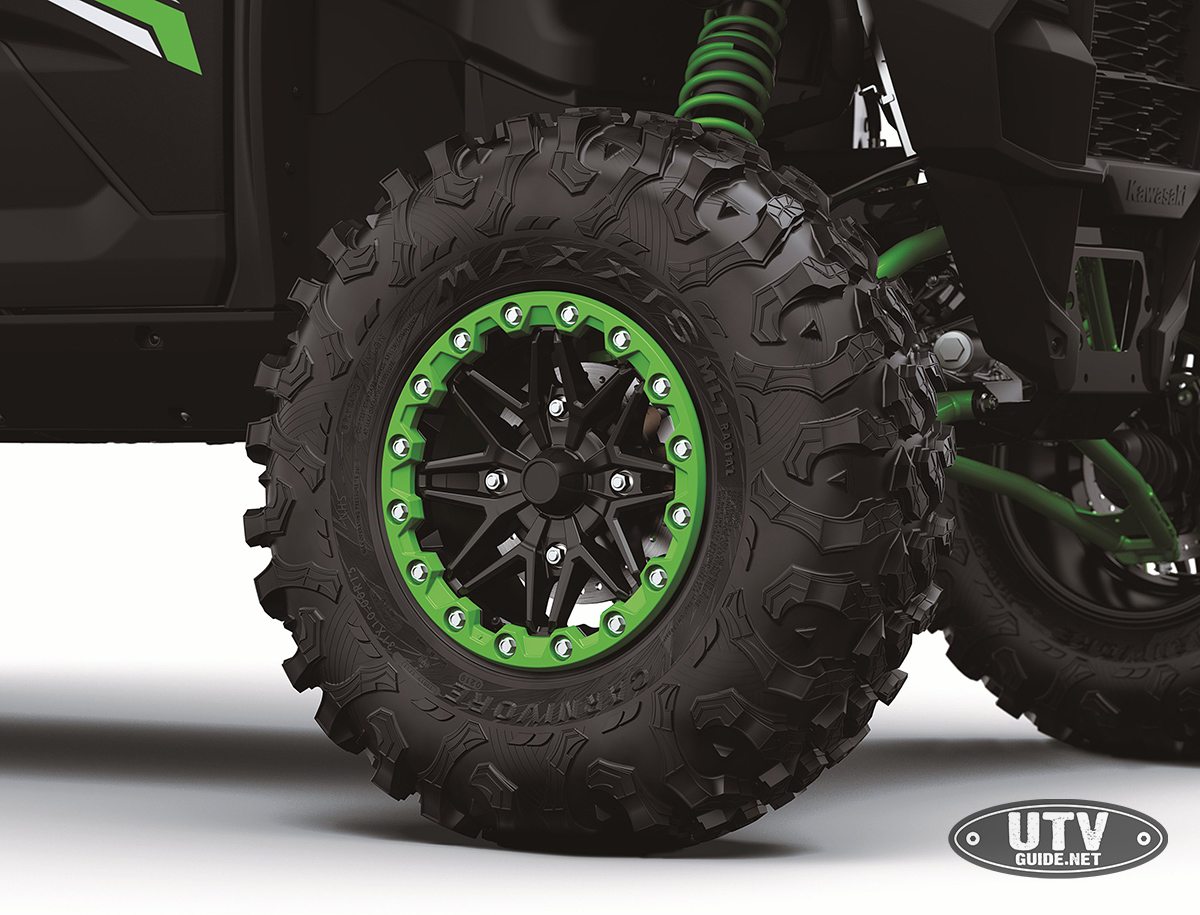
The Teryx KRX 1000 side x side is equipped with class-leading, large-diameter tires and bead-lock wheels. The 31-inch MAXXIS Carnivore tires were chosen to ride over small obstacles with greater ease than their smaller-diameter counterparts, and help maintain its forward momentum. The tires’ off-road pattern offers enhanced grip for climbing over rocks in rock crawls, and their 8-ply construction offers excellent puncture resistance. The 15-inch aluminium wheels feature bead-lock rims designed to hold the tire beads in place in off-road riding situations. Large M10 bolts are reinforced with inserts in the female thread for extra holding power.
Electric power steering
Kawasaki’s high-grade electric power steering (EPS) system is designed to work best when you need it most: at extremely slow speed and when stopped. Turning the wheel causes a signal to be sent to the EPS ECU, initiating assistance. The ECU uses input from a vehicle speed sensor and torque sensor to determine the amount of steering assistance required from the system’s electric motor. At slow speed or when stopped, assistance is greatest; assistance is reduced as vehicle speed increases to ensure responsive steering.
The EPS system also enhances ride comfort and control by acting as a damping system. The inertia of the electric motor significantly reduces kickback to the steering wheel caused by shocks to the wheels when hitting small bumps or chop on the trail. The EPS system features two separate electronic maps (one for 2WD, one for 4WD) help to maintain a more consistent steering feel, regardless of the mode selected.
Tilt steering
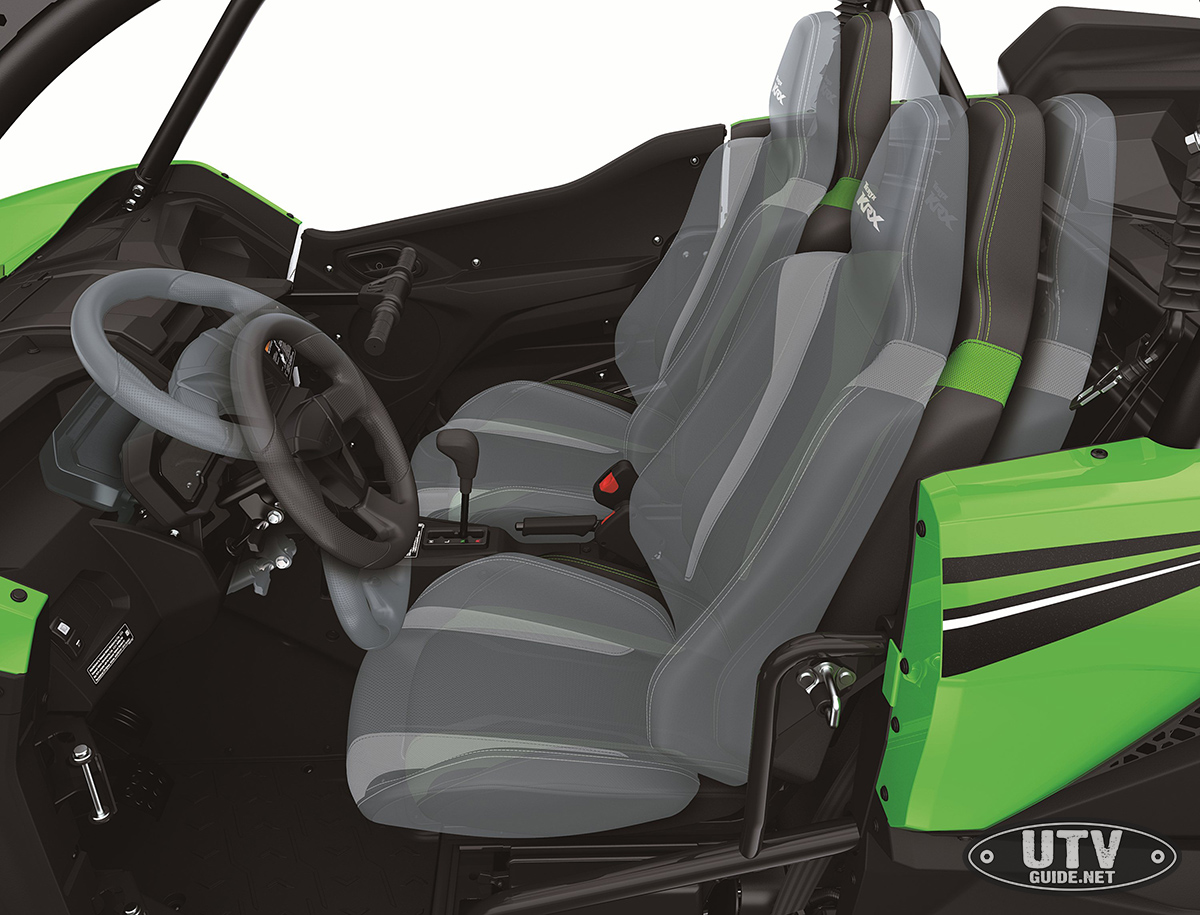
The steering wheel has a stepless range of adjustability, allowing drivers to set its position to suit their preference, as well as lift it out of the way to facilitate getting in and out of the vehicle. The steering wheel’s solid core also adds a feeling of rigidity ideal for sporty riding.
Roomy interior
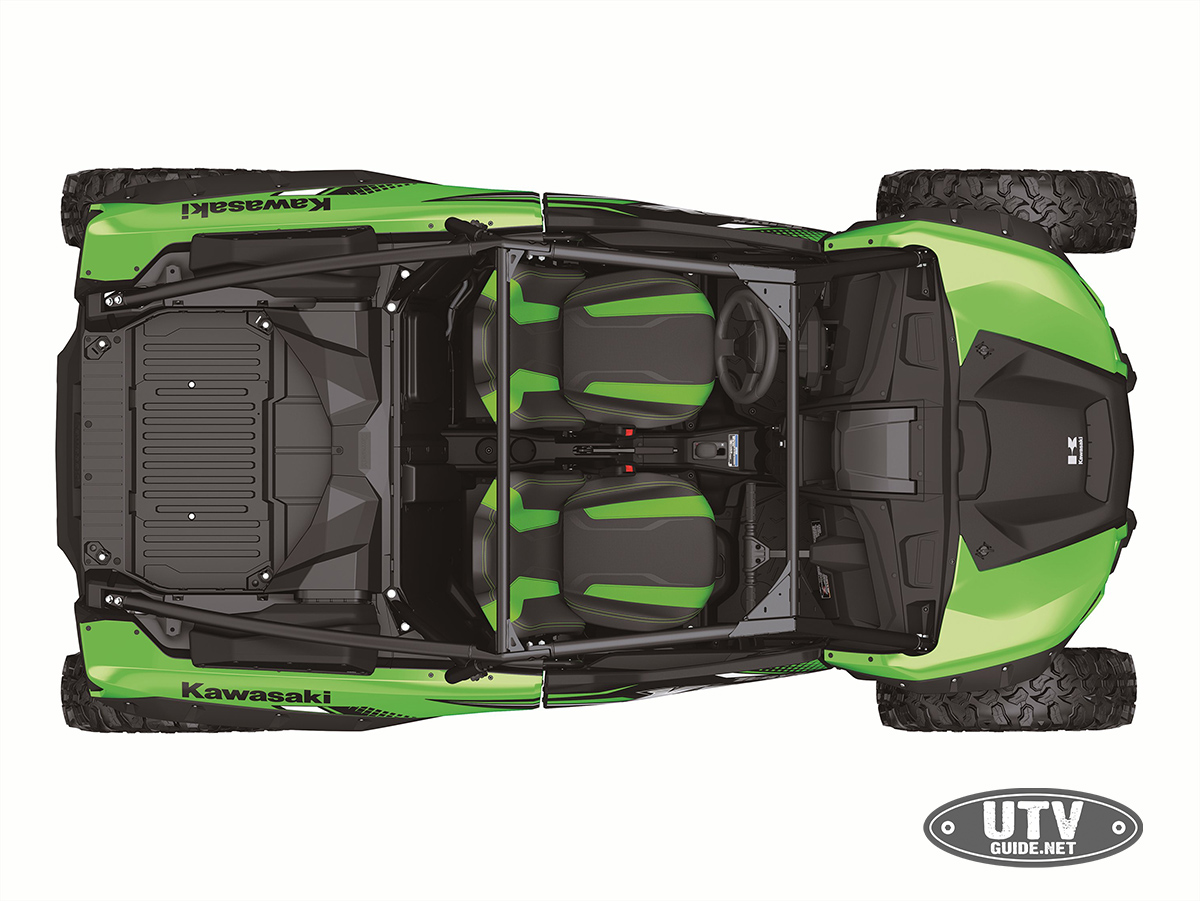
The driving position was optimized for off-road riding and the roomy cabin greatly contributes to ride comfort. High-backed, form-fitting bucket seats and three-point seatbelts support the driver and passenger and provide comfortable seating. Ample legroom and lever-adjustable seats allow the driver to fine-tune their position for control and comfort. The KRX 1000’s long wheelbase affords plenty of space for a roomy cabin. Further, its rear-mounted-engine design locates the engine away from the cabin, meaning less engine heat and noise, which translates to increased comfort.
Six-point seatbelts are available as Kawasaki Genuine Accessories. The seats’ ergonomic shape was designed to cradle the passenger, providing both support and comfort. The angle of the backrest was optimized for ride comfort. The backrest’s sculpted shape offers support from the shoulders to the sides, the wide contact patch making it easy to relax and sink comfortably into the seat. The long, wide bottom cushion offers greater leg and hip support, further contributing to comfort especially when sitting for a long time. The seats use different urethane cushioning for the bottom and back. Bottom urethane is firm to offer proper support and long-term comfort; back urethane is softer. The slip-resistant seat material has superb elasticity, offering increased comfort and support regardless of weather conditions. Both seats are lever-adjustable, with a superior total forward-rearward range of six inches, adjustable in one-half inch increments.
The Teryx KRX 1000 side x side features standard half doors which open wide. The doors are higher at the shoulder, to offer protection from mud as well as increase ride comfort with armrests built into the doors for both the driver and passenger. Controls on both sides of the doors mean they can be opened from both inside and outside the vehicle.
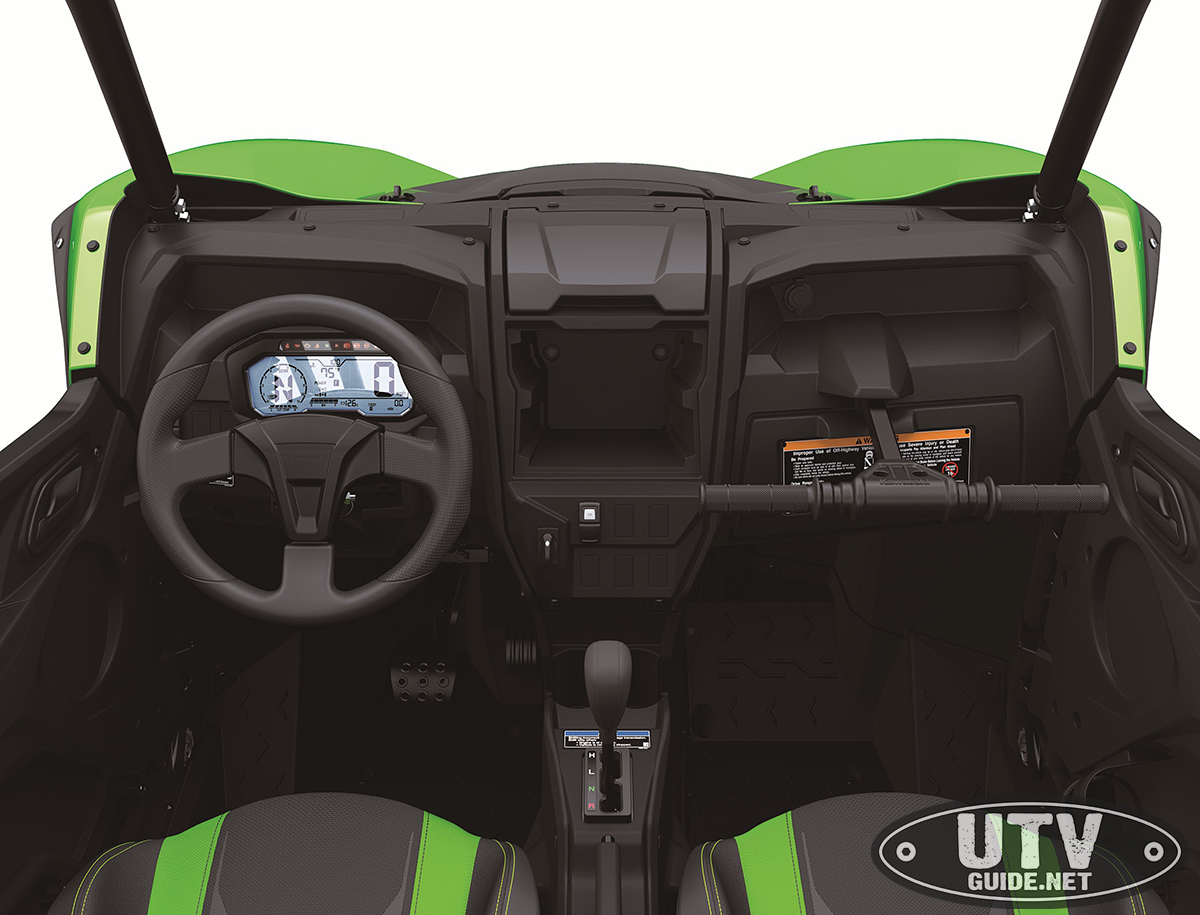
All controls are positioned within easy reach of the driver Shifting is comfortable and easy with the gate-style shift lever located in the center console. There is a wide and adjustable T-handle grip for the passenger with the handle adjustment located inside the glove box to keep out dirt and debris while not in use. There is ample storage in the cockpit including a water-resistant storage container located above the center console, an easy-access pocket in the center console, passenger-side glove box and five cup-holders (four in the center console and one in the passenger door). A DC socket integrated into the dashboard provides a power supply (up to 120 W) for accessory items or personal devices
Digital instrumentation
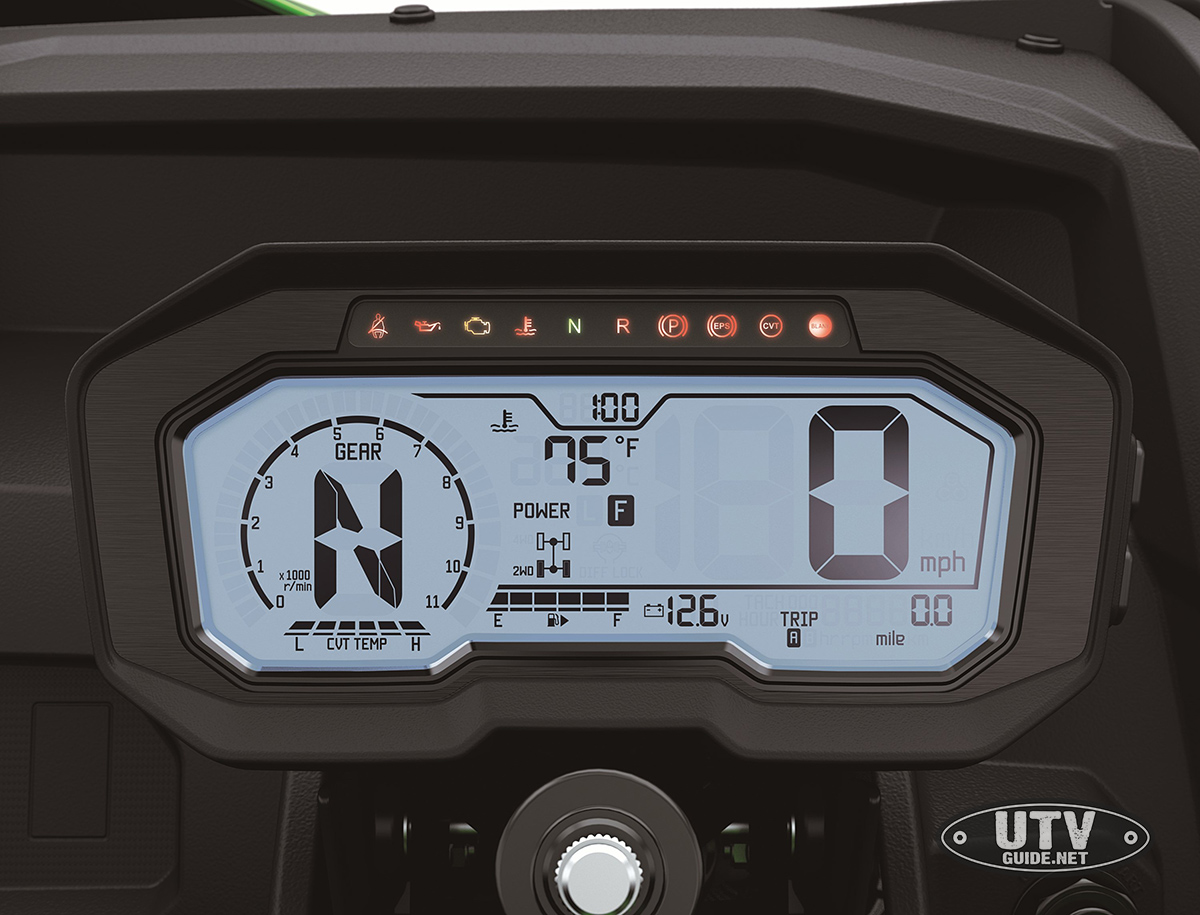
Positioned above the steering wheel, a large all-digital instrumentation screen offers at-a-glance information to the driver. The display features white backlighting and has three selectable brightness levels. The multi-function display includes the following features:
- Bar-style tachometer (2 display options)
- Digital speedometer
- Bar-style fuel gauge
- Gear indicator (L, H, N, R)
- Power Mode
- Driving mode (2WD/4WD/4WD+Diff Lock) indicator
- Economical Riding Indicator
- Clock
- Odometer
- Dual trip meters
- Hour meter
- Water temperature
- Digital battery gauge
- Bar-style CTV temperature
- Seatbelt warning lamp
- Oil warning lamp
- Engine check lamp
- Water temperature warning lamp
- Neutral indicator lamp
- Reverse indicator lamp
- Parking indicator lamp
- EPS warning lamp
- CVT belt warning lamp
The CVT temperature gauge and indicator lamp warns the driver of conditions that may shorten the life of the CVT belt.
Large rear carrier space
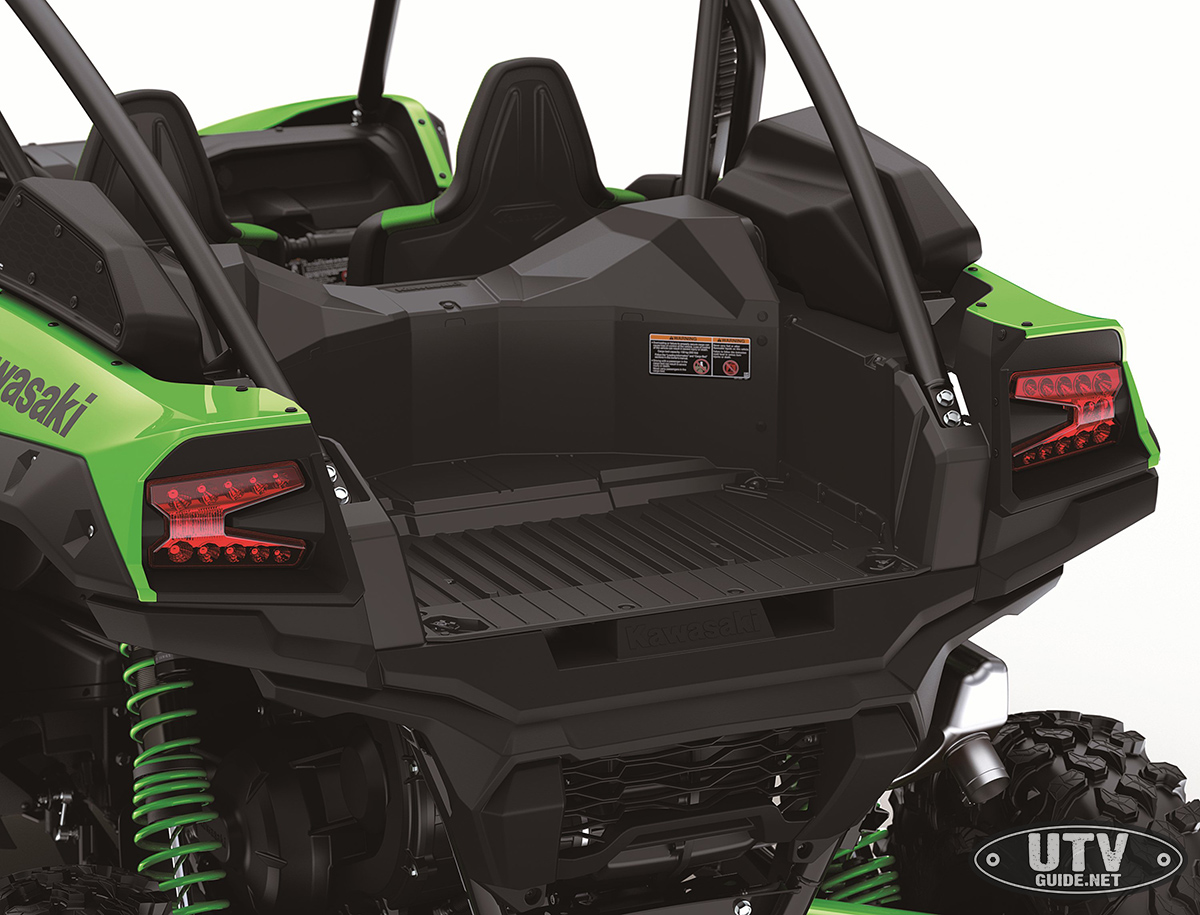
The roomy, rear carrier space is large enough to accommodate up to a 32” spare tire and has a load capacity of 350 pounds. The carrier’s recessed bottom helps prevent a cooler box or other cargo items from moving around. Cargo can be secured using the four cargo hooks built into the carrier bottom.
Capable, tough, sleek styling
The Teryx KRX 1000 side x side features capable, tough and sleek styling which highlights its trail-conquering, off-road potential. Its long wheelbase, combined with high fenders designed to show off its massive shock units and long wheel travel, more than hints at its off-road capabilities. The tough, aggressive front end – an image emphasized by its wide stance – is complemented by sleek bodywork that flows from its front to its rear. One look at the Teryx KRX 1000 is all you need to know that this side by side is definitely up for an adventure.
The KRX 1000’s imposing chassis and its visually massive components convey solid performance. The hood was made as low as possible to enhance the driver’s view of the trail ahead. The enormous front grill provides cooling air to the radiator, while adding to the KRX 1000’s tough, aggressive front end. The sporty intake contributes to radiator cooling, and acts as a heat sink when stopped.
Newly designed LED headlights include high and low beams, as well as line-type LED position lamps. Their wide position reinforces the aggressive image of the KRX 1000’s wide, stable stance. The large wheel-gap created by the high fenders shows off the suspension components and their long travel, reminding the viewer of the KRX 1000’s superb off-road capabilities. The front fenders and the front of the doors were cleverly designed to be slimmer to offer the driver a clear view of the front tire – an advantage when navigating tricky rock crawling sections.
The wheels feature color matched bead-lock rings to draw attention to the large, aggressive tires. The angled design of the underbody emphasizes the high ground clearance. In addition to contributing to ride comfort, the tall design of the doors creates a sporty image by giving the ROPS a low-profile look. Intakes in the rear fenders direct fresh air into the engine compartment. Further emphasizing the ample rear wheel travel, the tall rear ride height provides an aggressive, forward-leaning stance while the LED taillights contribute to the stylish rear end.
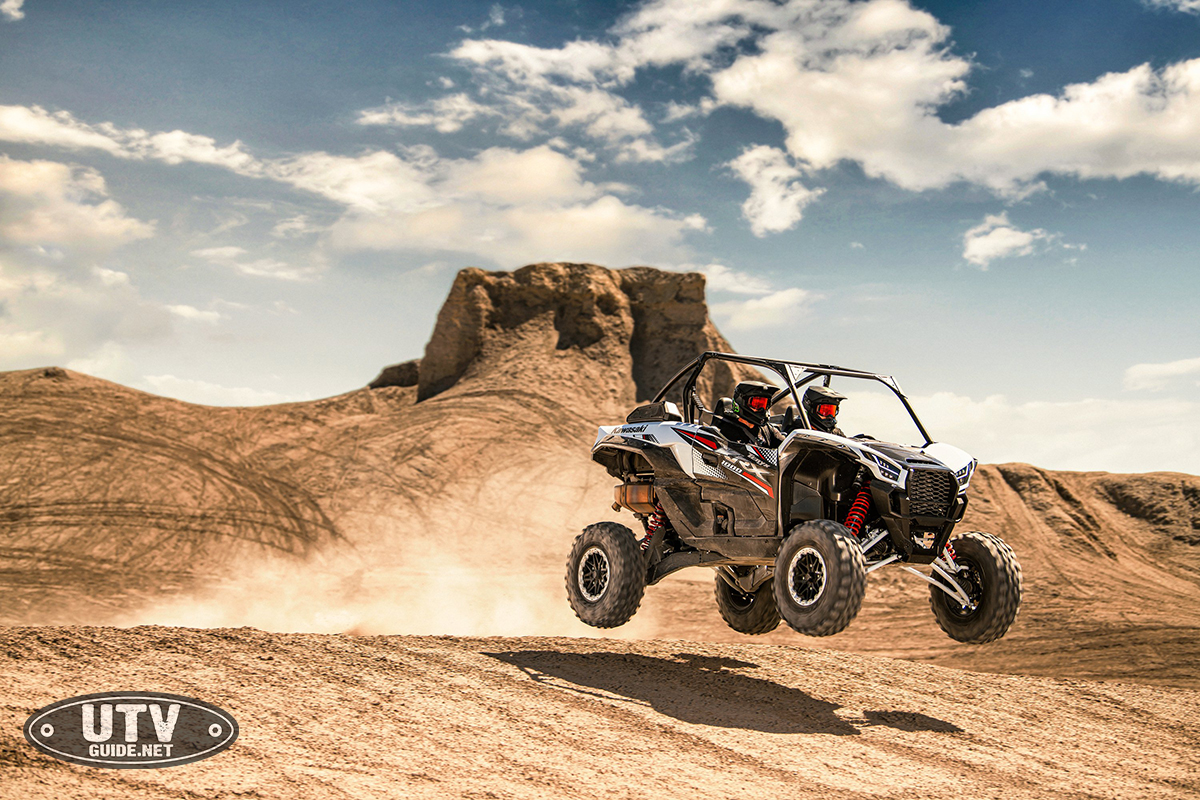
Ample Accessories
Owners looking to accessorize their machine will be happy with Kawasaki’s wide range of Kawasaki Genuine Accessories which are designed for enhanced convenience, comfort, and style. The Kawasaki Genuine Accessories were designed in conjunction with the Teryx KRX 1000 side x side, providing better fit and finish. The nearly 50 available accessories include full and half windshields, multiple roof options, and vehicle protection components including front and rear bumper, additional skid plates, a-arm and trailing arm guards. Owners can also add LED light bars, a dome light, rearview and side mirrors, an audio system and winch. Pre-selected accessories packages are also available and are offered at a package discount when compared to the aggregate original MSRP of all accessories in the package. These include the KRX Protection, KRX Cab, KRX Lighting, KRX Recreation, KRX Mud and KRX I Want It All packages.
COLORS
Lime Green / Metallic Onyx Black
Metallic Moondust White / Metallic Onyx Black
MSRP Teryx KRX 1000: $20,499
Availability: Now
ABOUT KAWASAKI
Kawasaki Heavy Industries, Ltd. (KHI) started full-scale production of motorcycles over a half century ago. The first Kawasaki motorcycle engine was designed based on technical know-how garnered from the development and production of aircraft engines, and Kawasaki’s entry into the motorcycle industry was driven by the company’s constant effort to develop new technologies. Numerous new Kawasaki models introduced over the years have helped shape the market, and in the process have created enduring legends based on their unique engineering, power, design and riding pleasure. In the future, Kawasaki’s commitment to maintaining and furthering these strengths will surely give birth to new legends.
Kawasaki Motors Corp., U.S.A. (KMC) markets and distributes Kawasaki motorcycles, ATVs, side x sides, and Jet Ski® watercraft through a network of almost 1,100 independent retailers, with close to an additional 7,400 retailers specializing in general purpose engines. KMC and its affiliates employ nearly 3,100 people in the United States, with approximately 260 of them located at KMC’s Foothill Ranch, California headquarters.