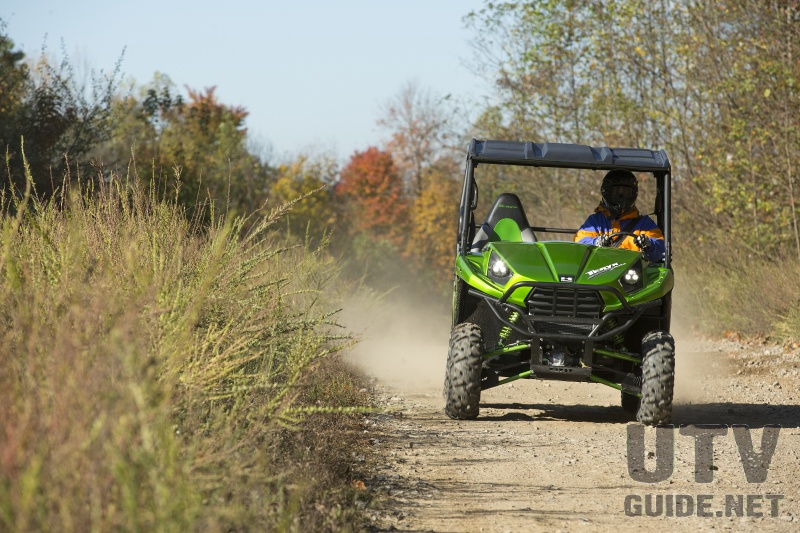
The 2014 Kawasaki Teryx was far more than a routine model-year update. Kawasaki redesigned its two-seat recreational utility UTV around a longer, stronger chassis, increased engine displacement, added adjustable FOX Podium shocks and made electronic power steering standard. The result was a Teryx that felt more stable, more comfortable and considerably better suited to all-day adventure rides.
We tested the redesigned Teryx for more than 100 miles on the Hatfield-McCoy Trail System in West Virginia. Those two days included rocks, roots, mud, steep climbs, tight wooded trails and faster connecting roads—an ideal environment for evaluating Kawasaki’s new two-seat platform.
More than a decade later, the 2014 model remains an important chapter in the history and evolution of the Kawasaki Teryx. It established the basic two-seat adventure-oriented layout that Kawasaki continued developing for years afterward.

2014 Kawasaki Teryx Review: Quick Takeaways
- Best qualities: Durable drivetrain, stable chassis, excellent protected storage, effective EPS and predictable trail handling
- Primary drawbacks: Limited suspension travel by modern standards, noticeable engine noise and no Turf Mode
- Best use: Trail exploration, hunting, camping, technical terrain and light utility work
- Less suited for: High-speed desert riding, large whoops and open dunes
- Why it mattered: The 2014 redesign transformed the two-seat Teryx into a more capable adventure UTV
A Completely Redesigned Two-Seat Teryx
Although the hood retained some familiar Kawasaki styling, the 2014 Teryx was essentially a new machine. The most important change was its longer wheelbase, which stretched the vehicle by nearly 10 inches compared with the previous-generation two-seat Teryx.
Kawasaki kept the overall length relatively compact by changing the proportions of the vehicle rather than simply extending the back of the old chassis. The new layout placed the wheels closer to the corners, improving stability and ride quality without making the Teryx excessively long on tight trails.
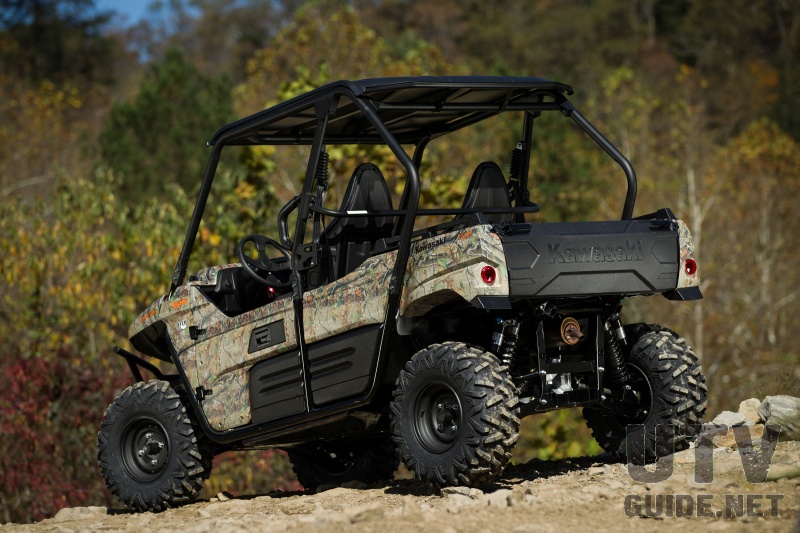
The 2014 two-seater shared its basic Double-X frame architecture with the Kawasaki Teryx4. Instead of using the space behind the front seats for a second row, Kawasaki created a large cargo bed and two protected storage compartments.
This was one of the redesign’s most useful features. The space behind the seats and ahead of the cargo bed gave the two-seat Teryx considerably more storage than most compact UTVs. It was especially valuable for camping gear, recovery equipment, tools, spare parts and camera equipment that needed protection from mud and weather.

783cc V-Twin Engine and Drivetrain
Kawasaki increased displacement of the liquid-cooled V-twin from 749cc to 783cc. The changes extended beyond the larger displacement and included a higher compression ratio, revised cam profiles, increased crankshaft mass and a larger-diameter exhaust collector.
Kawasaki claimed a 26-percent increase in horsepower and 12-percent more torque, with much of the improvement concentrated in the low- and midrange. That is where a trail-oriented UTV needs its power most.
The 783cc engine was not a high-revving sport-UTV powerplant. Instead, it delivered strong, controllable torque for climbing hills, negotiating rocks and accelerating out of slow corners. It had enough power for the wooded West Virginia trails, although riders accustomed to open desert or dune riding would likely want more top-end performance.
Kawasaki also upgraded the centrifugal clutch, revised the transmission ratios and strengthened several drivetrain components. The centrifugal clutch maintained tension on the CVT belt when the vehicle was stopped, helping reduce belt slip, heat and wear. That was particularly valuable when crawling slowly through rocks or starting on steep inclines.
Despite the increase in output, Kawasaki claimed approximately 20-percent better fuel economy than the previous model. The additional range supported the Teryx’s new role as a machine built for longer trail rides and backcountry exploration.
How the 2014 Teryx Handled on the Trail
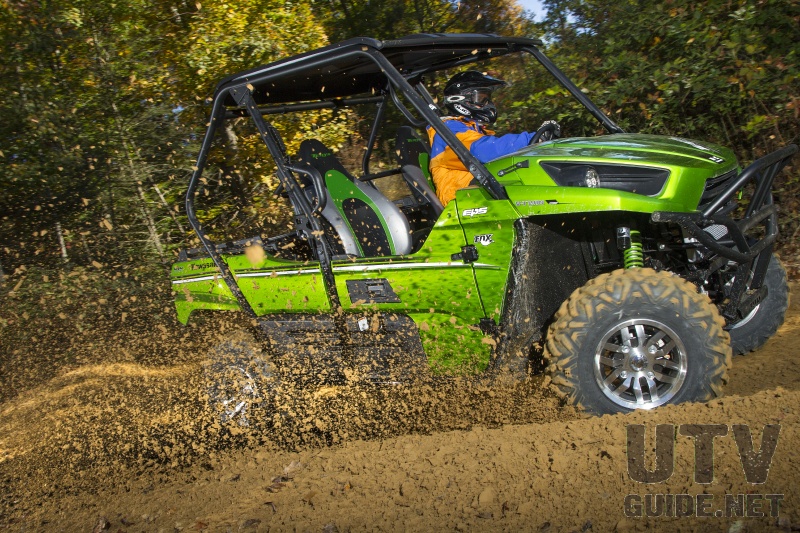
The longer wheelbase was immediately noticeable on rough terrain. The old two-seat Teryx could feel short and busy when traveling across closely spaced bumps. The 2014 chassis settled the vehicle down and produced a more controlled ride without sacrificing too much maneuverability.
Kawasaki engineered the chassis around an approximately 50:50 front-to-rear weight distribution. Combined with the rigid Double-X frame, that balance gave the Teryx predictable handling on steep climbs, downhill sections and tight switchbacks.
The Teryx did not feel like a lightweight sport UTV, but it felt planted and dependable. On technical trails, that sense of stability often mattered more than outright speed.
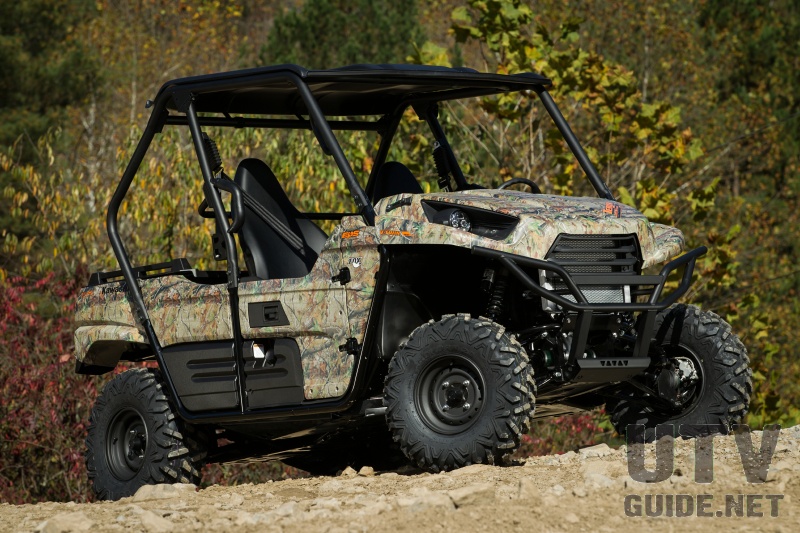
The full-coverage doors were also a worthwhile improvement. They were easy to open, offered better protection than the nets commonly used on UTVs of that era and helped make the cockpit feel more complete.

FOX Podium Suspension
Kawasaki equipped the 2014 Teryx with FOX Podium piggyback shocks featuring adjustable compression damping and spring preload. The external reservoirs increased oil capacity and helped control heat during long, demanding rides.
The FOX shocks were a meaningful upgrade over basic utility-UTV suspension. They allowed owners to adjust the setup for passenger weight, cargo and different terrain. On rocky trail sections, the shocks provided controlled movement and helped keep the chassis composed.
Suspension travel was still limited compared with today’s crossover and sport UTVs. The Teryx could handle rocks, roots and moderate trail impacts, but it was not designed to charge through deep desert whoops. Drivers needed to choose sensible lines and maintain a realistic pace when the trail became rough.
That limitation did not detract significantly from its intended purpose. The Teryx was engineered as a durable recreational utility machine rather than a pure sport side-by-side.
Electronic Power Steering
Electronic Power Steering was standard across the 2014 Teryx lineup. The system reduced steering effort at low speeds and helped isolate the steering wheel from impacts caused by rocks, roots, potholes and trail debris.
During our two-day test, the EPS assistance felt natural at both slow and moderate speeds. Steering remained light while navigating technical obstacles without feeling overly assisted on faster trail sections.
This was especially helpful late in the day. After hours of driving through tight woods and uneven terrain, reduced steering effort meant less driver fatigue.
Cargo Bed and Protected Storage
The tilting cargo bed measured approximately 28 by 43 inches and was rated to carry up to 600 pounds. It was smaller than the bed on the previous-generation two-seat Teryx, but the overall storage arrangement was more versatile for recreational use.
The sealed compartments behind the seats were a major advantage. They provided protected space for cameras, food, clothing, tools and other equipment that should not be left exposed in the cargo bed.
That combination made the 2014 Teryx particularly appealing as an adventure vehicle. Two people could carry camping and recovery gear without moving to a longer four-seat machine. UTVGuide later used this platform to create a Kawasaki Teryx adventure and rock-crawling build designed for demanding trails and overnight trips.

Testing at Hatfield-McCoy
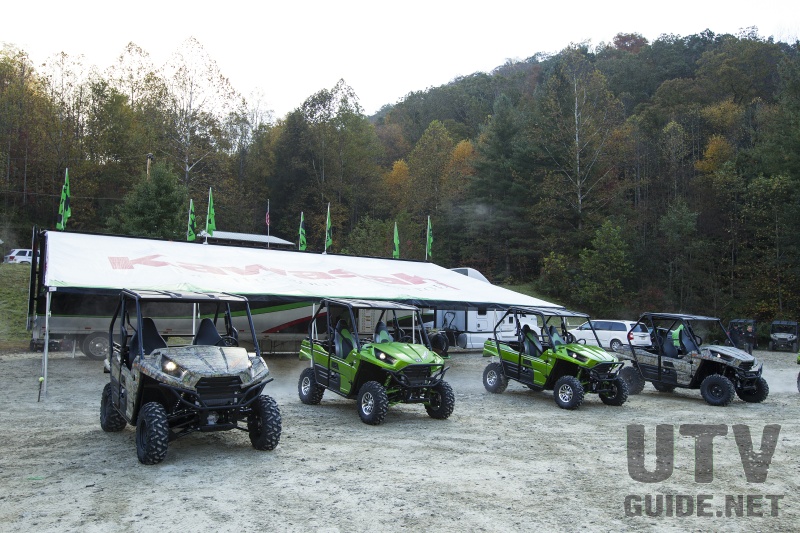
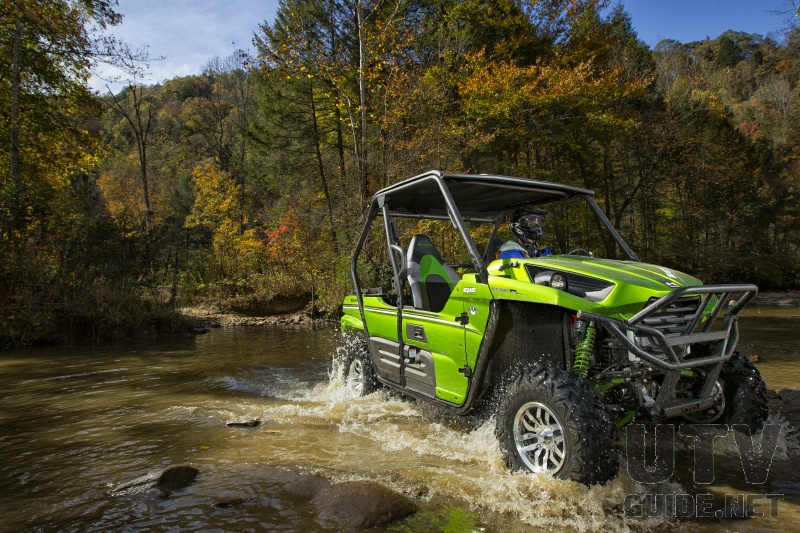
Kawasaki introduced the 2014 Teryx to the media with a two-day destination ride through West Virginia’s Hatfield-McCoy Trail System. Our route traveled through southern West Virginia coal country, including portions of the Indian Ridge, Pinnacle Creek and Pocahontas trail systems.
On the first day, we traveled from Pineville toward Bramwell. The second day reversed direction and incorporated additional trails on the way back toward Princeton. Together, the two days covered more than 100 miles.
Many Hatfield-McCoy trails were designed specifically for off-road vehicles rather than repurposed from ordinary dirt roads. The routes followed the terrain with steep climbs, tight corners, rolling elevation changes, rocks, mud, roots and wooded connectors between trail systems.
That variety made the location an excellent test for the redesigned Teryx. The longer chassis improved its behavior across rough sections, the EPS reduced effort in the tight woods and the V-twin delivered usable torque on the climbs.
We drove the machines hard and did not treat them gently. Despite the mileage and terrain, none of the Teryx test units experienced a mechanical problem during our ride. The chassis, engine, clutch and drivetrain all felt exceptionally solid.
2014 Kawasaki Teryx LE Features
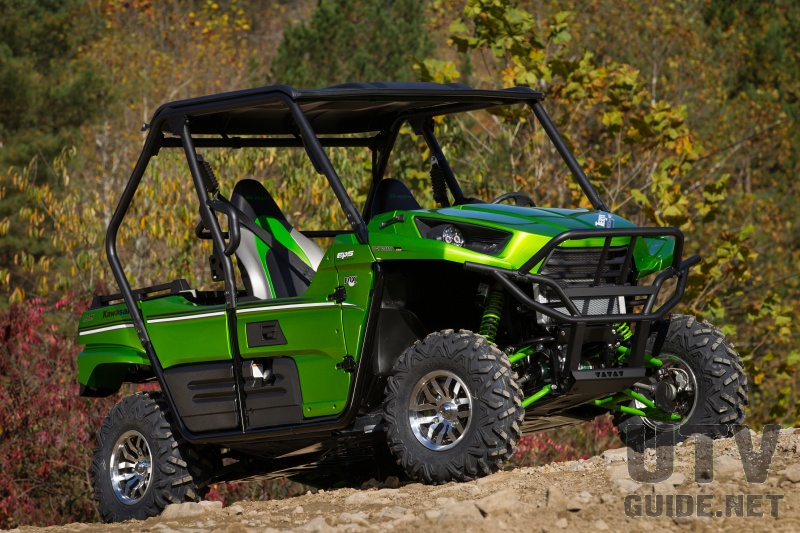
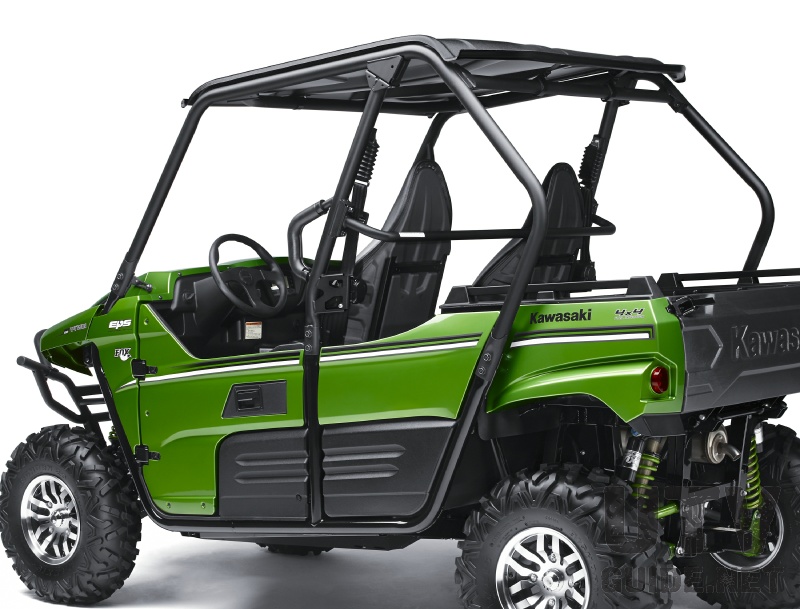
Our test vehicle was the Candy Lime Green Teryx LE. Mechanically, it shared the important chassis, engine, drivetrain and suspension updates found across the Teryx line. The LE package added several appearance and convenience upgrades:
- High-intensity LED headlights
- Tubular-steel front brush guard
- Cast-aluminum wheels
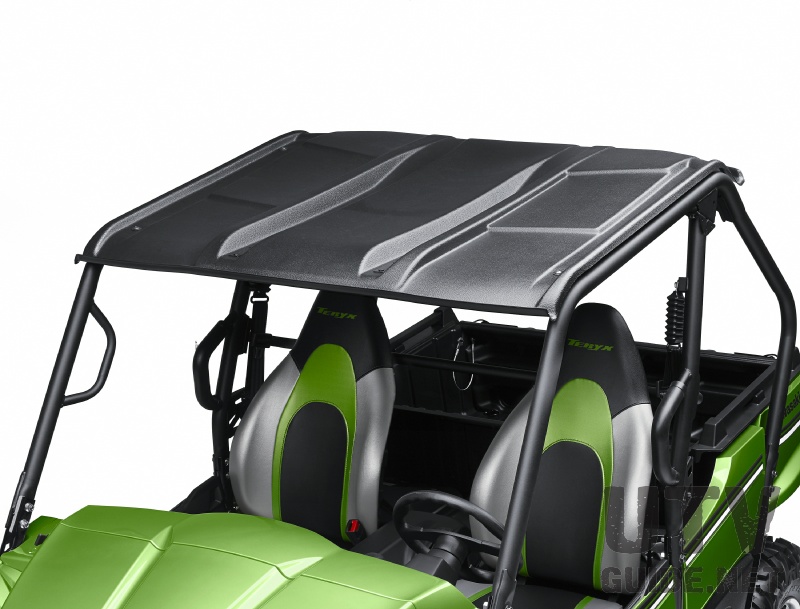
- Plastic roof
- Automotive-quality painted bodywork
- Color-matched suspension arms and shock springs
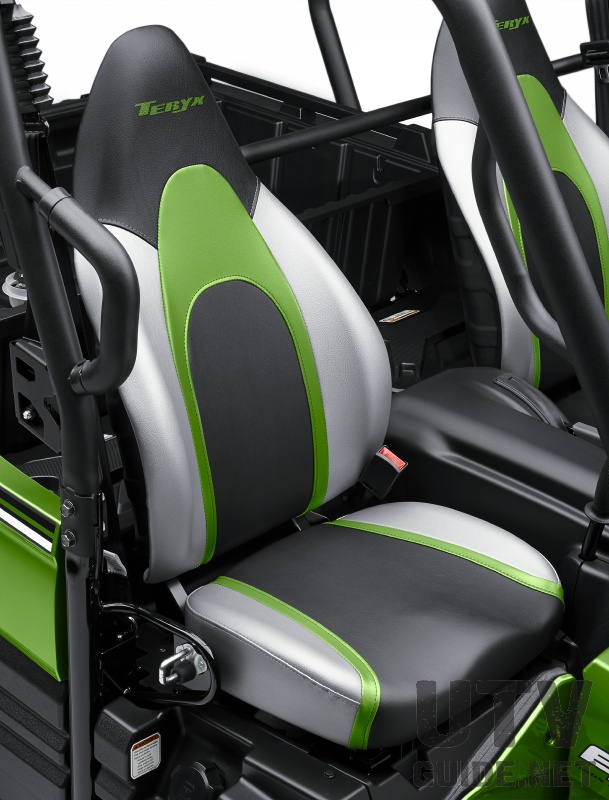
- Three-tone high-back seat covers
The LED headlights and roof added genuine trail value, while the painted bodywork, wheels and color-matched components gave the LE a more finished appearance.
What We Liked
- Longer wheelbase improved stability and ride quality
- Strong and predictable low- to midrange V-twin power
- Centrifugal clutch helped maintain CVT belt engagement at low speed
- Standard electronic power steering
- Adjustable FOX Podium piggyback shocks
- Large protected storage compartments behind the seats
- Useful 600-pound-capacity tilting cargo bed
- Comfortable seating position and good forward visibility
- Solid chassis and durable drivetrain
- Full doors were easy to operate and provided good coverage
- Three-year limited factory warranty
What Could Be Better
- No Turf Mode or unlockable rear differential
- Noticeable engine noise at mid to high speeds
- Limited suspension travel for aggressive high-speed terrain
- Rear cage structure restricted clearance for substantially larger tires
- Gauge lacked coolant-temperature and voltage readouts
- More power would have helped in open desert and dunes
The locked rear differential provided dependable traction but could cause the inside rear tire to scrub during tight turns. An independently selectable open rear differential would have reduced turning effort and minimized damage when operating on grass or other sensitive surfaces.
Is the 2014 Kawasaki Teryx Still Worth Buying?
A well-maintained 2014 Teryx can still be a compelling used UTV for buyers who value durability, protected storage and technical-trail ability more than horsepower or suspension travel.
Its 783cc V-twin and compact 61-inch-class width are well suited to wooded trails, hunting access and backcountry exploration. The two-seat layout also provides much more cargo capacity than a comparable four-seat machine of similar overall length.
However, expectations need to remain realistic. Modern crossover UTVs offer more horsepower, more suspension travel, quieter cabins and more sophisticated instrumentation. The 2014 Teryx should be evaluated as a durable trail and utility machine—not as an alternative to a current high-performance sport UTV.
When shopping for a used example, inspect the CVT intake and housing, suspension bushings, wheel bearings, skid plates, frame, air filter and cooling system. Check for oversized tires or heavy accessories that may have increased stress on the drivetrain and suspension. Service history and overall condition matter more than cosmetic appearance alone.
Final Verdict
The 2014 redesign moved the Kawasaki Teryx decisively toward adventure riding. The longer wheelbase, stronger 783cc engine, standard EPS, FOX shocks and protected storage made it more comfortable and capable on long trail rides while preserving the durability that had become central to the Teryx name.
Its performance limits were also clear. The engine could be loud, the suspension was not intended for high-speed whoops and the locked rear differential was less versatile around lawns and tight work areas. Even so, the Teryx delivered where it mattered most during our West Virginia test: it was stable, predictable, useful and dependable.
For two riders who want to carry camping gear, tools, camera equipment or hunting supplies into difficult terrain, the 2014 Kawasaki Teryx remains one of the most interesting two-seat recreational utility UTVs from its era.
Our experience with the platform continued well beyond the initial test. See the complete 2014 Kawasaki Teryx build and how the modified machine performed while rock crawling at Rally on the Rocks.
2014 Kawasaki Teryx FAQ
What engine does the 2014 Kawasaki Teryx have?
The 2014 Teryx uses a 783cc liquid-cooled, fuel-injected V-twin engine. Kawasaki increased displacement from the previous model’s 749cc and revised several internal and exhaust components to improve low- and midrange performance.
Does the 2014 Kawasaki Teryx have power steering?
Yes. Electronic Power Steering was standard on the 2014 Teryx. The system reduced low-speed steering effort and helped limit steering-wheel kickback on rocks and other rough terrain.
How much can the 2014 Teryx cargo bed carry?
The tilting rear cargo bed was rated for up to 600 pounds. The Teryx also included two large protected storage compartments behind the seats.
Is the 2014 Kawasaki Teryx good for rock crawling?
Yes, within the limits of its ground clearance and suspension travel. Its predictable V-twin torque, centrifugal clutch, four-wheel drive, locking front differential and stable chassis made it a strong technical-trail platform.
Is the 2014 Teryx a sport UTV?
The Teryx is better classified as a recreational utility UTV. It can handle aggressive trail riding, but it does not have the horsepower or long-travel suspension of a pure sport side-by-side.
What is different about the 2014 Teryx LE?
The LE package added LED headlights, a tubular-steel brush guard, cast-aluminum wheels, a roof, painted bodywork, color-matched suspension components and upgraded three-tone seat covers.
More 2014 Kawasaki Teryx Photos