


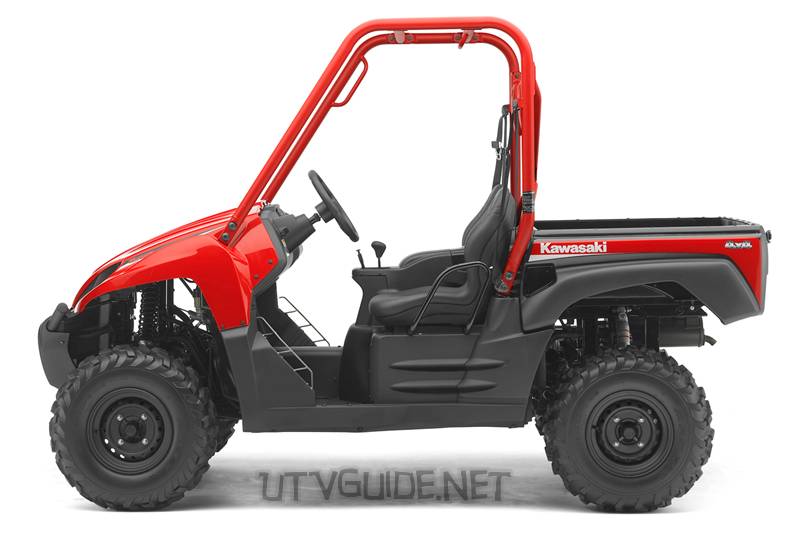
The 2008 Kawasaki Teryx 750 4×4 marked Kawasaki’s entrance into the recreational side-by-side market. Instead of developing another traditional work-focused utility vehicle, Kawasaki combined a 749cc V-twin engine, independent suspension, selectable four-wheel drive and a useful cargo bed in a two-seat platform designed for both trail riding and everyday hauling.
The original Teryx arrived during an important period in UTV development. The Yamaha Rhino had demonstrated the demand for recreational side-by-sides, while the Polaris RZR was beginning to push the category toward more specialized sport machines. Kawasaki positioned the Teryx between those approaches, giving it more cargo capacity and utility than a pure sport UTV while emphasizing stronger acceleration, suspension performance and aggressive handling.
For driving impressions from UTV Guide’s original introduction, read our 2008 Kawasaki Teryx first-ride review. For a broader look at how the platform changed over time, visit the history and evolution of the Kawasaki Teryx.
Why the 2008 Kawasaki Teryx Mattered
Kawasaki already had extensive experience building work-oriented side-by-sides through the MULE line, but the Teryx represented a different type of vehicle. Its bucket seats, relatively low seating position, locked rear axle and more performance-focused suspension gave it a sportier personality than Kawasaki’s utility models.
At the same time, the Teryx retained practical features that made it useful beyond recreational riding. Its rear cargo bed could carry up to 500 pounds, and its 1,300-pound towing rating allowed it to pull a small trailer or other equipment when properly equipped.
The result was an early example of what would eventually become the recreation-utility UTV category. The original Teryx was neither as narrowly focused as a pure sport machine nor as work-oriented as a Kawasaki MULE.
749cc Carbureted V-Twin Engine
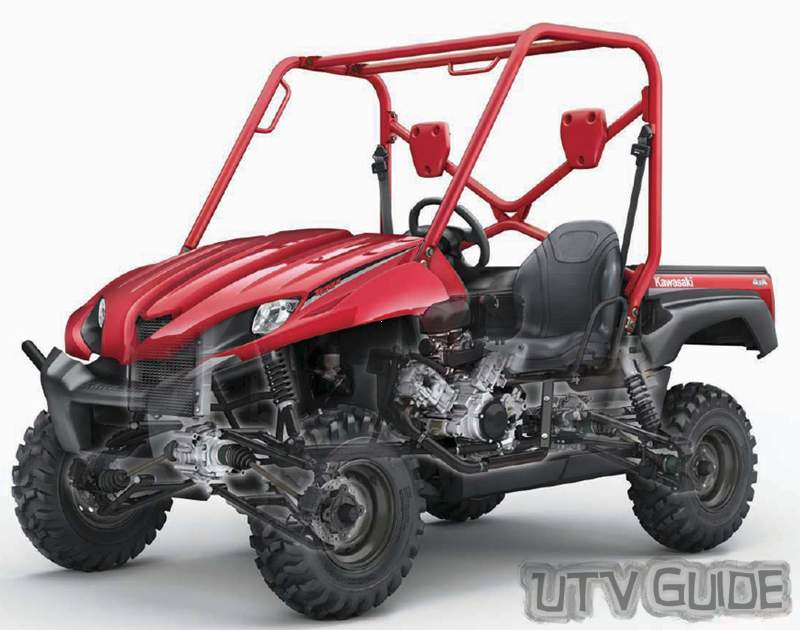
The defining feature of the 2008 Teryx was its liquid-cooled, 749cc, 90-degree V-twin engine. The basic engine architecture was related to the powerplant used in the Kawasaki Brute Force 750 ATV and gave the Teryx a displacement and torque advantage over the single-cylinder Yamaha Rhino of the period.
The engine used single overhead cams, four valves per cylinder and two 34mm Keihin CVKR carburetors. This is an important distinction when comparing the first Teryx with later models: the 2008 Teryx was carbureted, while Kawasaki added digital fuel injection for the 2009 model year.
Kawasaki positioned the engine near the middle of the chassis to improve front-to-rear weight distribution. Cooling air ducts near the cargo bed helped direct air toward the engine, while the radiator was mounted high in the chassis to help protect it from mud and trail debris.
Automatic CVT With High and Low Range
A continuously variable belt-drive transmission provided high range, low range, neutral and reverse. Low range gave the driver additional control when climbing steep terrain, pulling a load or traveling slowly through difficult sections.
Kawasaki Engine Brake Control helped slow the vehicle during descents. As with any belt-driven UTV, using the proper transmission range is important. Low range should be selected when operating at low speeds under a heavy load or in steep and technical terrain rather than forcing the CVT to work unnecessarily hard in high range.
Selectable 2WD and 4WD
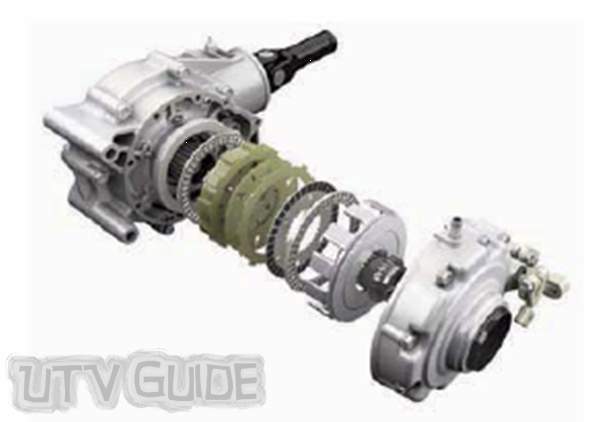
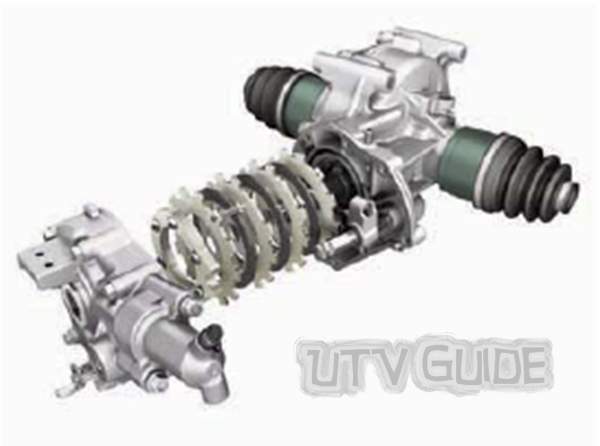
The driver could switch between two-wheel drive and four-wheel drive using a dashboard control. The front drivetrain used a limited-slip differential during normal four-wheel-drive operation to reduce steering effort.
Instead of a simple on-or-off front differential lock, the original Teryx used Kawasaki’s Variable Front Differential Control. A hand lever allowed the driver to progressively increase the amount of front differential lock when additional traction was required.
The rear axle remained locked, meaning both rear wheels turned together. This helped the Teryx find traction and contributed to its ability to rotate or slide through loose corners, although it could also cause the inside rear tire to scrub during tight turns on firm surfaces.
Independent Suspension and Chassis
The 2008 Teryx used a large-diameter tubular-steel frame and independent suspension at all four corners. Dual A-arms provided 7.5 inches of front-wheel travel, while the independent rear suspension offered approximately 7.3 inches.
Adjustable gas-charged Kayaba shocks were fitted at both ends, with remote reservoirs used on the rear shocks. The suspension was tuned more toward recreational performance than the soft, low-speed ride associated with many work-focused utility vehicles of the period.
With a width of 58.3 inches, a 75.8-inch wheelbase and 11.2 inches of ground clearance, the Teryx was compact enough for many trails while offering useful stability and obstacle clearance. Specially developed 26-inch Maxxis tires were intended to provide both forward traction and predictable sliding characteristics.

Brakes, Tires and Ground Clearance
Dual 200mm hydraulic disc brakes with twin-piston calipers handled braking at the front. The discs were positioned inside the wheels to help protect them from rocks, mud and trail debris.
At the rear, Kawasaki used a sealed, oil-bathed multi-disc brake. Enclosing the rear brake helped isolate it from water and mud, giving the system an advantage in difficult working and trail conditions.
The Teryx rode on 26×8-12 front and 26×10-12 rear Maxxis tires. Combined with its 11.2 inches of ground clearance, the tires helped the vehicle negotiate ruts, rocks and other common trail obstacles.
Passenger Compartment and Occupant Protection
The two-passenger cab included individual bucket seats, retractable three-point seat belts and an integrated occupant-protection structure. Steel floorboards and built-in foot guards helped keep occupants’ feet inside the vehicle.
Kawasaki positioned the padded steering wheel relatively low to give the driver a more direct and controlled seating position. The cab also provided enough shoulder room for two adults, although the original Teryx lacked many of the adjustable controls and interior storage features now common in modern UTVs.
Cargo Bed and Towing Capacity
The rear cargo bed measured approximately 44.1 inches wide, 32.7 inches long and 12 inches deep. Its 500-pound carrying capacity gave the Teryx significantly more utility than a narrow, pure sport side-by-side.
Tie-down points were positioned at all four corners, and a cargo net was included to help secure equipment. Kawasaki rated the Teryx to tow as much as 1,300 pounds when properly equipped.
Standard, LE and Camouflage Models
Kawasaki offered more than one version of the 2008 Teryx. Equipment varied by trim and color, so shoppers looking at a used vehicle should verify exactly which components remain on the machine.
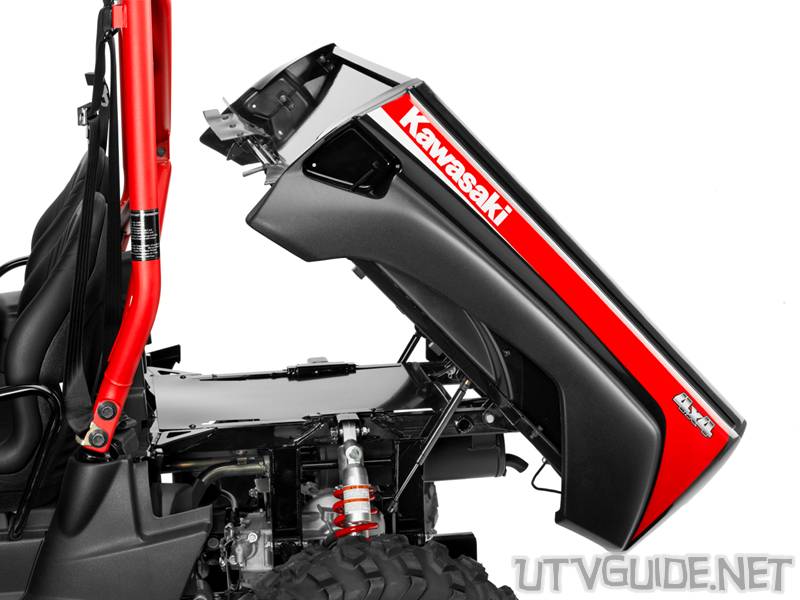
The better-equipped Teryx 750 4×4 LE added several comfort and convenience features, including:
- Digital meter with dual trip meters
- Clock and hour meter
- Half windshield
- Hard roof
- Dual retractable cup holders
- Gas-assisted tilting cargo bed
Available colors included Sunbeam Red, Woodsman Green and REALTREE Hardwoods Green HD camouflage. Kawasaki also offered an extensive accessory catalog, allowing owners to add protection, wind management, storage and other equipment.

2008 Kawasaki Teryx 750 4×4 Specifications
| Engine | Liquid-cooled, four-stroke, 90-degree V-twin; SOHC, four valves per cylinder |
|---|---|
| Displacement | 749cc |
| Bore × stroke | 85 × 66mm |
| Compression ratio | 8.8:1 |
| Fuel system | Two Keihin CVKR-34 carburetors |
| Starting system | Electric |
| Ignition | Digital DC-CDI |
| Transmission | Automatic continuously variable belt-drive transmission with high range, low range and reverse |
| Engine braking | Kawasaki Engine Brake Control |
| Final drive | Shaft |
| Drive system | Selectable two-wheel drive or four-wheel drive |
| Front differential | Limited-slip differential with Variable Front Differential Control |
| Rear differential | Locked rear axle |
| Frame | Large-diameter, thin-wall, high-tensile tubular steel |
| Front suspension | Independent dual A-arm with adjustable gas-charged shocks |
| Front-wheel travel | 7.5 inches |
| Rear suspension | Independent rear suspension with adjustable gas-charged reservoir shocks |
| Rear-wheel travel | Approximately 7.3 inches |
| Front tires | Maxxis 26×8-12 |
| Rear tires | Maxxis 26×10-12 |
| Front brakes | Dual 200mm hydraulic discs with two-piston calipers |
| Rear brake | Sealed, oil-bathed multi-disc |
| Overall length | 115.7 inches |
| Overall width | 58.3 inches |
| Overall height | 75.4 inches |
| Wheelbase | 75.8 inches |
| Ground clearance | 11.2 inches |
| Fuel capacity | 8 gallons |
| Cargo-bed dimensions | 44.1 inches wide × 32.7 inches long × 12 inches high |
| Cargo-bed capacity | 500 pounds |
| Towing capacity | 1,300 pounds |
| Lighting | Two 40-watt headlights, dual taillights and brake light |
| Standard colors | Sunbeam Red, Woodsman Green and REALTREE Hardwoods Green HD |

2008 Kawasaki Teryx Frequently Asked Questions
What engine is in the 2008 Kawasaki Teryx?
The 2008 Kawasaki Teryx uses a liquid-cooled 749cc, 90-degree V-twin engine with single overhead cams and four valves per cylinder. Two Keihin CVKR-34 carburetors supply fuel.
Is the 2008 Kawasaki Teryx fuel injected?
No. The first-year 2008 Teryx is carbureted. Kawasaki introduced digital fuel injection on the Teryx for the 2009 model year.
Does the 2008 Kawasaki Teryx have four-wheel drive?
Yes. The driver can select two-wheel drive or four-wheel drive from the dashboard. A hand-operated Variable Front Differential Control lever progressively increases front differential lock when more traction is needed.
Does the 2008 Teryx have a locking rear differential?
The rear axle is permanently locked, so both rear wheels turn together. It does not have a selectable Turf Mode or an unlockable rear differential.
How much suspension travel does a 2008 Teryx have?
The 2008 Teryx provides 7.5 inches of front-wheel travel and approximately 7.3 inches of rear-wheel travel. Adjustable gas-charged shocks are used at all four corners, with reservoir shocks at the rear.
How wide is a 2008 Kawasaki Teryx?
The 2008 Kawasaki Teryx is 58.3 inches wide. It measures 115.7 inches long, has a 75.8-inch wheelbase and provides 11.2 inches of ground clearance.
How much can a 2008 Kawasaki Teryx tow?
Kawasaki rated the 2008 Teryx to tow up to 1,300 pounds when properly equipped. Its rear cargo bed can carry as much as 500 pounds.
What is the difference between the standard Teryx and the Teryx LE?
The 2008 Teryx 750 4×4 LE added equipment including a hard roof, half windshield, digital meter, dual trip meters, clock, hour meter, retractable cup holders and a gas-assisted tilting cargo bed.
What replaced the original 2008 Teryx?
Kawasaki continued refining the first-generation two-seat Teryx with fuel injection and other durability, cooling and bodywork updates. The company later introduced the four-seat Teryx4 for 2012 and a substantially redesigned two-seat Teryx for 2014.
The Beginning of the Teryx Line
The 2008 Teryx was significant because it established the basic identity Kawasaki would carry forward: V-twin power, a durable chassis, selectable traction, independent suspension and enough cargo capacity to support work or longer recreational rides.
Its carburetors, relatively short suspension travel and basic cab clearly reflect the era in which it was introduced. Even so, the combination of a powerful V-twin, compact dimensions and useful cargo capacity made the first Teryx an influential early recreation-utility side-by-side.
Continue with our original 2008 Teryx driving review, or explore the complete evolution of the Kawasaki Teryx from 2008 forward.


